Staying lean year-round isn’t just about crushing workouts—it’s about what hits your plate every single day.
Fitness expert Jeff Cavaliere, the creator behind Athlean-X, recently shared his complete daily nutrition blueprint.
He revealed 17 specific foods he eats without fail to maintain single-digit body fat while building muscle naturally.
And the best part? Many of these choices might surprise you—including nightly frozen yogurt and his unapologetic love for pasta.
Jump to:
- Starting Strong: The Morning Foundation
- The Beverage That Adds Up
- The Spice That Stabilizes Blood Sugar
- Protein Powerhouses Throughout the Day
- The Carbohydrate Controversy
- Green Vegetables with Science Behind Them
- The Berry That Speeds Recovery
- Fats That Fight Inflammation
- The Controversial Soy Product
- Orange Superfoods for Anti-Aging
- The Workout Enhancer
- The Sweet Exceptions
- The Protein Shake Non-Negotiable
- The Bigger Picture
Starting Strong: The Morning Foundation
Cavaliere kicks off every morning with egg whites—six of them, poured straight from a container for convenience.
The eggs give me a good source of protein in the morning, and there aren’t really a whole hell of a lot that fit my meal plan.
Those six egg whites deliver 24 grams of protein with virtually zero fat, setting the metabolic tone for the day. While whole eggs offer additional nutrients in the yolk, Cavaliere opts for whites purely for calorie management—a strategy that makes sense when you’re eating specific foods daily.
Paired with those egg whites? Old-fashioned oatmeal, and this choice transformed his energy levels.
I noticed I had more energy. I noticed that muscle cramping, which was a thing that I kind of struggled with for a while, decreased tremendously because of the magnesium.
He avoids instant varieties, sticking with slow-cooked oats that contain zero added sugar. To make them palatable, he adds pumpkin, walnuts, and even a dollop of whipped cream—proving that clean eating doesn’t mean tasteless eating.
The Beverage That Adds Up
Here’s where things get interesting: Cavaliere drinks between 40 and 50 ounces of skim milk every single day.
That’s not a typo. He consumes it in his oatmeal, protein shakes, and as standalone glasses throughout the day. His choice of skim over whole milk isn’t about fat being unhealthy—it’s pure mathematics.
That would be an extra 450 calories if I chose the whole milk version. When you’re trying to stay in a certain caloric range, having that much could do some damage.
For someone consuming lower volumes, whole milk remains a perfectly viable option with additional nutritional benefits. But when frequency and volume climb this high, those calories compound rapidly.
The Spice That Stabilizes Blood Sugar
Cinnamon appears in Cavaliere’s diet daily, but not just any cinnamon—specifically Ceylon cinnamon.
The distinction matters. Cassia cinnamon, the more common supermarket variety, contains higher levels of coumarin, a compound that can cause liver toxicity when consumed in large amounts. Ceylon cinnamon contains significantly less coumarin, making it safer for daily use in substantial quantities.
Beyond safety, cinnamon offers genuine metabolic benefits. Research supports its role in improving insulin sensitivity and helping stabilize blood sugar levels—valuable effects when staying lean is the goal.
Protein Powerhouses Throughout the Day
Lunchtime brings Greek yogurt, which Cavaliere values for more than just probiotics and immune support.
Each container delivers between 15 and 25 grams of protein. While Greek yogurt contains all nine essential amino acids, not all are present in optimal amounts. To create a truly complete protein profile, he adds chia seeds or pumpkin seeds—a simple hack that boosts the amino acids that yogurt naturally provides in lower quantities.
For his main meals, Cavaliere rotates between chicken, fish, and lean beef, but he’s abandoned the bodybuilder stereotype of bland, boiled protein.
You won’t find me eating boiled chicken with steamed broccoli. It’s just not going to happen, especially because it’s not necessary.
Seasoning and preparation methods matter for adherence. When building muscle is non-negotiable, making protein taste good becomes equally non-negotiable.
The Carbohydrate Controversy
Despite low-carb trends, Cavaliere eats pasta every single day.
Growing up Italian with a grandfather who prepared traditional seven-fish Christmas feasts, pasta represents more than fuel—it’s cultural identity. But he’s strategic about portions, dedicating only one-third of his plate to starchy carbohydrates while remaining highly active.
As long as I remain active, I can eat these things. But again, I have to have a healthy respect.
Sweet potatoes earn equal space in his carbohydrate rotation. Beyond their lower glycemic index and steady energy release, they contain carotenoids—antioxidant compounds found in orange foods that combat free radicals and cellular aging.
Each sweet potato provides four to six grams of fiber and satisfies his sweet tooth without derailing his nutrition plan.
Green Vegetables with Science Behind Them
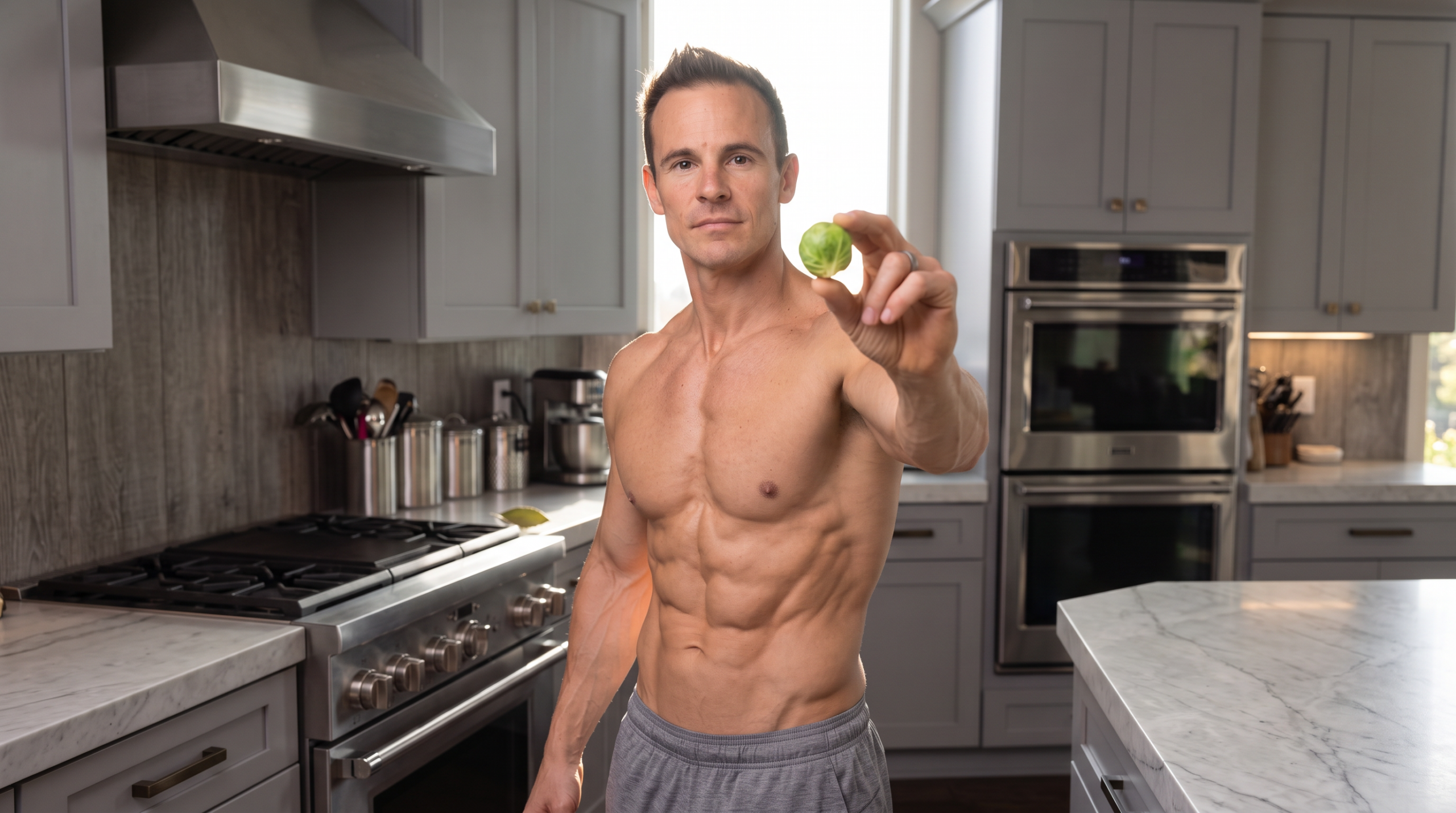
Cruciferous vegetables—bok choy, Brussels sprouts, cauliflower—appear on Cavaliere’s plate every night without exception.
These vegetables contain sulforaphane, a compound that delivers powerful anti-inflammatory benefits particularly valuable for anyone training intensely. But sulforaphane’s most intriguing property involves myostatin inhibition.
Myostatin is a protein that signals muscle breakdown in the body. By inhibiting myostatin, sulforaphane theoretically creates conditions more favorable for muscle growth. The research here shows promise, particularly in animal models, though human studies remain more limited in demonstrating direct muscle-building effects from dietary sulforaphane alone.
Asparagus makes daily appearances for its natural diuretic properties—bodybuilders have long used it to reduce water retention before competitions. The vegetable’s high potassium content helps regulate fluid balance, creating that tighter, more defined appearance once body fat drops low enough.
The Berry That Speeds Recovery
Blueberries get tossed into Cavaliere’s daily protein shake, and the benefits extend beyond antioxidants.
Research demonstrates that blueberries can decrease oxidative stress and damage to muscle progenitor cells—the cells responsible for muscle repair and growth. Studies have also shown they may reduce delayed-onset muscle soreness by up to 25% after intense training.
Cavaliere dismisses the notion that fruit causes fat gain:
There’s only 0.88 calories in a single blueberry, which means you can eat a hundred of them and it’ll only cost you 80 calories. Eating blueberries never will make you fat.
Fats That Fight Inflammation
Walnuts represent Cavaliere’s primary nut choice, sprinkled into his morning oatmeal daily.
Among all nuts, walnuts contain the highest concentration of omega-3 fatty acids—specifically alpha-linolenic acid (ALA). These omega-3s help control inflammation and support muscle recovery, similar to the omega-3s found in fatty fish.
After years of avoiding dietary fat due to outdated nutrition advice, Cavaliere now prioritizes healthy fats as essential for hormone production, nutrient absorption, and overall health.
The Controversial Soy Product
Despite persistent concerns about soy, Cavaliere eats edamame every night.
Each cup provides 17 grams of protein, and edamame stands as the only vegetable delivering all nine essential amino acids. The testosterone-lowering fears that plague soy’s reputation? Recent research suggests these concerns may be overstated for most people.
It’s something I’ve eaten every single day and experienced zero estrogenic side effects. So, at least in my case, I’m going to continue eating it.
Multiple systematic reviews have found that soy foods and isoflavones do not adversely affect testosterone levels in men, though individual responses may vary.
Orange Superfoods for Anti-Aging
Canned pumpkin joins the daily oatmeal rotation alongside walnuts and cinnamon.
Like sweet potatoes, pumpkin delivers carotenoids that function as free radical scavengers. But pumpkin offers these benefits at a lower caloric density—valuable when you’re eating something daily and monitoring total intake.
The vitamin A content is so high that Cavaliere acknowledges his skin takes on a slight orange tint from consuming orange vegetables daily—a harmless side effect of carotenoid accumulation called carotenemia.
The Workout Enhancer
Pickled ginger appears in Cavaliere’s daily diet in small but consistent amounts.
Beyond its blood sugar stabilization effects through improved insulin sensitivity, ginger has been shown to reduce delayed-onset muscle soreness by up to 25% in some studies. The anti-inflammatory compounds in ginger—particularly gingerols—help combat exercise-induced muscle damage.
The beauty of ginger lies in the minimal quantity required to experience benefits. A small serving of pickled ginger contains virtually zero calories while delivering meaningful effects.
The Sweet Exceptions
Cavaliere breaks from the typical bodybuilder mold with two daily indulgences: frozen yogurt and whipped cream.
Every night after dinner, he enjoys a tall glass of frozen yogurt topped with whipped cream. He adds whipped cream to his oatmeal and regular yogurt throughout the day.
If you can find something that you really, really enjoy and it helps to keep you on track because you don’t feel deprived, then it needs to be in your daily eating plan.
This philosophy prevents the all-or-nothing thinking that derails many nutrition plans. By choosing lower-calorie alternatives to ice cream and incorporating small amounts of foods he genuinely loves, Cavaliere maintains consistency without feeling restricted.
The Protein Shake Non-Negotiable
As soon as Cavaliere arrives home from work, he makes a protein shake with blueberries mixed in.
Since he trains late at night—sometimes not finishing until 11:30 PM—the shake bridges the gap between work and his post-workout dinner. He emphasizes that a high-quality protein powder remains one of the most convenient, digestible ways to meet daily protein requirements.
Whether whey or plant-based vegan formulas, protein shakes offer efficiency that whole food sources can’t always match, particularly during busy schedules or around training windows.
The Bigger Picture
What makes Cavaliere’s approach sustainable isn’t the specific foods—it’s the underlying principles.
He prioritizes protein at every meal, ensuring muscle preservation and growth. He respects carbohydrates rather than fearing them, using portion control and activity level to determine intake. He includes healthy fats from whole food sources like walnuts and fish.
Most importantly, he incorporates foods he genuinely enjoys, from pasta to frozen yogurt, making his nutrition plan something he can maintain year-round rather than a temporary diet.
The anti-inflammatory foods—ginger, blueberries, cruciferous vegetables, omega-3-rich walnuts—support recovery from intense training. The blood sugar stabilizers—cinnamon and ginger—help manage energy and insulin sensitivity.
None of these 17 foods work in isolation. They function as an integrated system built around consistency, enjoyment, and scientific rationale. The daily repetition eliminates decision fatigue while the variety within categories prevents monotony.
Cavaliere proves that staying lean doesn’t require perfection—it requires a plan you can actually follow every single day, complete with whipped cream on top.