Brain once hummed along, and now finishing a single thought feels impossible?
In a recent YouTube video, board-certified primary care doctor Dr. Ashley Frawley argued that this struggle may not be a character flaw at all.
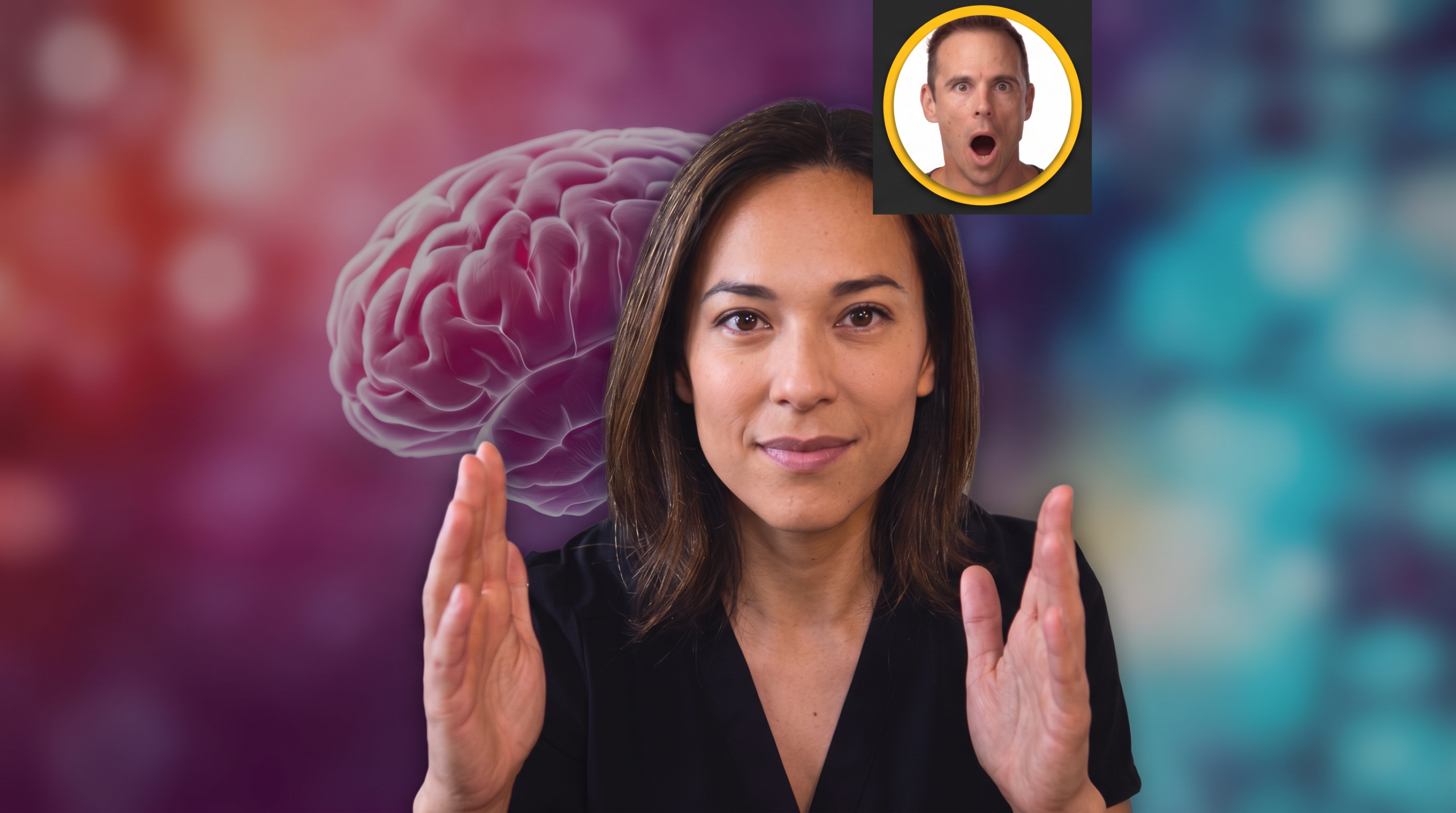
ADHD is real, she says, yet something else in your biology might be quietly hijacking your focus.
Brain chemicals, hormones, and energy-producing mitochondria all play starring roles.
Stick around for the free strategies at the end, because one of them earned the title “my favorite thing ever.”
Jump to:
ADHD or Just Overstimulated?
Modern life can look a lot like ADHD. Frawley is careful to say the condition itself is genuine and sometimes debilitating.

If you want something simple that actually works, this is one of the most effective tools I’ve used to build strength, conditioning, and endurance without needing a full gym setup.
- Full-body training with one weight using swings, squats, and presses
- Solid cast iron build that feels stable and lasts for years
- Comfortable grip that makes high-rep workouts easier to handle
Our brains were not designed for 200 notifications a day. We weren’t meant to switch tasks every 30 seconds, let alone get addicted doing it.
Persistent trouble with attention still deserves a proper evaluation from a clinician. Self-diagnosing from a video is never the goal.
Dopamine and Norepinephrine: The Focus Duo
Forget the “pleasure chemical” label. Frawley frames dopamine very differently.
In reality, dopamine is drive. It tells your brain, ‘This matters. Stay with it. Chase it. Focus.’
Both chemicals work inside the prefrontal cortex, the brain’s executive command center. Working memory, ignoring distractions, and sustaining attention all live there.
- Dopamine strengthens the signal, meaning the thing you need to focus on.
- Norepinephrine turns down the noise by helping suppress distractions.
Both need to be present in the right amounts. Real brain chemistry is messier than a two-chemical story, so treat this as a helpful simplification rather than a complete map.
The Big Three Hormones Behind Your Focus
Frawley’s blunt message: you’re not imagining it. Hormones shape attention.
Estrogen: The Cognitive Accelerator
Menopausal patients often arrive with weight changes and brain fog. When estrogen dips, distractibility and short-term memory lapses can follow.
If you want something simple that actually works, this is one of the most effective tools I’ve used to build strength, conditioning, and endurance without needing a full gym setup.
- Full-body training with one weight using swings, squats, and presses
- Solid cast iron build that feels stable and lasts for years
- Comfortable grip that makes high-rep workouts easier to handle
Estrogen literally functions in the brain to increase dopamine sensitivity.
Testosterone: The Drive and Initiation Hormone
Frawley checks this in both men and women. Her theory centers on dopamine production and release.
Low T leads to overall low dopamine tone, which leads to apathy and low drive.
Low motivation has many possible causes, including poor sleep, depression, and thyroid problems. Lab work beats guesswork before blaming any single hormone.
Progesterone: The Calming Hormone
Progesterone is like nature’s Valium. It hits GABA receptors in your brain, which calms and winds you down at night.
Wide awake at 3 a.m. every night? Her verdict: “your focus will be trash.”
A Biology-First Toolkit for Focus
Frawley stresses that this is not a shopping list. The point is supporting a biological process.
Energy comes first. Your brain makes up roughly 2% of body weight yet burns 20 to 25% of your energy, so struggling mitochondria can show up as fog, distraction, and mental fatigue.
NAD and Its Precursors
NAD works as a cellular energy currency. Levels fall with age, stress, poor sleep, and inflammation.
If you want something simple that actually works, this is one of the most effective tools I’ve used to build strength, conditioning, and endurance without needing a full gym setup.
- Full-body training with one weight using swings, squats, and presses
- Solid cast iron build that feels stable and lasts for years
- Comfortable grip that makes high-rep workouts easier to handle
Oral precursors like NMN or NR, plus injections and IV drips, are popular routes. Evidence that boosting NAD sharpens focus in healthy adults remains limited, so expectations should stay modest.
Methylene Blue
Frawley likens methylene blue to an emergency shuttle bus inside mitochondria. It picks up stuck electrons in the electron transport chain and carries them past damaged sections, “kind of like an ambulance just bypassing all of traffic.”
Don’t take methylene blue if you’re on antidepressants, and don’t take it if you have something called G6PD deficiency.
Creatine
Creatine helps store the phosphate needed to make ATP. Neurons get a quick-access reserve during demanding mental work.
Frawley points to clinical trials showing better working memory, processing speed, and fatigue resistance, especially when sleep-deprived. Among everything on her list, creatine is the most widely available and best known.
L-Theanine
L-theanine increases alpha brain waves tied to calm attention. It nudges GABA enough to smooth out anxiety without sedating you.
Research Peptides: Fascinating, Unproven
For now, the things I’m about to talk about are research compounds only. They’re not approved for human use.
Frawley calls her discussion “just really cool science,” not medical advice. Much of the evidence here comes from animal or lab studies, and unregulated products carry purity and dosing risks.
If you want something simple that actually works, this is one of the most effective tools I’ve used to build strength, conditioning, and endurance without needing a full gym setup.
- Full-body training with one weight using swings, squats, and presses
- Solid cast iron build that feels stable and lasts for years
- Comfortable grip that makes high-rep workouts easier to handle
- Dihexa: Activates the HGF/c-Met pathway, a powerful synapse-building signal, especially in the prefrontal cortex. That same pathway is heavily upregulated in cancer cells, which is why she says it “may never be studied in humans.”
- Semax: Approved in Russia, not the US. Frawley says it raises BDNF, the brain’s growth and repair signal, in the prefrontal cortex without the overstimulation people fear from Adderall or Ritalin.
- MOTS-c: A peptide your mitochondria naturally produce. It activates AMPK, the same metabolic regulator triggered by exercise and fasting.
- Selank: Gently boosts GABA-A receptor signaling, potentially calming anxious “internal noise” without benzodiazepine-style sedation or addiction.
It’s not a stimulant, it’s not a wakefulness drug, it’s an energy-stabilizing compound. At least that’s what the research in animals show.
Her own caveat matters. Because MOTS-c influences glucose use and insulin sensitivity, it carries a theoretical risk of metabolic interference, particularly for people with diabetes or blood sugar conditions.
Her stack concept: Dihexa builds connections, Semax reinforces them, MOTS-c fuels them, and Selank quiets noise. Intriguing on paper, but human proof is still missing.
Free Strategies That Actually Help
No supplements required here. Three behavioral tools made her list.
Body Doubling
Someone quietly sitting nearby may increase prefrontal cortex activity. Frawley compares it to “borrowing someone else’s executive function to overcome inertia.”
Study groups work on this principle. Frawley herself finds it overwhelming, though: she needs to be alone to focus.
Time Boxing
Pick one task and a fixed window of 10, 20, 30, or 40 minutes. Finishing is a bonus, not a requirement.
If you want something simple that actually works, this is one of the most effective tools I’ve used to build strength, conditioning, and endurance without needing a full gym setup.
- Full-body training with one weight using swings, squats, and presses
- Solid cast iron build that feels stable and lasts for years
- Comfortable grip that makes high-rep workouts easier to handle
I actually did this very thing to get through med school, and I didn’t even know it had a name for it, but it helped tremendously.
A defined start and end makes work feel doable, which she says boosts dopamine and lowers the barrier to starting.
Cold Exposure
Here comes her favorite. A cold plunge or cold shower, she says, sends dopamine and norepinephrine climbing for hours.
I cold plunge almost every morning, and the days that I don’t, I can literally feel the lack of motivation on my way to work.
Her personal experience is vivid, though responses to cold vary. Anyone with heart conditions should check with a doctor before diving in.
The Bottom Line
If you’ve been beating yourself up because you can’t focus, please stop. This isn’t a character flaw, it’s biology.
Support your sleep, hormones, mitochondria, and dopamine system, and focus may become something you can do again.
Frawley runs a direct primary care clinic in Mesa, Arizona, where she says patients get time to talk through exactly these concerns without insurance constraints.