Olympic champion Keely Hodgkinson just stepped onto the track in what may be the most technologically advanced racing suit ever created for middle-distance running.
The British 800-meter sensation debuted a full-length hooded Nike bodysuit featuring 3D-printed aerodynamic nodes at a recent competitive meet, clocking 1:56.40 and immediately drawing comparisons to one of athletics’ most iconic wardrobe moments.
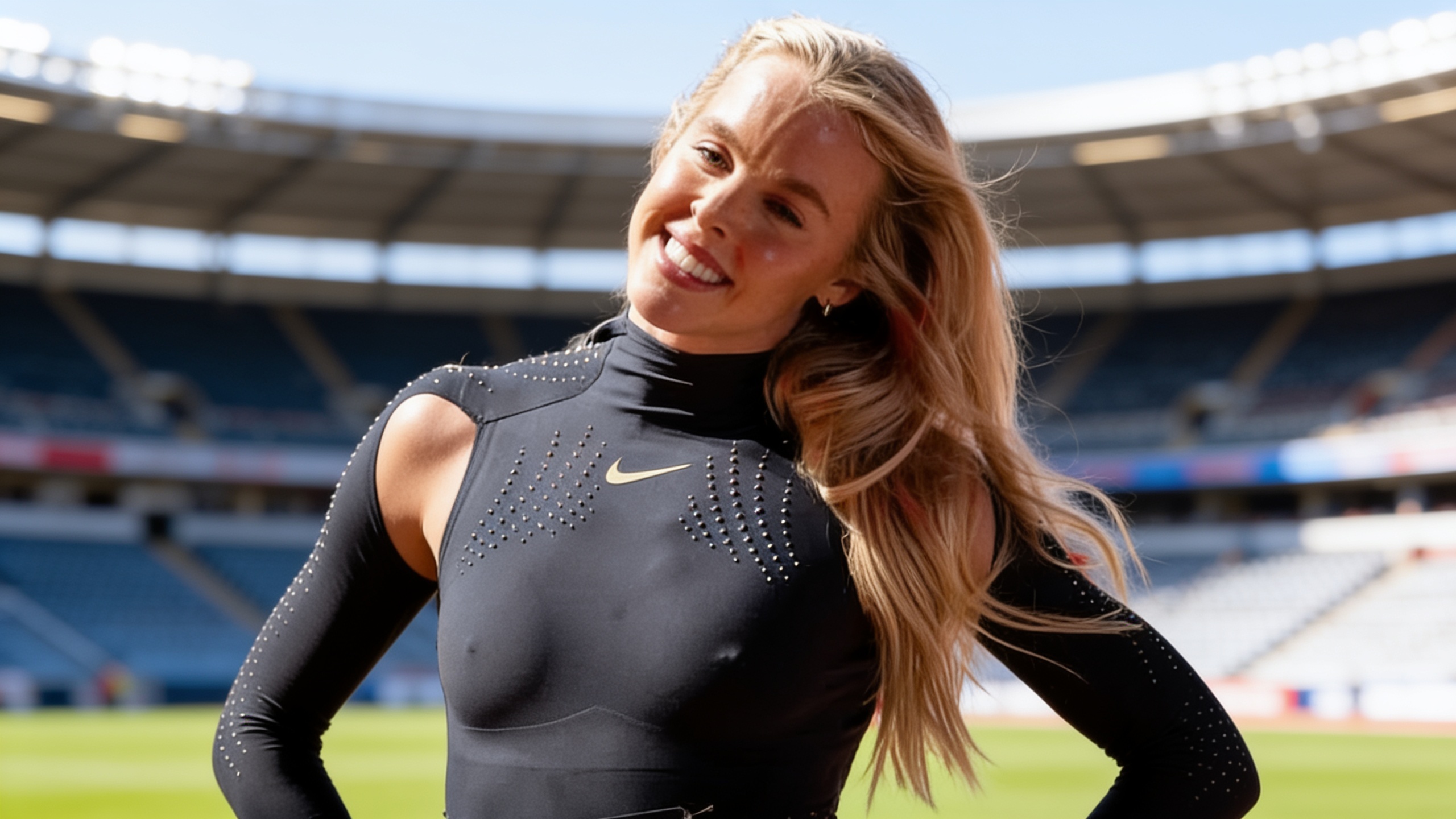
Nike reportedly spent an entire year engineering this custom suit specifically for Hodgkinson’s body, potentially signaling a new era in performance apparel where elite athletes receive bespoke technology tailored to their exact physiology.
And the parallels to Cathy Freeman’s groundbreaking hooded Swift Suit from the 2000 Sydney Olympics? Impossible to ignore.
Jump to:
Engineering Advantage or Unfair Edge?
The sleek black suit features an open back design with no visible closures and rows of 3D-printed nodes strategically placed across Hodgkinson’s shoulders, torso, and thighs.
These nodes aren’t just aesthetic. They’re designed using principles borrowed from golf ball dimple technology, where surface geometry manipulates airflow patterns to reduce drag.

If you want something simple that actually works, this is one of the most effective tools I’ve used to build strength, conditioning, and endurance without needing a full gym setup.
- Full-body training with one weight using swings, squats, and presses
- Solid cast iron build that feels stable and lasts for years
- Comfortable grip that makes high-rep workouts easier to handle
At running speeds typical of elite 800-meter races—roughly 6 to 7 meters per second—even marginal drag reduction could translate to measurable performance gains.
The question now facing track and field: does this represent legitimate innovation or the beginning of an equipment arms race that only benefits athletes backed by massive corporate sponsorships?
The Technology Behind the Fabric
3D-printing technology in athletic apparel has evolved dramatically over the past decade. Companies including Nike, Adidas, and Under Armour have invested heavily in research exploring how printed components can optimize aerodynamics, fit, and performance.
What sets Hodgkinson’s suit apart is the reported year-long development process focused exclusively on her body’s specific dimensions and biomechanics.
This isn’t off-the-rack technology. It’s personalized engineering at the highest level.
The custom-fitted nature raises immediate questions about accessibility and fairness. If only athletes with elite sponsorship deals can access body-specific aerodynamic suits, does that create competitive imbalance?
If you want something simple that actually works, this is one of the most effective tools I’ve used to build strength, conditioning, and endurance without needing a full gym setup.
- Full-body training with one weight using swings, squats, and presses
- Solid cast iron build that feels stable and lasts for years
- Comfortable grip that makes high-rep workouts easier to handle
Echoes of Sydney 2000
Anyone who watched Cathy Freeman race to gold in Sydney remembers the moment. The Australian sprinter emerged wearing Nike’s revolutionary hooded Swift Suit, generating enormous media attention with its futuristic aesthetic.
Freeman won the 400 meters in that suit, and it became an instant cultural landmark—not just in sports apparel history, but in Olympic iconography.
Born in 2002, Hodgkinson wasn’t even alive when Freeman made that historic run. Yet she’s now stepping into a similar spotlight, wearing technology that could define athletics fashion and function for the next Olympic cycle.
Nike’s investment in pushing boundaries hasn’t stopped since Sydney. The company’s Breaking2 marathon project, Vaporfly shoe line, and AlphaFly innovations have all pushed—and sometimes crossed—the line between enhancement and advantage.
From Cultural Moment to Performance Engineering
What’s changed between 2000 and 2025 isn’t just fabric technology. It’s the entire philosophy behind elite athletic apparel.
Freeman’s Swift Suit was groundbreaking, but it was primarily about aerodynamics through body coverage and fabric compression. Hodgkinson’s suit represents something different: personalized aerodynamic optimization using advanced manufacturing techniques.
If you want something simple that actually works, this is one of the most effective tools I’ve used to build strength, conditioning, and endurance without needing a full gym setup.
- Full-body training with one weight using swings, squats, and presses
- Solid cast iron build that feels stable and lasts for years
- Comfortable grip that makes high-rep workouts easier to handle
Sports historians note that athletic apparel has evolved from cultural statement to measurable performance variable—one that governing bodies now struggle to regulate fairly.
Performance Impact: What the Numbers Show
Hodgkinson’s debut performance in the suit—1:56.40 over 800 meters—sits comfortably within her capability range. She won Olympic gold at Paris 2024 with 1:56.72, breaking a 32-year-old Olympic record.
So did the suit actually help? That’s impossible to determine from one race.
Sports biomechanics experts emphasize that aerodynamic gains become more significant at higher speeds and over longer durations. Middle-distance events like the 800 meters present unique challenges for aerodynamic optimization compared to sprints or marathons.
Key factors that could influence the suit’s effectiveness:
- Running speed and duration of exposure to air resistance
- Environmental conditions including wind and temperature
- Body position and running mechanics throughout the race
- Psychological confidence boost from wearing cutting-edge equipment
The psychological component shouldn’t be underestimated. Athletes who believe they have technological advantages often perform better, regardless of measurable physical benefits.
If you want something simple that actually works, this is one of the most effective tools I’ve used to build strength, conditioning, and endurance without needing a full gym setup.
- Full-body training with one weight using swings, squats, and presses
- Solid cast iron build that feels stable and lasts for years
- Comfortable grip that makes high-rep workouts easier to handle
What World Athletics Might Do Next
World Athletics governs competition apparel rules and would need to approve any such suit for Olympic use. Current regulations restrict certain garment dimensions but don’t explicitly prohibit full-length suits.
However, the governing body has shown willingness to update rules when technology threatens competitive balance. Remember the controversy over Nike’s Vaporfly shoes and subsequent regulations limiting sole thickness?
With LA 2028 approaching, World Athletics faces pressure to clarify apparel standards before another Olympic Games becomes a showcase for technological disparities rather than athletic excellence.
Several governance questions demand answers:
- Availability: Must performance-enhancing apparel be commercially available to all competitors?
- Customization limits: Should body-specific tailoring be restricted or standardized?
- Surface modifications: Do 3D-printed aerodynamic features constitute illegal equipment enhancement?
- Testing protocols: How should governing bodies measure and compare apparel performance benefits?
The Sponsorship Divide
Perhaps the most troubling aspect isn’t the technology itself, but access to it.
Elite athletes with major Nike sponsorships can receive year-long custom development projects. Athletes from smaller nations or with smaller sponsor deals cannot.
If you want something simple that actually works, this is one of the most effective tools I’ve used to build strength, conditioning, and endurance without needing a full gym setup.
- Full-body training with one weight using swings, squats, and presses
- Solid cast iron build that feels stable and lasts for years
- Comfortable grip that makes high-rep workouts easier to handle
This creates a two-tier system where competitive advantage correlates directly with corporate backing rather than pure athletic ability or training quality.
Sports ethics experts argue this threatens the fundamental fairness that separates athletics from motorsports or other equipment-dependent competitions.
Looking Toward Los Angeles 2028
Hodgkinson remains one of the most dominant figures in women’s middle-distance running globally. At just 22 years old, she’s entering her athletic prime with three more years before the LA Olympics.
If this suit—or its future iterations—receives approval for Olympic competition, LA 2028 could showcase the most technologically enhanced track and field performances in history.
Or it could force governing bodies to draw clearer lines about where athletic performance ends and technological assistance begins.
Either way, Hodgkinson’s debut in Nike’s latest innovation signals that the conversation about technology in track and field has entered a new chapter. One where personalized, engineered advantages may become as important as training, genetics, and mental toughness.
If you want something simple that actually works, this is one of the most effective tools I’ve used to build strength, conditioning, and endurance without needing a full gym setup.
- Full-body training with one weight using swings, squats, and presses
- Solid cast iron build that feels stable and lasts for years
- Comfortable grip that makes high-rep workouts easier to handle
The sport now faces a choice: embrace this technological evolution or pump the brakes before elite athletics becomes an engineering competition disguised as human performance.