Ancient training methods might hold the key to building strength, athleticism, and mobility that modern gym culture has forgotten.
Many fitness enthusiasts find themselves stiff, slow, and riddled with aches despite following popular workout programs.
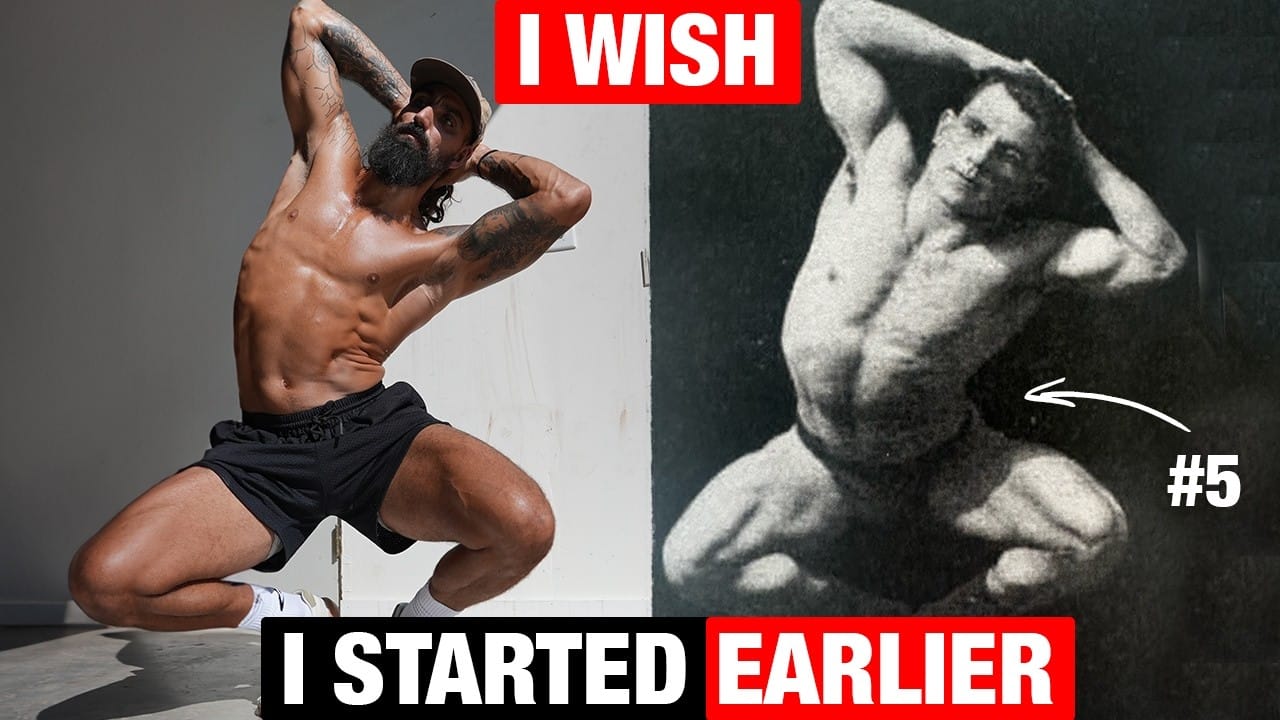
But before the rise of modern bodybuilding, people mastered their bodyweight and used simple, low-tech objects to develop incredible strength and athletic prowess.
In a recent video, movement coaches shared five ancient practices that can help reclaim an athletic, lean physique—methods used for thousands of years that deserve a modern comeback.
Jump to:
Push-Ups: The Foundation of Upper Body Power
Push-ups target chest muscles, front deltoids, triceps, and core using nothing but bodyweight and ground. This simple movement can literally transform the entire front side of your body.
While the bench press builds muscle mass, push-ups offer a crucial advantage: they allow the scapula to move freely from retraction to protraction while integrating full core tension. This natural movement pattern proves considerably easier on shoulders, often resulting in less stiffness and fewer injuries.

If you want something simple that actually works, this is one of the most effective tools I’ve used to build strength, conditioning, and endurance without needing a full gym setup.
- Full-body training with one weight using swings, squats, and presses
- Solid cast iron build that feels stable and lasts for years
- Comfortable grip that makes high-rep workouts easier to handle
Historical warriors understood this power instinctively. Spartans used calisthenics to build strength and stamina for battle, while Shaolin monks combined bodyweight exercises with self-defense training. Early US schools and military programs relied on high-rep calisthenics to develop elite functional bodies.
Scaling Push-Ups for Every Level
Anyone can incorporate push-ups into their routine regardless of current strength levels. Beginners can elevate hands on a box or table to reduce difficulty while maintaining proper form.
I still use this variation when I want to do easier high rep sets. It’s fantastic for all levels.
Ring push-ups provide an advanced variation that offers added range of motion. Although ancient Romans weren’t using gymnastics rings, this modern adaptation activates chest muscles more effectively while remaining easier on shoulders because hands can move freely throughout the movement.
Swinging: Unlocking Rotational Power
Rotational training has become increasingly neglected in modern fitness culture, yet it offers tremendous benefits for athletic performance and injury prevention. Some of the most powerful movements in sports—throwing a ball, delivering a punch—tap into rotational core strength available to everyone.
Persian and Indian club swinging dates back to prehistoric times, initially serving as warrior training to prepare for battle before evolving into dedicated exercise. These movements encourage scapulas to move freely while integrating rotator cuff muscles in natural patterns, ultimately reclaiming spine mobility and promoting better posture.
Club and Mace Training Techniques
The reverse throw pattern offers an excellent starting point for club work. Begin with hand positioned in front of opposite shoulder and club directly in front of clavicles. Reach hand behind back with club parallel to spine, then throw the club away and allow it to swing back to starting position as one fluid motion.
If you want something simple that actually works, this is one of the most effective tools I’ve used to build strength, conditioning, and endurance without needing a full gym setup.
- Full-body training with one weight using swings, squats, and presses
- Solid cast iron build that feels stable and lasts for years
- Comfortable grip that makes high-rep workouts easier to handle
Mace training provides another accessible option for modern practitioners. Fluidly pass the mace behind you from one shoulder to the next while allowing spine movement to facilitate rotation.
Start lighter than expected—swinging movements require significant coordination and control.
Deep Knee Bending: Rebuilding Lower Body Strength
Full knee flexion strengthens quadriceps and feet, transforming lower bodies into powerful foundations using nothing but bodyweight. Unfortunately, countless hours spent in chairs cause many people to lose this fundamental ability.
Wrestling has appeared in Olympics since 708 BC, and every early culture developed some form of grappling—one of humanity’s most ancient competitive practices. Indian wrestlers famously performed hundreds of Hindu squats as part of their training regimen.
Hindu Squat Mechanics
Squat down with completely upright torso, allowing heels to lift off ground. This position loads quadriceps entirely while forcing full toe extension and complete knee bend. Foot arches must fully engage to maintain balance throughout the movement.
Beginners can use hand assistance and work within comfortable ranges of motion. Most wrestlers incorporate low walking into training through walking Hindu squats, which pivot torso slightly to shift weight more into one leg at a time.
If you want something simple that actually works, this is one of the most effective tools I’ve used to build strength, conditioning, and endurance without needing a full gym setup.
- Full-body training with one weight using swings, squats, and presses
- Solid cast iron build that feels stable and lasts for years
- Comfortable grip that makes high-rep workouts easier to handle
These are fantastic for rewiring your feet’s connection to the ground and creating athletic springy legs.
Odd Object Lifting: Real-World Functional Strength
Unlike standardized barbells or dumbbells, lifting sandbags, stones, logs, or even shoveling dirt develops more real-world usable strength. These movements build massive back, leg, and forearm development while creating three-dimensional strength that translates beyond gym walls.
Atlas stones serve as the final event in every World’s Strongest Man competition, representing the ultimate test of full-body strength. But this practice truly is ancient, dating back thousands of years across nearly every physically demanding culture.
Greek wrestlers famously built massive strength and muscle simply by digging ditches. Modern practitioners don’t need to become stone-lifting strongmen—a simple sandbag provides all the same physiological benefits.
Basic Sandbag Technique
Start by hinging down and securing a solid grip on the bag. Simultaneously row and deadlift the bag to lap level, then wrap arms around it in a bear hug position and stand up.
This straightforward movement engages entire lower body while integrating arms, lats, upper and lower back, complete with an intense forearm workout. Nearly every lower body barbell movement can be replicated with a sandbag, but first mastering the pickup proves essential.
Side Bending: The Forgotten Movement Pattern
Side bending stretches musculature on one side of the body while strengthening the opposite side. Muscles like quadratus lumborum, lats, and psoas move in unique ways that have become increasingly rare in modern fitness programming.
If you want something simple that actually works, this is one of the most effective tools I’ve used to build strength, conditioning, and endurance without needing a full gym setup.
- Full-body training with one weight using swings, squats, and presses
- Solid cast iron build that feels stable and lasts for years
- Comfortable grip that makes high-rep workouts easier to handle
Yoga—among the most ancient practices of all—incorporates numerous poses featuring side bends. Early strongmen and bodybuilders included side-bending strength exercises in their routines as standard practice.
Could this missing movement pattern be key to bulletproofing backs and eliminating chronic pain? With back pain rates climbing in modern society, the correlation seems worth exploring.
A stiff spine constricts movement, while flexible spines enhance athletic performance. Basketball players driving to the hoop, pitchers winding up—torso must move freely for both health and sport.
Side Bend Progressions
- Basic stance: Take wide stance, place one arm overhead, reach one arm down while opposite hand reaches across midline
- Horse stance variation: Combine hip opening with spinal mobility by reaching both arms to one direction, squeezing side core and thigh together
- Seated version: Requires adequate hamstring and inner thigh mobility but stretches the long side of body immensely while mobilizing hamstrings
Start slowly with these movements, allowing body time to adapt to unfamiliar ranges of motion.
Results from Ancient Training Methods
Training with these ancestral movements for just one year can produce remarkable transformations. Practitioners report becoming more muscular than ever before while simultaneously improving running and jumping power beyond what they achieved during competitive athletic careers decades earlier.
I’m more muscular than I’ve ever been. But I’m also running and jumping more powerfully than I ever did when I was playing college basketball 20 years ago, and my mobility gets easier and easier to maintain.
The combination of sandbag work and increased repetitions on basic calisthenics creates simultaneous gains in muscle mass, athletic performance, and mobility maintenance. Our ancestors clearly understood something modern fitness culture has overlooked.
If you want something simple that actually works, this is one of the most effective tools I’ve used to build strength, conditioning, and endurance without needing a full gym setup.
- Full-body training with one weight using swings, squats, and presses
- Solid cast iron build that feels stable and lasts for years
- Comfortable grip that makes high-rep workouts easier to handle
These five ancient practices—push-ups, swinging, deep knee bending, odd object lifting, and side bending—represent time-tested methods for developing complete physical capability. They require minimal equipment, can be scaled for any fitness level, and address movement patterns neglected by contemporary training programs.
By incorporating these ancestral techniques, modern practitioners can reclaim the athletic, resilient bodies that humans naturally developed throughout history.