Dr. John Sheff is making waves in metabolic health circles with a fasting protocol that sounds almost too good to be true.
His claims? A 50% reduction in total body fat and 60% reduction in visceral fat in just six weeks.
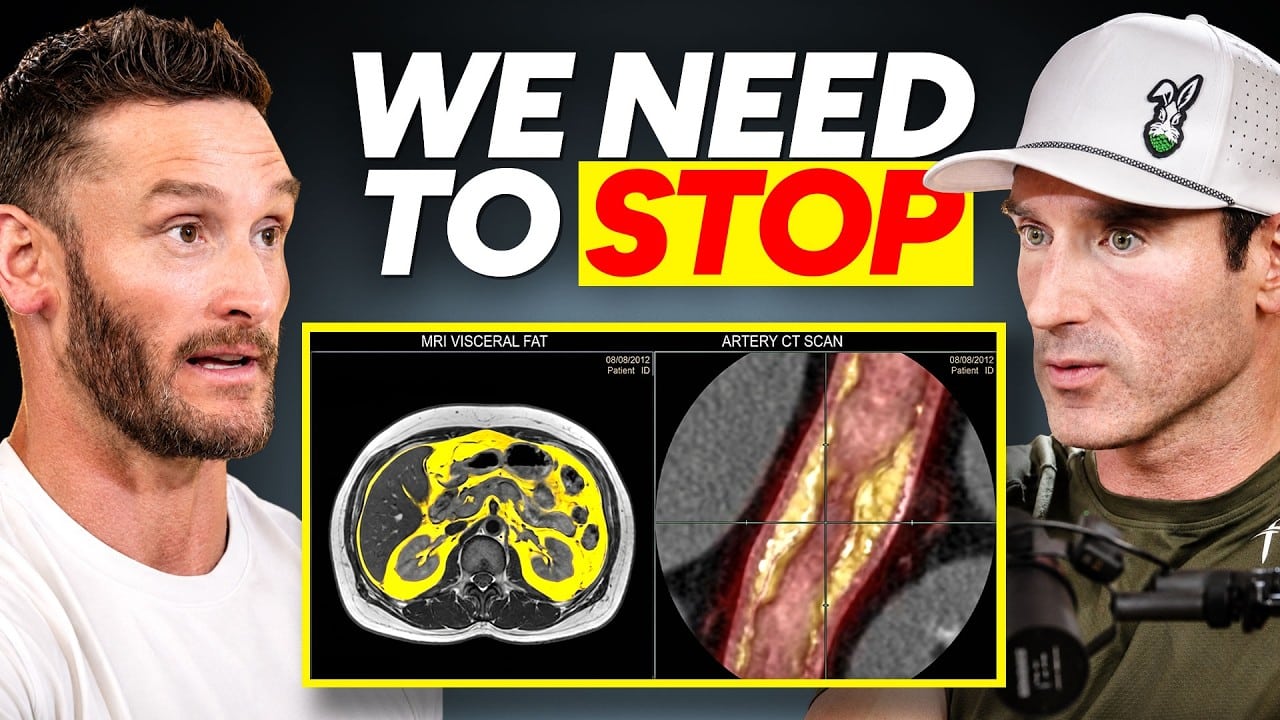
The method involves weekly 36-hour fasts, and surprisingly, clients actually gain 1-2 pounds of skeletal muscle during this period.
In a recent conversation with fitness expert Thomas DeLauer, Dr. Sheff explained why traditional intermittent fasting falls short and how extended fasting windows create dramatic metabolic shifts that calorie restriction simply cannot match.
Jump to:
- Why 16:8 Intermittent Fasting Isn’t Actually Fasting
- The Critical Role of Insulin in Fat Storage
- The 36-Hour Weekly Fast Protocol
- Understanding Glucagon and Insulin Balance
- Visceral Fat: The Real Enemy
- Preserving Muscle During Extended Fasting
- Why Calorie Restriction Alone Falls Short
- The Importance of Data-Driven Protocols
- Addressing Common Fasting Concerns
- Beyond Weight Loss: Metabolic Transformation
- The Maintenance Phase
- Practical Implementation Guidelines
- The Bigger Picture: Reversing Metabolic Disease
Why 16:8 Intermittent Fasting Isn’t Actually Fasting
Dr. Sheff doesn’t mince words when it comes to popular intermittent fasting protocols.
16:8 is not fasting. Period. Understanding that the idea that the intermittent fasting windows less than 24 hours is simply not enough time.
According to Dr. Sheff, fasting windows shorter than 24 hours fail to meaningfully impact the relationship between glucose, insulin, and lipolysis (fat burning). Clinical data from his practice demonstrates this consistently.
The fundamental issue is insulin. When insulin levels remain elevated—as they do in most Americans with insulin resistance—the body simply cannot access stored fat for fuel. This isn’t speculation; it’s basic metabolic physiology.
The Critical Role of Insulin in Fat Storage
Insulin acts as a gatekeeper for fat metabolism. Dr. Sheff explains that elevated insulin levels prevent lipolysis by interfering with hormone-sensitive lipase (HSL), an enzyme essential for releasing stored fat from cells.
If you have elevated insulin, insulin resistance, your body cannot burn fat. Period. Full stop. That is real.
Traditional intermittent fasting protocols don’t provide enough time to deplete glycogen stores and normalize insulin levels. Without addressing this fundamental hormonal barrier, these approaches become indistinguishable from simple calorie restriction.
The research supports this perspective. Studies comparing intermittent fasting to calorie restriction often show similar weight loss results, primarily because shorter fasting windows don’t create sufficient metabolic change beyond reducing total caloric intake.
The 36-Hour Weekly Fast Protocol
Dr. Sheff’s approach centers on a single 36-hour fast performed weekly for six consecutive weeks. The results he reports are striking:
- 50% reduction in total body fat mass
- 60% reduction in visceral fat
- Preservation or gain of 1-2 pounds of skeletal muscle
These outcomes contradict conventional wisdom about weight loss, which typically accepts 40-50% loss of lean body mass alongside fat reduction during calorie restriction.
Reproducibly, 36 hours once a week for up to 6 weeks as a protocol. Reduction in total body fat mass of 50%, reduction in visceral fat mass of 60%. Most clients gain 1 to 2 lb of skeletal muscle in that period of time. That should sound absurd, right?
Why Extended Fasts Work Differently
Extended fasting periods allow complete glycogen depletion. Once glycogen stores empty, insulin levels naturally normalize, removing the hormonal block on fat burning.
Dr. Sheff can demonstrate this objectively through blood work, showing fasting insulin levels above 20 normalizing during strategic fasting periods. This metabolic shift allows direct access to adipose tissue, particularly visceral fat.
Understanding Glucagon and Insulin Balance
The insulin-glucagon relationship represents one of the most critical yet overlooked aspects of metabolic health. While insulin promotes storage, glucagon facilitates fuel release.
Most Americans with insulin resistance exist in a chronically elevated insulin state. Glucagon cannot effectively counterbalance this hormonal imbalance, leaving metabolism stuck in storage mode.
Glucagon is the antithesis or the counteracting agent of insulin. Everything in the human body is in balance. Everything is constantly shifting.
This explains why newer medications like retatrutide show such promise. Unlike semaglutide (which primarily affects GLP-1 receptors), retatrutide is based on the glucagon molecule itself, directly addressing this fundamental hormonal imbalance.
Visceral Fat: The Real Enemy
Dr. Sheff emphasizes a crucial distinction between subcutaneous fat (stored under the skin) and visceral fat (surrounding organs).
Visceral fat isn’t simply stored energy. It functions as a biologically active, hormone-producing entity that actively worsens insulin resistance and promotes inflammation.
Visceral fat is a hormonal entity. It is a biological suborganism. More visceral fat drives more insulin resistance. More insulin resistance, higher levels of resting insulin drive more visceral fat accumulation.
This creates a vicious cycle. Elevated insulin promotes visceral fat storage, which then produces inflammatory cytokines that further impair insulin sensitivity. Breaking this cycle requires directly targeting visceral fat.
Why Strategic Fasting Targets Visceral Fat
Extended fasting periods specifically access visceral fat stores. Dr. Sheff uses MRI imaging and InBody analysis to track this process, observing a distinct pattern.
During the first 3-4 fasts, visceral and total fat mass show steady downward trends. Then something remarkable happens—the measurements “fall off a cliff,” showing dramatic acceleration.
Dr. Sheff believes this represents the point where sufficient visceral fat has been eliminated to fundamentally shift the hormonal environment, removing the exponential barrier to further fat loss.
Preserving Muscle During Extended Fasting
Perhaps the most counterintuitive aspect of Dr. Sheff’s protocol involves muscle preservation and even growth during significant fat loss.
The secret lies in maintaining resistance training performance throughout the fasting protocol. Rather than adjusting gym schedules around fasting, Dr. Sheff does the opposite.
We base that entire protocol on your resistance training program. It’s not the other way around. People think they’re going to need to modify what they do in the gym to account for fasting. No, your fasting is predicated on the time in the gym.
By maintaining strength output and muscle stimulus, metabolic adaptation that typically causes muscle loss during calorie restriction is avoided. The body has no reason to catabolize muscle tissue when receiving consistent signals to maintain it.
Increasing Activity During Fasting
Contrary to popular belief about conserving energy while fasting, Dr. Sheff recommends increasing intentional movement during fasting days.
Creating baseline energy demand forces the body to mobilize stored fuel. Combined with normalized insulin levels, this dramatically accelerates fat oxidation while preserving muscle mass.
Why Calorie Restriction Alone Falls Short
The calorie-centric model of weight loss treats the human body as a simple thermodynamic system. Dr. Sheff argues this fundamentally misunderstands human metabolism.
Traditional calorie restriction produces predictable results: 0.5-1% body weight loss per week, with 40-50% of that loss coming from lean tissue rather than fat. Metabolic adaptation occurs within months, creating the infamous weight loss plateau.
Strategic fasting creates different outcomes entirely. A weekly 36-hour fast might create less total caloric deficit than daily restriction, yet produces superior metabolic results.
I can create a strong calorie deficit over time with daily restriction that leads to dramatically less impact on biomarkers and global health outcomes. Whereas strategically fasting changes the script altogether.
Acute Versus Chronic Stress Adaptation
Dr. Sheff introduces an important distinction: acute stress adaptation in the human body is almost uniformly positive, while chronic stress adaptation is typically negative.
Chronic calorie restriction represents chronic stress—the body responds by reducing metabolic rate, increasing hunger hormones, and preferentially preserving fat while sacrificing muscle. Extended but intermittent fasting represents acute stress—the body responds by mobilizing stored energy and preserving functional tissue.
This explains why Dr. Sheff describes his protocol as producing “accelerated returns” rather than the “diminishing returns” characteristic of traditional dieting.
The Importance of Data-Driven Protocols
Dr. Sheff’s clinical practice relies heavily on biomarker tracking to individualize fasting protocols. Primary indicators include fasting insulin levels and visceral fat measurements via MRI or body composition analysis.
More metabolically compromised individuals—those with higher fasting insulin and greater visceral fat burden—typically require longer fasting periods initially to “break the system” and reset metabolic function.
Blood work during fasting periods provides objective evidence of hormonal shifts. Seeing fasting insulin normalize during a 36-hour fast demonstrates the protocol is working at a fundamental level.
Addressing Common Fasting Concerns
Many people experience visceral resistance to the idea of 24-36 hour fasts. Dr. Sheff acknowledges this psychological barrier represents one of the biggest challenges to implementing strategic fasting.
This is where tools like GLP-1 medications can provide value, helping patients build confidence in their ability to fast successfully. Retatrutide, which directly influences the glucagon-insulin relationship, may prove particularly effective for this purpose.
Efficiency and Compliance
Dr. Sheff frames the choice between six weeks of weekly fasting versus 18 months of calorie restriction simply: which approach is someone more likely to complete?
If I told you you do exactly what I say for the next 6 weeks, you got a million dollars in your bank account. Or we’ll target 18 months. Who is going to choose the 18-month route? No one will.
Efficiency matters not just for results but for adherence. The mental fatigue of chronic restriction creates its own form of disordered eating, leading to failure around months 4-5 for many people.
Beyond Weight Loss: Metabolic Transformation
Dr. Sheff emphasizes that the goal isn’t simply weight loss but healthy body recomposition—specifically, using fat to fuel muscle.
This shift in focus explains how clients can lose 32 pounds of fat mass, reduce visceral fat by 65%, and simultaneously add 2 pounds of skeletal muscle. These outcomes are reproducible when protocols prioritize metabolic health over scale weight.
For individuals over 40-50, time becomes critical. Every day spent with elevated visceral fat, high HbA1c, and chronic inflammation through advanced glycation end products literally shortens lifespan.
Rapid Fat Loss Without Rebound
Contrary to popular belief, research doesn’t support the idea that rapid weight loss leads to faster rebound. What matters is whether proper tools are implemented for maintenance.
Dr. Sheff and DeLauer agree: removing inflammatory load as quickly as possible (while preserving muscle) provides more time living in a healthier metabolic state, regardless of maintenance outcomes.
The Maintenance Phase
After the initial six-week transformation protocol, maintenance becomes the focus. Both Dr. Sheff and DeLauer utilize strategic fasting for this purpose rather than rigid dietary restriction.
DeLauer notes his own diet isn’t particularly strict—roughly 80% adherence to whole foods—because he maintains metabolic health through periodic fasting rather than constant dietary vigilance.
I maintenance with fasting. Like it’s that easy.
The hormonal impact of weekly extended fasting makes it virtually impossible to overcome the benefits through moderate overeating on non-fasting days, assuming whole food consumption and attention to protein intake.
Practical Implementation Guidelines
For those interested in implementing strategic fasting based on Dr. Sheff’s approach, several key principles emerge:
- Duration matters: Fasting periods should extend beyond 24 hours to meaningfully impact insulin levels
- Frequency is strategic: Weekly 36-hour fasts for 6 weeks represent an effective transformation protocol
- Training is non-negotiable: Resistance training must continue at full intensity to preserve muscle mass
- Activity increases during fasting: Intentional movement should be highest on fasting days
- Data drives decisions: Tracking fasting insulin and visceral fat provides objective feedback
- Nutrition quality matters: Focus on whole foods, prioritize protein, consume carbs strategically for glycemic control
The Bigger Picture: Reversing Metabolic Disease
Dr. Sheff views insulin resistance as the root cause of most metabolic disease, with type 2 diabetes representing “terminal” insulin resistance. This perspective reframes the stakes.
Diabetics face 3.5-4.5 times higher all-cause mortality than the general population. No other single condition—including familial hypercholesterolemia—carries comparable risk.
Visceral fat begins accumulating early, with insulin resistance now profound even in adolescents. No child is born insulin resistant or obese, yet many reach adolescence in both states.
I think insulin resistance starts at birth. Feed a kid garbage from day one. No child is born insulin resistant and no child is born obese.
Addressing this epidemic requires moving beyond conventional approaches that have demonstrably failed. Strategic fasting, combined with resistance training and whole food nutrition, offers a metabolically sound alternative.
Dr. Sheff’s work suggests the future of metabolic medicine lies in understanding and leveraging the body’s natural mechanisms rather than fighting against them through chronic restriction and pharmaceutical band-aids.