Leg day doesn’t have to feel like punishment.
In a recent video, fitness coach and content creator shared ten game-changing insights about leg training that would have transformed his early training years—not just building more muscle faster, but actually enjoying the process.
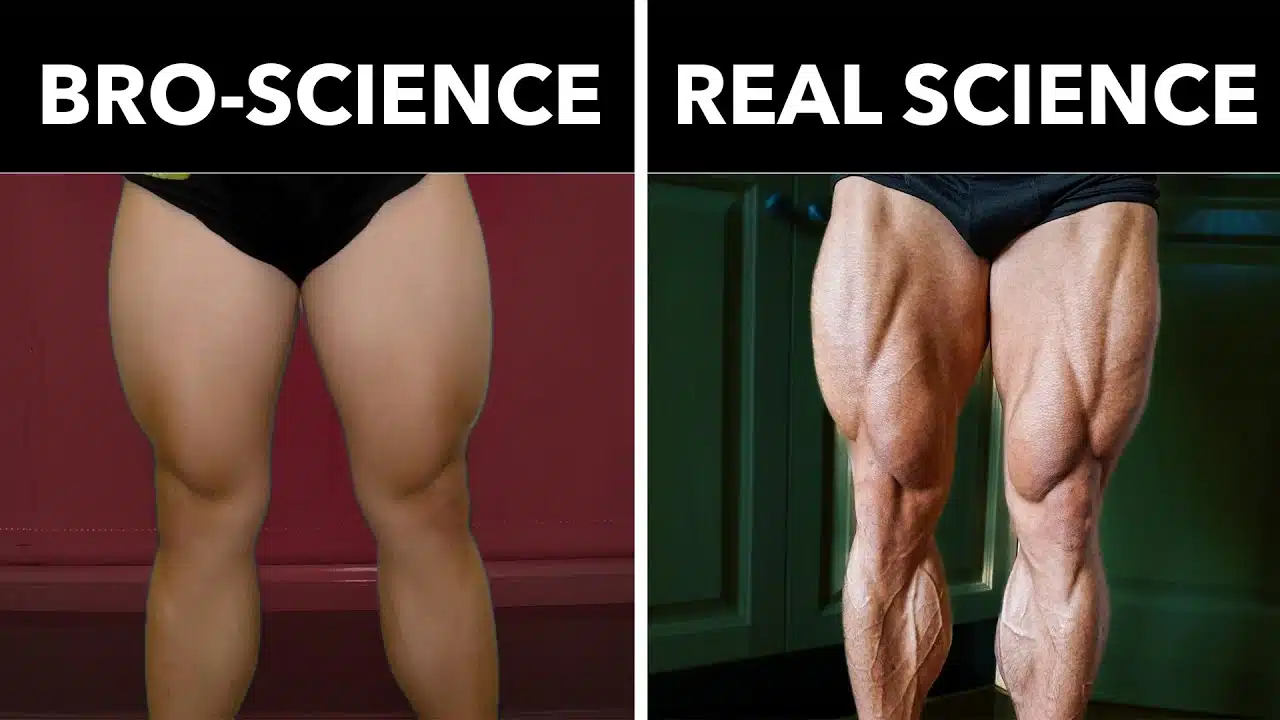
These aren’t your typical “just squat more” tips.
They’re science-backed adjustments that improve mobility, athleticism, and training efficiency while making workouts feel less like obligation and more like opportunity.
Jump to:
- The Reclined Leg Extension Advantage
- Vary Your Load Carrying for Single-Leg Work
- Lean Forward During Seated Leg Curls
- Use Straps for Front Squats
- Train Calves First
- Heel Elevation Isn’t Cheating
- Explosive Jumps for Performance Enhancement
- Don’t Neglect Your Adductors
- Pause in Stretched Positions for Mobility
- Barbell Squats Aren’t Mandatory
- The Bottom Line
The Reclined Leg Extension Advantage
Most people sit bolt upright during leg extensions. That’s leaving gains on the table.
Leaning back during leg extensions places the rectus femoris—one of four quad muscles—into a stretched position that maximizes growth potential. This technique leverages stretch-mediated hypertrophy and the length-tension relationship, principles showing that muscles trained in lengthened positions often respond with superior growth.
I usually find that most people end up being around 20 to 30% stronger on this once they get used to it, which means you can expose your body to more tension and stimulate more gains.
The setup is simple: recline the seat back to open your hip angle without losing contact with the pad. You’re not trying to lie completely flat—just enough to feel that hip extension while maintaining stability.
Vary Your Load Carrying for Single-Leg Work
Lunges, split squats, and step-ups aren’t just about fixing imbalances or improving balance. Those are side benefits, not primary goals.
The real purpose? Accessing different hip rotation patterns that challenge mobility and strength from multiple angles.
Three Loading Variations
- Contralateral loading (weight on non-working side only): Pulls your body toward the working leg, increasing hip mobility demands
- Ipsilateral loading (weight on working side only): Creates opposite rotational force, making it easier to drive out of the bottom position
- Bilateral loading (weights on both sides): Eliminates rotation but provides maximum stability for overload
None is superior. The question becomes: which have you been neglecting, and does that show up as poor hip mobility or limited rotational ability?
Lean Forward During Seated Leg Curls
Seated leg curls offer perhaps the most efficient hamstring stimulus without spinal loading—unlike Romanian deadlifts or good mornings that create systemic fatigue.
Here’s what most people miss: the starting position of a seated leg curl mirrors the bottom of a Romanian deadlift. That means you’re already in an ideal position to stretch-load the hamstrings.
Pro natural bodybuilder and Brazilian Jiu-Jitsu black belt Jimmy demonstrates the setup perfectly:
From this position I’m going to be leaning forward as if I was trying to touch my toes. Pull your chest up and straighten out your entire spine here. Flex the quad, squeeze through that, hold, control on the way back, load the eccentric, flex the quad again.
This simple postural adjustment transforms a standard machine exercise into a dynamic hamstring mobility drill that builds strength at end ranges.
Use Straps for Front Squats
Front squats allow easier depth achievement than back squats due to anterior load placement. Even those with poor mobility typically find front squats more accessible.
The limiting factor? Holding the bar in front.
If clean grip mobility isn’t there, most default to the cross-arm variation. That works, but becomes challenging under fatigue.
The strap method offers an elegant solution: attach lifting straps where hands would normally grip, pull them tight, and use them to keep the bar fixed. You maintain all the cueing benefits of a clean grip—lat tension, upper back engagement—without wrist and shoulder mobility requirements.
Zercher carries provide another anterior loading option that promotes upright positioning, though they require significant adaptation.
Train Calves First
Exercise order typically prioritizes compound movements. Squats always come first.
But that pattern leaves certain muscle groups perpetually relegated to workout endings—where they become increasingly neglected. Calves and hamstrings suffer most from this approach.
Whatever gets trained first receives maximum attention and mental energy. Legendary coach John Meadows advocated performing leg curls before squats to warm hips.
Extending this principle to calves makes perfect sense. Training them first won’t compromise squat or deadlift performance, but it will finally give neglected areas the priority they deserve while potentially improving ankle mobility and stability for subsequent exercises.
Heel Elevation Isn’t Cheating
Critics claim heel elevation acts as a crutch that masks poor mobility. For many lifters, the “problem” isn’t mobility at all—it’s bone structure.
Two people of identical height can have drastically different torso-to-femur ratios. Longer torsos with shorter femurs create more upright squats with easier depth access. Shorter torsos with longer femurs make squatting significantly more challenging.
If that’s cheating then I as someone who has genetically good leg and torso length for squatting I’m permanently playing the game in god mode.
Heel elevation effectively shortens femur length relative to torso, balancing proportions for long-femured lifters. Whether using wedges, squat shoes, or small plates, better positioning means harder training and superior results.
Explosive Jumps for Performance Enhancement
Ever picked up a weight you’ve handled before, but on that particular day it felt impossibly heavy?
Performing explosive jumps immediately before work sets may dramatically improve performance through post-activation potentiation—where maximal muscle activation from jumps carries over to subsequent lifts.
Muscle activation functions less like an on-off switch and more like a dimmer. Large, powerful muscle fibers require significant energy, so your body preferentially recruits smaller, weaker fibers when possible.
When familiar weights feel unexpectedly heavy, insufficient fiber recruitment is often the culprit. Max effort jumps flip that dimmer switch fully on, activating all available motor units.
Keep volume minimal—just a few jumps won’t create meaningful fatigue but will prime your nervous system for peak output.
Don’t Neglect Your Adductors
Inner thigh muscles pull legs from wide to narrow stance. They’re also primary hip extensors assisting squat bottom position.
Despite their size, strength, and functional importance, adductors rarely receive direct training beyond seated adduction machines—which most people skip entirely.
That represents massive opportunity. Small training additions yield disproportionate returns.
- Wider stance variations (sumo deadlifts, horse stance squats)
- Single-leg exercises with rotational elements
- Seated adduction machines
- Copenhagen planks
Adding even minimal direct adductor work improves hip function, squat strength, and injury resilience.
Pause in Stretched Positions for Mobility
Everyone wants better hip mobility. Stretching helps, but many skip the most effective intervention: deliberate three-second pauses in lengthened exercise positions.
Apply this principle to movements emphasizing stretched positions:
- Calf raises (ankle dorsiflexion)
- Romanian deadlifts (hamstring hip flexion)
- Weighted pigeon pose (glute and hip abductor stretch)
- Split squats (quad and hip flexor stretch)
Include at least one stretched-position exercise weekly per muscle group. Hold that bottom position for three full seconds on every rep.
This builds active strength and stability at challenging ranges, creating genuine, resilient mobility improvements—not just passive flexibility that disappears under load.
Barbell Squats Aren’t Mandatory
The squat pattern is essential. The barbell back squat movement is not.
Structure, mobility, or simple preference make barbell squats problematic for many lifters. Yet guilt persists because they’re labeled the “king of exercises.”
Countless free-weight and machine alternatives train your body to its absolute limit. While developing barbell squat proficiency has value, it’s absolutely not essential for outstanding leg development.
Progressively overloading your body over time and being consistent is important so do whatever allows you to do that and you’ll get fantastic results.
Adherence trumps exercise selection. Training movements you can perform well, recover from properly, and progress consistently will always outperform forced compliance with exercises that don’t suit your body.
The Bottom Line
These adjustments sound simple in hindsight. But internalizing and applying them took years.
Leg training doesn’t require suffering through movements that feel terrible or ignoring structural realities. Smart modifications, strategic exercise selection, and attention to neglected areas create superior results while making training genuinely enjoyable.
Following structured programming eliminates second-guessing about volume, intensity, and exercise selection—allowing you to focus entirely on execution and progress.