Maximizing results while minimizing gym time sounds like a fitness fantasy.
But what if building muscle and strength didn’t require spending hours in the gym every week?
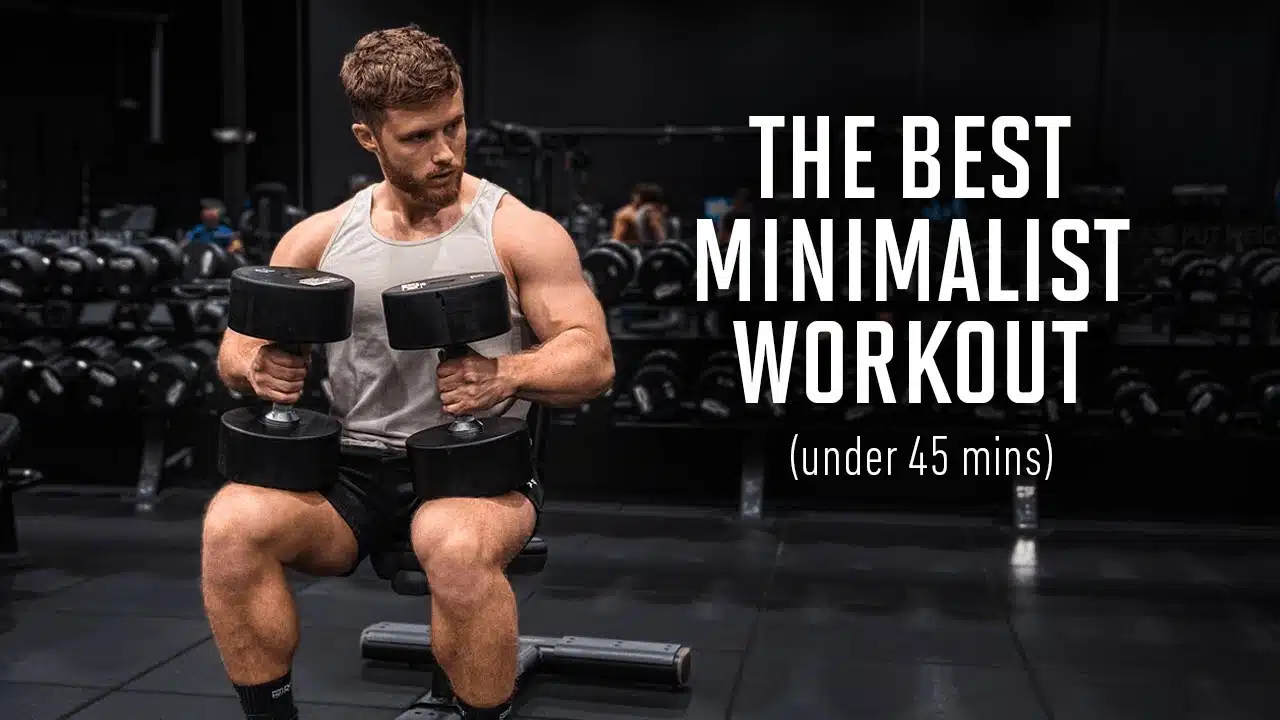
Popular fitness coach Jeff Nippard recently broke down his minimalistic workout approach that takes under 45 minutes per session and can be done just twice weekly.
Even better, he explains exactly how to modify this framework for those with three, four, or five training days available.
Jump to:
The Philosophy Behind Minimalist Training
Minimalist training isn’t about doing less for the sake of convenience. It’s about strategic efficiency—choosing exercises that deliver maximum results with minimum time investment.
This approach relies heavily on compound movements, smart exercise selection, and intensity techniques like drop sets and myo-reps to pack more stimulus into fewer sets.
Full Body Day One: Maximizing Efficiency
Starting Smart With Dumbbell Press
After a brief warmup of brisk walking and dynamic stretches, Nippard kicks off with flat dumbbell press rather than barbell bench.
The reasoning is simple: dumbbells save time by eliminating plate changes and provide greater range of motion. This matters significantly on minimalist routines where compensatory exercises get cut.
The protocol involves two sets—one heavy for 4-6 reps followed by a lighter backoff set for 8-10 reps. This combination targets both strength and hypertrophy pathways efficiently.
Posterior Chain Power: Romanian Deadlifts
Next comes dumbbell Romanian deadlifts for two sets of 8-10 reps. Again, dumbbells win for time efficiency.
The execution focuses on pushing hips back while allowing weight to drop straight down under control. Nippard emphasizes reversing motion once you feel significant hamstring stretch without rounding the lower back.
Using lifting straps prevents grip from becoming the limiting factor, ensuring hamstrings receive full tension.
Back and Biceps With Dual-Grip Pulldowns
The two-grip lat pulldown kills multiple birds with one stone—two sets of 10-12 reps using different grips per set.
First set uses overhand middle grip targeting mid-back and lats. Second set switches to underhand close grip, emphasizing biceps and hitting lats from another angle.
After the second set, strip back weight for overhead curls to ensure high-threshold bicep fibers experience adequate tension.
Lower Body Focus: Step-Ups Done Right
A single working set of 8-10 reps per leg on dumbbell step-ups serves as the primary quad and glute movement.
Because minimalist training often involves just one set per exercise, execution becomes critical. Front leg must carry all load with back leg only providing balance.
Most people stop well shy of failure on unilateral movements like step-ups. Going heavier than instinct suggests usually proves necessary to reach true failure or one rep shy.
Triceps: Why Overhead Wins
One set of 12-15 reps plus drop set on overhead cable tricep extensions comes next. Why overhead instead of standard pushdowns?
Triceps already get worked in neutral shoulder position during flat dumbbell press, making pushdowns somewhat redundant. More importantly, research from Mayo and colleagues in 2022 found overhead extensions resulted in roughly 40% more hypertrophy compared to pushdowns when volume matched.
While one study shouldn’t dictate everything, when time is limited, favoring overhead extensions makes strategic sense.
Shoulder Development Through Lateral Raises
One set of 12-15 reps plus drop set on machine lateral raises targets side delts. Nippard prefers machines allowing larger range of motion while maintaining consistent tension, but cables or dumbbells work equally well when taken to failure.
Using straps allows pure side delt activation without grip limiting performance. After initial failure, drop weight 30-40% and hit failure again.
Finishing With Calves
One set of 12-15 reps on horizontal toe press wraps up day one. Performing calf raises on leg press eliminates upper body involvement, improving mind-muscle connection.
Critical point: maintain strict form through drop set. Each rep requires one-second pause at bottom stretch and full squeeze at top.
Full Body Day Two: Building on Fundamentals
Hack Squats for Quad Development
Day two opens with hack squats—one heavy set for 4-6 reps, then lighter backoff for 8-10 reps.
Machines require fewer warmup sets than free weight compounds. Barbell back squats might demand 30 minutes of warmup sets, while hack squats need just two or three quick sets before working weight.
First heavy set targets one rep shy of failure (RPE 9), focusing purely on moving weight. After three minutes rest, backoff set emphasizes controlled negatives and mind-muscle connection.
Antagonistic Supersets: Press and Row
Two sets of high incline Smith machine press superset with T-bar rows efficiently target opposing muscle groups.
Setting bench angle higher than typical (45-60 degrees) increases delt involvement, essentially combining horizontal and vertical pressing into one movement. Closer grip increases tricep range of motion and emphasizes upper pecs.
T-bar rows follow for 10-12 reps. Alternating wider and closer grips between sets targets back from different angles. Important note: even when supersetting, 30-60 seconds rest between exercises allows adequate recovery.
Hamstring Isolation Done Properly
One set of 10-12 reps on seated hamstring curls plus drop set comes next. Research from 2020 showed greater hamstring growth with seated versus lying leg curls across 12 weeks.
A recent 2020 study showed greater hamstrings growth with seated leg curls over lying leg curls across a 12-week training study.
This advantage relates to higher stretch degree in seated position. Leaning forward over machine throughout set accentuates this effect.
Biceps With Myo-Reps
One set of 12-15 reps on EZ bar bicep curls followed by myo-reps maximizes arm development efficiently.
Technique matters: curl weight out and up (not just up), drive through pinky to cue supination, squeeze biceps intentionally, maintain loose grip preventing forearm takeover.
After hitting failure, instead of dropping weight, rest 3-4 seconds then perform four more reps. Repeat this pattern until four reps become impossible.
Myo-reps deliver more high-tension reps quickly. Since only final reps near failure become maximally hypertrophic, these mini-sets eliminate early low-tension reps and jump straight to effective stimulus.
Core Work to Complete Training
One set of cable crunches for 12-15 reps plus double drop set finishes the session.
Kneeling position with rope locked overhead allows crunching down hard while allowing entire back (including lower back) to round naturally. After first failure, drop weight 30%, hit failure again, then strip another 20-30% for final failure set.
Adapting to More Training Days
The beauty of this framework lies in its scalability:
- Three days weekly: Keep full body day one intact, split day two into separate upper and lower sessions
- Four days weekly: Split both full body workouts into upper/lower format (upper, lower, rest, upper, lower, rest, rest)
- Five days weekly: Implement upper/lower/push/pull/legs split across five training days
When splitting workouts across more days, adding extra volume through additional sets or exercises targeting individual weak points becomes feasible.
Key Principles for Success
Several universal principles make minimalist training effective:
- Exercise selection matters: Choose movements providing maximum muscle recruitment with minimal setup time
- Intensity techniques: Drop sets and myo-reps pack more stimulus into fewer total sets
- Execution quality: When doing single sets per exercise, perfect execution becomes non-negotiable
- Strategic equipment: Lifting straps prevent grip from limiting target muscle stimulation
- Proximity to failure: Most sets should reach actual failure or stop one rep shy
Minimalist training proves you don’t need endless gym hours to build impressive physiques. Strategic exercise selection, proper intensity, and smart programming deliver results whether training twice weekly or five times.
The question isn’t whether minimalist approaches work—research and real-world results confirm they do. Rather, it’s whether you’re willing to push intensity high enough when reducing volume.