Popular fitness content creator has completely overhauled his training approach, and the results have been striking enough to warrant attention from anyone stuck in a plateau.
After years of experimenting with virtually every training split imaginable—upper/lower, push/pull/legs variations, and countless bro split iterations—he’s landed on something that’s produced more growth in a shorter timeframe than anything he’s tried before.
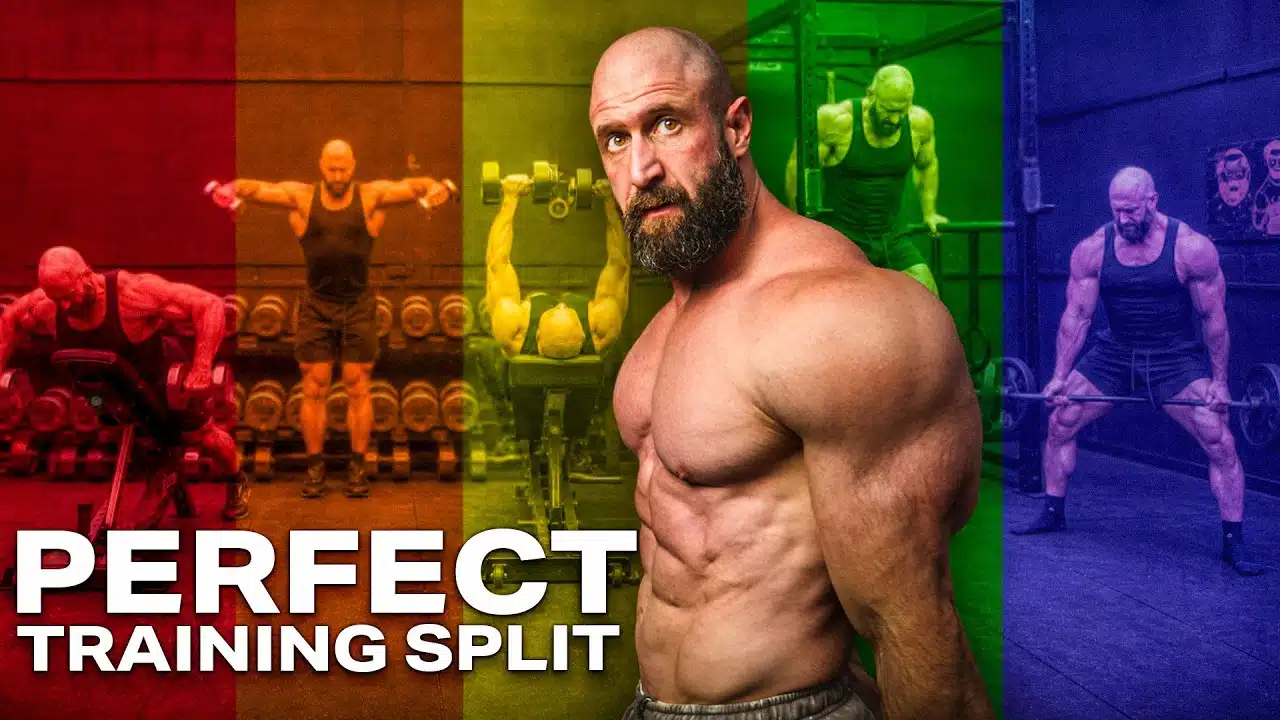
The approach combines high-volume training with advanced intensity techniques, but with a twist that addresses one of the biggest challenges in bodybuilding: balancing volume with frequency.
Here’s what makes this system different and why it might be worth trying yourself.
Jump to:
The Problem With Chasing Research
Before diving into the specifics, he makes an important point about how most lifters approach training modifications.
Never make a change in your training just because you got excited about some new research. That’s uh that’s dumb.
His methodology flips the conventional wisdom on its head. Rather than adjusting training based on newly published studies, he makes tweaks based on real-world progress, then looks into research afterward to understand why something worked.
This approach prevents the common trap of constantly changing programs based on every trending study—especially ones with significant limitations.
The Seated Calf Raise Study Debacle
He illustrates this point with the viral seated versus standing calf raise study that led countless lifters to abandon seated calf work entirely.
The problems with that research were substantial:
- Only 14 participants (seven male, seven female)
- All subjects were completely untrained
- Range of motion was standardized incorrectly
- The study failed to account for how knee flexion affects ankle dorsiflexion capacity
- Video evidence showed participants using momentum and assistance
The gastrocnemius crosses the knee joint, creating laxity when bent that significantly impacts performance. Standardizing range of motion between seated and standing variations essentially guaranteed inferior results for the seated version.
The Core Training Philosophy: Advanced Sets Only
The foundation of this approach is deceptively simple but brutally difficult: only working sets that incorporate advanced techniques count as legitimate training volume.
This means every single set uses drop sets, rest-pause, clusters, or other intensity modifiers.
One thing that has turned into the ABA BB blood code is that I only count a set as a working set if it’s an advanced set. Drop, rest, pause, cluster, you get it.
While meta-analyses show advanced training techniques are effective—at minimum for time efficiency—the real benefit isn’t about saving minutes in the gym.
The true value lies in ensuring legitimate intensity rather than accumulating junk volume just to hit arbitrary weekly set targets.
Soreness as a Training Compass
This high-volume, high-rep approach with advanced techniques has produced significant post-workout soreness—which he acknowledges doesn’t directly equal growth.
However, soreness serves as a valuable indicator that training volume and intensity reached sufficient levels. More importantly, it confirms proper muscle targeting.
If anterior delts are screaming after chest day, or traps dominate after rear delt work, something went wrong with exercise selection or execution.
The Hybrid Bro Split Structure
The split maintains the soul of traditional bodybuilding—dedicating entire sessions to annihilating specific muscle groups—but incorporates two crucial modifications.
Starting Every Workout With Smaller Muscle Groups
Each training session begins with work on one of two smaller muscle groups that recover quickly. He rotates between these two muscles across all workouts.
Recently, his focus has been forearms and calves, alternating between them to start each session.
Other options for these frequent-emphasis muscles include:
- Neck flexors and extensors
- Hip internal and external rotators
- Abdominals
- Anterior tibialis
Because these muscles receive such frequent, intense stimulation, the work volume doesn’t need to be extensive. Two genuinely grueling drop sets or rest-pause sets provide sufficient stimulus.
Priority Muscle Group Training
Beyond the rotating smaller muscles, one major muscle group receives absolute priority over everything else in the program.
For him, that’s been chest—historically a weakness that’s now developed to the point where there’s actual mass to grab.
Whenever my chest isn’t debilitatingly sore anymore and it’s ready to train again, that’s what I hit next and everything else gets pushed back.
This autoregulated frequency means chest gets trained every four to five days depending on recovery, rather than being locked into a rigid weekly schedule.
Other body parts simply get pushed back when the priority muscle is ready for another session.
Advanced Set Techniques by Muscle Group
Different muscle groups respond optimally to specific advanced training techniques based on their biomechanics and fatigue patterns.
Arms: Cable Drop Sets
Cable exercises allow seamless weight adjustments, making them perfect for drop sets. An effective variation involves ascending sets—adding weight until form breaks down into embarrassing quarter-reps, then dropping back down.
Back: Rest-Pause With Loaded Stretches
Rather than setting weight down during brief rest periods, maintain tension by holding the stretch position. This compounds metabolic stress and mechanical tension simultaneously.
Shoulders: Technique Varies by Deltoid Head
- Rear delts: Mechanical drop sets work exceptionally well—start with one movement pattern, then switch to another as fatigue accumulates
- Lateral delts: Traditional drop sets, as this head fatigues rapidly
- Anterior delts: Cluster sets with controlled cheating, such as Viking press for 20 reps to failure, brief pause, force additional reps, repeat multiple times
Chest: Rest-Pause Sets
Once scapular positioning is locked in properly for pressing movements, maintaining that setup becomes crucial. Rest-pause allows maximum intensity without constantly resetting shoulder blade position.
Legs: Creative Brutality
Lower body training offers the most options for advanced techniques. One recent discovery: walking weighted barbell lunges with drops—performing the movement until failure, then immediately reducing load and continuing.
His programming philosophy for legs? Design workouts as if creating a program for someone you despise, then force yourself through it.
Balancing Volume and Frequency
Research consistently shows volume correlates with hypertrophy, even when returns diminish at higher levels.
The challenge becomes determining the threshold where adding sets within a single workout leads to half-hearted effort rather than productive overload.
This hybrid approach solves the problem by increasing frequency for smaller muscles that recover quickly while allowing longer recovery for major muscle groups that receive truly destructive training sessions.
Traditional bro splits excel at complete muscular annihilation but typically provide suboptimal frequency. Adding high-frequency work for lagging smaller muscles addresses this limitation without compromising the intensity that makes body-part splits effective.
The Individualization Imperative
When asked about optimal training methods, his response reflects hard-earned wisdom from years of experimentation.
When someone asks me what’s the best way to train to build muscle my answer is always the same. What a stupid question. What an idiot. The reality is it’s so specific to each individual that to figure out what’s best for you. You’re going to have to use trial and error.
No single program works optimally for everyone. Variables including recovery capacity, training history, weak points, schedule constraints, and psychological preferences all influence what produces results.
This system works exceptionally well for him—producing more growth in a compressed timeframe than previous approaches. That doesn’t guarantee it’ll be ideal for every lifter.
The principles, however, offer a framework worth testing: autoregulated frequency for priority muscles, high-frequency training for lagging small muscle groups, and mandatory advanced techniques to ensure legitimate intensity rather than accumulating junk volume.
Try the approach, monitor progress honestly, and adjust based on what your body actually responds to rather than what sounds impressive in theory.