Hailey Bieber recently shared a workout trick that’s catching attention across social media, and it’s not just another celebrity fitness fad.
Those bands wrapped around her thighs during training sessions serve a specific scientific purpose: they’re BFR (Blood Flow Restriction) bands designed to help build muscle with significantly lighter weights.
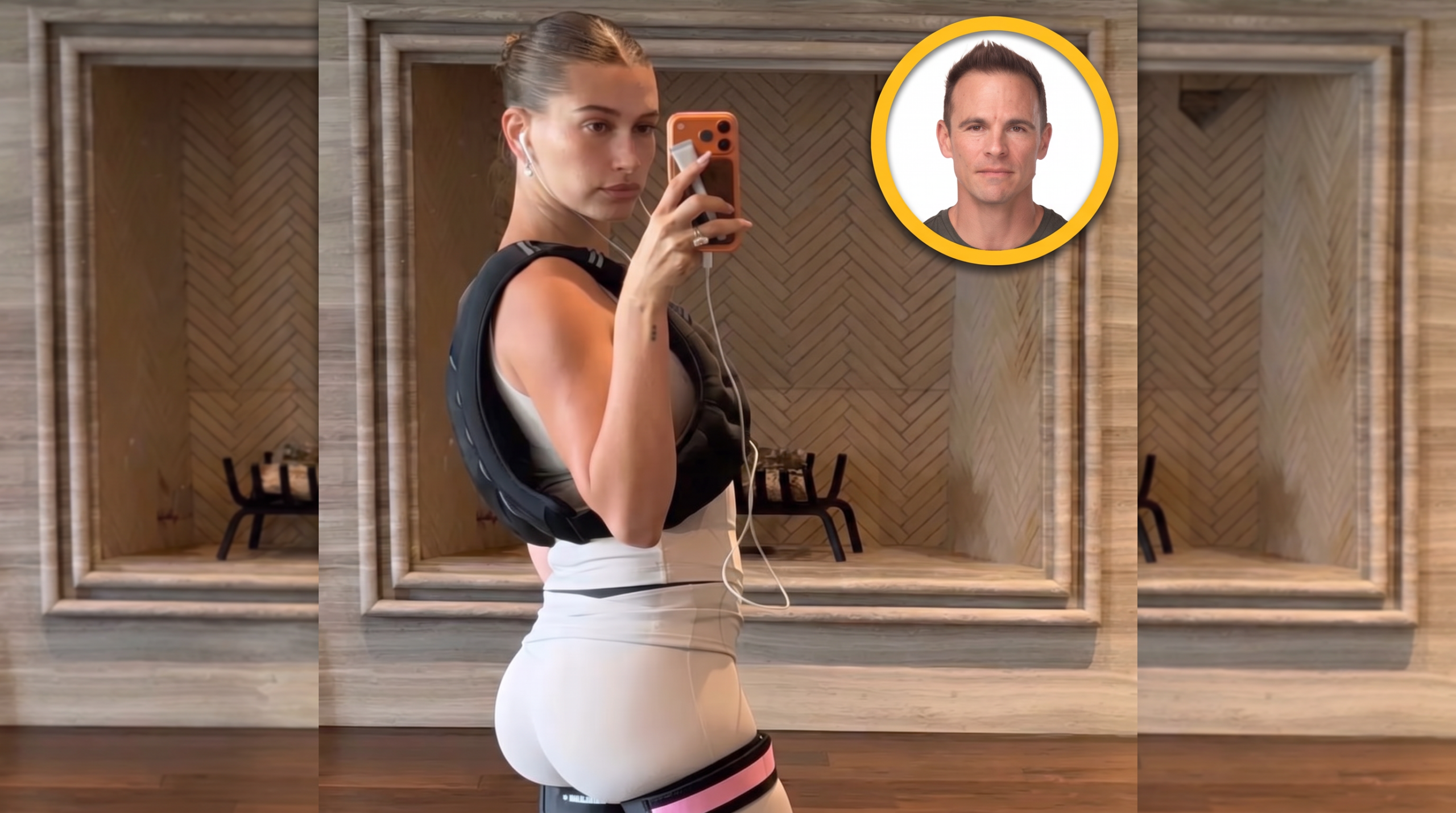
This method, which has been used by professional athletes and physical therapists for decades, is now making its way into mainstream fitness routines.
But before you rush to try it yourself, there’s crucial information you need to know about safety, proper technique, and who should avoid this training method altogether.
Jump to:
- The Japanese Origins of Blood Flow Restriction Training
- How BFR Actually Works Inside Your Muscles
- Building Muscle With Four Times Less Weight
- Key Benefits That Draw Athletes and Rehab Patients Alike
- Who Should Never Try BFR Training
- The Most Dangerous Mistakes People Make
- What Proper BFR Application Looks Like
- Starting BFR the Right Way
- Realistic Expectations and Training Integration
- The Celebrity Fitness Trend Worth Investigating
The Japanese Origins of Blood Flow Restriction Training
Blood Flow Restriction training isn’t a modern invention dreamed up by influencers. Its roots stretch back to 1960s Japan, where Dr. Yoshiaki Sato developed what became known as Kaatsu training.
Dr. Sato’s breakthrough came from an unexpected moment. While sitting in the traditional Japanese seiza position during a Buddhist ceremony, he noticed his calves going numb from restricted circulation. This observation sparked years of research into how deliberately limiting blood flow could trigger muscle adaptation.
What he discovered was remarkable: carefully restricting venous blood flow during exercise could create metabolic conditions similar to heavy weightlifting, but with a fraction of the load.
How BFR Actually Works Inside Your Muscles
BFR involves placing specialized bands around the uppermost part of your limbs—just below the shoulders for arms, or at the top of the thighs for legs.
The goal isn’t to cut off blood flow completely. Instead, you’re creating partial restriction of venous blood flow (blood returning from muscles to the heart) while maintaining some arterial flow (oxygen-rich blood moving to muscles).
This specific restriction causes oxygen depletion in the working muscles and allows metabolic by-products like lactate to accumulate faster than usual. Your body interprets this accumulation as a signal that you’re performing extremely demanding work.
In response, it activates metabolic pathways responsible for muscle growth and releases growth hormone—even when you’re lifting weights that would normally be considered too light to trigger these adaptations.
Building Muscle With Four Times Less Weight
Traditional strength training typically requires lifting loads of 60-80% of your one-rep maximum to stimulate meaningful muscle growth.
BFR flips this requirement on its head. Research shows you can achieve similar hypertrophy (muscle growth) using loads as light as 20-30% of your maximum.
That means instead of squatting with 100 pounds, you might use just 25-30 pounds while wearing BFR bands and still trigger comparable muscle-building responses.
This approach offers several compelling advantages, particularly for specific populations and training scenarios.
Key Benefits That Draw Athletes and Rehab Patients Alike
Professional athletes have embraced BFR for decades, and physical therapists commonly use it during rehabilitation. The method offers distinct advantages:
- Muscle growth with minimal resistance: Build strength without the mechanical stress of heavy weights
- Reduced joint and tendon strain: Lower loads mean less wear on connective tissues, ideal during injury recovery
- Faster rehabilitation: Maintain or regain muscle mass when heavy lifting isn’t possible
- Training variety: Add a new stimulus when progress plateaus with traditional methods
- Time efficiency: Shorter rest periods between sets due to lower mechanical fatigue
These benefits explain why BFR has moved from rehabilitation clinics into performance training facilities. It fills a unique niche for people who need muscle stimulus without mechanical loading.
Who Should Never Try BFR Training
Before you follow Hailey Bieber’s lead, understand that BFR carries real risks when used improperly or by the wrong people.
This method is not appropriate for everyone. Several conditions and circumstances make BFR dangerous:
- High blood pressure or cardiovascular disease
- History of blood clots, deep vein thrombosis, or vascular disorders
- Pregnancy
- Diabetes
- Varicose veins or chronic venous insufficiency
- Complete beginners to resistance training
If you’re new to weightlifting entirely, BFR bands aren’t the place to start. Build a foundation with traditional training first, then consider adding BFR under professional guidance.
The Most Dangerous Mistakes People Make
When BFR training goes wrong, the consequences can range from uncomfortable to genuinely harmful. Most problems stem from three common errors:
Applying Excessive Pressure
Complete occlusion—fully blocking blood flow—defeats the purpose and creates serious risk. You’re aiming for partial restriction, not a tourniquet effect.
Too much pressure can cause nerve damage, tissue injury, and dangerous blood pooling. Professional BFR systems include pressure gauges to prevent this, but improvised solutions offer no such safeguards.
Using Inappropriate Equipment
Elastic bands, resistance bands, knee wraps, or random compression straps are not substitutes for proper BFR equipment.
These makeshift options can’t provide consistent, measurable pressure. They’re more likely to slip, create pressure points, or restrict too aggressively—significantly increasing injury risk.
Wearing Bands Too Long
BFR protocols typically limit band application to 10-20 minutes per workout session, including rest periods between sets.
Exceeding this duration extends the period of restricted circulation beyond safe parameters. Remove bands between exercises targeting different limbs, and never wear them continuously throughout an entire gym session.
What Proper BFR Application Looks Like
If you’re cleared to try BFR and want to do it safely, proper technique matters immensely.
Bands should be positioned at the very top of limbs—high on the upper arm or upper thigh. Width matters too; wider bands (typically 2-3 inches) distribute pressure more safely than narrow tourniquets.
A good rule of thumb: you should feel pressure and mild discomfort, but not pain. Your limb may feel slightly heavy or full, but shouldn’t go numb, tingle severely, or change color dramatically.
Pale white or deep purple skin signals too much restriction. Slight redness or pink tone is normal.
Starting BFR the Right Way
The smartest approach? Don’t start alone.
Work with a certified personal trainer, physical therapist, or exercise physiologist who has specific training in BFR protocols. They can teach you proper band placement, appropriate pressure levels, and suitable exercises.
Initial sessions should focus on learning the sensations of correct restriction and understanding your individual pressure tolerance. This isn’t something you can learn adequately from a social media video.
Invest in quality BFR-specific bands with pressure regulation systems rather than improvising with whatever equipment you have lying around. The cost difference pales compared to potential medical bills from improper use.
Realistic Expectations and Training Integration
BFR isn’t magic, and it doesn’t replace traditional strength training for most people.
Think of it as one tool in a comprehensive training approach. It excels in specific situations—during rehabilitation, when joints need a break from heavy loading, or when adding training volume without additional mechanical stress.
Many athletes use BFR strategically: lighter BFR sessions on recovery days, during deload weeks, or as accessory work after main strength lifts.
You’re not choosing between traditional lifting or BFR. You’re potentially adding another evidence-based method to your training toolkit when circumstances call for it.
The Celebrity Fitness Trend Worth Investigating
Unlike many fitness trends that cycle through social media with little scientific backing, BFR stands on decades of research and clinical application.
Hailey Bieber’s use of these bands reflects a legitimate training method that’s migrated from rehabilitation clinics and elite athletic programs into more mainstream fitness culture.
That scientific foundation doesn’t eliminate the need for caution, proper education, and individualized application. If BFR sounds right for your goals and health status, take the time to learn it properly.
Consult professionals who understand both the benefits and the boundaries of this technique. Your muscles—and your circulatory system—will thank you for the measured approach.