In 2019, Allyson Felix made headlines — not for breaking records on the track, but for breaking her silence off of it.
A nine-time Olympic medalist and one of Nike’s most marketed athletes, Felix took on the biggest name in athletic apparel over its lack of maternity protections for sponsored athletes.
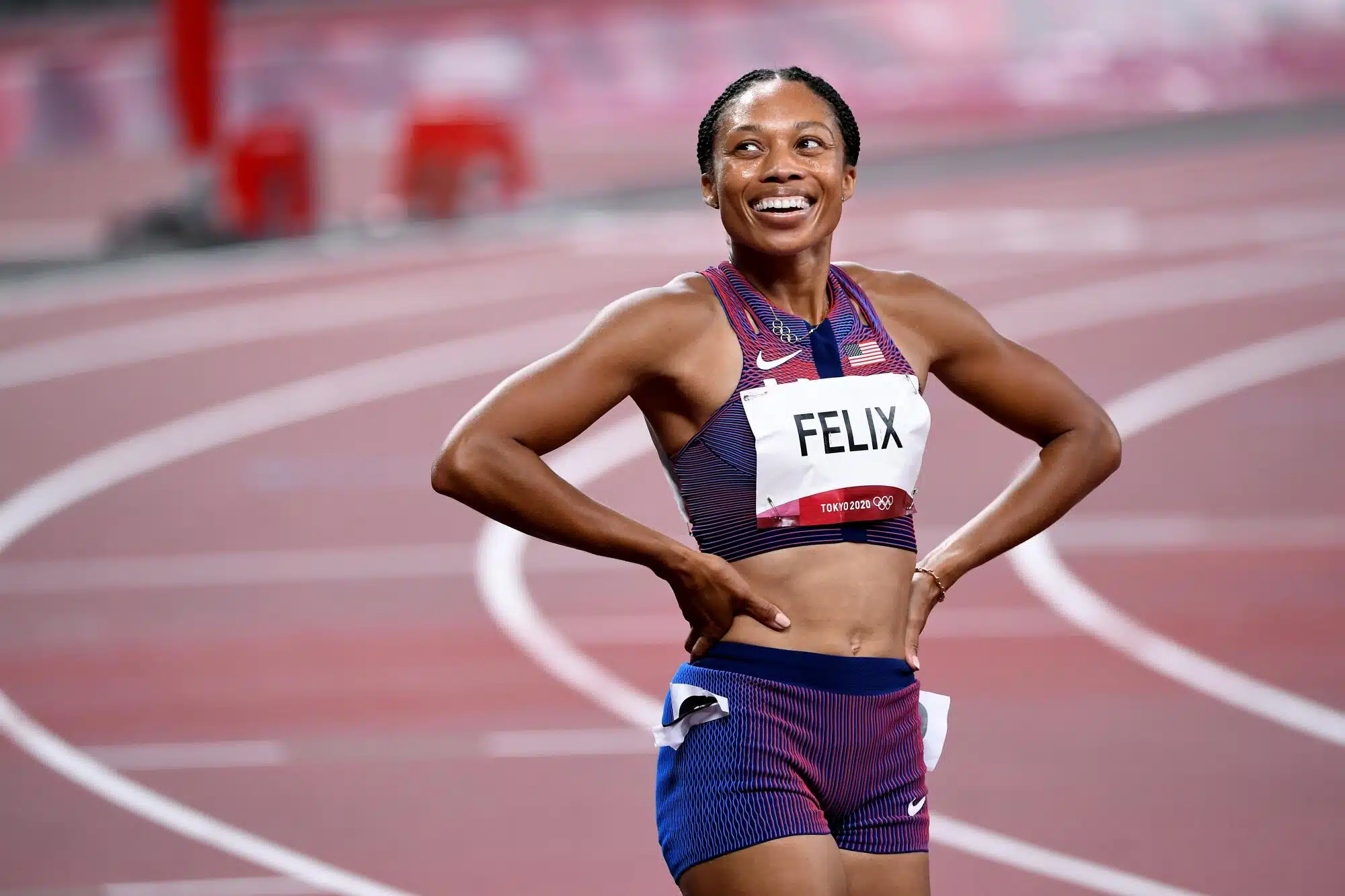
Her story exposed a deep and systemic issue in the sports world — one that had gone ignored for far too long.
Now, years later, that bold stand has transformed not only corporate contracts but the landscape for female athletes across the board.
Here’s how Felix helped redefine what it means to be both a mother and a champion.
Jump to:
“If I Can’t Secure Maternity Protections, Who Can?”
When Felix decided to start a family in 2018, she was still at the height of her career. But in the sports world, motherhood was considered risky business. Her Nike contract had expired in 2017, and negotiations for renewal quickly turned contentious.
“They offered me 70% less than what I had previously been paid,” Felix revealed. “But the one point I wasn’t willing to budge on was maternity protections.”
Nike declined. Despite her elite status, Felix’s request for contractual guarantees around pregnancy — that she wouldn’t be financially penalized for the months surrounding childbirth — was denied. The company wouldn’t even put the new terms in writing.
This wasn’t just about her paycheck. It was about sending a message to the next generation of female athletes: pregnancy shouldn’t cost you your career.
Silence and Suffering Behind the Scenes
The culture in professional track and field, Felix noted, was one of silence.
“Get pregnant and you hide it,” she said. “It can feel so risky when your livelihood depends on it.”
That risk became all too real when she developed severe pre-eclampsia during pregnancy, resulting in an emergency C-section at 32 weeks. Felix spent the next month in the hospital with her daughter, Camryn. At the same time, she was squeezing in training at 1 a.m. to prepare for her athletic return — because she knew sponsors expected her to be back in top form within six months.
“I just felt like I was in an impossible situation,” she said.
She wasn’t alone. Fellow Olympians Alysia Montaño and Kara Goucher shared similar stories, risking their careers and breaking nondisclosure agreements to bring attention to the issue. Montaño, famously known as “the pregnant runner,” continued racing through her pregnancies — despite sponsors like Nike pulling support.
Public Pressure Brings Real Change
The backlash was swift and widespread.
When Felix published her op-ed in The New York Times, it sparked public outrage and even a congressional inquiry. Within months, Nike revised its policy, guaranteeing athletes full pay and bonuses for 18 months around pregnancy. Other brands, including Burton, Altra, Nuun, and Brooks, quickly followed suit.
“Few people do the right thing every time right off the bat,” said Matt O’Neill, co-director of She Runs the World, a documentary about Felix’s journey. “But the industry can change — and change is possible.”
From Activist to Entrepreneur
The battle with Nike was just the beginning. In 2021, Felix launched Saysh, a shoe company designing performance footwear by and for women. The brand’s first commercial debuted during the Tokyo Olympics, which featured Felix running — not in Nike, but in her own shoes.
Saysh wasn’t just about product. It stood for something bigger.
Felix ensured her company would offer paid maternity leave and lifetime memberships for customers whose feet changed during pregnancy. It was a clear rebuke to the system she had fought against.
By 2024, she had expanded her mission with a new venture: Always Alpha, a management agency focused exclusively on representing female athletes.
“Agencies were built for male athletes,” Felix said. “We had to construct our own plan from the ground up. I took a lot of missteps that were challenging… This is about helping the next generation not face what I did.”
Why This Story Still Matters
Felix’s advocacy wasn’t just about sports contracts. It was a call for systemic change across all industries.
“Pregnancy isn’t a distraction or a liability,” she emphasized. “It’s part of life — and women deserve protections in every field.”
According to the CDC, Black women are four times more likely to die from childbirth-related complications. Felix’s own experience with life-threatening pre-eclampsia made that statistic painfully personal — and highlighted the broader health disparities women of color face in the U.S.
“We shouldn’t have to rely on companies to do the right thing,” she wrote. “Our families depend on it.”
Final Lap, Lasting Legacy
Felix retired from competition in 2022, but not before winning gold one last time in Eugene, Oregon — the birthplace of Nike. The symbolism wasn’t lost on her.
Her story, once hidden behind the curtain of contracts and image deals, is now front and center in the film She Runs the World, which debuted at the Tribeca Film Festival and screened at the Bentonville Film Festival.
“I’ve always been a private person,” she admitted. “But I felt like this story could help. That it could have impact.”
She was right. Because of her courage, thousands of female athletes now compete with the knowledge that their pregnancies won’t be used against them.
In stepping out of her lane, Allyson Felix redrew the track entirely.