Dr. Mike Israetel, the popular fitness educator and bodybuilder, recently underwent something most enhanced athletes avoid: a full-body MRI scan.
After 15 years of performance-enhancing drug use, he wanted answers about what was really happening inside his body.
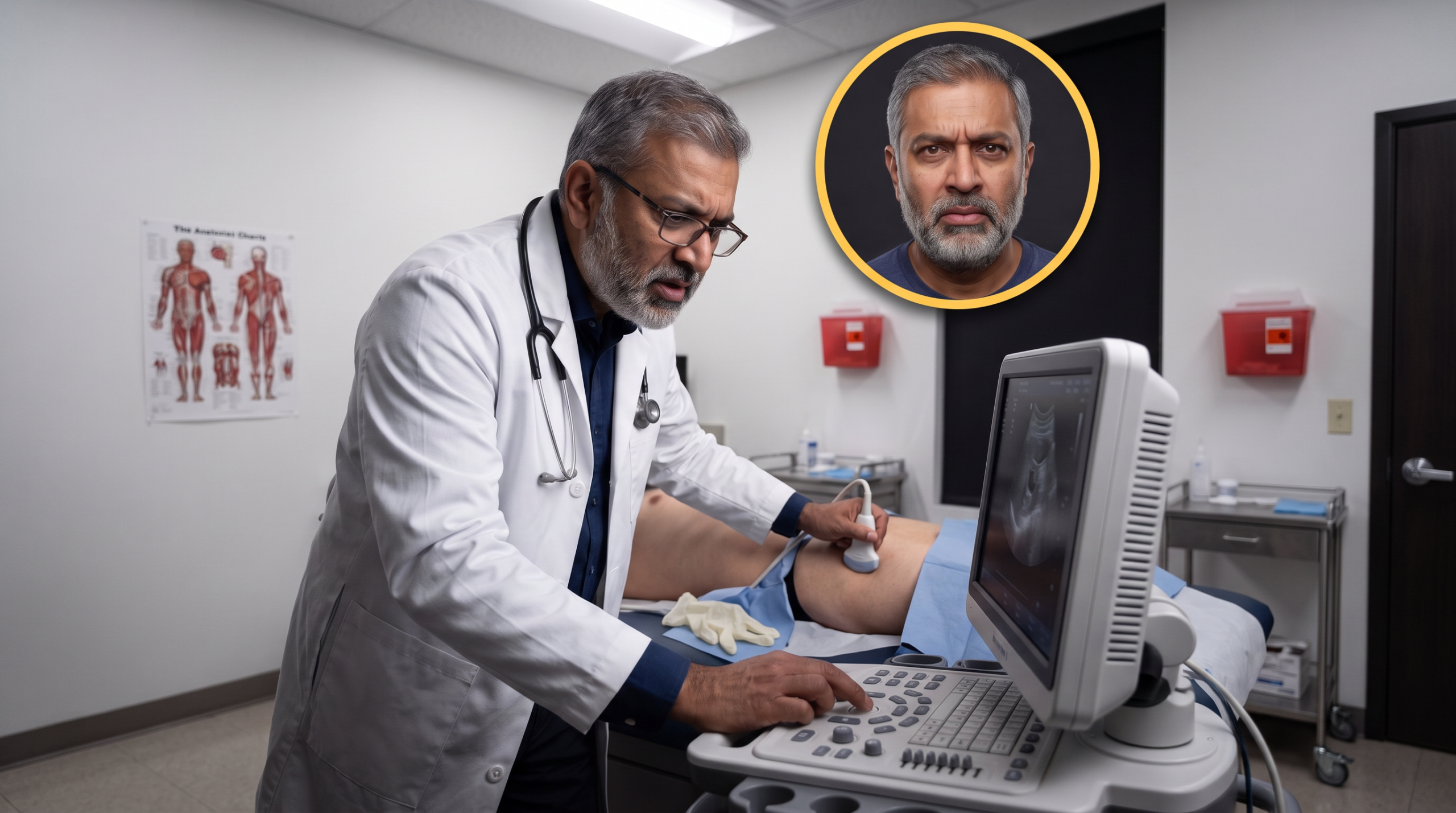
What doctors found was surprising, defying many assumptions about steroid use and organ health.
His experience offers valuable lessons for anyone concerned about visceral fat, enhanced athletes, and what medical imaging can—and can’t—tell you about your health.
Jump to:
- Coming Clean About 15 Years of Enhancement
- Inside the MRI Machine
- The First Bodybuilder MRI: What Doctors Found
- The Visceral Fat Paradox
- The Organ Enlargement That Wasn’t There
- Where That Visceral Fat Really Came From
- What This Means For You: Practical Takeaways
- The Bottom Line on Enhanced Athletes and Internal Health
- Sources
Coming Clean About 15 Years of Enhancement
Dr. Israetel has always been transparent about his performance-enhancing substance use, which began at age 27.
I’ve taken more than a few different kinds of steroids, growth hormones, insulin, peptides, thyroid drugs, and a whole bunch else. Oh, kind of a trip to say out loud.
He emphasized that while he monitored blood work and blood pressure throughout, those markers don’t reveal everything happening internally.
Research confirms his concerns have merit. Supraphysiological doses of androgens like testosterone are associated with cardiovascular risks including arterial plaque buildup and changes in heart structure. Studies also show these compounds can increase visceral adipose tissue—the dangerous fat surrounding organs—even in individuals who appear lean externally.
Inside the MRI Machine
The full-body MRI scan took over an hour, scanning from head to mid-thigh to evaluate organs, brain, spine, and reproductive system.
Dr. Shawn Omar, the specialist reading the scan, screens patients for hundreds of abnormalities, with cancer detection being a primary concern for most who seek preventive scanning.
The experience itself proved challenging. Dr. Israetel had to wear a head and neck brace that aggravated an old jiu-jitsu injury, causing radiating arm pain for 20-30 minutes.
When the scan is hitting various parts of your body, various layers, you can feel localized heat, because apparently the water molecules, the hydrogens actually vibrate and give off heat, which is such a trip.
The abdominal scanning required multiple 10-15 second breath holds to account for breathing movement, creating what he described as an oddly “kinky” experience of controlled breathing commands.
The First Bodybuilder MRI: What Doctors Found
Dr. Omar had never evaluated an MRI from a serious bodybuilder before, making the scan particularly revealing.
Dr. Mike’s MRI is extraordinary. First of all, for his muscle hypertrophy. This dude is jacked inside his body. Look at these massive pecs. These almost look like women breasts, but the shape of them are very different. There’s incredible tone to them.
The scan revealed the largest pectoral and back muscles Dr. Omar had ever seen in hundreds of thousands of MRIs reviewed.
But the musculature wasn’t the only noteworthy finding.
The Damage From Training History
Years of Brazilian jiu-jitsu and powerlifting left clear marks:
- Multiple herniated discs throughout the spinal column, including the neck
- Shoulder damage consistent with his daily pain experience
- Abdominal asymmetry with the right rectus abdominis showing diminishment compared to the left side
Dr. Omar questioned whether an abdominal tear caused the asymmetry, but Dr. Israetel attributed it to either genetics or developmental factors in the womb, noting his left side has always been more muscular.
The Cancer Fear: Unfounded
Despite his concerns about latent cancer risk, the scan revealed no suspicious tumors.
I’m a Russian Jew in my 40s. I figure I’ve got at least some latent cancer in there.
The doctors found nothing resembling a giant impending cancerous tumor, a result that brought visible relief.
The Visceral Fat Paradox
The most surprising finding centered on body fat distribution—or rather, the lack of it where expected.
Dr. Israetel had less visceral fat than the average 42-year-old American, with some around his heart and more in his lower abdomen. However, this comparison isn’t particularly reassuring given that the average middle-aged American man already carries excessive visceral adipose tissue.
What’s really interesting is that you have less visceral fat than the average person. But what’s interesting to me is you have almost no fat outside your body. So you are thin on the outside but fat on the inside. Like I have never seen anybody as much inversion. This is the highest ratio of internalized fat to outside fat I’ve ever seen in a human being.
Most visceral fat concentrated in the posterior (back) compartment rather than anterior, with substantial fat remaining in his lower back and sides despite previous skin removal surgery.
Positively, he showed less pericardial fat around his heart than expected and very low liver fat—both excellent health indicators.
The Organ Enlargement That Wasn’t There
Perhaps the most shocking finding: no organ enlargement detected.
Neither his heart nor any other organs showed the enlargement commonly associated with long-term steroid and growth hormone use.
This finding challenges common assumptions, though research on this topic presents a mixed picture. While some studies document cardiac changes in steroid users, individual responses vary considerably based on dosage, duration, specific compounds used, and genetic factors. Dr. Israetel noted he never used “outlandish amounts” and maintained regular monitoring, which may have contributed to this outcome.
Combined with normal visceral fat levels, this raised an obvious question: if organs weren’t enlarged and visceral fat wasn’t excessive, what explained his prominent gut?
The Abdominal Wall Mystery Solved
The answer appears to be genetic: a very loose abdominal wall.
This condition runs in his family, giving a characteristic pot-belly appearance regardless of actual organ size or visceral fat levels. The MRI essentially confirmed what he’d suspected for years.
Achieving a flat stomach would likely require major surgical intervention similar to what mothers of triplets undergo postpartum—tightening the abdominal wall itself rather than addressing fat or organ size.
Where That Visceral Fat Really Came From
Dr. Israetel traced most of his visceral adipose tissue to a period years ago when he was drug-free but “dreamer bulking”—gaining weight aggressively to build muscle.
He reached 30% body fat during this phase, which caused visceral fat cell multiplication. That’s the critical point: fat cells can shrink but don’t disappear.
When he reduces overall body fat, visceral stores decrease. But when he bulks back up to normal body fat percentages for muscle building, those established visceral fat cells readily refill.
The GLP-1 Strategy
Dr. Israetel’s current approach involves GLP-1 receptor agonists, specifically tirzepatide (Mounjaro/Zepbound) year-round, with retatrutide added during cutting phases.
Research indicates these medications preferentially target visceral fat compared to subcutaneous fat more effectively than most interventions. Studies on semaglutide and tirzepatide show significant reductions in visceral adipose tissue alongside overall weight loss, though the mechanisms aren’t entirely understood.
Until visceral fat cell-specific apoptotic drugs (medications that cause targeted cell death) or advanced surgical options become available, his strategy focuses on:
- Maintaining high training volume and daily activity
- Prioritizing nutritious food choices
- Optimizing sleep quality
- Managing stress levels
- Continuing year-round tirzepatide use
What This Means For You: Practical Takeaways
Dr. Israetel’s scanning experience offers several actionable insights for anyone concerned about internal health markers.
Blood Work Remains Essential
Regular blood work detects many problems long before they become serious, particularly for those using testosterone replacement therapy or performance-enhancing drugs.
He recommends screening twice yearly for:
- Comprehensive liver and metabolic panels
- Cholesterol and blood lipids
- Testosterone and estrogen levels
- Diabetes markers like HbA1c
- Any additional markers your physician recommends
Full-Body MRI Scans: Worth It?
Comprehensive scans can provide valuable information, including body composition data on fat mass, muscle mass, and bone density alongside health screening.
However, it’s crucial to understand what these scans actually do: they detect possible risks, not provide diagnoses.
Any flagged issues require follow-up through additional scans, blood work, and physician analysis. False negatives (missing problems) and false positives (flagging non-issues) both occur.
A bad scan isn’t a death sentence, and a good scan isn’t a health all clear. A scan just gives you some added information about your health.
Dr. Israetel underwent his scan at Bionic Body Medical Scanning in Southfield, Michigan, noting they offer discounts to those who mention his name, though he has no financial affiliation.
Measurement Versus Action
Perhaps his most important insight: what you do matters far more than how you measure.
Health-promoting behaviors to prioritize:
- Consuming mostly whole, nutritious foods
- Achieving roughly 10,000 daily steps
- Training hard and consistently
- Managing stress effectively
- Getting sufficient quality sleep
Behaviors to minimize or avoid:
- Excessive steroid use (unless accepting the risks)
- High junk food consumption
- Chronic sleep deprivation
- Skipping yearly physicals and basic blood work
The Bottom Line on Enhanced Athletes and Internal Health
Dr. Israetel’s MRI revealed a complex picture that defied simple narratives about steroid use.
Despite 15 years of enhancement, his organs showed no enlargement and his visceral fat remained below excessive levels—though his “thin outside, fat inside” ratio was unprecedented in Dr. Omar’s experience.
The scan confirmed that his prominent midsection stems from abdominal wall laxity rather than organ pathology, providing reassurance while highlighting that genetic factors play substantial roles in body composition appearance.
His experience demonstrates that individual responses to performance-enhancing substances vary dramatically. Responsible monitoring through blood work and medical imaging can provide valuable information, but these tools offer snapshots rather than complete pictures.
For those considering similar scans or concerned about internal health markers, the message is clear: combine regular medical monitoring with consistently health-promoting behaviors, understand that scans provide possibilities rather than certainties, and never substitute measurement for the fundamental habits that actually build health.
Sources
- Research on anabolic-androgenic steroids and cardiovascular effects: Multiple peer-reviewed studies documenting arterial changes and cardiac structure alterations
- Studies on visceral adipose tissue increase with androgen use: Published research showing preferential visceral fat deposition
- GLP-1 receptor agonist research: Clinical trials on semaglutide and tirzepatide showing visceral fat reduction
- Research on individual variability in steroid response: Studies documenting wide variation in cardiovascular effects based on dosage, duration, and genetics