In a recent podcast conversation with host Thomas, Dr. Anthony Jay, a former heart disease researcher at Boston University Medical School, made a provocative case.
Cholesterol, he argues, is the wrong suspect in arterial plaque.
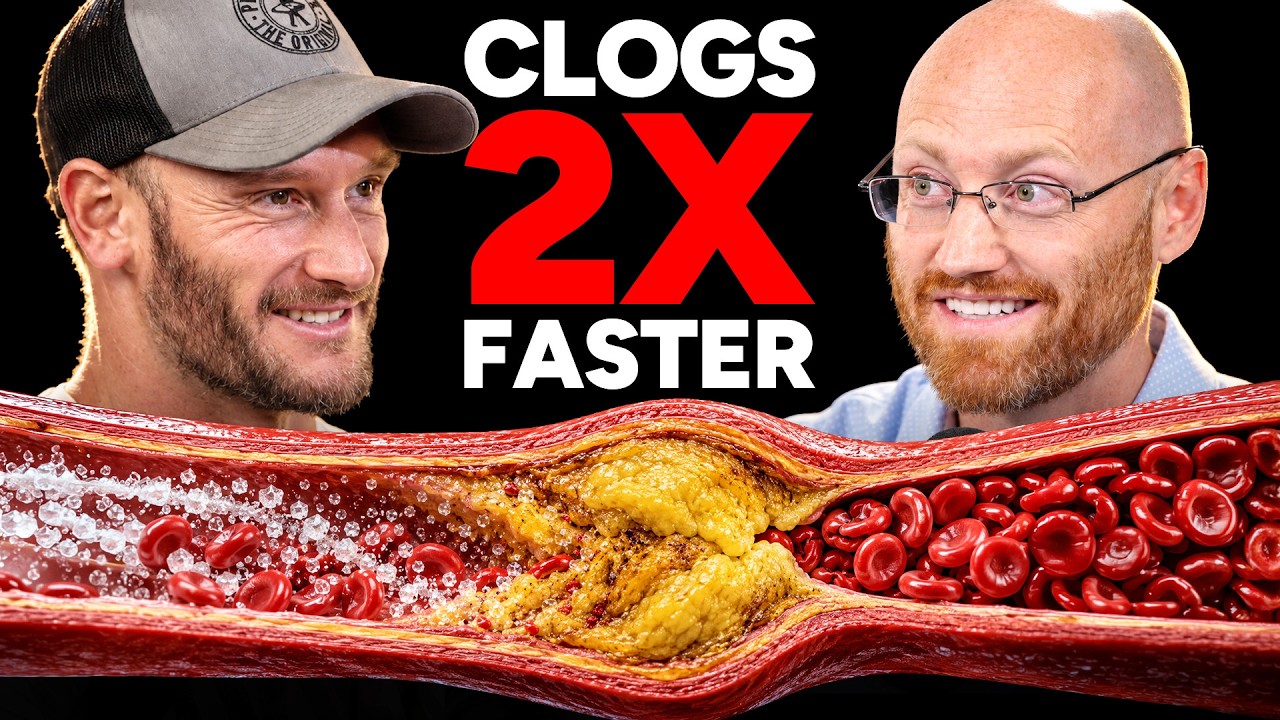
His prime suspect? Sugar and insulin resistance.
One hazard-ratio comparison, a “street sweeper” analogy, and a surprising critique of popular plaque scans all come into play.
Some claims are bold, and the science is more contested than Jay lets on.
Jump to:
- Why Jay Says the Heart Starves in Insulin Resistance
- The Hazard Ratio Showdown: Insulin Resistance vs. LDL
- Lp(a): Street Sweeper or Troublemaker?
- Why Jay Distrusts the Pricey Plaque Scans
- Jay’s Practical Playbook for Metabolic Health
- HDL and LDL as Lifestyle Proxies
- Thirty Years of Plaque, and What to Do About It
Why Jay Says the Heart Starves in Insulin Resistance
Jay starts with fuel. Bodies run on sugar and fats, he says, and protein is more like the metal framework of a car than gasoline.
If you want something simple that actually works, this is one of the most effective tools I’ve used to build strength, conditioning, and endurance without needing a full gym setup.
- Full-body training with one weight using swings, squats, and presses
- Solid cast iron build that feels stable and lasts for years
- Comfortable grip that makes high-rep workouts easier to handle
What’s interesting about the heart is it prefers to burn fats.
According to Jay, heart muscle stays near 85 to 95 percent fat oxidation, even during hard efforts. Years of carb-heavy, five-meals-a-day eating, he argues, can train it toward sugar instead.
You get insulin resistance and the heart starts to starve.
His theory: starved artery walls absorb lipids, which then linger. Doctors find fats at autopsy and blame them, though Jay says presence is not proof of cause.
The Hazard Ratio Showdown: Insulin Resistance vs. LDL
Jay cites a study of roughly 28,000 people examining early-onset heart attacks. Here is how he recalls the risk rankings:
- Insulin resistance: 6.4
- Hypertension: 2.3
- Triglycerides: 2.1
- LDL: 1.38
LDL is kind of a joke.
His read: a 1.38 means 38 percent higher risk, nothing next to insulin resistance. He also says insulin resistance outranks smoking, which he puts at about 4.5 for heart disease.
The research here is more mixed than Jay suggests. Hazard ratios from one study cannot prove cause, and mainstream cardiology groups still treat LDL as a driver of plaque. Insulin resistance and LDL also aren’t rivals, since both can raise risk at once.
Lp(a): Street Sweeper or Troublemaker?
Jay describes LDL as a fat transporter, which is why he says lean, low-carb eaters can see it climb. Lp(a) is, in his words, the same particle plus a tail that grabs oxidized debris.
If you want something simple that actually works, this is one of the most effective tools I’ve used to build strength, conditioning, and endurance without needing a full gym setup.
- Full-body training with one weight using swings, squats, and presses
- Solid cast iron build that feels stable and lasts for years
- Comfortable grip that makes high-rep workouts easier to handle
You can’t blame the street sweeper, you got to blame the parade and the candy wrappers.
Jay notes that Lp(a) rises during infection, including COVID, and says higher levels were tied to better survival there. His conclusion is that smoking, insulin resistance, and glycation overwhelm the cleanup crew.
He also questions drug targets. Jay says a re-adjudication of the Repatha FOURIER data found more cardiac deaths in the treatment group, and that approval of the newer Lp(a)-lowering drug rested on lab numbers rather than heart outcomes.
Here the evidence is far less settled than his delivery implies. Most cardiologists see elevated Lp(a) as a genetically driven risk marker, and Jay’s “helpful sweeper” idea remains a minority view. His drug-trial characterizations also deserve checking against the primary papers.
Why Jay Distrusts the Pricey Plaque Scans
Jay separates two tests. The CAC scan (coronary artery calcium) is low-radiation and cheap, which he says cost him $40 in South Dakota. CCTA, the AI-assisted angiogram, uses roughly five times more radiation.
I like the CAC scan because when you do that scan, it just spits out a number. There’s no interpretation.
He claims repeat CCTA scans within one week differ by plus or minus 20 percent. In another study he cites, three professional readers agreed at just 2.3 on a 0-to-10 scale.
Jay also rejects the idea that calcified plaque is harmless. He points to a 2016 analysis by Matthew Budoff, where risk climbed as CAC scores rose.
If you want something simple that actually works, this is one of the most effective tools I’ve used to build strength, conditioning, and endurance without needing a full gym setup.
- Full-body training with one weight using swings, squats, and presses
- Solid cast iron build that feels stable and lasts for years
- Comfortable grip that makes high-rep workouts easier to handle
Hard plaque has always been thought of as problematic, as high risk for heart disease.
He further argues statins raise hard plaque and that the industry reframed it as benign. That claim is contested, and statin trials have repeatedly shown fewer heart attacks and strokes in many patient groups.
Jay’s Practical Playbook for Metabolic Health
Jay’s most actionable advice: measure insulin, not just glucose.
Check the insulin. Insulin is more important than the blood sugar.
- Fasting insulin: Jay wants it below 5. Dr. Philip Ovadia, he notes, is comfortable below 8.
- Fasting glucose: Under 85 in the morning usually signals strong insulin sensitivity, he says.
- HOMA-IR: Two blood values combined, with insulin weighted most heavily.
- CAC scan after 50: He suggests looking for plaque rather than assuming.
- Exercise: Working muscle absorbs glucose without insulin, which helps reverse resistance.
I’m not interested in the normal. I’m interested in the optimal.
Standard insulin ranges are wide, roughly 3 to 25, so Jay says “normal” hides plenty of dysfunction. He also cites claims that over 40 percent of Americans under 40 are insulin resistant.
Fasting, Carefully
Jay calls intermittent fasting possibly even better than carb cutting for reversing insulin resistance. He points to a 2024 umbrella review of systematic reviews showing benefits for waist size, insulin resistance, and triglycerides.
He dismisses a widely covered American Heart Association headline linking fasting to higher heart-disease risk, noting it came from a phone questionnaire. That critique is fair, since self-reported eating habits make weak evidence.
His caveat is worth keeping: don’t leap from severe insulin resistance to extreme fasting.
If you want something simple that actually works, this is one of the most effective tools I’ve used to build strength, conditioning, and endurance without needing a full gym setup.
- Full-body training with one weight using swings, squats, and presses
- Solid cast iron build that feels stable and lasts for years
- Comfortable grip that makes high-rep workouts easier to handle
HDL and LDL as Lifestyle Proxies
Does HDL matter? Jay says yes, but mostly as a signal.
I think it does in the sense that it tracks very strongly with insulin resistance.
Drugs that artificially lift HDL, he says, have failed. Jay adds that antioxidant supplements have underperformed too, a pattern he sees whenever people swap lifestyle for pills.
LDL, he argues, can also be a proxy:
LDL is also a proxy for bad habits a lot of times.
- Smoking
- Poor sleep
- Trans fats
- Binge drinking
- Very high iron stores (ferritin)
Keto-style eating can raise LDL too, he notes, calling that rise a different story. Researchers still debate how to interpret it, so individual context matters.
Thirty Years of Plaque, and What to Do About It
Jay stresses that plaque takes decades to build, and he rarely saw much before age 50 during his research years.
The real solution is to eat healthy for 30 years.
His framework (exercise, sleep, less sugar, smart fasting, tracking insulin) lines up with widely accepted prevention advice.
If you want something simple that actually works, this is one of the most effective tools I’ve used to build strength, conditioning, and endurance without needing a full gym setup.
- Full-body training with one weight using swings, squats, and presses
- Solid cast iron build that feels stable and lasts for years
- Comfortable grip that makes high-rep workouts easier to handle
Several of his harder claims about LDL, statins, and scans run against mainstream guidance. Anyone on cholesterol medication should talk with a physician before changing treatment, and never stop prescribed drugs based on a podcast.