Building that coveted V-taper back doesn’t require a gym full of equipment or a dozen different exercises.
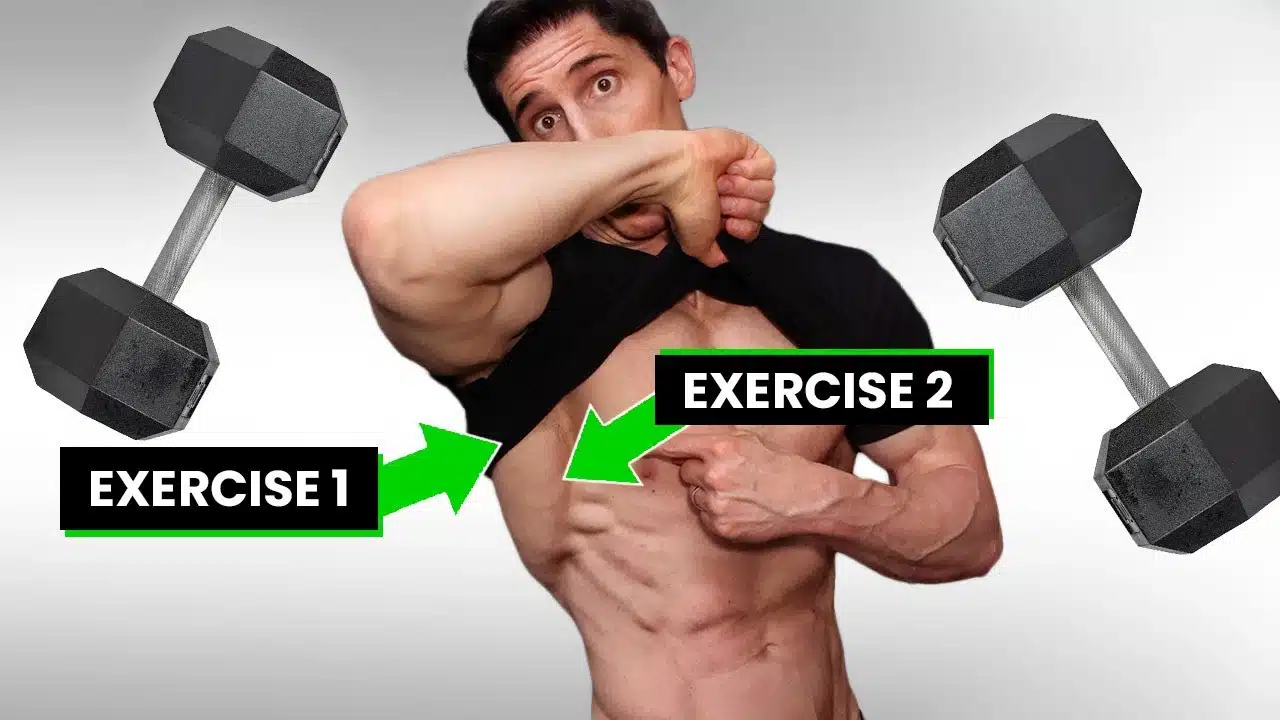
In fact, according to popular fitness expert Jeff Cavaliere, just two strategic dumbbell movements can deliver serious results.
The catch? You need to understand how your lats actually work and execute these exercises with proper form.
And there’s a smart setup trick that makes all the difference: you’ll need two dumbbells at different weights.
Jump to:
The Two-Dumbbell Strategy That Changes Everything
Before diving into technique, Cavaliere emphasizes the importance of choosing the right weights. You’ll need one heavier dumbbell and one lighter option that’s approximately 20% less than your heavier weight.
Each serves a specific purpose in maximizing back development while minimizing injury risk.
Exercise #1: The Safer One-Arm Dumbbell Row
The one-arm dumbbell row is a staple back builder, but most people are doing it wrong. Cavaliere warns against the traditional setup where you place one knee on a bench with your body in an asymmetrical stance.
You’re just increasing the risk of the exercise, especially on the weakened tissues of the inguinal canal, which increases your risk of hernia when you put a heavy weight in your hand and pull from this offset position.
This is where your heavier dumbbell comes into play.
The Incline Bench Modification
Instead of the risky traditional position, Cavaliere recommends a brilliant modification. Prop an adjustable bench up to an incline, then position yourself behind it with both feet planted firmly on the floor in a stable tripod stance.
The benefits are immediately apparent:
- Weight distributes evenly between both feet
- The dumbbell can be positioned between your feet for better symmetry
- Your body maintains balance throughout the movement
- Hernia risk drops significantly
Proper Rowing Technique
From this stable position, focus on one critical cue: drive your elbow back behind your body. Don’t think about pulling with your hands.
Keep that elbow as close to your side as possible to ensure maximum lat engagement. This mental shift from “pulling” to “driving the elbow” activates the target muscles more effectively.
An opportunity here to do the exercise more safely without losing any of the benefits that we know the exercise can give us.
Exercise #2: The Misunderstood Dumbbell Pullover
According to Cavaliere, the dumbbell pullover might be “one of the most misunderstood and therefore avoided exercises” for back development. Many people skip it entirely because of shoulder discomfort.
But that discomfort stems from poor execution, not the exercise itself.
This is where your lighter dumbbell becomes essential.
The Elbow Position Fix
Most lifters keep their elbows tucked during pullovers, which creates shoulder impingement. Cavaliere’s solution? Let your elbows flare out.
This simple adjustment puts your shoulders into external rotation, opening up the joint and making the movement dramatically more comfortable. It’s a game-changer for anyone who’s abandoned pullovers due to shoulder pain.
Why Lighter Weight Wins
The pullover isn’t about ego-lifting heavy weights. It’s about capitalizing on the stretch at the bottom position.
Using a lighter dumbbell allows you to control the movement and hold that stretched position safely.
The Hip Drop Secret
Here’s where anatomy knowledge makes all the difference. The lats attach to your pelvis, which means dropping your hips creates a greater stretch on these muscles.
If you can drop the hips, then you’re going to create a larger stretch on the lats, even without having to drop the dumbbell too far behind your head or even explore some of those positions of the shoulder that make you uncomfortable.
This technique allows you to maximize lat activation without pushing your shoulders into compromising positions.
Proper Pullover Execution
Follow this sequence for optimal results:
- Drop your hips first before lowering the weight
- Lower the dumbbell with elbows flared only as far as comfortable
- Hold the bottom stretch position briefly
- Return the weight upward, but don’t go too high
- Stop before the dumbbell reaches vertical to maintain tension on the lats
That final point is crucial. Bringing the weight all the way up removes tension from your back muscles, essentially giving them a rest mid-set.
Why This Two-Exercise Approach Works
The genius of Cavaliere’s minimalist approach lies in exercise selection that hits different lat functions. The modified one-arm row targets lat thickness through horizontal pulling, while the pullover develops lat width through vertical arm movement and maximum stretch.
Together, they create complete back development without equipment hopping or workout complexity.
The two-weight system ensures you’re lifting appropriately for each movement pattern—heavier for the mechanically advantageous row, lighter for the stretch-focused pullover.
This is and always will be one of the two best dumbbell exercises you could possibly do for building a thicker, wider back.
For home gym enthusiasts or anyone with limited equipment, this approach proves you don’t need cable stations or specialized machines. Just two dumbbells, proper form knowledge, and consistent effort can build an impressive V-taper back.
The real takeaway? Exercise selection matters less than execution quality. By understanding lat anatomy and biomechanics, you can accomplish more with less.