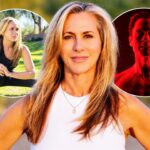
Fitness coach Dana Linn Bailey has been training for nearly 25 years, and her approach has transformed dramatically since her competitive bodybuilding days.
At 43, the former Olympia competitor has completely revamped her training philosophy—not because her old methods were wrong, but because her goals, body, and life priorities have evolved.

In a recent video, Bailey shared the seven biggest changes she’s made to her training regimen as she’s gotten older.
Her insights offer a refreshing perspective on sustainable fitness that prioritizes longevity over ego.
Jump to:
Shorter Workouts, Better Results
Bailey’s first major shift? Cutting workout duration dramatically. Her goal now is to finish training in under an hour—sometimes as quickly as 40 minutes.
This marks a stark contrast to her competitive days, when three-hour gym sessions were the norm.

If you want something simple that actually works, this is one of the most effective tools I’ve used to build strength, conditioning, and endurance without needing a full gym setup.
- Full-body training with one weight using swings, squats, and presses
- Solid cast iron build that feels stable and lasts for years
- Comfortable grip that makes high-rep workouts easier to handle
I was definitely somebody that was more is better. I would train for 3 hours and back then my goals were a lot different. I was trying to get to the Olympia.
Bailey admits she was “a psychopath” whose entire life revolved around the gym. She’d arrive at 7 PM and wouldn’t leave until 10 PM or later, doing endless sets until she literally couldn’t move.
Now, her perspective has shifted entirely. She still incorporates plenty of volume and exercises, but with one clear objective: get in, get it done, and get out.
The takeaway? You don’t need marathon training sessions to build an impressive physique, especially if you’re not preparing for a professional stage.
Leaving the Ego at the Door
Personal records and max-effort lifts? Bailey has left those behind. She no longer cares about hitting one or two-rep maxes or seeing how much weight she can move.
I would rather look like the strongest person in the gym than actually be the strongest person in the gym.
Interestingly, Bailey doesn’t completely dismiss ego lifting. She credits it with helping her build significant size as a beginner—going heavy gave her confidence and wasn’t something she was afraid to do.
But years of heavy lifting take a toll. Shoulders start hurting. Recovery becomes harder. Injuries accumulate.
If you want something simple that actually works, this is one of the most effective tools I’ve used to build strength, conditioning, and endurance without needing a full gym setup.
- Full-body training with one weight using swings, squats, and presses
- Solid cast iron build that feels stable and lasts for years
- Comfortable grip that makes high-rep workouts easier to handle
After a two-year powerlifting stint that “messed her up,” Bailey made the strategic decision to prioritize longevity over lifting impressive numbers. She rarely goes below five or six reps now, focusing instead on building muscle through volume rather than breaking her back under maximal loads.
Intensity Techniques Over Heavy Weight
Bailey’s third evolution involves using advanced intensity techniques rather than constantly chasing heavier weights.
She used to do 50-pound dumbbell lateral raises and 225-pound bent-over rows with questionable form, all in service of moving more weight.
Now? Her philosophy has completely flipped. If she can make 25 pounds feel like 50 pounds, she’s winning.
This approach is particularly important while working through a shoulder injury. To continue building muscle without aggravating the issue, she employs various tactics:
- One-and-a-half reps to extend time under tension
- Pause reps at peak contraction points
- Resistance bands combined with dumbbells for variable resistance
- Supersets and drop sets to maximize muscle fatigue
This strategy preserves tendons and ligaments while still providing progressive overload—just not through constantly adding more weight to the bar.
If you want something simple that actually works, this is one of the most effective tools I’ve used to build strength, conditioning, and endurance without needing a full gym setup.
- Full-body training with one weight using swings, squats, and presses
- Solid cast iron build that feels stable and lasts for years
- Comfortable grip that makes high-rep workouts easier to handle
You don’t necessarily have to progressive overload by adding more weight every single time. Cuz at some point, yeah, you are going to get hurt.
HIIT Over Steady-State Cardio
Bailey’s cardio approach has undergone a complete transformation. Gone are the days of 45-plus minutes on “Stanley the Stairmaster” every single day.
While she still appreciates steady-state cardio for its muscle-preserving benefits and easier recovery, she now prioritizes efficiency. Why spend 45 minutes doing easy cardio when you can get similar or better results in 15 minutes?
Her current preference is high-intensity interval training (HIIT)—short bursts of maximum effort followed by recovery periods. Whether on a treadmill, track, or Peloton bike, she’d rather go extremely hard for a quarter-hour than cruise for an hour.
The formula is simple: sprint, recover, sprint, recover, sprint, recover. It’s not easy—you have to genuinely push yourself—but it saves considerable time without sacrificing results.
Eating Less, Living More
Bailey’s nutrition strategy has also simplified dramatically. She’s no longer eating six or seven meals daily, timed precisely every 2.5 hours by phone alarms.
Back then, I was eating six, seven meals a day. Like absolute psychopath. I had a timer. There was so many days where I was just like, I just don’t feel like eating.
The meal-prep burden alone was overwhelming—packing multiple containers daily, bringing food on airplanes, constantly focused on the next feeding window.
If you want something simple that actually works, this is one of the most effective tools I’ve used to build strength, conditioning, and endurance without needing a full gym setup.
- Full-body training with one weight using swings, squats, and presses
- Solid cast iron build that feels stable and lasts for years
- Comfortable grip that makes high-rep workouts easier to handle
Her goals then required that approach: building maximum muscle mass for the Olympia stage. Now, at a maintenance phase where she’s satisfied with her current size, eating less makes perfect sense.
Less food also means less cardio is necessary to stay lean. It’s a more sustainable, enjoyable lifestyle that doesn’t revolve entirely around meal timing and food prep.
Lower Body Takes Priority
Bailey has shifted her training focus significantly toward legs and glutes—training lower body three times weekly with dedicated quad, hamstring-glute, and additional leg sessions.
This represents a complete reversal from her bodybuilding days when, as a former soccer player with naturally developed legs, she focused primarily on building her upper body.
Goals change, so programming must adapt accordingly. Bailey is also working around injuries—she only recently returned to chest training after a four-month hiatus due to shoulder issues.
Sometimes your training and your programming has to work around injuries. So, right now I’m down a complete body part cuz chest day was hurting me. So, I added some more legs in.
Intelligent training means adjusting your split based on what your body can handle and what aesthetic goals you’re currently pursuing.
If you want something simple that actually works, this is one of the most effective tools I’ve used to build strength, conditioning, and endurance without needing a full gym setup.
- Full-body training with one weight using swings, squats, and presses
- Solid cast iron build that feels stable and lasts for years
- Comfortable grip that makes high-rep workouts easier to handle
Rest Days Are Strategy, Not Weakness
Perhaps Bailey’s most significant mindset shift involves rest and recovery. She spent four or five years training 365 days annually without a single rest day.
Back then, rest meant weakness. Rest meant competitors gaining an edge. Rest meant laziness.
Now, rest means strategy. Bailey has learned to distinguish between laziness—which requires discipline to overcome—and genuine fatigue, which demands recovery.
I will train 7 days a week as long as I feel good, but when my body is telling me, “Hey, you are tired. You need a break.” I actually listen now.
She emphasizes that recovery isn’t about competitors getting ahead of you. Rest days actually improve performance during training sessions, making them an essential component of progress rather than an obstacle to it.
Intuitive Eating Over Rigid Protocols
Bailey’s final and most comprehensive change ties everything together: shifting from rigid structure to intuitive flexibility.
As a competitive bodybuilder, every aspect of her life was governed by scales, timers, and alarm clocks. She had no life outside the gym and kitchen.
If you want something simple that actually works, this is one of the most effective tools I’ve used to build strength, conditioning, and endurance without needing a full gym setup.
- Full-body training with one weight using swings, squats, and presses
- Solid cast iron build that feels stable and lasts for years
- Comfortable grip that makes high-rep workouts easier to handle
While that level of discipline served its purpose for reaching the Olympia stage, it’s simply not sustainable—or necessary—for most people’s fitness goals.
Bailey now takes an intuitive approach: no alarm clocks dictating meal times, no weighing every morsel, no force-feeding when she’s not hungry. She eyeballs portions and eats based on actual hunger cues.
I don’t want to have fitness feel like a freaking job. It’s already hard enough to get in here and now, I have built a structure and the discipline to live my life the best I can.
Her philosophy? Fitness should feel like something you want to do, not torture you have to endure.
Evolution Is the Goal
Bailey’s overarching message is powerful: the goal of fitness isn’t to train the same way forever.
At 43, she has nothing left to prove. She’s already achieved her competitive best. Now, fitness is about continued evolution, learning, and staying dangerous in her 40s and beyond.
The goal of fitness is not to look and be your best at 23. It’s to keep growing, keep learning and be dangerous in your 40s.
Her journey illustrates an important truth: what works at one stage of life—or for one set of goals—may not serve you forever. Adapting your approach based on changing priorities, accumulated wisdom, and listening to your body isn’t compromise. It’s intelligent fitness.
If you want something simple that actually works, this is one of the most effective tools I’ve used to build strength, conditioning, and endurance without needing a full gym setup.
- Full-body training with one weight using swings, squats, and presses
- Solid cast iron build that feels stable and lasts for years
- Comfortable grip that makes high-rep workouts easier to handle
For anyone feeling burned out from overly rigid protocols or wondering if they should still train like they did in their twenties, Bailey’s evolution offers a blueprint for sustainable, lifelong fitness that doesn’t require sacrificing quality of life.