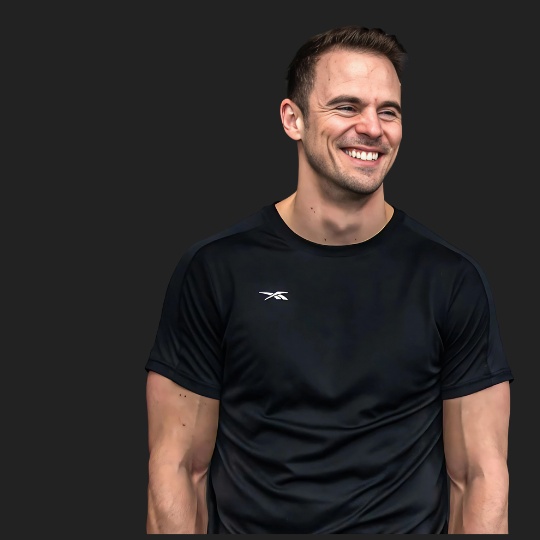

Getting older doesn’t mean getting weaker — at least not if you followed the Charles Poliquin playbook.
By the time he was in his 50s, the legendary strength coach — who trained more than 800 elite athletes in 20+ sports — was still lifting heavy, still building muscle, and still outworking lifters half his age.
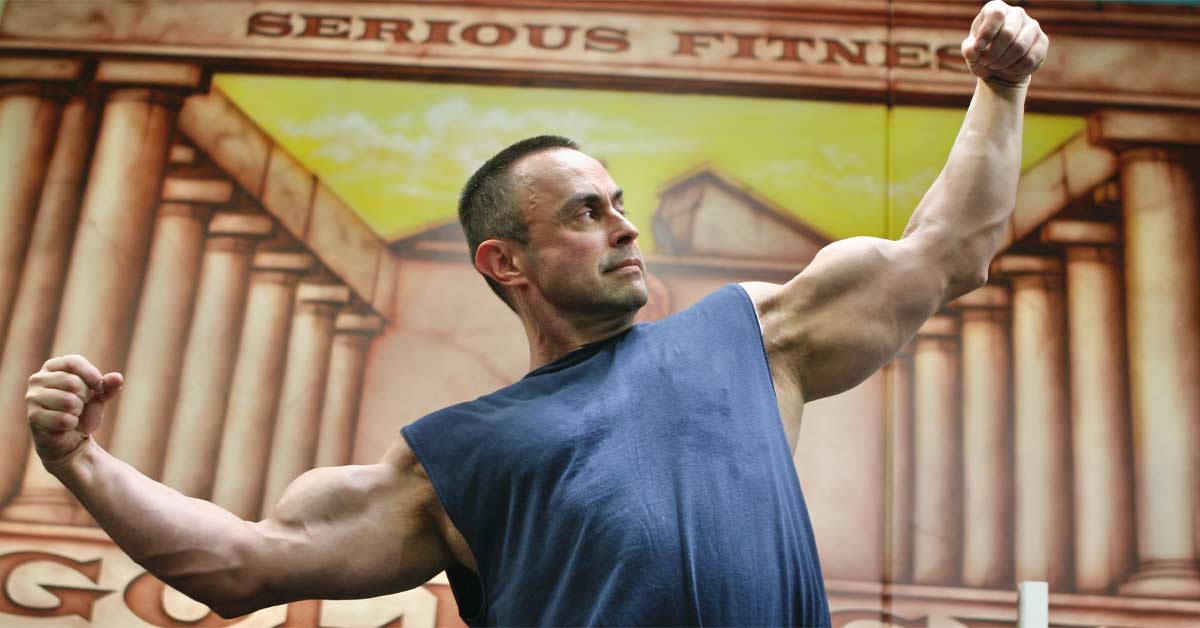
He wasn’t just staying in shape — he was thriving.
From advanced hormone protocols to high-tech recovery, Poliquin used cutting-edge tools to beat Father Time — and the science is finally catching up. This article unpacks exactly how he maintained muscle, performance, and health deep into middle age.
Jump to:
- Strength Doesn’t Have to Decline With Age
- Smart Training, Not Stubborn Training
- Hormone Replacement Therapy: Do It Right — Or Don’t Do It At All
- Peptides: The New Frontier for Muscle and Joint Health
- Eating for Hormones, Not Just Macros
- Joint Health Hacks from the Strength Sensei
- The Two-Hour Doctor Rule
- Final Takeaway: You Don’t Have to Decline — You Just Have to Adapt
Strength Doesn’t Have to Decline With Age
It’s common to hear that strength and muscle mass decline after 30, accelerating into your 40s and 50s.
That’s true — if you do nothing about it.
But Poliquin proved that with the right combination of smart training, hormone optimization, recovery strategies, and targeted nutrition, you can continue building lean mass and crushing PRs well past midlife.
“If you’re 54 and training right, you can still be stronger than when you were 30. But you have to be smarter — not just tougher,” he said.
Smart Training, Not Stubborn Training
Poliquin never trained like a 20-year-old — and that’s exactly why he kept making gains.
After 50, he emphasized:
- Lower training frequency (but higher quality)
- More structured deloads
- Joint-friendly movements
- Shorter workouts with higher density
He leaned heavily on advanced techniques like tempo manipulation, eccentric loading, and cluster sets — all of which create massive muscle stimulus without excessive volume or wear and tear.
His goal was to train hard without unnecessary inflammation. He didn’t chase soreness or exhaustion — he chased results.
“You don’t get stronger by getting tired,” Poliquin often reminded students.
Hormone Replacement Therapy: Do It Right — Or Don’t Do It At All
One of Poliquin’s secret weapons for longevity? Hormone Replacement Therapy (HRT) — but only when it was necessary and properly managed.
He rejected the reckless, one-size-fits-all protocols pushed by shady clinics. Instead, he worked with elite anti-aging doctors to monitor:
- Testosterone
- DHEA-Sulfate
- Estrogen and estrogen metabolites
- Salivary cortisol
- Thyroid function
“Testosterone alone won’t fix you. You need to monitor everything — or you’re just guessing,” he said.
He also emphasized ratios, not just levels. For example, testosterone without adequate DHEA-Sulfate could leave you strong but unmotivated. Too much test without managing estrogen could tank your lipid profile or lead to gyno.
And forget blasting grams of testosterone. His protocols were moderate, medically supervised, and always tailored to bloodwork.
Peptides: The New Frontier for Muscle and Joint Health
Long before most lifters knew what a peptide was, Poliquin was already experimenting with them for joint regeneration, sleep, and lean mass retention.
While many peptides remain “for research purposes only,” he was particularly interested in:
- BPC-157 – for soft tissue healing and gut repair
- TB-500 – for muscle recovery and inflammation
- CJC-1295 + Ipamorelin – for growth hormone stimulation without shutting down natural production
But again, it wasn’t about blasting everything. His protocols were strategic.
“The cowboys on the internet don’t know what they’re doing. Peptides work — if you know when and how to use them,” he warned.
Eating for Hormones, Not Just Macros
Poliquin’s nutrition advice evolved over the decades. But by his 50s, he prioritized hormonal balance over just calorie counting.
Here’s what changed:
- Higher fat intake, especially from wild game like yak, elk, and wapiti (for omega-3s and CLA)
- Targeted carb intake, based on insulin sensitivity (tested via glucose, HbA1c, and reactive insulin response)
- Emphasis on micronutrients, especially magnesium, zinc, selenium, and chromium
He also recommended high-dose fish oil — up to 30–40g/day for short periods — for fat loss, inflammation reduction, and cognitive support.
“Every gene in the human genome has a receptor site for omega-3. It affects everything,” he said.
Joint Health Hacks from the Strength Sensei
Training heavy over 40 means one thing: joint health becomes non-negotiable.
Poliquin’s go-to strategies:
- Soft-tissue therapy, including ART and fascial work
- Topical gotu kola cream for skin elasticity and collagen support
- Collagen support supplements like glycine, proline, and vitamin C
- Rotating joint angles and grips to prevent wear
He was also a big believer in environmental cleanup — avoiding xenoestrogens in lotions, plastics, and household products to support testosterone and reduce inflammation.
The Two-Hour Doctor Rule
Another Poliquin gem: if your doctor doesn’t spend two hours on your first visit, find another one.
He worked only with physicians who:
- Specialized in functional medicine or integrative endocrinology
- Understood how training affects lab markers
- Didn’t treat “normal” lab values as optimal
“Normal is Homer Simpson. I want optimal,” he famously said.
His favorite resource for finding quality doctors? ACAM.org, the American College for the Advancement of Medicine.
Final Takeaway: You Don’t Have to Decline — You Just Have to Adapt
Charles Poliquin didn’t age gracefully — he aged powerfully.
He trained smart, optimized his hormones, nourished his joints, and never stopped testing, tweaking, and evolving.
If you’re over 40 — or planning to get there — his approach offers a clear roadmap:
- Personalize everything
- Track bloodwork
- Lift heavy (but smart)
- Recover harder than you train
- Stay curious
Strength after 50 isn’t a pipe dream. It’s a system.
And Charles Poliquin built it.