Emulsifiers lurk in frozen desserts, coffee creamers, salad dressings, and countless processed foods, creating smooth textures consumers crave.
But mounting research suggests these common food additives may be wreaking havoc on gut health in ways most people never consider.
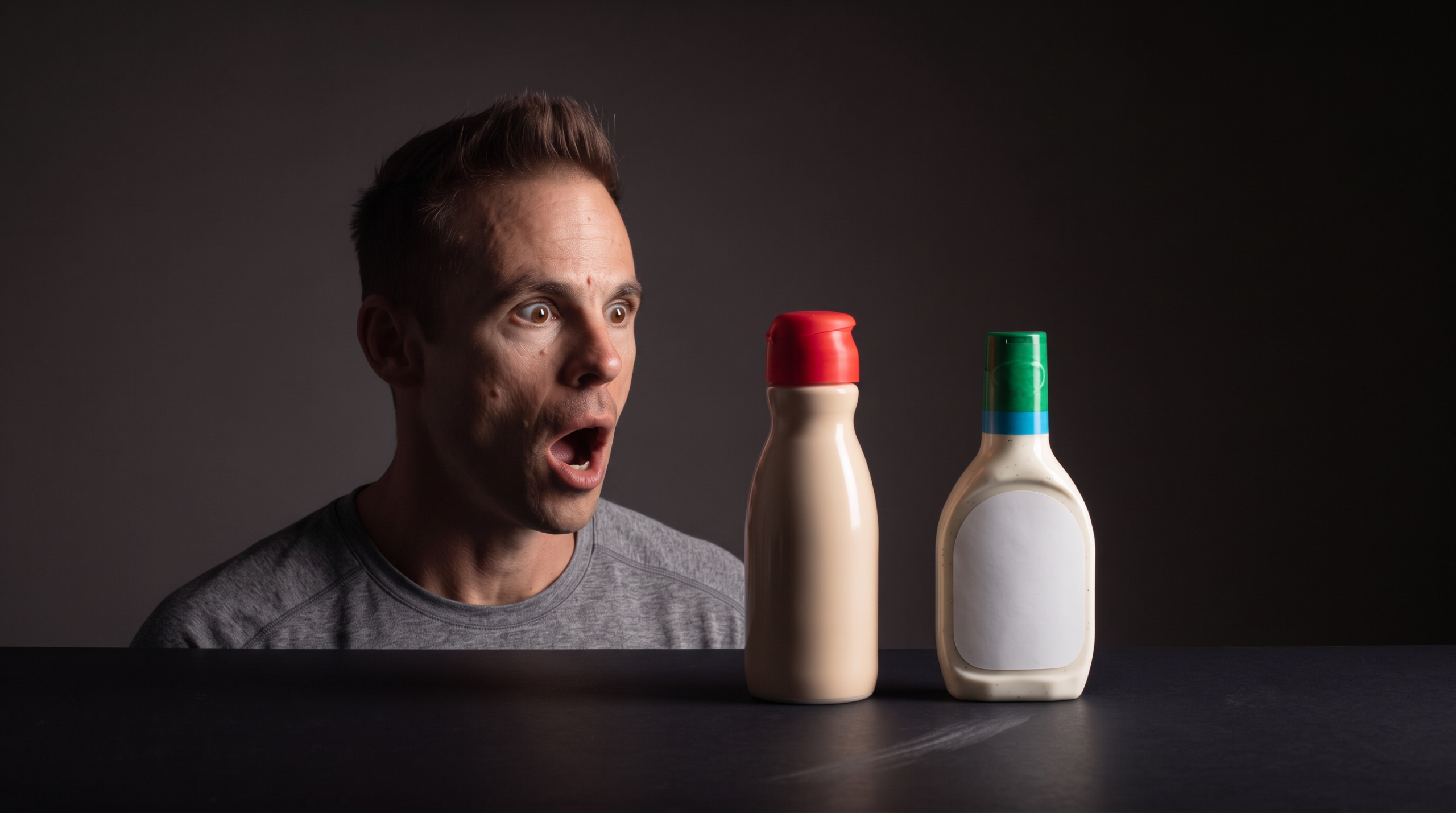
Dr. Jacob Torres, a researcher studying kidney disease and gut barrier function, has been investigating how emulsifiers like polysorbate disrupt the protective mucus layer lining the digestive tract.
What he’s discovered in the lab raises serious questions about ingredients most people consume daily without a second thought.
Jump to:
- The Mucus Layer: Your Gut’s First Line of Defense
- How Emulsifiers Strip Away Protection
- Polysorbate: The Laboratory Detergent in Your Food
- Beyond Polysorbate: Other Emulsifiers to Watch
- What Happens When the Barrier Breaks Down
- The Symptoms of Compromised Gut Integrity
- The Worst Offenders in Your Diet
- The Hidden Cost of Restaurant Salads
- The Oxalate Connection
- Butyrate: The Gut’s Repair Signal
- Practical Steps for Protection
- The Energy Cost of Constant Repair
- When “Healthy” Choices Backfire
- The Research Gap and What Lies Ahead
- Sources
The Mucus Layer: Your Gut’s First Line of Defense
The intestinal mucus layer serves as a critical barrier between the food passing through your digestive system and the delicate cells lining your gut. This protective coating measures approximately five to ten microns thick, depending on location.
In the small intestine, mucus is constantly secreted and coats the intestinal surface. In the colon, each fecal pellet gets wrapped in its own mucus layer—this is actually where researchers typically measure mucus thickness in laboratory studies.
The main mechanism I think that is you know we would probably point to it’s the easiest to see is that you can see that the mucus is just gone.
This mucus barrier keeps bacteria and undigested food particles safely contained within the gut, preventing them from making direct contact with intestinal cells.
How Emulsifiers Strip Away Protection
Emulsifiers work by combining water and fat into smooth, creamy textures. The chemistry behind this process is what makes them potentially problematic for gut health.
These compounds have both hydrophobic (water-repelling) and hydrophilic (water-attracting) portions. The hydrophobic part is typically a long fatty tail, while the hydrophilic portion forms the head.
When mixed in solution, emulsifiers naturally form structures called micelles—tiny spheres with hydrophobic cores that pick up fat-soluble substances. This is the same basic structure as liposomes used in supplement delivery.
In the lab we use a lot because we want to maximize the effect. So we are at at you know magnitudes above what you would see like we’re at extreme levels.
The problem? This same emulsifying action that creates smooth ice cream also breaks down the mucus layer protecting your intestinal lining. The effect is dose-dependent—more emulsifier causes more disruption.
Polysorbate: The Laboratory Detergent in Your Food
Polysorbate comes in different forms—polysorbate 20, 60, and 80 being the most common. The numbers indicate the length of the fatty acid tail; higher numbers mean longer chains.
In research laboratories, scientists refer to polysorbate as “Tween” and use it as a detergent to break open cells. That same compound appears on ingredient labels of products people consume daily.
It’s just a detergent. So we use it for like making one of lice cells or something. We use the detergents right and detergents have a usually a hydrophobic and a hydrophilic portion.
Chain length matters because it affects how micelles form and how large they become. Longer tails can create bigger spheres, though there may be diminishing returns if chains become too long and start knotting up on themselves.
Beyond Polysorbate: Other Emulsifiers to Watch
The concern extends beyond polysorbate to other emulsifiers sharing similar chemical structures. Lecithin, commonly derived from soy or sunflower, also functions as an emulsifier, though it may have a shorter fatty acid tail than polysorbate.
Any substance with a hydrophobic tail and hydrophilic head can potentially emulsify the mucus layer. This isn’t unique to synthetic compounds—it’s about the chemical structure and its mechanical action.
The difference lies in concentration and frequency of exposure. While bile acids produced naturally by the body also act as emulsifiers during digestion, ancestrally humans wouldn’t have encountered concentrated dietary emulsifiers regularly.
What Happens When the Barrier Breaks Down
When emulsifiers strip away the mucus layer, bacteria and food particles can make direct contact with intestinal cells. This triggers a cascade of potentially harmful effects.
Below the mucus layer lie junctional barriers—semi-permeable connections between cells that regulate what passes through. These junctions allow some substances through while blocking others.
Direct contact with bacteria or food particles can trigger inflammatory responses that weaken these junctions. When the barrier becomes compromised, it opens and allows substances to pass into the bloodstream.
If it’s a, you know, pathogenic bacteria that is interacting with that surface, um, the surface of the epithelial cells, it might damage them in some way that eventually the it becomes like a hole.
The Symptoms of Compromised Gut Integrity
Damage from emulsifiers can manifest in subtle or dramatic ways, depending on individual sensitivity and level of disruption. Initial effects may be minimal because the gut demonstrates remarkable resilience.
However, repeated injury accumulates over time. One concerning possibility is the development of new food allergies—a barrier disruption allowing proteins to trigger immune responses that wouldn’t occur with an intact gut lining.
Common symptoms of barrier disruption include:
- Joint pain and inflammation
- Brain fog and cognitive difficulties
- Persistent fatigue or malaise
- Digestive discomfort and bloating
- Body aches similar to mild food poisoning
These symptoms often stem from bacterial lipopolysaccharide (LPS) entering the bloodstream. LPS is a component of certain bacterial cell walls that triggers strong inflammatory responses even at low levels.
If anybody’s ever been food poisoned and had like the body aches and the pain of all that’s like the severe LPS like being exposed to it like you just like are just exposed to a lot of that at once.
The Worst Offenders in Your Diet
Coffee creamers, particularly non-dairy varieties, rank among the most problematic sources of emulsifiers. These products often contain polysorbate along with preservatives like sodium benzoate, and people consume them on empty stomachs—maximizing gut exposure.
Frozen desserts, ice cream sandwiches, and novelty ice creams frequently contain emulsifiers to maintain smooth texture through freeze-thaw cycles. Not all ice cream contains these additives, but many commercial varieties do.
Shelf-stable salad dressings present another concern. Ranch dressing, blue cheese, and creamy varieties sitting unrefrigerated on store shelves almost certainly contain emulsifiers to prevent separation.
A simple rule: If a creamy product doesn’t require mixing or stirring before use, it probably contains emulsifiers. Natural products like some hummus or tzatziki may separate and need mixing—an inconvenience that signals the absence of these additives.
The Hidden Cost of Restaurant Salads
Many health-conscious diners choose salads when eating out, believing they’re making the better choice. Unfortunately, restaurant salads often deliver a concentrated dose of the cheapest commercial dressings available.
These dressings maximize shelf stability and minimize cost—goals achieved through liberal use of emulsifiers, seed oils, and preservatives. Combined with high sodium and calorie content, the “healthy” salad becomes surprisingly problematic.
Requesting olive oil and vinegar sidesteps this issue, though few diners choose this option. The reality is that what makes most restaurant salads palatable is precisely what makes them questionable for gut health.
The Oxalate Connection
When gut barrier integrity is compromised, other dietary compounds become more problematic. Oxalates, found in high concentrations in spinach, chard, and many greens, can cause additional damage.
Oxalates give certain vegetables their characteristic gritty texture—you’re literally feeling calcium oxalate micro-crystals or nano-crystals forming as oxalates bind to calcium.
Free oxalate can be absorbed through the gut lining, but once crystallized, these compounds become too large for absorption and should be excreted. However, when dissolved, oxalates can enter circulation and damage mitochondria and other cellular structures.
Oxalate crystals are bad. They tear they tear the they just physically damage cells and they also have some inhibitory effects as well when they’re not crystals.
Consuming high-oxalate foods with calcium-rich foods helps bind oxalates in the digestive tract, promoting excretion rather than absorption. Yogurt, kefir, or cheese consumed with spinach or chard can mitigate oxalate absorption.
Butyrate: The Gut’s Repair Signal
Short-chain fatty acids, particularly butyrate, play crucial roles in maintaining and repairing the gut mucus barrier. Butyrate stimulates mucus production and thickens the protective layer.
The gut microbiome produces butyrate through fermentation of dietary fiber. Beneficial bacteria in the colon break down resistant starch and soluble fiber into butyrate and other short-chain fatty acids.
While foods like ghee and butter contain some butyrate in the form of tributyrin, the amounts pale in comparison to what a healthy gut microbiome produces from fermenting fiber-rich foods.
Tributyrin Supplementation
Tributyrin supplements offer a way to deliver butyrate directly to the gut. In Dr. Torres’s animal research, doses equivalent to four to five grams daily showed significant benefits.
Human supplements typically provide 500 milligrams to one gram per serving. The triglyceride form may help tributyrin survive stomach acid better than free butyrate, allowing more to reach the colon where it’s needed.
I measured um serum butyrate after giving these animals all this butyrate and it doesn’t seem to affect serum butyrate. So I think all it’s just getting consumed in the gut.
Colonocytes—the cells lining the colon—appear to consume butyrate before it enters general circulation, using it for energy and repair functions. This makes tributyrin potentially valuable for people with compromised gut barriers who can’t consume adequate fiber.
Practical Steps for Protection
Reading ingredient labels becomes essential. Look for polysorbate (followed by any number), lecithin, and other emulsifiers in creamy, shelf-stable products.
Choose refrigerated versions of dressings, dips, and sauces when possible. Products requiring refrigeration often rely less heavily on emulsifiers and preservatives.
Don’t fear products that separate or require stirring—this natural separation indicates the absence of synthetic emulsifiers. A few seconds of mixing is a small price for better gut health.
Prioritize fiber intake from vegetables, fruits, and resistant starches to support butyrate-producing bacteria. A healthy microbiome provides natural protection against occasional emulsifier exposure.
Consider tributyrin supplementation if following restrictive diets that limit fiber intake, such as low-FODMAP protocols or carnivore diets. Those dealing with small intestinal bacterial overgrowth may particularly benefit.
The Energy Cost of Constant Repair
Intestinal cells turn over rapidly—approximately every few days. This constant renewal demands significant energy and resources from the body, requiring substantial amounts of NAD and cellular energy.
While intestinal cells themselves may not be directly destroyed by emulsifiers, the mucus-producing goblet cells work overtime attempting to replace stripped-away mucus. These cells can only produce so much mucus in any given time period.
Chronic exposure to emulsifiers forces the gut into constant repair mode, diverting energy that could support other bodily functions. This metabolic burden may contribute to the fatigue and malaise many people experience.
When “Healthy” Choices Backfire
The combination of raw spinach (high in oxalates) with commercial ranch dressing (loaded with emulsifiers) and coffee with non-dairy creamer represents perhaps one of the most gut-damaging meals imaginable.
Each component compounds the problems of the others: oxalates damage cells, emulsifiers strip protective barriers, and the combination allows increased absorption of inflammatory compounds.
Home-prepared meals offer significantly more control. Making ranch dressing from scratch requires just a few simple ingredients—cream, herbs, and seasonings—without the shelf-stabilizing chemicals found in commercial versions.
Real mayonnaise contains eggs, oil, and acid—that’s essentially it. Commercial versions lasting months unrefrigerated achieve that feat through chemistry, not quality ingredients.
The Research Gap and What Lies Ahead
Despite growing evidence from animal studies, human research on emulsifiers remains limited. The challenge lies in obtaining meaningful data—researchers can’t easily biopsy human intestines or measure real-time mucus production.
Fecal samples can measure butyrate levels and provide some insight into gut function, but they reveal nothing about what’s happening in the small intestine where much nutrient absorption occurs.
Current animal research shows consistent patterns of mucus disruption and barrier compromise. While laboratory doses often exceed typical dietary exposure, the dose-dependent nature of the effect suggests any regular consumption warrants caution.
The cumulative nature of gut damage means effects may not appear immediately. By the time symptoms manifest, significant barrier disruption may have already occurred, making prevention far preferable to treatment.
As research continues, the evidence increasingly suggests that common food additives designed for convenience and shelf life extract a real cost—one paid by the intricate barrier system protecting gut health and, by extension, overall wellbeing.
Sources
- Viennois E et al., Inflammatory Bowel Diseases (2021) – https://pubmed.ncbi.nlm.nih.gov/33616648/
- Chassaing B et al., Nature (2015) – https://pubmed.ncbi.nlm.nih.gov/25731162/
- Laudisi F et al., International Journal of Molecular Sciences (2019) – https://pubmed.ncbi.nlm.nih.gov/31614683/
- Bischoff SC et al., BMC Gastroenterology (2014) – https://pubmed.ncbi.nlm.nih.gov/25407511/
- Naimi S et al., Microorganisms (2020) – https://pubmed.ncbi.nlm.nih.gov/33086688/
- Cani PD et al., Gut (2008) – https://pubmed.ncbi.nlm.nih.gov/17604542/
- Roager HM, Licht TR, Nature Reviews Microbiology (2018) – https://pubmed.ncbi.nlm.nih.gov/29276082/