Exercise might be the ultimate brain booster, but there’s a catch most people miss.
In a recent conversation, neuroscientist Richard Davidson revealed why combining meditation with physical activity creates something far more powerful than either practice alone.
The secret lies in understanding what neuroplasticity actually does—and doesn’t do—for mental health.
What Davidson shared challenges everything most fitness enthusiasts believe about exercise and brain health.
Jump to:
The Neuroplasticity Paradox
Vigorous aerobic exercise stands as the most scientifically validated method for increasing neuroplasticity—the brain’s ability to form new neural connections and adapt.
But here’s what research reveals: neuroplasticity itself is completely neutral regarding mental well-being.

If you want something simple that actually works, this is one of the most effective tools I’ve used to build strength, conditioning, and endurance without needing a full gym setup.
- Full-body training with one weight using swings, squats, and presses
- Solid cast iron build that feels stable and lasts for years
- Comfortable grip that makes high-rep workouts easier to handle
Davidson explained the paradox clearly.
If you increase neuroplasticity and you’re thinking a lot of unwholesome thoughts, toxic thoughts, if you’re in an environment which is stressful, you will increase the likelihood of being stressed and of being challenged because the increase in neuroplasticity is increasing the extent to which those negative thoughts are being encoded.
Think of neuroplasticity as a recording device. It doesn’t discriminate between positive and negative experiences—it simply amplifies whatever you’re focusing on.
Exercise cranks up brain’s recording capacity. But what you record during that heightened state determines whether you’re building resilience or reinforcing stress patterns.
Contemplative Aerobics: The Ultimate Mind-Body Practice
Davidson’s solution doesn’t require choosing between meditation and exercise—or adding extra time to your routine.
He calls it “contemplative aerobics,” and the practice is remarkably simple.
Next time you do physical exercise, spend a few moments as you are ramping up to do the exercise. It may be putting on your sneakers, getting yourself ready, or it can even be during the exercise itself. Reflect on how doing this physical exercise is beneficial not only for yourself, but it’s beneficial for all of those that you touch directly or indirectly.
Instead of focusing solely on personal benefits—better mood, sharper focus, cardiovascular health—expand your awareness to include how your improved health benefits everyone around you.
If you want something simple that actually works, this is one of the most effective tools I’ve used to build strength, conditioning, and endurance without needing a full gym setup.
- Full-body training with one weight using swings, squats, and presses
- Solid cast iron build that feels stable and lasts for years
- Comfortable grip that makes high-rep workouts easier to handle
Why This Mental Shift Matters
Davidson describes this as invoking a mindset of generosity and altruism while engaging in neuroplasticity-boosting activity.
When you combine increased neuroplasticity from exercise with wholesome, connection-oriented thoughts, you’re essentially encoding prosocial patterns into your brain at an accelerated rate.
The neuroscientist emphasized that this approach represents ideal conditions for mental training.
Invoking that kind of mind state or mindset, which is a mindset of generosity and altruism, is filling your mind with this virtuous wholesome motivation while you’re doing something that will increase your neuroplasticity. That is the ideal combination.
Social Connection Gets Under Your Skin
Shifting focus from purely personal benefits to collective well-being taps into one of health’s most powerful forces: social connection.
Davidson referenced startling research from former US Surgeon General Vivek Murthy’s 2023 health advisory.
Loneliness poses a greater risk for premature death than smoking 15 cigarettes daily.
If you want something simple that actually works, this is one of the most effective tools I’ve used to build strength, conditioning, and endurance without needing a full gym setup.
- Full-body training with one weight using swings, squats, and presses
- Solid cast iron build that feels stable and lasts for years
- Comfortable grip that makes high-rep workouts easier to handle
Social isolation doesn’t just affect mood—it fundamentally alters biology. Chronic loneliness triggers inflammatory responses throughout body systems, accelerating disease processes.
Conversely, practices that foster connection with others produce measurable anti-inflammatory effects.
We know that connecting with others is anti-inflammatory. Practices which help us connect to others actually change our biology in very meaningful ways that are really important for our mental and physical health.
From Thought to Behavior Change
Simply thinking altruistic thoughts during exercise might sound too easy to create meaningful change.
Davidson’s research suggests otherwise—when practiced systematically.
If it’s done on a regular basis, systematically as a practice with intentional focusing of the mind on those topics, the answer is unequivocally yes.
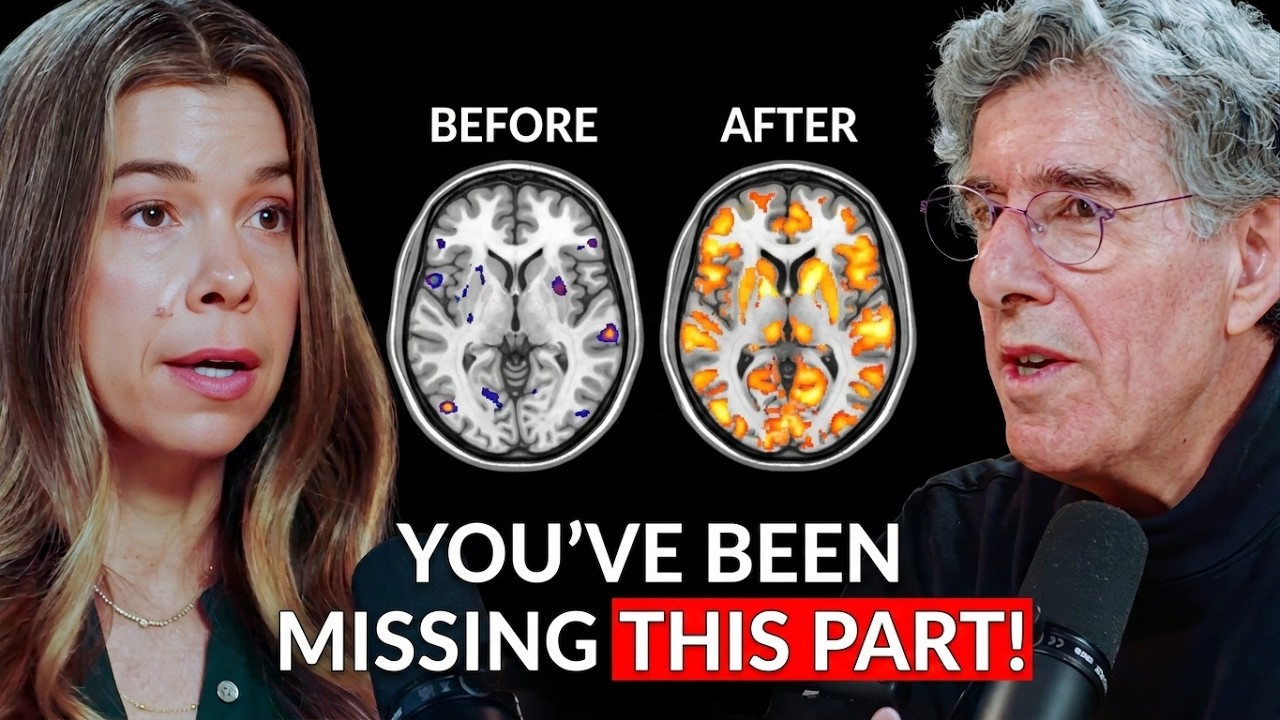
His team conducted randomized controlled trials measuring both behavior and brain structure using MRI technology. Results showed that regular practice produces observable changes in:
- Altruistic behavior in real-world situations
- Brain function measured through neuroimaging
- Brain structure visible on MRI scans
Consistency matters more than duration. Davidson noted it doesn’t take much time, but sustainable practice requires ongoing commitment.
If you want something simple that actually works, this is one of the most effective tools I’ve used to build strength, conditioning, and endurance without needing a full gym setup.
- Full-body training with one weight using swings, squats, and presses
- Solid cast iron build that feels stable and lasts for years
- Comfortable grip that makes high-rep workouts easier to handle
Mental Hygiene as Essential as Dental Hygiene
Davidson offered a compelling analogy that reframes how we should view contemplative practices.
When humans first evolved, none of us were brushing our teeth and yet most people, I’m sure every listener of this podcast spends at least a few minutes a day brushing their teeth. It’s not part of our genome. We’ve learned to do that.
Tooth brushing isn’t instinctive—it’s a learned behavior we’ve collectively adopted because evidence demonstrates its value.
Davidson argues mental nourishment deserves similar priority. Research indicates spending even less time than we spend brushing teeth on contemplative practices would transform individual and collective well-being.
Building Your Practice
Starting contemplative aerobics requires minimal adjustment to existing routines:
- Before exercise: While lacing shoes or warming up, spend 30-60 seconds reflecting on how improved health benefits people around you
- During exercise: Periodically return attention to connection—how physical vitality enhances your capacity to support family, friends, colleagues, community
- Maintain consistency: Like physical training, neuroplastic changes require regular practice to sustain benefits
- Expand gradually: Begin with brief moments of altruistic reflection; naturally extend duration as practice becomes habitual
Davidson emphasized that these practices work similarly to physical exercise—benefits accumulate with regular engagement but diminish when practice stops.
Just like physical exercise, you know that you can’t work out for a couple of weeks and then think that the improvements that you may have gleaned from that are going to last forever if you stop working out. It’s a practice that you continue to do for hopefully the remainder of your life.
The neuroscience is clear: exercise creates optimal conditions for brain change, but intentional mental content determines whether those changes promote flourishing or reinforce negative patterns. Combining vigorous physical activity with contemplative awareness of connection creates synergistic effects neither practice achieves alone.
If you want something simple that actually works, this is one of the most effective tools I’ve used to build strength, conditioning, and endurance without needing a full gym setup.
- Full-body training with one weight using swings, squats, and presses
- Solid cast iron build that feels stable and lasts for years
- Comfortable grip that makes high-rep workouts easier to handle