There’s a movement that’s been hiding in plain sight for centuries, quietly fixing rounded shoulders, tight hips, and forward head posture—all while building bulletproof strength through your entire backside.
It’s called the crab position, and according to fitness experts who’ve studied movement patterns across multiple disciplines, it might be the missing link in modern training programs.
While push-ups dominate gym routines and build impressive front-side muscles, most people completely neglect the muscles they can’t see in the mirror.
That’s a costly mistake that leads to imbalanced bodies, chronic pain, and posture that makes you look decades older than you actually are.
Jump to:
- Why Modern Life Is Destroying Your Posture
- The Beginner Crab: Your Starting Point
- Proper Form: Setting Your Shoulders Correctly
- The Full Crab Press: Unlocking Elite Mobility
- How the Crab Fixes Your Entire Body
- The Push-Up for Your Backside
- Movement Disciplines That Have Mastered the Crab
- Taking It Further: The Crab Crawl
- Why Children Can Do This Easily (And Adults Can’t)
- Advanced Variation: The Crawl Switch
- A Simple Weekly Protocol
Why Modern Life Is Destroying Your Posture
One hundred years ago, most people spent their days on their feet. Old photographs reveal something striking: people stood differently, moved differently, and carried themselves with natural pride.
Today’s humans have become stiff from hours hunched at desks, slumped in car seats, and curved over smartphones. Modern culture systematically slumps us forward in nearly every daily activity.
This creates tight front shoulders, a rounded upper back (kyphotic posture), and a cascade of compensations throughout the entire body. What’s needed is a movement that elongates the spine, activates the back of the shoulder, and opens up the chest.
Enter the crab position—a deceptively simple posture that reverses years of slouching.
The Beginner Crab: Your Starting Point
Most people can perform this stretch regardless of age or fitness level, making it an accessible entry point into better movement.
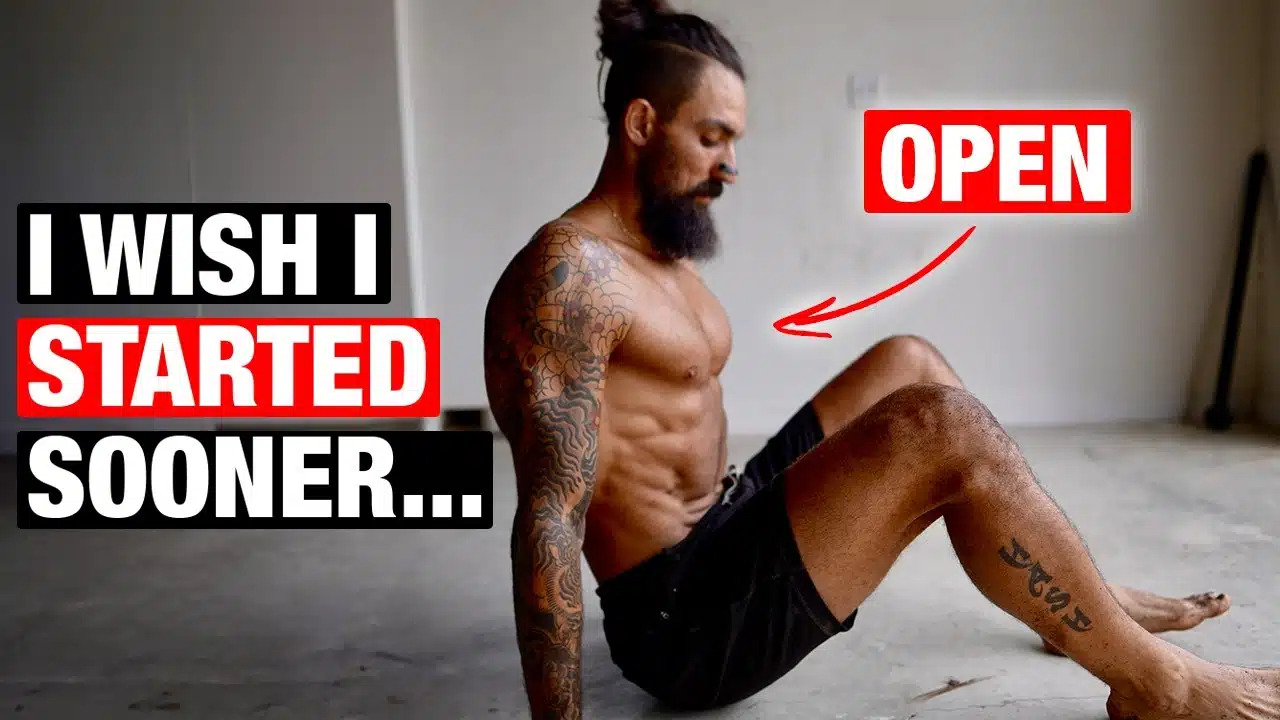
Here’s the basic setup:
- Sit on the ground with hands placed directly behind your hips
- Lift your hips off the floor
- Feel the back of your shoulder engage
- Notice a slight stretch across the front of your chest and shoulders
When ready to progress, rock your hips forward. This pulls the arm further behind the body, creating an even deeper stretch through all those muscles that have tightened from sitting.
Your ability to reach your arms behind you is highly correlated with the health of your upper spine and shoulders.
As we age, many people experience pain and discomfort with simple tasks. Even buckling a seat belt can become challenging. But this deterioration is completely avoidable with proper shoulder mobility work.
Proper Form: Setting Your Shoulders Correctly
Getting the shoulder position right from the start determines whether you’ll unlock mobility or just strain your joints.
The key is external rotation. Face your fingers away from your body—this naturally helps externally rotate the shoulder joint.
Think about showing your armpit to the wall beside you. Roll the shoulder forward, then back. Repeat this several times before each crab position to properly set the joint.
Without proper shoulder positioning, the body can’t extend correctly. You’ll just compensate with other areas, missing the entire benefit.
The Full Crab Press: Unlocking Elite Mobility
While the beginner crab offers tremendous value, the full crab press or tabletop position unlocks elite levels of full-body mobility.
This position doesn’t just open chest and shoulders—it simultaneously strengthens glutes and stretches hip flexors. The result? A complete revamp of your posture and movement quality.
After setting your shoulders correctly, lift your hips and press upward into full extension. Keep your core tight throughout the movement.
As the arm moves further behind you, you should feel slight retraction in your shoulder blades. Stay strong through your hips and avoid forcing yourself into position without maintaining tension.
How the Crab Fixes Your Entire Body
At first glance, the tabletop seems like primarily a shoulder stretch. But it actually initiates a full-body postural correction that works from head to toe.
Here’s the domino effect of poor posture:
- Stiff shoulders and upper back force overuse of the lower back
- This creates tight hip flexors that pull the pelvis forward
- Ankles become stiff and immobile
- Head shifts forward to counterbalance body weight
It’s a posture nightmare, but the crab position reverses this entire chain reaction.
As you practice the crab regularly, shoulders come back and the upper spine regains extension capability. This elongates your torso, straightens the hip, and activates dormant glute muscles. Forward head posture realigns with the spine, and ankle mobility naturally restores itself.
The Push-Up for Your Backside
Push-ups remain king for building the front side of your body. You can build an impressively aesthetic physique with countless push-up variations.
But the muscles we don’t see in the mirror often get completely neglected—and these posterior muscles are perhaps more important for how you feel and function daily.
The crab press is the push-up for your backside that we’ve all been missing out on.
These are the muscles that help you feel younger, stand with proud posture, and develop a symmetrical, balanced body that moves well in all directions.
Movement Disciplines That Have Mastered the Crab
Yoga has incorporated reverse tabletop for thousands of years as a flexibility and strength builder. Capoeira, the Brazilian martial art, uses the crab position as an escape mechanism and transition into subsequent moves.
Look closely at most movement disciplines—martial arts, gymnastics, dance—and you’ll find variations of the crab position. Athletes understand intuitively that it builds resilient joints, natural functional strength, and bulletproof shoulders.
Taking It Further: The Crab Crawl
Moving from the crab position becomes even more potent. This transforms a stretch into strength, a pose into a pattern, and a position into a practical skill.
Locomotion patterns unlock mobility while developing real-life strength simultaneously. As you move and crawl from this position, your body recognizes that it needs to keep this mobility for functional purposes.
This lives in that beautiful space between strength training and stretching—building capability while expanding range of motion.
The crab crawl teaches your body to coordinate opposite limbs together to move forward and backward. This coordination goes beyond the physical and starts training your brain as well.
Watch how much core activation is required to control this movement. This is body control—something you won’t develop from machines or dumbbells alone.
Why Children Can Do This Easily (And Adults Can’t)
The majority of children can crab crawl effortlessly. Yet as we age, we progressively lose this ability through disuse and compensation patterns.
All you need to focus on is moving opposite limbs simultaneously. Your hips, shoulders, and core will balance automatically in this supported position.
If every adult did this, we’d have far less wrist and shoulder injuries, as well as hunched over spines.
Advanced Variation: The Crawl Switch
The crawl switch transitions from front-side crawl to backside crab position. Now your shoulder must work and strengthen in multiple planes of motion.
Shoulder blade stability increases while overall shoulder mobility skyrockets. But the control and body awareness gained is unmatched.
If you can perform crawl switches effortlessly, there will be no daily life movement that’s too challenging. Your chance of experiencing shoulder, hip, or back pain drops dramatically.
A Simple Weekly Protocol
For those looking for an effective animal movement combination, try this protocol:
- Perform 10 steps of crab crawl forward
- Bear walk back to starting position
- Repeat for 3-5 rounds
Shoulders get strengthened both behind you and overhead, which is essential for balanced development. Legs get stretched in each direction, and you’re moving through patterns that humans naturally thrive on.
No matter which variation appeals to you most, aim to become your own table at least once daily. The cumulative effect of this simple practice can reverse years of postural decline and restore athletic movement quality at any age.