Daniel Craig didn’t stumble into becoming one of cinema’s most physically imposing James Bonds by accident.
Behind every perfectly executed fight scene and shirtless beach moment in Casino Royale was months of brutal, disciplined training that transformed him from leading man to legitimate action star.
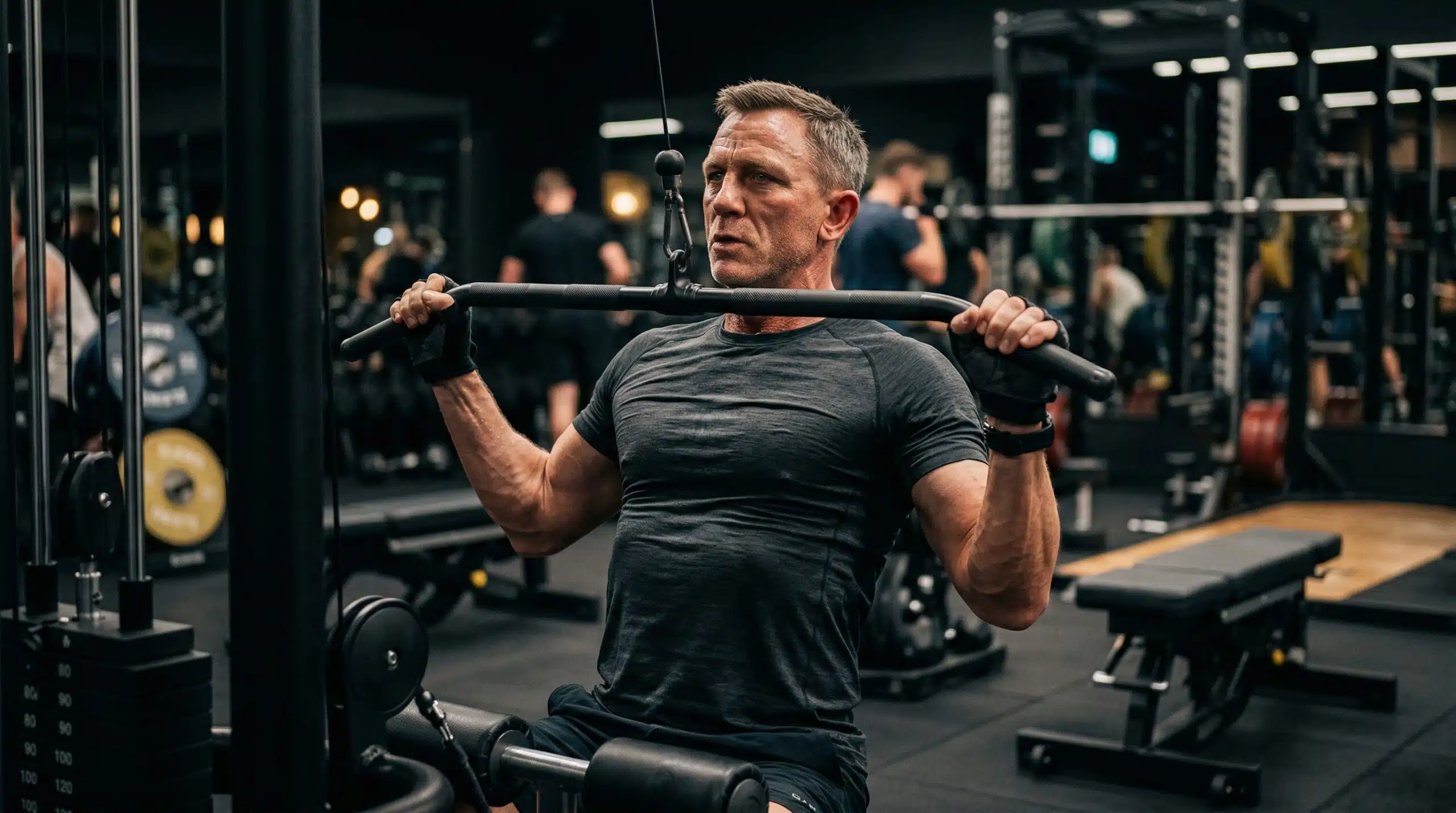
The daniel craig workout became legendary in fitness circles—not because it promised quick fixes or gimmicks, but because it delivered real, functional strength wrapped in an undeniably aesthetic package.
What made Craig’s transformation so remarkable wasn’t just the visible muscle definition, but the explosive athleticism and raw power that made his portrayal of 007 feel authentically dangerous for the first time in decades.
Jump to:
- The Bond Blueprint: What Makes This Workout Different
- The Core Exercises That Built 007
- The Nutrition Protocol: Fueling Transformation
- Training Frequency and Recovery
- Adapting the Program for Different Levels
- The Mental Game: Motivation and Consistency
- Common Pitfalls and How to Avoid Them
- Long-Term Sustainability Beyond the Transformation
The Bond Blueprint: What Makes This Workout Different
Craig’s training philosophy broke from traditional bodybuilding splits that isolate individual muscle groups. Instead, his regimen focused on compound movements that build functional strength—the kind actually useful when performing stunts or maintaining energy through grueling 14-hour shoot days.
The program combines powerlifting fundamentals with circuit training intensity. Think heavy barbell squats followed immediately by explosive plyometric work, then metabolic conditioning that leaves you gasping.
This approach triggers multiple adaptation responses simultaneously: strength gains, cardiovascular conditioning, and the metabolic boost needed to maintain single-digit body fat percentages while building muscle.
Progressive Overload: The Secret Agent’s Secret Weapon
Craig’s trainer reportedly emphasized one non-negotiable principle: progressive overload.
Every session demanded slightly more than the last—an extra rep, five additional pounds, shorter rest periods. This systematic increase in training stress forces continuous adaptation, preventing plateaus that derail most transformation attempts.
Recovery received equal attention to training intensity. Strategic rest days and periodization prevented overtraining while maximizing muscle protein synthesis during downtime.
The Core Exercises That Built 007
Barbell squats formed the foundation—heavy sets of 6-8 reps that built explosive leg power and triggered systemic hormonal responses supporting muscle growth.
Craig reportedly worked up to squatting significantly more than his bodyweight, developing legs capable of generating force through complex stunt choreography.
Upper Body Dominance
Dumbbell bench press and weighted pull-ups created the iconic V-taper physique—broad shoulders tapering to a lean waist. The protocol called for 8-10 controlled reps with challenging weight, emphasizing full range of motion over ego lifting.
Pull-ups particularly received special attention. Starting with assisted variations if necessary, progression toward weighted pull-ups for multiple sets developed back width and thickness that filled out tailored suits perfectly.
Deadlift Power
Deadlifts—performed with meticulous form for 5-7 heavy reps—built posterior chain strength essential for athletic movement. This exercise alone engages over 200 muscles, making it incredibly efficient for building total-body power.
Form mastery came before weight progression. Rounded backs and jerky movements were absolutely forbidden, with lighter loads used initially to groove proper hip hinge mechanics.
Explosive Athleticism
Plyometric box jumps injected explosive power development into the program. These aren’t casual step-ups—they’re maximal effort jumps onto progressively higher boxes, landing softly to protect joints while building reactive strength.
Renegade rows combined anti-rotational core work with pulling strength. Holding plank position while rowing dumbbells alternately builds stability that translates directly to fighting scenes and maintaining posture under fatigue.
Shoulder Development and Metabolic Finishers
Overhead pressing built three-dimensional shoulder development—not just size, but strength through full ranges of motion. Craig’s program alternated between barbell and dumbbell variations to prevent adaptation and address weaknesses.
Kettlebell swings served as metabolic finishers—15-20 explosive reps that spiked heart rate while hammering glutes and hamstrings. This exercise bridges strength and conditioning, building work capacity essential for back-to-back action sequences.
The Nutrition Protocol: Fueling Transformation
Training represents maybe 30% of physique transformation. Nutrition determines the remaining 70%.
Craig’s dietary approach prioritized protein intake around 200-280 grams daily—roughly 1 gram per pound of target bodyweight. This provided amino acids necessary for muscle repair and growth while supporting satiety during caloric restriction phases.
Macro Balance and Timing
Carbohydrates weren’t demonized but strategically deployed. Approximately 280-360 grams daily fueled intense training sessions while maintaining hormone balance critical for muscle retention and energy.
Timing mattered—complex carbs concentrated around training windows when insulin sensitivity peaks and glucose preferentially shuttles into muscle tissue rather than fat storage.
Dietary fats comprised 20-25% of intake, supporting testosterone production and nutrient absorption. Sources emphasized omega-3s from salmon, monounsaturated fats from olive oil and almonds, avoiding inflammatory seed oils.
Sample Daily Eating Structure
Breakfast kicked off with protein-forward meals: oatmeal with protein powder, egg whites with vegetables, nutrient-dense nuts. This combination provided sustained energy while jumpstarting muscle protein synthesis after overnight fasting.
Mid-morning snacks maintained metabolic momentum—Greek yogurt delivering casein protein with slow absorption, paired with fruits providing micronutrients and fiber.
Lunch centered on lean proteins like chicken breast (6-8 ounces), complex carbs from quinoa or brown rice, abundant vegetables providing volume and micronutrients with minimal calories.
Pre-workout nutrition emphasized easily digestible proteins and simple carbs—whey shakes with rice cakes—providing immediate fuel without digestive distress during training.
Dinner featured fattier proteins like salmon, providing omega-3s supporting recovery, paired with fibrous vegetables and moderate carbs from sweet potatoes.
Evening snacks when needed used slow-digesting proteins like cottage cheese or casein powder, feeding muscles during sleep while preventing muscle breakdown.
Training Frequency and Recovery
Craig’s program reportedly followed a four to five day per week schedule, allowing adequate recovery between intense sessions. This frequency balances training stimulus with recuperation—muscles grow during rest, not gym time.
Split variations alternated between upper and lower body emphasis, or push/pull patterns, ensuring fresh energy for each muscle group while maintaining weekly training frequency.
Active Recovery Implementation
Rest days weren’t sedentary. Light activities like swimming, walking, or yoga maintained blood flow supporting recovery without adding training stress. This approach accelerates waste product removal while preserving mobility.
Sleep received non-negotiable priority—seven to nine hours nightly. Growth hormone secretion peaks during deep sleep cycles, making adequate rest essential for muscle growth and fat loss.
Adapting the Program for Different Levels
Beginners shouldn’t attempt Craig’s full intensity immediately. Start with bodyweight variations and lighter loads, focusing obsessively on movement quality.
Goblet squats replace barbell back squats initially. Push-ups progress toward bench pressing. Assisted pull-ups build toward bodyweight variations.
Form mastery prevents injuries that derail progress. Spending weeks perfecting technique with lighter weights creates foundation for safely handling heavier loads later.
Progressive Program Evolution
Intermediate trainees gradually increase volume and intensity. Add sets, reduce rest periods, incorporate advanced techniques like drop sets or supersets once baseline strength establishes.
Advanced practitioners might add training days, implement periodization schemes cycling between strength, hypertrophy, and power phases throughout training blocks.
The Mental Game: Motivation and Consistency
Physical transformation demands mental toughness rivaling any Bond villain defeat.
Craig’s preparation required months of disciplined training when motivation waned. Success came from systems over motivation—scheduled workouts treated like non-negotiable appointments, meal prep eliminating decision fatigue.
Progress tracking maintained momentum. Logging workouts reveals strength gains invisible day-to-day but undeniable across weeks. Photos capture physique changes your mirror misses.
Building Sustainable Habits
Finding training partners creates accountability. Shared suffering during tough workouts builds camaraderie while making gym time social rather than isolating.
Setting process goals rather than outcome goals maintains control. You can’t control exactly when six-pack abs emerge, but you can control completing programmed workouts and hitting macros.
Celebrating small victories—adding weight to lifts, completing extra reps, consistently hitting protein targets—builds positive reinforcement loops supporting long-term adherence.
Common Pitfalls and How to Avoid Them
Overtraining derails more transformations than undertraining. More isn’t always better—recovery drives adaptation.
Ignoring pain signals leads to injuries requiring weeks or months away from training. Distinguish between productive discomfort and warning signs demanding rest or modification.
Inconsistent nutrition undermines training efforts. Weekend dietary free-falls erase weekly deficits. Flexible dieting allows occasional treats while maintaining overall targets.
Expectations vs. Reality
Craig’s transformation took months of dedicated work under professional guidance. Expecting identical results in weeks sets up disappointment.
Genetic factors influence muscle-building rates and fat distribution patterns. Your best physique looks different from Craig’s—and that’s perfectly fine. Focus on your personal best rather than exact replication.
Professional actors have resources most lack—personal trainers, chefs, flexible schedules. Working within real-world constraints while maximizing adherence produces better results than perfect plans you can’t maintain.
Long-Term Sustainability Beyond the Transformation
Reaching goal physique represents beginning, not ending. Maintaining results requires ongoing commitment, though less extreme than initial transformation phase.
Maintenance calories increase above deficit levels. Training volume might slightly decrease while maintaining intensity. This sustainable approach prevents yo-yo cycles plaguing crash transformations.
Building fitness into lifestyle rather than temporary project creates lasting change. Finding training you genuinely enjoy increases adherence over suffering through hated exercises solely for results.
The daniel craig workout ultimately provides framework, not rigid prescription. Adapting principles to personal circumstances, preferences, and goals while maintaining core elements—progressive overload, compound movements, adequate protein, recovery emphasis—delivers Bond-worthy results accessible to dedicated trainees everywhere.