Most men chase muscle growth without understanding what actually creates an impressive physique.
The truth? It’s not about getting bigger everywhere—it’s about building specific muscles that create a balanced, athletic shape.
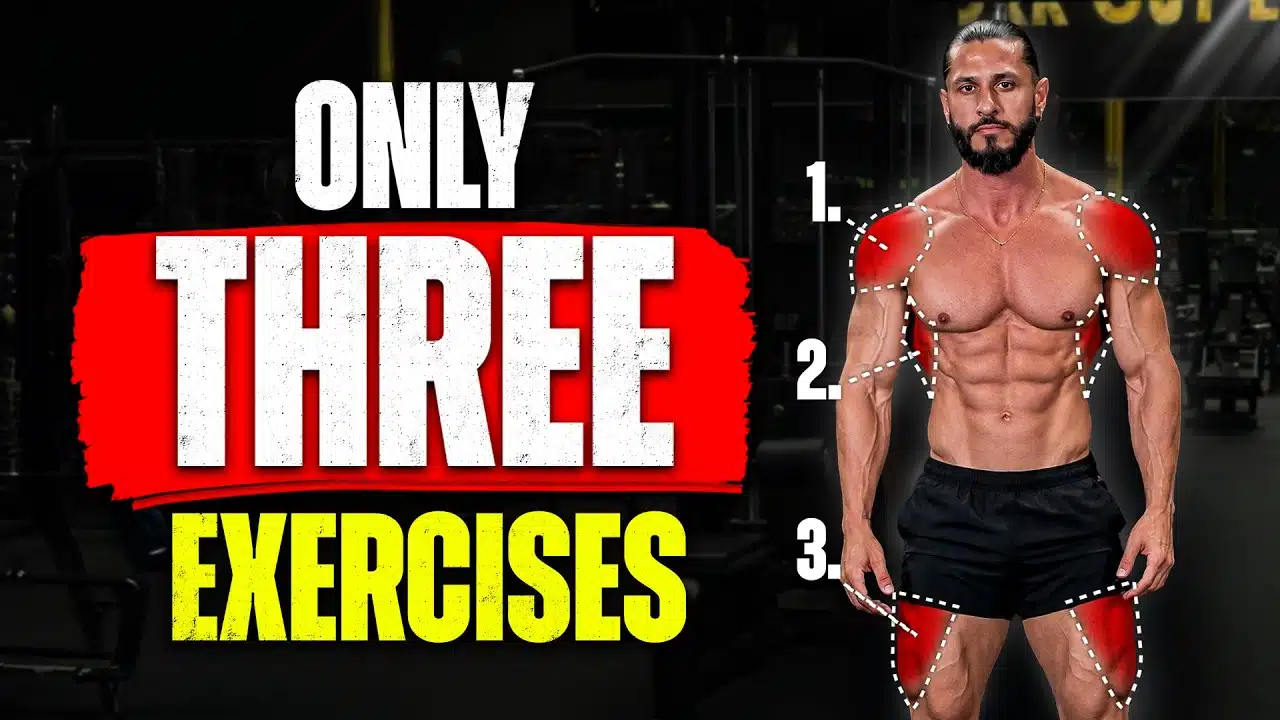
Fitness expert and author Jeremy Ethier recently broke down the exact approach that transforms how a physique looks, especially for men over 40 who need to train smarter, not harder.
His strategy centers on three key movement patterns that maximize visual impact while minimizing recovery costs.
Jump to:
The Science Behind the X-Frame Physique
Research consistently shows that men with broader shoulders relative to their waist are rated as more attractive than those who are simply larger overall. This proportional advantage isn’t genetic—it’s strategic.
Ethier explains this concept through what he calls “the X-frame”—wide shoulders that taper down through developed lats into a narrow waist, then flow into powerful outer quads. Think classic Greek statue rather than modern bodybuilder.
To this day, I still find it a little strange when people compliment my physique because I’m honestly not that big. But over the years, I’ve learned that when you build the right shape, people almost always assume you’re bigger than you really are.
After 40, recovery becomes the limiting factor. Every hard set costs something, and spreading effort equally across all muscles means underinvesting in those that create the most dramatic visual changes.
Movement Pattern #1: Shoulder Abduction for Wider Shoulders
Side delts create the top corners of the X-frame. No muscle delivers more width to your upper body silhouette.
Shoulder abduction—raising your arm out and away from your body—targets this muscle group directly. But execution matters tremendously.
Why Cables Beat Dumbbells for Lateral Raises
Traditional dumbbell lateral raises have a fatal flaw: at the bottom position where side delts reach their longest stretch, gravity pulls straight down, creating almost zero tension. Research suggests this stretched position may be one of the most productive parts of a rep for muscle growth.
Cable lateral raises solve this problem completely. The cable pulls from the side, maintaining constant tension even when your arm rests by your side.
The Leaning Cable Lateral Raise Technique
- Hold onto the machine with your free hand
- Lean your body away from the cable stack
- Let your working arm start slightly across your body for a deeper loaded stretch
- Keep only a slight bend in your elbow throughout the movement
- Use a neutral, palm-down hand position
EMG research demonstrates that a straighter arm increases middle delt activation by creating a longer moment arm. The neutral grip proves more shoulder-friendly while keeping focus squarely on side delts.
Movement Pattern #2: Vertical Pull for the V-Taper
Lats connect your shoulders to your waist, creating the sweeping width that makes your upper body look broader while your waist appears smaller. They’re essential for completing the X-frame.
Both pull-ups and lat pulldowns train this pattern, but grip width makes all the difference when maximizing lat development.
Why Wide Grip Matters
Lats primarily perform shoulder adduction—pulling your arms down toward your sides. They’re one of few muscles that do significant work in pure adduction.
Wide grip naturally emphasizes this adduction pattern, allowing lats to handle more work. Narrower grips shift the movement toward shoulder extension, recruiting traps and rhomboids more heavily and spreading effort across multiple muscle groups.
Research mapping lat moment arms found they have greatest mechanical advantage for shoulder adduction when arms are elevated between 60° and 75°. Wide grip naturally positions your arms in that optimal range.
Lat Pulldowns vs. Pull-Ups
While both exercises build lats effectively, lat pulldowns offer advantages for muscle growth:
- Progressive overload: Smaller load increments allow more precise progression
- Technical consistency: Easier to maintain proper form throughout sets
- Failure training: Push lats harder without grip becoming the limiting factor
- Tension control: Better ability to keep stress exactly where intended
Take a wide grip and drive your elbows into your back pockets as you pull the bar toward your upper chest. Control the weight completely back up, allowing lats to fully lengthen before starting the next rep.
Movement Pattern #3: Knee Extension for Quad Sweep
Just as side delts create width at the top, outer quads (vastus lateralis) create width below the waist. That dramatic quad sweep balances your upper body and completes the X-frame.
Squats, hack squats, and leg presses all involve knee extension, but they’re not optimal for targeting outer quads specifically.
The Leg Extension Advantage
Compound leg movements combine knee extension with hip extension, meaning glutes and adductors share significant workload. For quad specialization, leg extensions offer superior isolation.
Benefits include:
- Pure knee extension with no hip drive involvement
- No balance or stabilization requirements
- Direct effort into quads without secondary muscle interference
- Ability to push very close to failure with minimal systemic fatigue
Full Range of Motion Is Non-Negotiable
Research comparing different leg extension ranges found full range of motion produced greatest overall growth of the vastus lateralis. At three of four measured sites along the muscle, full range training created largest increases in muscle size.
Don’t rush through the top of the rep. Unlike squats and leg presses where load becomes easier near lockout as the knee moment arm shrinks, leg extensions allow you to challenge quads all the way into a hard lockout.
Use full range, control the eccentric portion, and get a strong squeeze at the top of every single rep.
Recovery: The Hidden Currency After 40
You have to think of recovery like a budget, and every hard set is an expense. If you spend your entire budget trying to build every muscle equally, you end up under-investing in the few muscles that make the biggest difference in how your physique looks.
This mindset shift proves crucial for men over 40. Instead of trying to maximize everything, focus on exercises that deliver the highest visual return on your recovery investment.
These three movement patterns—shoulder abduction, vertical pull, and knee extension—create proportions that make physiques look dramatically wider, more athletic, and far more impressive without requiring massive amounts of overall muscle.
Building a Complete Program
Individual exercises form the foundation, but complete programs require proper sets, reps, frequency, and integration with other training priorities. Context determines results.
Ethier emphasizes that strategic muscle building isn’t about abandoning other body parts—it’s about prioritizing the muscles that create the most dramatic visual changes while maintaining overall balance and functionality.
For men over 40, this approach offers a sustainable path to an impressive physique without the recovery demands and injury risks of trying to maximize everything simultaneously.
The X-frame strategy proves that looking bigger isn’t always about being bigger. It’s about being proportional, strategic, and intentional with where you invest your limited recovery resources.