What if you could train for old age the same way athletes train for competition?
Stanford-trained physician Dr. Peter Attia believes most people are sleepwalking into their final decade, unprepared for the physical and cognitive decline ahead.
In a recent 60 Minutes interview with Norah O’Donnell, Attia revealed his radical approach to what he calls “the marginal decade” — those final 10-15 years when capacity plummets to 50% if nothing is done.
His prescription? Treat life like a sport.
Jump to:
- The 75-Year Cliff Nobody Talks About
- Training That Actually Predicts Longevity
- Life Is A Sport — Train Like It
- From Burnt-Out Surgeon to Longevity Pioneer
- What Medicine 3.0 Actually Means
- The Six-Figure Price Tag
- Controversial Recommendations
- Mental Health: The Missing Piece
- The Timeline Exercise That Changes Everything
- Making Longevity Medicine Accessible
The 75-Year Cliff Nobody Talks About
Attia doesn’t mince words about what happens at 75.
At 75, both men and women fall off a cliff. At the population level, it’s unmistakable what happens at the age of 75. That’s what we’re up against.
Most people witness this decline in their own parents and relatives, yet somehow believe it won’t happen to them. But Attia says ignoring reality won’t change the outcome.
His goal isn’t eliminating that final decade — it’s making it as enjoyable as possible by maintaining far more capacity than typical aging allows.
The marginal decade’s not going anywhere. We will all have a final decade of life. My goal is to make the marginal decade as enjoyable as possible.
When O’Donnell asked if people don’t already know this, Attia’s response was telling: They’ve seen it happen, they just haven’t connected the dots to their own future.
Training That Actually Predicts Longevity
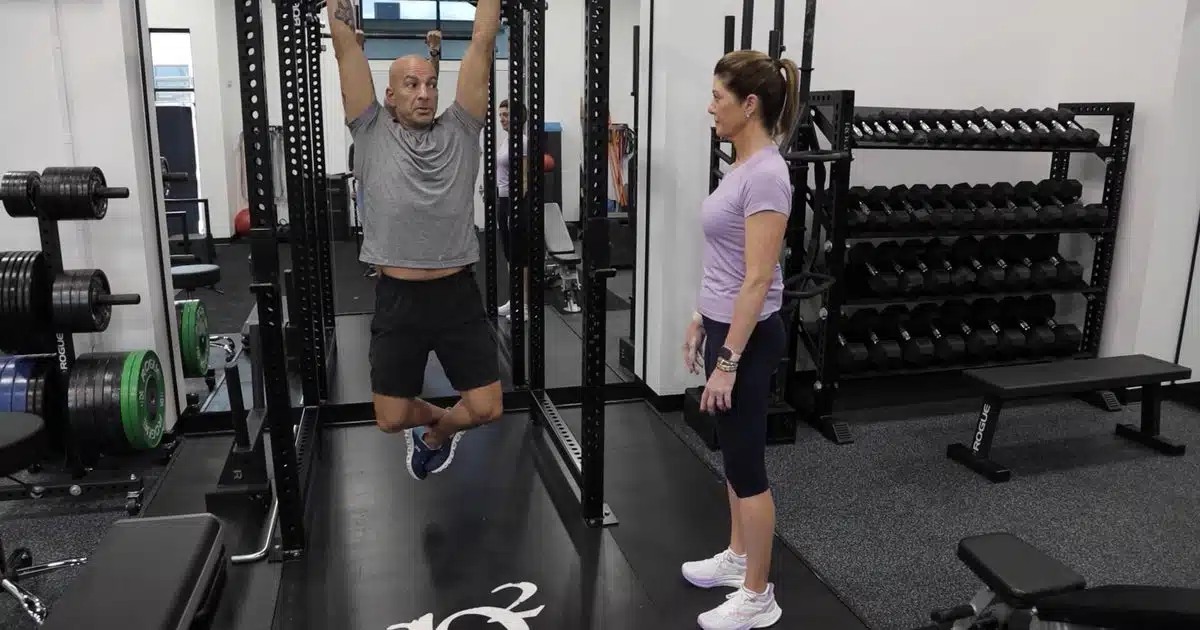
Attia’s practice in Austin, Texas puts patients through two days of intensive physical evaluation — testing their fitness, strength, and movement patterns.
The shocking revelation? Physical fitness metrics predict lifespan better than cholesterol or blood pressure.
I think this is the neglected part of medical testing, is how fit are you, how strong are you, how well do you move? And in many ways, these tests are even more predictive of how long you’re going to live than what I might get out of your bloodwork.
When challenged on this claim, Attia was emphatic: the data clearly shows cardiorespiratory fitness and muscle mass have higher associations with longevity than traditional markers.
VO2 Max: Your Body’s Engine Size
Attia considers VO2 max — essentially measuring how efficiently your body uses oxygen — the key indicator for overall health.
Even O’Donnell, who scored at the 85th percentile for women her age, wasn’t satisfied with her results by Attia’s standards.
Yes, your VO2 max was gonna place you at the 85th percentile for women your age. And I think it’s worth taking a victory lap. But tomorrow, we should come back and plan on what we’re gonna do.
His message is clear: being above average isn’t enough when training for longevity.
Life Is A Sport — Train Like It
Attia’s philosophy centers on one powerful concept: everyone should train like athletes, regardless of age.
Life is a sport.
Not training for Olympic glory, but for advanced age — when basic movements become challenges without proper preparation.
Attia himself dedicates about 10 hours weekly to exercise, including:
- Cardio sessions for fat burning
- Intense intervals to boost VO2 max
- Weightlifting to maintain strength and muscle mass
His prescription? Exercise is the best drug available to delay physical and cognitive decline.
From Burnt-Out Surgeon to Longevity Pioneer
Attia’s journey began with personal crisis, not academic curiosity.
Nearly 20 years ago, while training as a cancer surgeon at Johns Hopkins, he burned out from caring for terminal patients. He quit his residency and became a management consultant.
Everything changed after his daughter’s birth and discovering his diabetes risk.
After my daughter was born, all I could think about was, “Oh my God,” like, “I wanna– I wanna have as much time as possible on this planet with this baby.”
He became his own first patient, developing what he calls “Medicine 3.0” — focusing on prevention rather than treating disease after it appears.
What Medicine 3.0 Actually Means
Traditional medicine waits until disease strikes. Attia’s approach attacks chronic illness decades before symptoms appear.
We’re dying of heart disease, we’re dying from stroke, cancer, dementia, Type II diabetes, and we I think have sort of come to realize that, “Hey, the playbook of Medicine 2.0 which is treat a disease when a disease is present, doesn’t seem to work as well.”
His methods include using existing diagnostic tools in novel ways:
- DEXA scans to check bone density, muscle mass, and body fat (he calls it “almost criminal negligence” that most women don’t get one until 65)
- Full-body MRIs for early cancer detection, despite false positive risks
- Genetic testing for Alzheimer’s risk (he tested actor Chris Hemsworth, revealing 8-10x higher risk)
The controversial MRI screening sparked debate during the interview.
Early detection matters. The earlier you can treat a cancer, the smaller the burden of the tumor at the time of treatment, the greater your odds of success. Now, let’s talk about the flip side of that because it is going to detect a lot of things that are not cancer.
Attia acknowledges this creates anxiety from false positives, but believes the tradeoff is worthwhile.
The Six-Figure Price Tag
Attia sees fewer than 75 patients, with a lengthy waiting list.
When O’Donnell pressed him on cost, his answer was revealing.
It is a six-figure program.
Closer to $100,000 than $500,000, patients get access to Attia, multiple physicians, strength coaches, and nutritionists.
O’Donnell’s blunt response captured what many think: “That’s a lot of money. I mean, what do you get for that? You don’t get– I mean, you don’t live forever.”
You’re getting access to me, a team of a couple other physicians, a strength and conditioning team, a nutrition team. And what you’re really getting is a path to help you achieve your goal of living longer and living better.
Despite the elite price point, Attia’s reach extends far beyond wealthy clients through his bestselling book “Outlive” (nearly three million copies sold) and podcast (over 100 million downloads).
Controversial Recommendations
Attia’s methods attract both devotion and skepticism from medical professionals.
Protein Loading
He recommends patients eat more than double current nutritional guidelines for protein to maintain muscle mass during aging.
Rapamycin Experimentation
Attia and some patients have taken Rapamycin, an FDA-approved transplant drug that extended lifespan in mice.
He stopped due to mouth sores, a known side effect, but the willingness to experiment raised eyebrows.
Responding to Critics
When O’Donnell mentioned physicians calling his work “hocus pocus,” Attia’s response was pointed.
People are entitled to think what they want. And just because someone is a physician, doesn’t mean they’re even remotely equipped to evaluate the merits of exercise physiology. Remember, I went to Stanford Medical School, right? How many hours of education do you think I received on exercise?
Zero hours on exercise. Zero hours on nutrition.
His argument? Traditional medical training doesn’t equip doctors to evaluate his longevity protocols.
Mental Health: The Missing Piece
Physical training is only part of Attia’s longevity equation.
During a morning “ruck” (weighted backpack hike) with O’Donnell, he revealed his commitment to emotional health.
This, to me, is as much about mental health and socialization, being in nature. And rucking is simply a vehicle to get that.
Attia has been transparent about battling depression and anger from childhood abuse, including two stays at inpatient care facilities.
Through intensive therapy over five years, he says he made significant progress — crediting his wife Jill for standing by him.
By working hard on our physical health, we can reduce the rate of decline. But if we’re being deliberate and active on our emotional health, it can actually improve.
He points to data showing strong relationships correlate with longevity, calling it causation rather than mere correlation.
The Timeline Exercise That Changes Everything
Perhaps Attia’s most powerful tool isn’t medical — it’s visual.
He walks patients through a timeline exercise, mapping their remaining years against their children’s and future grandchildren’s lives.
If we were doing this for you, we would draw a line for Norah. So you’re 51. And then, I would draw a tick at 61, 71, 81, 91, 101, and then, we would draw all three of your kids. And then, we would start to extrapolate, when do you think they’re gonna have kids?
The exercise crystallizes what’s at stake. Living to 80 versus 90 determines whether you know your grandchildren as toddlers or young adults.
For Attia personally, the math is clear.
I know that the difference between being 80 and 90 is huge, in terms of what I can have with those kids.
Making Longevity Medicine Accessible
Despite catering to ultra-wealthy clients, Attia plans launching a digital health app next year.
His belief? 80% of his program doesn’t require a physician.
That democratization could transform his exclusive protocols into mainstream practice, making longevity medicine available beyond billionaires.
Attia’s final message is optimistic: it’s never too late to begin.
Whether someone starts at 45 or 65, training for the marginal decade can dramatically improve those final years — turning decline into vitality, dependence into autonomy.
The question isn’t whether the marginal decade will come.
It’s whether you’ll be ready when it does.