Stand up right now and grab a handful of skin around your belly button.
If there’s surprisingly little to pinch despite a growing waistline, that’s dangerous visceral fat wrapping around your organs—and it’s driven by cortisol.
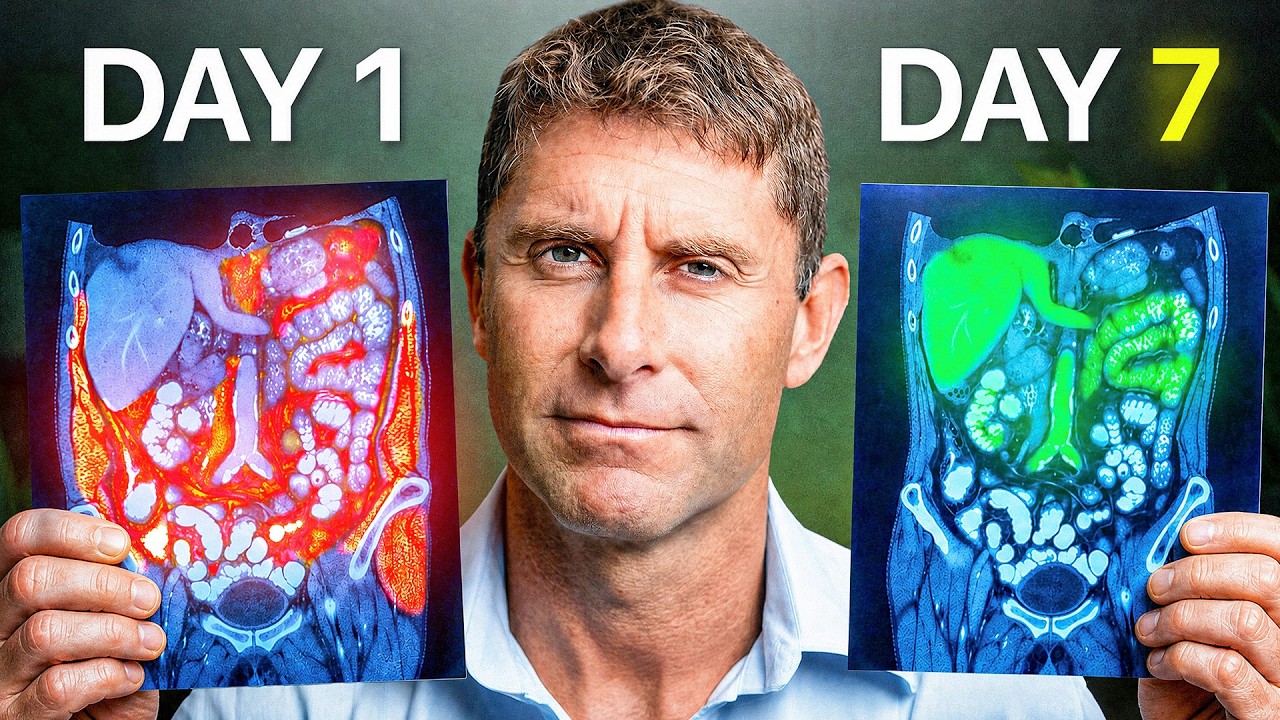
In a recent video, Dr. David Jockers, a doctor of natural medicine, laid out his exact 7-day protocol for attacking cortisol belly at the root.
What makes this different? It’s not about what you eat—it’s about when you do everything.
Jump to:
- Day One: Walk After Every Meal (Not Before)
- Day Two: Get Outside Within an Hour of Waking
- Day Three: Close the Kitchen Between Meals
- Day Four: Eat Protein and Vegetables Before Carbs
- Day Five: Protect the Night
- Day Six: Cut Every Drop of Liquid Sugar
- Day Seven: Put It All Together
- What Actually Happens in Seven Days
- What This Fat Has Been Doing to Your Brain
Day One: Walk After Every Meal (Not Before)
Dr. Jockers calls this the single most important habit of the week.
You walk for 10 minutes right after every meal. 10 after breakfast, 10 after lunch, 10 after dinner. 30 minutes total broken into three pieces, you’ll barely notice.
The timing is everything. Walking two hours after dinner or first thing in the morning on an empty stomach won’t work the same way.

If you want something simple that actually works, this is one of the most effective tools I’ve used to build strength, conditioning, and endurance without needing a full gym setup.
- Full-body training with one weight using swings, squats, and presses
- Solid cast iron build that feels stable and lasts for years
- Comfortable grip that makes high-rep workouts easier to handle
You need to intercept the glucose spike in the 30 to 90 minutes after eating, when sugar from your meal is flooding your bloodstream looking for somewhere to go.
Walk during that narrow window and your muscles pull sugar out of your blood without needing insulin.
Don’t Go Too Hard
Here’s the twist: hard exercise can make cortisol belly worse.
Hard exercise is a stressor. That’s the whole point of it. That’s how it makes you fitter. And your body responds to a stressor by releasing cortisol.
If you’re already carrying visceral fat and running on six hours of sleep, hammering yourself on a treadmill pours fuel on the fire.
Keep it conversational. You should be able to talk the entire time without getting winded.
Day Two: Get Outside Within an Hour of Waking
This one takes 10 to 20 minutes, and it must be outside—not by a window.
If you want something simple that actually works, this is one of the most effective tools I’ve used to build strength, conditioning, and endurance without needing a full gym setup.
- Full-body training with one weight using swings, squats, and presses
- Solid cast iron build that feels stable and lasts for years
- Comfortable grip that makes high-rep workouts easier to handle
Dr. Jockers is adamant about this because most people vastly underestimate how much light they’re actually getting indoors.
A bright indoor room, every light on, sun streaming through the window, that’s about 200 lux. Standing outside on a gray, drizzly, miserable morning, about 10,000 lux.
Glass filters out most of what your brain needs. Your pupils adjust so the room feels bright, but you’re getting a fraction of the signal.
Morning Light Raises Cortisol—And That’s Good
Contrary to popular belief, morning sunlight raises cortisol sharply. That spike is what wakes you up and gives you energy.
A healthy cortisol curve looks like this: high in the morning, low at night.
People with cortisol belly have a flat curve—weak morning bump, never really peaks, never really falls. You wake up exhausted and lie awake wired at 10 p.m.
We’re not trying to crush your cortisol. We’re trying to give it back its shape.
Raise it on purpose in the morning, and it falls on its own at night.
If you want something simple that actually works, this is one of the most effective tools I’ve used to build strength, conditioning, and endurance without needing a full gym setup.
- Full-body training with one weight using swings, squats, and presses
- Solid cast iron build that feels stable and lasts for years
- Comfortable grip that makes high-rep workouts easier to handle
Day Three: Close the Kitchen Between Meals
This is where the protocol asks something of you—but it’s probably not what you expect.
Dr. Jockers isn’t cutting carbs or handing out food lists. He’s closing the eating window.
Three meals, nothing in between, and a 12 to 14-hour gap overnight. You can do 16 to 18 hours as well if you like. That’s what I do.
Finish dinner by 7 p.m. Don’t eat again until 7 to 9 a.m. the next morning.
Most People Eat Across 15 Hours a Day
Researchers at the Salk Institute had people log every bite through a phone app for three weeks. The average eating window? 15 hours or longer.
First coffee with cream at 6:30 a.m., last handful of something at 9:30 p.m. You think you eat three times a day, but you’re closer to 12.
Every time food hits your system, insulin rises. When cortisol is already elevated all day and you open the insulin window 12 times, you’re running the fat-storage pairing nonstop.
If you want something simple that actually works, this is one of the most effective tools I’ve used to build strength, conditioning, and endurance without needing a full gym setup.
- Full-body training with one weight using swings, squats, and presses
- Solid cast iron build that feels stable and lasts for years
- Comfortable grip that makes high-rep workouts easier to handle
The window matters more than the macros.
A clean diet eaten in little bits across 15 hours won’t fix this. A slightly imperfect diet eaten as three real meals with nothing in between? That will.
What Breaks the Fast and What Doesn’t
Safe:
- Water
- Black coffee
- Plain tea
- Sparkling water
Breaks it:
- Cream, milk, sugar, honey
- Diet soda
- The bites while you cook
- Crackers on the counter
- A taste of what’s in the pan
Those “not a snack” bites? They count. That’s usually where the 15-hour window comes from.
Day Four: Eat Protein and Vegetables Before Carbs
Nothing leaves your plate. You’re just changing the order.
In one study, researchers had people eat identical meals twice, one week apart. One time: bread and juice first, then chicken and vegetables 15 minutes later. The other time: reversed.
If you want something simple that actually works, this is one of the most effective tools I’ve used to build strength, conditioning, and endurance without needing a full gym setup.
- Full-body training with one weight using swings, squats, and presses
- Solid cast iron build that feels stable and lasts for years
- Comfortable grip that makes high-rep workouts easier to handle
When they saved carbs for last, their blood sugar peak dropped 37% and insulin response fell 73%.
Why does this work? Protein and fiber slow stomach emptying, so carbohydrate trickles into your bloodstream instead of flooding it. They also trigger gut hormones like GLP-1 that help your body handle incoming sugar.
Eating the bread first is showing up to a house with nobody home. Eating the protein and the vegetable first is calling ahead.
Aim for 30 to 50 Grams of Protein Per Meal
This isn’t the usual protein advice. Cortisol doesn’t just add fat—it actively strips muscle off your arms and legs.
Muscle is where sugar is supposed to go. It’s your storage tank. While cortisol shrinks that tank, every low-protein meal lets it win a little more.
What 30 to 50 grams looks like:
- Palm-size piece of chicken, beef, or fish (5 to 7 oz)
- Five eggs
- Cup of Greek yogurt plus a scoop of protein powder
- Can of wild salmon or sardines
Breakfast is where most people fall short. Toast, cereal, oatmeal, fruit—that’s a carb meal with a rounding error of protein.
If you want something simple that actually works, this is one of the most effective tools I’ve used to build strength, conditioning, and endurance without needing a full gym setup.
- Full-body training with one weight using swings, squats, and presses
- Solid cast iron build that feels stable and lasts for years
- Comfortable grip that makes high-rep workouts easier to handle
Day Five: Protect the Night
Two rules: last bite of dinner at least three hours before bed, and 7 to 8 hours of sleep.
Sleep advice sounds like a throwaway item on every health list. But the research is brutal.
What Happens When You Sleep Four Hours Instead of Nine
Researchers locked 12 healthy adults in a lab for 21 days twice. Same people, everything controlled.
First time: 9 hours of sleep. Second time: 4 hours.
On four hours of sleep:
- They ate 300 extra calories daily
- Weight went up one pound
- Abdominal fat increased 9%
- Visceral fat increased 11%
The scale barely moved. The fat moved inward.
If you want something simple that actually works, this is one of the most effective tools I’ve used to build strength, conditioning, and endurance without needing a full gym setup.
- Full-body training with one weight using swings, squats, and presses
- Solid cast iron build that feels stable and lasts for years
- Comfortable grip that makes high-rep workouts easier to handle
Then they gave everyone three nights of recovery sleep. Calorie intake normalized, weight came back down—but visceral fat kept climbing.
They went back to sleeping normally and the fat around their organs, it was still increasing.
You can’t catch up on Saturday. The debt doesn’t clear that way.
Why Dinner Timing Matters
Eating late drives insulin up right when cortisol should be at its lowest. That’s the fat-storage pairing at the worst possible time.
Your body also doesn’t sleep well while digesting. You’ll get to sleep fine, but you won’t go deep—and deep sleep is when repair happens.
Target: dinner at 6 p.m., bed at 9 or 10 p.m.
And here’s what ties it together: Day two’s morning light spike sets up day five’s nighttime drop. They’re two ends of the same curve.
If you want something simple that actually works, this is one of the most effective tools I’ve used to build strength, conditioning, and endurance without needing a full gym setup.
- Full-body training with one weight using swings, squats, and presses
- Solid cast iron build that feels stable and lasts for years
- Comfortable grip that makes high-rep workouts easier to handle
Day Six: Cut Every Drop of Liquid Sugar
Soda, sweet tea, energy drinks, sports drinks, fruit juice, coffee drinks with pumps of flavoring—all gone.
Dr. Jockers saved this for last on purpose.
If I’d handed you this on day one, you’d have white-knuckled it for about two days and quit and you’d have blamed yourself for it.
But by day six, something has changed. The walks stopped sugar spikes. The eating window let insulin drop. Protein filled you up. Sleep turned off hunger signals.
Every one of those quietly dismantled the craving. By day six, you’re not fighting yourself—you just don’t reach for it.
Day Seven: Put It All Together
Here’s what a full day looks like:
- 6:45 a.m.: Wake up, go outside for 10 minutes
- 7:15 a.m.: Breakfast—30 to 50g protein, vegetables first, carbs last
- 7:45 a.m.: 10 to 15-minute walk
- Kitchen closed until lunch
- 12:30 p.m.: Lunch—same eating order
- 1:00 p.m.: 10 to 15-minute walk
- Kitchen closed until dinner
- 6:00 p.m.: Dinner—vegetables and protein first, water or sparkling water only
- 6:30 p.m.: 10 to 15-minute walk
- Kitchen closed for the night
- 9:30 p.m.: In bed
Add it up: 30 minutes of easy walking, 10 minutes outside, a few decisions about timing and order.
If you want something simple that actually works, this is one of the most effective tools I’ve used to build strength, conditioning, and endurance without needing a full gym setup.
- Full-body training with one weight using swings, squats, and presses
- Solid cast iron build that feels stable and lasts for years
- Comfortable grip that makes high-rep workouts easier to handle
Not one thing required a gym, supplement, meal plan, or hunger.
What Actually Happens in Seven Days
You feel it before you see it.
The 3 p.m. crash disappears, usually within three or four days. Cravings that used to hit an hour after eating vanish. You stop thinking about food every two hours.
Brain fog lifts. Words come easier. Sleep gets deeper. Blood pressure drops. Aches you wrote off as aging start to quiet.
People come back to me and they talk about their energy and their sleep before they mention their waist, every time.
Then you start to see it: waist down 1 to 3 cm, scale down a pound or two, clothes fitting differently around the middle.
But Here’s the Reality
Most of what you lose in week one is water and stored carbohydrate, not fat. When insulin drops, your body dumps retained water.
If you want something simple that actually works, this is one of the most effective tools I’ve used to build strength, conditioning, and endurance without needing a full gym setup.
- Full-body training with one weight using swings, squats, and presses
- Solid cast iron build that feels stable and lasts for years
- Comfortable grip that makes high-rep workouts easier to handle
The visceral fat itself is an 8 to 12-week project.
Seven days isn’t the finish line. It’s proof that this works on your body specifically—and that proof carries you to day 90.
What This Fat Has Been Doing to Your Brain
The cortisol your belly manufactures doesn’t stay in your belly. It crosses into your brain and targets the hippocampus—the memory center.
But the hippocampus has another job: it’s the brake on your entire stress system. It senses cortisol levels and tells your adrenal glands to stop producing it.
The cruel part? The hippocampus has more cortisol receptors than almost any other brain region. When cortisol runs high for years, that part of your brain physically shrinks.
The brake wears out. And once the brake wears out, the signal to stand down never arrives. Cortisol production stops shutting itself off.
Your life can be fine—job fine, marriage good, kids healthy—and your body is still producing cortisol like something’s chasing you.
If you want something simple that actually works, this is one of the most effective tools I’ve used to build strength, conditioning, and endurance without needing a full gym setup.
- Full-body training with one weight using swings, squats, and presses
- Solid cast iron build that feels stable and lasts for years
- Comfortable grip that makes high-rep workouts easier to handle
This is why “just reduce stress” never worked. You were given advice for a problem you don’t have.
The Hippocampus Rebuilds
Here’s the good news: this is one of the most plastic regions in the brain. It can regrow.
Researchers brought patients with dangerously high cortisol back under control and imaged their brains before and after. Hippocampal volume increased up to 10%.
And it tracked patient by patient—the more cortisol came down, the more the hippocampus recovered. Memory improved alongside it.
But there’s a word in every study: consistently. Seven days doesn’t regrow your brain. The brain heals slowly, and only while cortisol stays down.
Seven days is how you find out you can run this. The next six months is what rebuilds the brain.
If you want something simple that actually works, this is one of the most effective tools I’ve used to build strength, conditioning, and endurance without needing a full gym setup.
- Full-body training with one weight using swings, squats, and presses
- Solid cast iron build that feels stable and lasts for years
- Comfortable grip that makes high-rep workouts easier to handle
Tomorrow morning: 10 minutes outside, 10 minutes walking after breakfast. That’s how it starts.