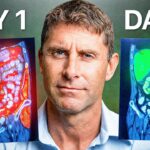
Performance coach Chonzee is revolutionizing how elite athletes train—and it has nothing to do with big muscles.
In a recent episode of the Before School podcast, the clinical researcher and exercise specialist revealed a hidden system that connects the world’s greatest athletes.

It’s not about how much you can lift or how defined your physique looks.
It’s about fascia—and most people have never even heard of it.
Jump to:
- The Missing 20% That Changes Everything
- Why Elite Athletes Have Different Feet
- How Fascia Actually Works
- The Weightlifting Problem Nobody Talks About
- Nutrition for Fascial Health
- Why Achilles Tears Keep Happening
- The Cellular Science Behind Recovery
- Hormones and Fascial Strength
- Testing Your Fascial Integration
- Age-Related Muscle Loss Starts in Fascia
- LeBron James and the Foot Deformity Paradox
- Practical Applications for Everyone
- The Future of Athletic Training
The Missing 20% That Changes Everything
Fascia accounts for roughly 20% of body weight, yet for decades scientists literally threw it away during dissections. They considered it nothing more than packing material between muscles.
That was a catastrophic mistake.

If you want something simple that actually works, this is one of the most effective tools I’ve used to build strength, conditioning, and endurance without needing a full gym setup.
- Full-body training with one weight using swings, squats, and presses
- Solid cast iron build that feels stable and lasts for years
- Comfortable grip that makes high-rep workouts easier to handle
Fascia is everywhere in the body. Just like dark energy, every tissue in your body is actually surrounded, buffered, protected, integrated, separated, compartmentalized by fascia.
Coach Chonzee works with UFC champions like Zhang Weili and world-class decathletes. His approach focuses on developing fascial connections from the ground up—literally starting with bare feet.
Through fresh cadaver dissections at Stanford and years of clinical research, he discovered that fascia forms an interconnected web throughout the entire body. Nerves run through it. Blood vessels depend on it. Muscles can’t function properly without it.
Why Elite Athletes Have Different Feet
Chonzee identified specific structural signs in champion-level athletes that separate them from everyone else. These signs appear in their feet.
They have what we call the fascial driven elite natural signs and fascial structure of the foot which means they have a very strong prominent anterior tibial tendon which is that big tendon in the front of the shin that goes directly to the arch.
Elite athletes also display highly visible extensor tendons. Their feet show remarkable fascial integration—a web-like structure that creates whole-body strength without massive muscles.
Countries known for producing exceptional soccer players—Brazil, Argentina, Italy, Spain—share something in common. They have cultures of playing barefoot from childhood.
Feet contain over 200,000 nerve endings on the bottom surface. This makes them incredibly sensitive sensory organs designed to detect ground texture, adjust force output, and communicate constantly with the rest of the body.
If you want something simple that actually works, this is one of the most effective tools I’ve used to build strength, conditioning, and endurance without needing a full gym setup.
- Full-body training with one weight using swings, squats, and presses
- Solid cast iron build that feels stable and lasts for years
- Comfortable grip that makes high-rep workouts easier to handle
Shoes completely dampen this system.
How Fascia Actually Works
Fascia exists in multiple layers throughout the body. There’s superficial fascia just under skin, deep fascia around muscles, and visceral fascia surrounding organs.
This tissue performs critical functions:
- Force distribution: Manages how tension spreads through the body during movement
- Pain management: Controls pain signals and inflammatory responses
- Muscle scaffolding: Provides structure for muscles to grow and function
- Nerve protection: Creates pathways and buffers for nerves between muscle tissue
- Explosive power: Stores and releases elastic energy during dynamic movements
The tensile strength of fascia is 552 times stronger than muscle fiber. When athletes jump and land, bodies withstand eight to nine times their body weight. Muscles only account for a fraction of that force absorption—fascia handles the rest.
Your fascia has to be always extremely pre-tensioned and strong working in the background. But we’re taking this for granted.
The Weightlifting Problem Nobody Talks About
Weightlifting creates a double-edged sword effect on fascia. For people with poor fascial connections, lifting weights can actually worsen imbalances.
Chonzee uses electromyography (EMG) testing to measure which muscles activate during compound movements. Elite athletes and average people perform the same exercises completely differently.
If you want something simple that actually works, this is one of the most effective tools I’ve used to build strength, conditioning, and endurance without needing a full gym setup.
- Full-body training with one weight using swings, squats, and presses
- Solid cast iron build that feels stable and lasts for years
- Comfortable grip that makes high-rep workouts easier to handle
Elite level athlete will use much more core and glutes and they don’t have to bend down too much to get that glute activation which is very fascinating to look at.
Average individuals rely heavily on quads and lower back during squats. This creates compensatory patterns that lead to chronic pain and dysfunction over time.
When fascial connections are imbalanced, one side of the body may recruit glutes properly while the other compensates with lower back muscles. Lifting heavier weights simply reinforces this dysfunctional pattern.
Weightlifting also creates compression. Fascia needs to glide between layers for proper movement. Constant compression from heavy loads can restrict this essential gliding function.
Nutrition for Fascial Health
Fascia is made primarily of collagen, which requires specific nutritional building blocks.
Hydration ranks as the number one priority. Bodies are 70% water, and fascial tissue relies on constant fluid movement to function properly.
Stagnance produces pestilence. If your body within the body is not flowing, you’re going to have problems.
Vitamin C plays a crucial role in collagen synthesis. People who follow strict carnivore diets without any plant foods may develop fascial weakness over time.
If you want something simple that actually works, this is one of the most effective tools I’ve used to build strength, conditioning, and endurance without needing a full gym setup.
- Full-body training with one weight using swings, squats, and presses
- Solid cast iron build that feels stable and lasts for years
- Comfortable grip that makes high-rep workouts easier to handle
Additional fascial support comes from:
- Antioxidants from vegetables and fruits
- Balanced protein intake for collagen production
- Adequate minerals for connective tissue integrity
- Avoidance of excessive processed sugars that reduce fascial gliding
Too much inflammation from poor diet choices damages fascial organization and creates adhesions that restrict movement.
Why Achilles Tears Keep Happening
Achilles tendon injuries plague professional athletes, particularly those with highly developed leg muscles. The explanation lies in foot mechanics.
When feet remain relaxed inside cushioned shoes, they lack engagement. During push-off movements, feet continue to collapse and deform without proper anterior tibial tendon activation.
This progressive collapse overstretches the Achilles tendon with every step.
When they’re barefooted, the foot detects tension all the time. So your foot is tensed and engaged much more. That type of injury doesn’t happen as much.
Barefoot athletes develop natural pre-tension in foot structures. Their anterior tibial tendons stabilize arches automatically, preventing excessive Achilles strain.
If you want something simple that actually works, this is one of the most effective tools I’ve used to build strength, conditioning, and endurance without needing a full gym setup.
- Full-body training with one weight using swings, squats, and presses
- Solid cast iron build that feels stable and lasts for years
- Comfortable grip that makes high-rep workouts easier to handle
Modern athletic shoes create a mechanical interference that changes natural movement patterns. Heel-to-toe running form—commonly taught in Western countries—acts as a braking force with every stride.
Elite athletes run primarily on the balls of their feet with minimal heel contact. Their ankles remain stiff, creating single-contact efficiency rather than the energy-wasting double-contact pattern of heel strikers.
The Cellular Science Behind Recovery
Fascia contains different cell types that respond to mechanical stimulation. Fibroblast cells convert to myofibroblasts through tension and movement.
Myofibroblasts are significantly stronger and serve as precursors to regenerative functions. They help remodel tissue and restore proper fascial organization.
This explains why techniques like acupuncture work. Inserting needles creates a mechanical stimulus that fascia grabs onto. Twisting needles generates shearing forces that promote fascial gliding between layers.
Fascia also produces hyaluronic acid—a lubricating substance that allows tissue layers to slide smoothly past each other during movement. Without adequate gliding, pain and dysfunction inevitably follow.
If you want something simple that actually works, this is one of the most effective tools I’ve used to build strength, conditioning, and endurance without needing a full gym setup.
- Full-body training with one weight using swings, squats, and presses
- Solid cast iron build that feels stable and lasts for years
- Comfortable grip that makes high-rep workouts easier to handle
Hormones and Fascial Strength
Fascia contains hormone receptors for both estrogen and testosterone. These hormonal influences partly explain injury rate differences between male and female athletes.
Higher estrogen levels create more laxity in fascial tissue. This increased flexibility comes with reduced stability, contributing to higher ACL tear rates in women.
Fascia also has cannabinoid receptors, meaning marijuana use can affect fascial function. The impact depends on existing fascial health—those with strong connections tolerate it better than individuals with poor fascial organization.
Testing Your Fascial Integration
Chonzee developed a simple test to assess whole-body fascial connection. Someone holds you horizontally with your back facing the ground, then releases you from about two feet up.
People with strong fascial integration can rapidly rotate their entire body and catch themselves before impact. Those with segmented, poorly connected fascia struggle to coordinate the rotation.
If your body is segmented, it’s very difficult because you turn your upper body, but your lower body hasn’t received that message.
This relates to non-Newtonian fluid properties of fascia. When struck with force, well-organized fascia becomes solid and responsive. Slow, gentle pressure allows penetration through layers.
If you want something simple that actually works, this is one of the most effective tools I’ve used to build strength, conditioning, and endurance without needing a full gym setup.
- Full-body training with one weight using swings, squats, and presses
- Solid cast iron build that feels stable and lasts for years
- Comfortable grip that makes high-rep workouts easier to handle
Another assessment involves the elevated toe curl test or EMG measurement from foot to glutes. Imbalances between left and right sides indicate fascial disconnection that will cause compensatory movement patterns.
Age-Related Muscle Loss Starts in Fascia
Research shows muscle mass begins declining after age 40, but the location of that loss reveals something crucial. Posterior chain muscles—glutes and hamstrings—atrophy first.
This happens because fascial scaffolding degenerates before muscles do. Microscope images of fascia from people over 40 show disorganized, broken collagen fibers.
Without proper fascial integration from feet upward, posterior chain activation becomes nearly impossible. Muscles that can’t be recruited properly will inevitably waste away.
Eastern martial artists in their 70s and 80s maintain youthful movement quality and muscle mass. Bone density scans of 60-year-old martial artists sometimes show bone health equivalent to 30-year-olds.
The difference? Lifelong barefoot training that maintains fascial integrity.
If you want something simple that actually works, this is one of the most effective tools I’ve used to build strength, conditioning, and endurance without needing a full gym setup.
- Full-body training with one weight using swings, squats, and presses
- Solid cast iron build that feels stable and lasts for years
- Comfortable grip that makes high-rep workouts easier to handle
LeBron James and the Foot Deformity Paradox
LeBron James has notoriously deformed feet with toes overlapping each other. Yet he’s maintained elite performance for over two decades.
Photos from his youth show normal foot structure with the telltale signs of superior fascial development—prominent anterior tibial tendons and visible extensor tendons.
Years of shoe confinement created the deformity, but his exceptional fascial connections from childhood allow him to perform despite it.
When your fascial connection is much higher, you don’t need the foot to be at certain shape or form because it works holistically. Your core and your glutes will help the foot striking the ground.
Russell Westbrook displays similar patterns—deformed feet from years of shoe use, yet remarkable durability because of strong underlying fascial systems developed in youth.
Average people with similar foot deformities cannot move properly because they lack that foundational fascial network.
Practical Applications for Everyone
Chonzee’s Hyper Arch Foot Training (HFT) protocol focuses on rebuilding fascial connections from the ground up. Clinical trials currently underway are comparing HFT to traditional training methods.
If you want something simple that actually works, this is one of the most effective tools I’ve used to build strength, conditioning, and endurance without needing a full gym setup.
- Full-body training with one weight using swings, squats, and presses
- Solid cast iron build that feels stable and lasts for years
- Comfortable grip that makes high-rep workouts easier to handle
Early results show participants can increase vertical jump height and explosive power without lifting weights—while simultaneously resolving chronic ankle pain.
For people with fascial imbalances, Chonzee recommends holding off on heavy weightlifting until proper connections are established. Building balanced fascial integration first prevents compensatory patterns from becoming permanently ingrained.
Key principles include:
- Barefoot exposure: Walk, run, and train without shoes when safely possible
- Toe engagement: Practice activating toe extensors and anterior tibial tendons
- Whole-body movements: Prioritize exercises that require fascial integration over isolation work
- Fascial release work: Address adhesions and restrictions through targeted manual therapy
- Grounding: Direct contact between bare feet and earth improves electrical conductivity through fascia
The Future of Athletic Training
Fascia represents the bridge between Eastern holistic health philosophy and Western anatomical precision. Understanding this tissue explains why acupuncture works, why barefoot cultures produce exceptional athletes, and why chronic pain often resists conventional treatment.
Second-generation regenerative medicine now focuses on fibroblast growth factors—fascial cells that promote healing and remodeling. Biotech companies are investing heavily in fascia-based therapies.
Chonzee’s vision includes developing technology that allows people to visualize their fascial health—comparing their tissue quality to elite athletes like Michael Jordan or LeBron James.
If you want something simple that actually works, this is one of the most effective tools I’ve used to build strength, conditioning, and endurance without needing a full gym setup.
- Full-body training with one weight using swings, squats, and presses
- Solid cast iron build that feels stable and lasts for years
- Comfortable grip that makes high-rep workouts easier to handle
Once our clinical trials are published, we try to go after every major team.
The missing 20% of the body that scientists discarded for decades may hold the key to understanding human performance, preventing injuries, and promoting genuine longevity. Fascia isn’t just connective tissue—it’s the conductive network that determines whether bodies break down or remain resilient for life.