Peptides are making headlines again, and the reasons behind their resurgence might surprise you.
Roughly two years after a controversial ban, these powerful compounds are generating more buzz than ever before.
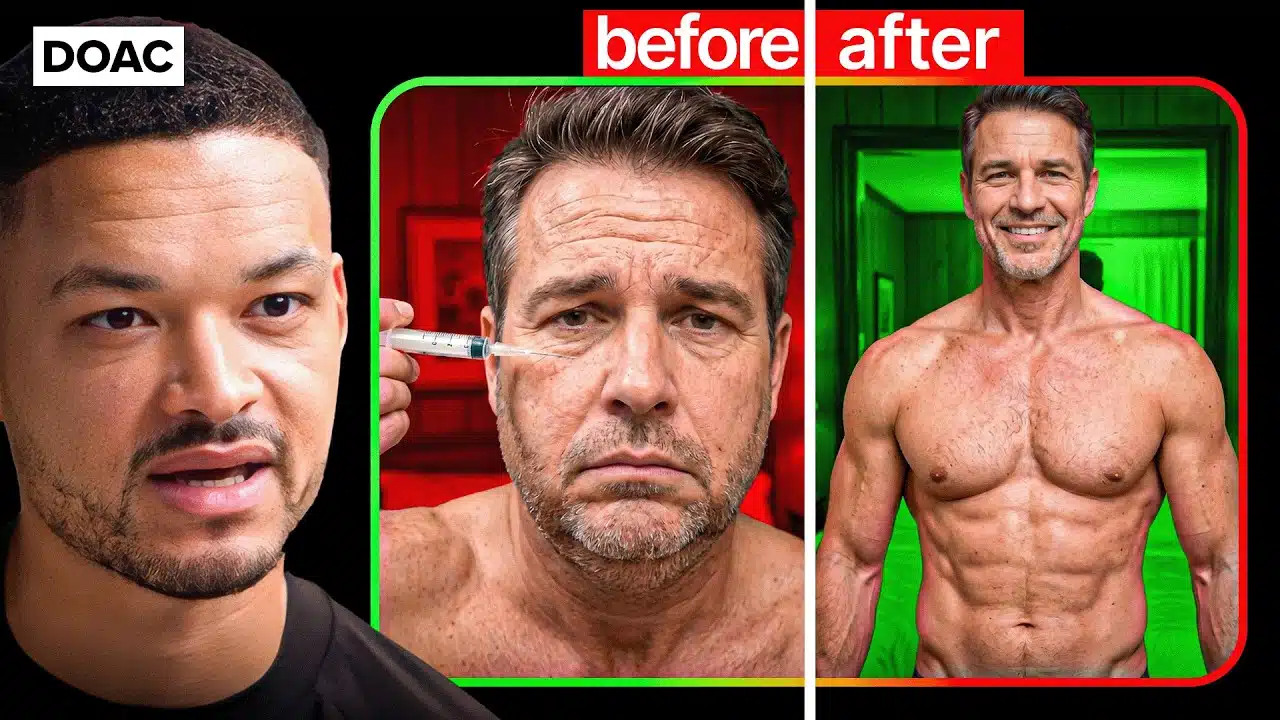
From dramatic weight loss transformations to healing stubborn injuries, peptides are being hailed as the future of personalized medicine.
But what’s driving this renewed interest, and why are some experts calling them “apps for your body”?
Jump to:
- The Forbidden Fruit Effect: Why Peptides Are Trending Again
- A Life-Changing Success Story: From Infertility to Fatherhood
- Peptides as “Apps for Your Body”
- Major FDA News: Seven Peptides Under Reconsideration
- The Gray Market Problem: Gas Station Sushi for Your Health
- How Peptides Are Actually Administered
- The Tirzepatide Controversy: Why Big Pharma Is Fighting Back
- What About Muscle Building?
- Peptides for Metabolic Disorders and Insulin Resistance
- Topical Options: GHK-Cu for Skin Aging
- Cognitive Enhancement: Peptides for Mental Performance
- Real-World Medical Perspective: What Doctors Actually Use
- What Peptides Can’t Do: Managing Expectations
The Forbidden Fruit Effect: Why Peptides Are Trending Again
According to medical experts discussing the peptide phenomenon, the 2023 ban created an unexpected consequence.
I think what we’re seeing is the forbidden fruit effect because this was banned and all of a sudden, oh, well, why’d they ban it? Well, they wouldn’t have banned it if it weren’t working, right?
The perfect storm emerged when this ban coincided with TikTok’s explosive growth and short-form content going viral. Add new administration leadership from figures like RFK Jr., and peptides suddenly became impossible to ignore.
A Life-Changing Success Story: From Infertility to Fatherhood
Perhaps no story illustrates peptide potential better than young men struggling with infertility due to metabolic dysfunction.
Physicians treating morbidly obese patients with low sperm counts face significant challenges. These men suffer from high insulin resistance that damages their endocrine systems, preventing proper testosterone production and testicular stimulation.
Traditional treatments address symptoms rather than root causes. Weight loss remains incredibly difficult despite education and resources.
Enter GLP-1 peptides like semaglutide and tirzepatide.
I just saw a patient last week who increased his sperm count 10 times over and is now in a normal range because he’s lost 100 pounds due to using tirzepatide, exercising, and improving his diet. And he has totally changed his life.
Peptides as “Apps for Your Body”
Understanding peptides becomes easier with a simple analogy.
Peptides are almost like an app on your phone. So, imagine before we had apps. Like I’m old enough to remember trying to log on and do my banking online before we had apps, and gosh, it was so painful, right?
Before apps existed, accomplishing tasks online required inconvenient, roundabout methods. Now smartphones offer apps for virtually everything except folding laundry.
Peptides work similarly for human biology.
What Peptides Can Target
- Weight loss: GLP-1 drugs like semaglutide and tirzepatide
- Skin quality: GHK-Cu for improved complexion and collagen production
- Gut healing: BPC-157, particularly effective for ulcerative colitis
- Sleep regulation: Compounds that support melatonin production and circadian rhythm
- Injury recovery: TB-500 for improved blood flow to damaged tissue
- Exercise performance: MOTS-c for enhanced VO2 max and ATP production
- Cognitive function: Semax, Dihexa, and Epitalon for mental performance
The question isn’t, you know, what can peptides do? It’s kind of, well, what can’t they do? And if they can’t do that yet, can we develop a peptide that can accomplish that task? And the answer is probably.
Major FDA News: Seven Peptides Under Reconsideration
On April 15th, significant news emerged from regulatory authorities.
FDA press releases announced that seven peptides would be considered for removal from category two back to category one in July—essentially legalizing them again.
Heavy hitters on this list include:
- BPC-157: Known for tissue repair and injury healing
- TB-500: Improves blood flow to injured areas, sending regenerative cells where needed
- KPV: Linked to angiogenesis and tissue repair
- MOTS-c: Called “exercise in a vial” for improving VO2 max
- Dihexa, Epitalon, and Semax: All targeting cognitive function and sleep recovery
The Gray Market Problem: Gas Station Sushi for Your Health
When peptides were banned in 2023, history repeated itself in an uncomfortable way.
It’s kind of like the United States experimented banning alcohol. It didn’t go very well, right? All of a sudden, you know, they we you know, the mob came around and we started, you know, seeing unregulated saloons and unregulated alcohol production.
Gray market companies stepped in immediately, selling peptides labeled “for research use only.” This supposedly removes them from FDA jurisdiction since they’re not technically sold for human injection.
Everyone knows what’s really happening.
Without quality control, these products become dangerously unreliable.
Because there isn’t any quality control, it’s kind of like getting gas station sushi. Like, yeah, you can do it, but you don’t really know if it’s sushi and it may not end very well for you.
Moving peptides back into legal 503A compounding frameworks would ensure standardization and safety.
How Peptides Are Actually Administered
Peptides consist of amino acid building blocks. Your digestive system breaks down any protein consumed orally into individual components.
Drinking peptides would be indistinguishable from eating chicken—your gut would simply dismantle them.
Rare exceptions exist, like certain oral forms of BPC-157, but most peptides require injection either subcutaneously (just under skin) or intramuscularly.
Subcutaneous administration follows simple technique: pinch an inch of skin, inject underneath. Many medications use this same method.
Auto-Injector Pens vs. Vials
Prescription products like Mounjaro (brand name tirzepatide from Lilly) come in convenient auto-injector pens. Users simply adjust dosage and press against skin for automatic deployment.
Research-use peptides typically come in vials requiring manual drawing with needles. This allows custom dosing but requires calculation knowledge.
The Tirzepatide Controversy: Why Big Pharma Is Fighting Back
Pharmaceutical companies view compounded tirzepatide as potentially their biggest competitive threat.
Prescription Mounjaro works like paint-by-numbers—standardized, once-weekly dosing as approved by regulators. Compounded tirzepatide from 503A pharmacies offers infinite permutations and dosing flexibility.
Instead of one large weekly dose, physicians can prescribe multiple mini-doses throughout the week. This prevents hunger returning by week’s end and reduces side effects for sensitive patients.
The problem? Money spent on compounded versions doesn’t go to Lilly or Novo Nordisk.
We have seen an unprecedented crackdown in the United States from the FDA in trying to shut down compounding pharmacies and prevent them from making these medications even though that ability to customize, the fact that this is not an exact copy, should protect it under current legislation.
Lobby pressure from both major GLP-1 manufacturers has been intense. FDA Commissioner Marty Makary has reportedly tweeted more about cracking down on compounded GLP-1 medications than about diabetes or heart disease combined during his tenure.
What About Muscle Building?
Social media frequently promotes peptides for muscle gain, but this claim requires careful examination.
IGF-1 LR3 represents the only peptide that might legitimately contribute to muscle mass. This longer-lasting version of IGF-1 mimics downstream effects of growth hormone that bodybuilders use for size and fat loss.
The reality check: Peptides alone won’t build significant muscle independently. Gym work remains essential.
I have so many patients that think that they can just take testosterone and just put on muscle naturally. And it doesn’t work that way. You might get a tiny little bit, but you still have to have stimulus.
Physicians aren’t replacements for personal trainers. Optimal results require combining medical intervention with proper training and nutrition.
Peptides for Metabolic Disorders and Insulin Resistance
For those struggling with glucose control and insulin sensitivity, GLP-1 drugs currently reign supreme.
These compounds slow gastric emptying, creating gradual food absorption that prevents glucose spikes. This dramatically increases insulin sensitivity.
Caution advised: Some peptides that boost growth hormone and IGF-1 can actually increase serum glucose—the opposite of what insulin-resistant individuals need.
Topical Options: GHK-Cu for Skin Aging
While most peptides require injection, legitimate topical formulations exist.
GHK-Cu, a copper tripeptide, decreases naturally as we age. Applied topically as facial cream, it proves highly effective at regenerating skin quality.
Benefits include:
- Improved complexion
- Increased collagen and elastin production
- Skin tautness and youthful appearance
Topical GHK-Cu faces different regulation than injectable forms and can be purchased today, though quality versions typically cost premium prices.
Cognitive Enhancement: Peptides for Mental Performance
For those seeking improved focus and mental stamina—podcasters doing marathon recording sessions, for instance—intranasal Semax shows promise.
Originally studied in Russia, this seven-amino acid peptide demonstrated remarkable effects when administered after traumatic brain injury or stroke. Patients recovered faster.
Research suggests Semax upregulates factors supporting cognition and neural connections. Its intranasal administration allows absorption through mucous membranes, delivering compounds directly where needed.
If legalized again in July, expanded access could generate valuable efficacy data across broader populations.
Real-World Medical Perspective: What Doctors Actually Use
Physicians passionate about peptides often face questions about personal use.
One 33-year-old physician currently uses only tirzepatide in small doses. After reaching 240 pounds through powerlifting, he prioritized longevity over pure strength.
It’s really great to be able to deadlift 500 lb, but then stairs become really hard when you’re trying to walk up. You’re like, I don’t know. I kind of like uh being able to not take a break after two or three flights of stairs.
Why not use others? Current legal frameworks prevent safe, standardized access.
If peptides were legal, this physician would consider BPC-157 and TB-500 for chronic shoulder issues and recovery. GHK-Cu might address persistent rosacea causing facial redness.
Physicians who maintain licenses must lead by example, advocating for legal, safe access rather than turning to gray markets.
What Peptides Can’t Do: Managing Expectations
Despite impressive capabilities, peptides have limitations worth acknowledging.
They won’t independently build massive muscle without training stimulus. No compound exists yet that replicates the boundless energy of early twenties. Hard work, proper nutrition, and personal training remain irreplaceable.
Medical providers partner with nutritionists and trainers because optimizing health requires comprehensive approaches, not single miracle solutions.
As peptide research accelerates—aided by pharmaceutical companies signing billion-dollar AI-assisted development deals—expect exponentially more products entering markets as commercial offerings.
Whether through regulatory approval or continued gray market innovation, peptides represent a frontier in personalized medicine that shows no signs of slowing down.