Full-body training doesn’t have to mean hour-long gym sessions or following bodybuilder splits.
In fact, one fitness coach is proving that short, daily workouts might be the secret to sustainable health and strength.
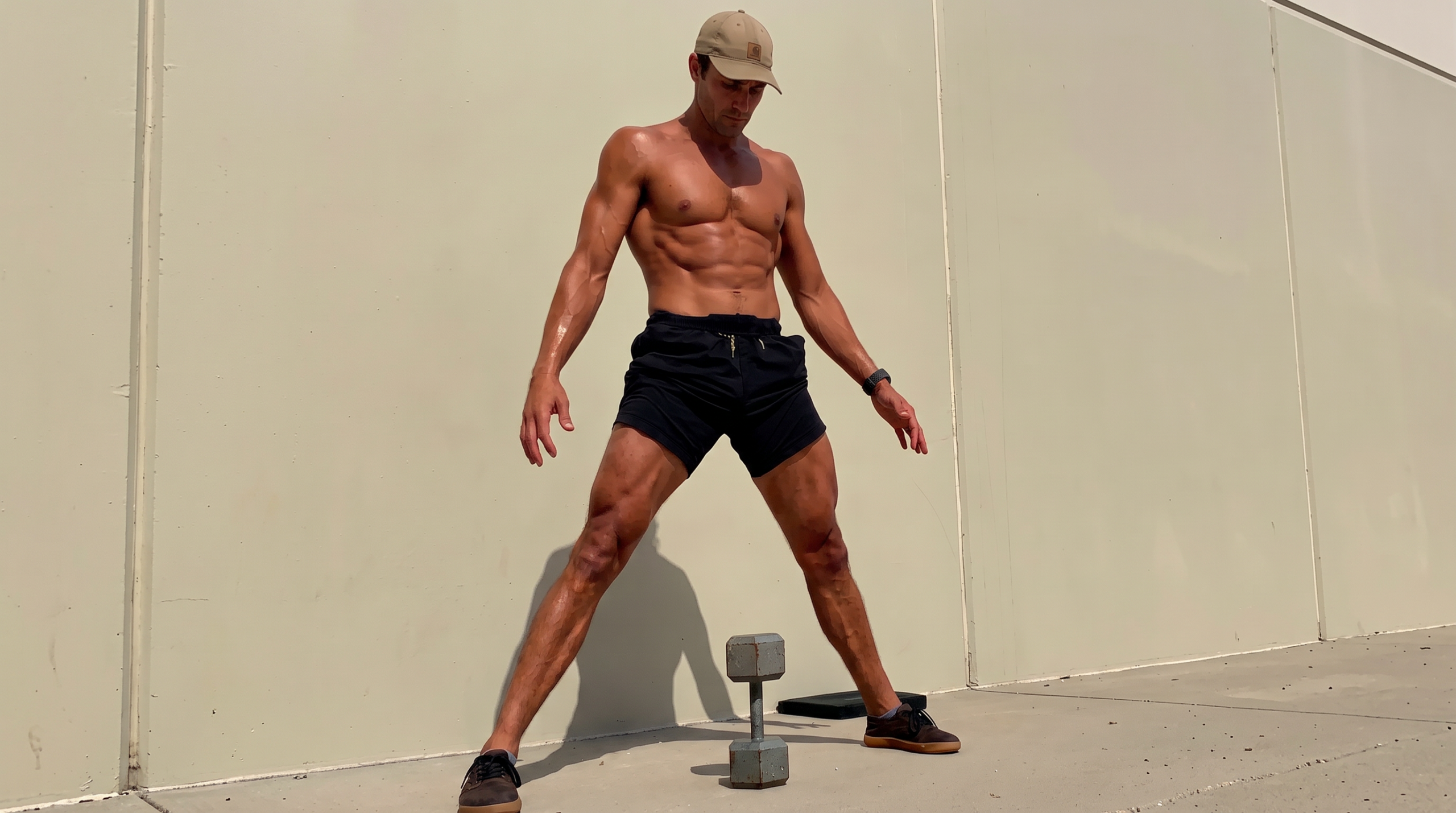
Julian Smith, founder of Strength Side, recently shared his complete weekly training routine—and it challenges everything mainstream fitness culture tells us about “optimal” programming.
Most sessions? Under 20 minutes. The results? Strength, mobility, and conditioning without the burnout.
Jump to:
- Why Daily Training Beats Traditional Splits
- The Monday Blueprint: Full-Body Strength in 15 Minutes
- Tuesday’s Mobility Focus: Opening Up What Matters
- Wednesday Through Friday: Strength Variation and Volume
- The Weekend: Conditioning and Recovery
- Why This Approach Works (And What Science Says)
- The Jump Rope Secret Weapon
- Practical Takeaways for Your Training
- The Real Advantage: Sustainability Over Intensity
Why Daily Training Beats Traditional Splits
Smith opens with a provocative statement: there’s no single “right” way to train the human body.
For most of us who just want to be healthy and in shape, we don’t need to be modeling our training off of bodybuilders or powerlifters or marathoners. Those are sports with hyper-specific training and hyper-specific results.
His point cuts through fitness industry noise. Elite athletic programs optimize for one quality—maximal strength, extreme size, or peak endurance—often at the expense of overall health and longevity.

If you want something simple that actually works, this is one of the most effective tools I’ve used to build strength, conditioning, and endurance without needing a full gym setup.
- Full-body training with one weight using swings, squats, and presses
- Solid cast iron build that feels stable and lasts for years
- Comfortable grip that makes high-rep workouts easier to handle
Smith learned this lesson firsthand. He used to chase massive deadlifts and magazine-cover aesthetics until, as he puts it, “those consequences caught up with me.”
Nowadays, I just want to be healthy enough to not worry about doctors visits and get the most out of life.
This philosophy shift led him to abandon traditional bodybuilding splits in favor of daily full-body training—brief sessions that build strength, mobility, and work capacity without grinding joints or nervous systems into dust.
The Monday Blueprint: Full-Body Strength in 15 Minutes
Smith’s Monday morning looks deceptively simple: three minutes of jump rope followed by a classic bodyweight circuit.
The target numbers:
- 25 pull-ups
- 50 push-ups
- 100 bodyweight squats
He breaks these into five rounds: 5 pull-ups, 10 push-ups, 20 squats, with minimal rest between sets. Total time? Under 15 minutes including warm-up.
Smith adds mace swinging in a horse stance because it makes him “feel athletic,” but emphasizes this is optional. The key insight: flexibility in execution matters more than rigid programming.
If you want something simple that actually works, this is one of the most effective tools I’ve used to build strength, conditioning, and endurance without needing a full gym setup.
- Full-body training with one weight using swings, squats, and presses
- Solid cast iron build that feels stable and lasts for years
- Comfortable grip that makes high-rep workouts easier to handle
I just focus on how many I want to have done by the end and maintain the highest quality I can while doing them. We’re focusing on tons of quality work accumulated over weeks or months, not making every day a massacring workout.
Later that day, he adds 20 minutes of sandbag work—tosses, shoulder carries, squats. Total Monday training time: 35 minutes.
Tuesday’s Mobility Focus: Opening Up What Matters
After jump rope and Indian club warm-up, Smith targets common problem areas with focused mobility drills:
- 20 single-leg good mornings (each side)
- 20 crab lifts
- 20 horse stance Cossack squats
Completed in two sets, the entire session takes under 10 minutes. These movements address hamstrings, hip flexors, groins, front shoulders, and hip rotation—the exact areas desk workers lose first.
Smith follows mobility work with rock climbing, noting his hips feel “extra open on the wall.” Afterwards? Weighted pull-ups and push-ups.
Here’s where his training philosophy shines through:
My quick sessions in the morning are all I need to stay fit and healthy. Anything after that is just icing on the cake. I love climbing, weighted calisthenics, sand bags, and athletic movements. So, I basically throw them in when I have the time or energy.
The activities stay fun because they’re not obligatory. The morning sessions handle the essentials; everything else is play.
If you want something simple that actually works, this is one of the most effective tools I’ve used to build strength, conditioning, and endurance without needing a full gym setup.
- Full-body training with one weight using swings, squats, and presses
- Solid cast iron build that feels stable and lasts for years
- Comfortable grip that makes high-rep workouts easier to handle
Wednesday Through Friday: Strength Variation and Volume
Wednesday mirrors Monday’s structure but swaps movements:
- 40 bodyweight rows
- 40 pike push-ups
- 24 pistol squats
This session runs 20 minutes. Smith emphasizes starting every day with three minutes of jump rope, plus additional short bouts throughout the day to “shake out stuck energy from sitting.”
He credits this approach for maintaining a 7-minute mile pace at over 200 pounds—with minimal actual running.
Thursday returns to mobility: straight-arm Hindu push-ups for shoulders, spine, and hamstrings, paired with quad stretching, split squats, and horse stance work. Fifteen minutes total, followed by 15 minutes of sandbag lifting.
Friday closes the strength portion with the same targets as Monday—25 pull-ups, 50 narrow-grip push-ups, 100 squats—but restructured into two longer sets with extended rest. Done in 12 minutes.
Later that day: park sprints and jumping for 25 minutes.
If you want something simple that actually works, this is one of the most effective tools I’ve used to build strength, conditioning, and endurance without needing a full gym setup.
- Full-body training with one weight using swings, squats, and presses
- Solid cast iron build that feels stable and lasts for years
- Comfortable grip that makes high-rep workouts easier to handle
The Weekend: Conditioning and Recovery
Saturday shifts focus to metabolic conditioning. Four rounds of:
- 2 minutes jump rope
- 5 burpees
- 1 minute crawling
- 10 hanging leg raises
Rest as needed, but with the intention of keeping heart rate elevated in “that uncomfortable zone.” Twenty minutes total, followed by climbing and weighted calisthenics later.
Sunday is deliberately restorative: jump rope, easy stretching, bridges to counteract weekly flexion patterns, and a family hike.
Why This Approach Works (And What Science Says)
Smith’s programming embodies several principles backed by exercise science, though his specific claims about maintaining running speed deserve context.
Daily training frequency is well-supported for skill development and neuromuscular adaptation. Research consistently shows that spreading volume across more frequent, shorter sessions can match or exceed traditional high-volume, low-frequency programs—especially for strength retention and movement quality.
Smith’s emphasis on submaximal training aligns with emerging understanding of fatigue management. He rarely pushes to exhaustion but accumulates substantial weekly volume—a strategy that promotes recovery while maintaining training stimulus.
If you want something simple that actually works, this is one of the most effective tools I’ve used to build strength, conditioning, and endurance without needing a full gym setup.
- Full-body training with one weight using swings, squats, and presses
- Solid cast iron build that feels stable and lasts for years
- Comfortable grip that makes high-rep workouts easier to handle
His claim about maintaining a 7-minute mile with minimal running, however, requires nuance. While jump rope absolutely builds cardiovascular fitness and lower-leg resilience, running economy—the efficiency specific to running movement patterns—typically requires regular running practice. CrossFit research has shown that high-intensity varied training can maintain decent aerobic capacity, but elite running performance still demands sport-specific work.
That said, for general fitness and health markers, Smith’s approach hits the mark. The American College of Sports Medicine recommends 150-300 minutes of moderate activity weekly, plus twice-weekly strength training. Smith exceeds this easily, distributing work across multiple domains.
The Jump Rope Secret Weapon
Smith returns to jump rope repeatedly—it’s the one non-negotiable in his program.
I think it’s the lowest hanging fruit for most people to keep their conditioning and lower body bone and connective tissues in healthy ranges for life.
Jump rope provides unique benefits: impact loading for bone density, calf and foot strengthening, coordination development, and efficient cardiovascular training. Unlike jogging, it’s weather-independent and joint-friendly when performed with proper technique.
The three-minute daily minimum creates a consistency habit that compounds over months and years—far more valuable than occasional long sessions.
Practical Takeaways for Your Training
Smith’s program offers several adaptable principles:
If you want something simple that actually works, this is one of the most effective tools I’ve used to build strength, conditioning, and endurance without needing a full gym setup.
- Full-body training with one weight using swings, squats, and presses
- Solid cast iron build that feels stable and lasts for years
- Comfortable grip that makes high-rep workouts easier to handle
- Alternate strength and mobility days rather than separating them by weeks
- Focus on total volume targets (reps completed) instead of rigid set/rep schemes
- Keep sessions brief to maintain daily consistency
- Build cardiovascular base through frequent, short jump rope sessions
- Rarely train to failure—accumulate quality work instead
- Reserve “extra” training for genuine enjoyment, not obligation
The weekly structure follows a clear pattern:
- Monday/Wednesday/Friday: Full-body strength (different movements each day)
- Tuesday/Thursday/Sunday: Mobility and active recovery
- Saturday: Metabolic conditioning circuit
- Every day: Jump rope (minimum 3 minutes)
The Real Advantage: Sustainability Over Intensity
What makes Smith’s approach compelling isn’t novelty—bodyweight circuits, mobility work, and jump rope have existed for decades. The innovation is in the structure and mindset.
By keeping sessions under 20 minutes and distributing work across seven days, he’s removed the primary barriers to consistency: time constraints and recovery limitations.
There’s no “I’ll start Monday” mentality because Monday isn’t dramatically different from Sunday. No intimidating 90-minute sessions that require motivation reserves. No week-long recovery from leg day.
Instead: daily movement, manageable doses, steady accumulation.
Train to feel good and keep progressing slowly but surely. That’s the mentality. The tortoise beats the hare.
This philosophy directly challenges fitness culture’s obsession with crushing workouts and dramatic transformations. Smith’s results come from unsexy consistency—showing up daily, doing quality work, never pushing so hard that tomorrow’s session is compromised.
If you want something simple that actually works, this is one of the most effective tools I’ve used to build strength, conditioning, and endurance without needing a full gym setup.
- Full-body training with one weight using swings, squats, and presses
- Solid cast iron build that feels stable and lasts for years
- Comfortable grip that makes high-rep workouts easier to handle
For the vast majority of people who simply want to be healthy, strong, and capable throughout life, this model deserves serious consideration. It prioritizes what actually matters: sustainable habits that build resilience rather than temporary peaks that crater into injury or burnout.
The unseen consequences Smith mentioned—the injuries, joint wear, and systemic fatigue from extreme training—stay hidden in mainstream fitness marketing. His daily training approach offers an alternative: consistent, balanced, and built for decades rather than Instagram cycles.