In a recent YouTube video, popular fitness creator Thomas DeLauer claimed that the first 60 minutes after waking matter more for metabolism and brain function than almost anything else done all day.
His target is one simple mistake that quietly sabotages mornings on autopilot.
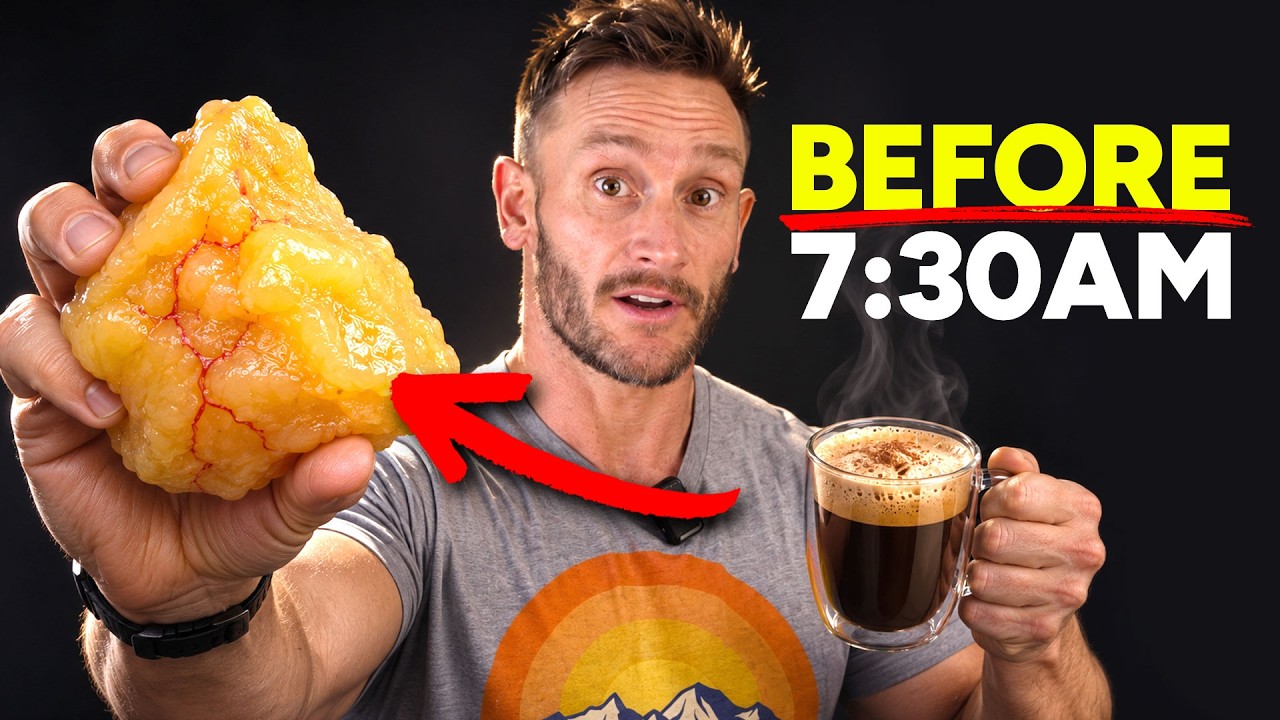
Plot twist: coffee is not the culprit.
So what is, and what does he suggest instead?
Here is the breakdown, including where the science is firmer and where it gets shakier.
Jump to:
Your Body’s Built-In Morning Alarm
Everything starts with the cortisol awakening response, a surge that fires moments after the eyes open. Cortisol often gets a bad rap as the “stress hormone,” and DeLauer wants that flinch retired for this particular case.

If you want something simple that actually works, this is one of the most effective tools I’ve used to build strength, conditioning, and endurance without needing a full gym setup.
- Full-body training with one weight using swings, squats, and presses
- Solid cast iron build that feels stable and lasts for years
- Comfortable grip that makes high-rep workouts easier to handle
In the 30 to 45 minutes after you open your eyes, cortisol climbs to its highest peak of the day.
He puts the jump at roughly 75% above waking levels. Its job, he explains, is threefold:
- Mobilizes glucose so the brain has fuel
- Primes the prefrontal cortex, the hub for focus and decisions
- Sets alertness and metabolism for the day ahead
This is your body’s built-in cup of coffee and it fires every morning whether you eat or not.
Why Morning Light Matters
DeLauer points to work in the Journal of Clinical Endocrinology and Metabolism. Bright light first thing in the morning pushed cortisol up more than 50% within 15 minutes, while the same light in the afternoon did nothing.
His takeaway? Morning is a uniquely sensitive window in which hormones are waiting for cues.
The Mistake: Eating Too Early
According to DeLauer, food is the cue that derails things. Insulin and cortisol, he says, behave like a seesaw.
The moment you eat, especially anything with carbs, you release insulin, and that insulin pushes down on the cortisol program before it’s finished running.
The result is a half-finished program and, he argues, a cycle where people grab more food to chase alertness their own biology was already offering for free.
A fair caveat: the seesaw is a simplified picture. Direct human evidence that an early breakfast blunts fat loss is thinner than the confident delivery implies, and total calories, food quality and consistency still carry plenty of weight.
If you want something simple that actually works, this is one of the most effective tools I’ve used to build strength, conditioning, and endurance without needing a full gym setup.
- Full-body training with one weight using swings, squats, and presses
- Solid cast iron build that feels stable and lasts for years
- Comfortable grip that makes high-rep workouts easier to handle
Why Coffee Gets a Pass
Biohacking circles often warn against morning coffee. DeLauer flips that script.
He cites a study in Psychosomatic Medicine showing caffeine significantly increases morning cortisol secretion. In this window, he says, that is working in the same direction as your body.
So the villain here has never been the coffee. It’s the food, specifically the insulin that comes with it.
Black coffee does not spike insulin the way a bowl of Cheerios does. His caveat is that breakfast itself is not evil, only timing matters.
Where NAD Fits In
DeLauer also recommends nicotinamide adenine dinucleotide (NAD), a molecule central to cellular energy production. His logic: it offers a sense of fuel without calories or insulin.
If we can give ourselves that in the morning, it’s a way to give us fuel without calories or without insulin that’s blunting this cortisol response in that first 60 minutes.
Worth knowing: NAD is essential to life, but whether supplementing it boosts morning energy in humans is a much less settled question. DeLauer himself frames it as optional, “if you want to mess with it.”
Also note that the video includes a paid partnership with Rho Nutrition, maker of the liposomal NAD he recommends.
If you want something simple that actually works, this is one of the most effective tools I’ve used to build strength, conditioning, and endurance without needing a full gym setup.
- Full-body training with one weight using swings, squats, and presses
- Solid cast iron build that feels stable and lasts for years
- Comfortable grip that makes high-rep workouts easier to handle
The 60-to-90-Minute Morning Playbook
DeLauer calls the fix “embarrassingly simple.” Here is the routine he outlines:
- Get bright light early. Step outside or sit by a bright window within the first half hour.
- Sip insulin-friendly drinks. Black coffee (maybe a little cream), water with a pinch of salt, and NAD if desired.
- Delay food 60 to 90 minutes. That gives the cortisol surge room to finish.
- Move gently. A walk, light rowing or a few minutes of bouncing all count.
DeLauer shared a few real-world examples. Pitcher Noah Syndergaard, he recalls, would roll a rower out into the sun and row casually, then swing some Bulgarian bags.
A trainer friend named Grant, big on lymphatic health, jumps rope or bounces for 30 to 90 seconds.
No Need to White-Knuckle It
If your morning is calling for food, eat it. Just don’t eat it within the first like 30 minutes, 60 minutes, right?
That flexibility makes the approach far more realistic than rigid fasting rules, especially for people managing insulin resistance or blood sugar who should loop in a healthcare provider first.
The Ghrelin Bonus: Your Sharpest Thinking Window
One more twist involves ghrelin, the so-called hunger hormone, which also peaks in the morning before eating.
DeLauer notes that ghrelin acts on the hippocampus, the memory center, and that animal research links it to new connections between neurons. Eating suppresses ghrelin within 30 to 60 minutes.
If you want something simple that actually works, this is one of the most effective tools I’ve used to build strength, conditioning, and endurance without needing a full gym setup.
- Full-body training with one weight using swings, squats, and presses
- Solid cast iron build that feels stable and lasts for years
- Comfortable grip that makes high-rep workouts easier to handle
Because that evidence comes largely from animals, the human payoff for memory remains unproven. Still, the practical suggestion costs nothing: schedule reading, writing or problem-solving before breakfast.
The fasted morning is your sharpest cognitive window.
Try It Tomorrow
DeLauer’s pitch is straightforward: light first, coffee if wanted, food later.
This whole thing costs nothing and it changes every single morning. So, try it tomorrow and see how different you feel.
Some mechanisms behind the claims are well established, while others remain educated extrapolation. Low risk, zero cost makes it an easy experiment for most healthy adults.