Tom Rhys Harries didn’t just prepare for a role—he rebuilt himself from the ground up.
The Welsh actor, best known for his turn as doomed DJ Axel Collins in Netflix’s White Lines, recently transformed his body to play DC’s shape-shifting villain Clayface, achieving a shredded 6% body fat.
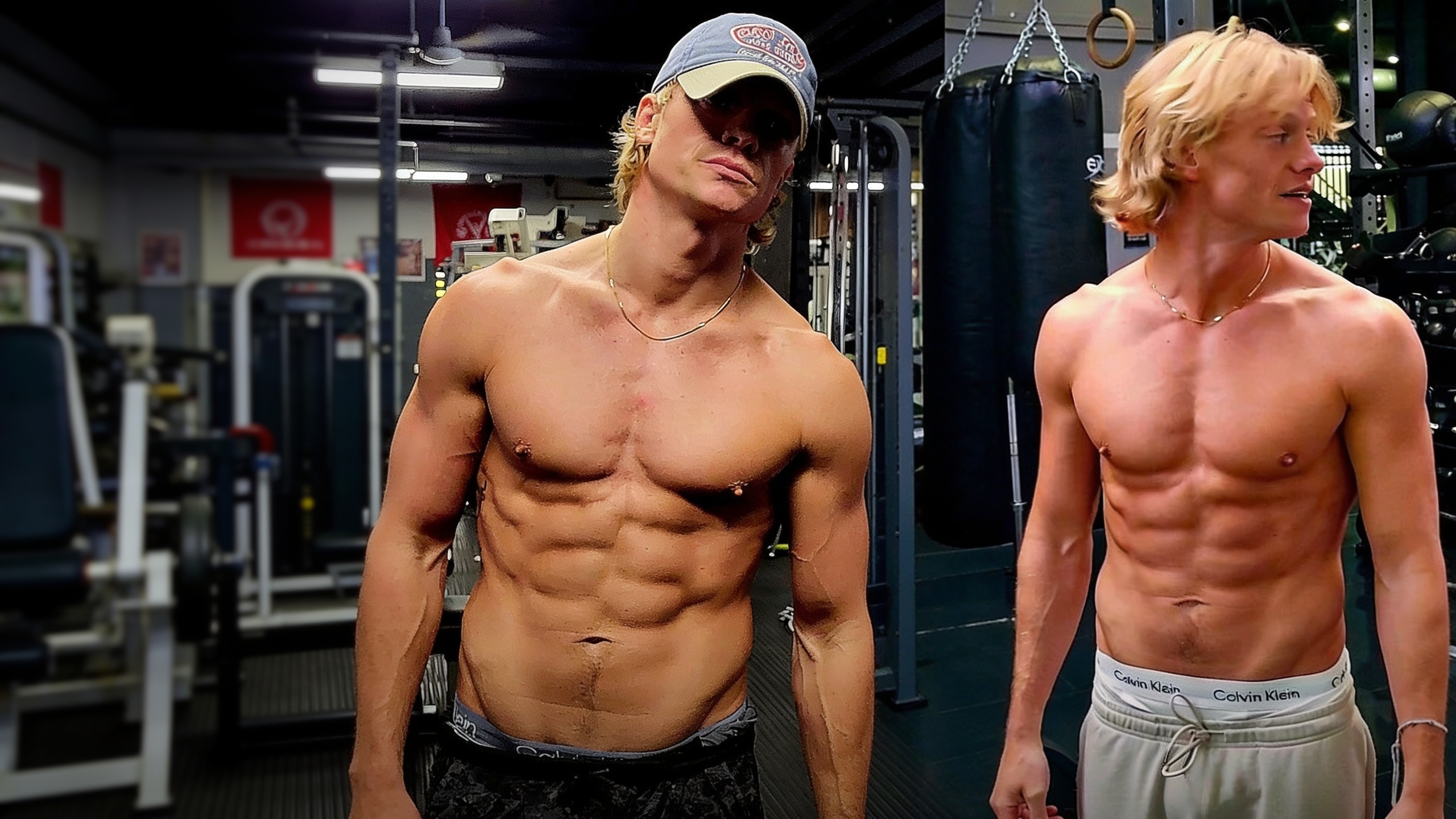
But here’s the twist: he did it all while recovering from a torn ACL.
The dual challenge of extreme fat loss and injury rehabilitation makes Harries’ preparation for the R-rated horror-tragedy one of the most demanding physical transformations in recent superhero cinema.
Jump to:
- The Role That Demanded Everything
- Training With a Torn ACL: The Impossible Balance
- Reaching 6% Body Fat: The Nutritional Gauntlet
- The Prosthetics Problem: DC’s Unusual Request
- What Makes This Transformation Exceptional
- Clayface’s Place in the Broader DCU
- The Sustainability Question
- From White Lines to DC Villain
The Role That Demanded Everything
Clayface, which hit theaters October 23, 2026, isn’t your typical DC superhero film. Directed by James Watkins—the horror veteran behind Eden Lake and Speak No Evil—the film reimagines one of Batman’s most enduring adversaries as a tragic figure.
Harries plays Matt, an actor whose desperate attempt to repair his disfigured face triggers monstrous consequences. The character, based on Basil Karlo from the comics, first appeared in Detective Comics in 1940 as a failed actor consumed by rage and transformation.
Part of the James Gunn and Peter Safran DCU—separate from Matt Reeves’ The Batman universe—the film leans heavily into body horror rather than blockbuster action. That meant Harries needed to look simultaneously human and superhuman, lean enough to showcase muscle definition while bulky enough to fit into Clayface’s elaborate prosthetic costumes.
Training With a Torn ACL: The Impossible Balance
Most actors face one challenge at a time. Build muscle. Or lose fat. Or rehab an injury.
Harries had to do all three simultaneously.
According to Men’s Health Australia, Harries tore his ACL during the preparation phase—an injury that typically requires 9 to 12 months of careful rehabilitation. ACL tears devastate athletic performance, cause significant muscle atrophy in the affected leg, and demand cautious progressive loading to avoid reinjury.
Working with trainer Avasilcai, Harries designed a program that balanced heavy resistance training with ACL-specific rehab exercises. The goal wasn’t just aesthetics—it was preventing muscle loss in his right leg while simultaneously building overall mass and stripping away body fat.
The Dual-Purpose Training Protocol
Harries’ training program had to walk a razor-thin line. Push too hard, risk reinjury. Go too light, lose muscle and miss the aesthetic target.
The solution involved structured periodization—combining compound lifts for overall muscle development with isolated rehabilitation movements designed to restore function and symmetry to his injured leg.
- Heavy resistance work maintained and built muscle mass across his entire physique
- ACL-specific exercises targeted the right leg to combat atrophy and restore stability
- Progressive loading protocols gradually increased stress on the healing knee without exceeding safe thresholds
- Careful volume management prevented overtraining while maintaining metabolic demands for fat loss
This approach mirrors protocols used by professional athletes returning from ACL reconstruction, where strength training continues aggressively in uninjured areas while the damaged limb follows a measured progression.
Reaching 6% Body Fat: The Nutritional Gauntlet
Training laid the foundation. Nutrition built the sculpture.
Harries followed what Men’s Health described as an “incredibly clean” diet with protein as the cornerstone. Achieving 6% body fat requires surgical precision with calories and macronutrients—there’s zero margin for error.
For context, 6% body fat sits at the extreme low end of leanness. Male bodybuilders typically hit 5-7% for competition day. Elite marathon runners hover around 6-13%. Most fitness models photograph at 8-12%.
At 6%, veins become prominent, individual muscle striations are visible, and subcutaneous fat virtually disappears. It’s also unsustainable for most people long-term, often accompanied by hormonal disruption, decreased performance, and compromised immune function.
Why Protein Was Non-Negotiable
High protein intake served dual critical functions in Harries’ transformation: preserving muscle mass during fat loss and supporting tissue repair for his healing ACL.
During aggressive caloric deficits—necessary to reach extreme leanness—the body readily cannibalizes muscle tissue for energy. Elevated protein intake (typically 1.0-1.2 grams per pound of body weight) provides amino acids that signal muscle retention even when overall calories drop.
For ACL recovery, protein becomes even more essential. Collagen synthesis, tissue remodeling, and muscle rebuilding all depend on adequate amino acid availability. Skimp on protein during injury rehab, and healing slows dramatically.
The Prosthetics Problem: DC’s Unusual Request
Here’s where Harries’ transformation hit an unexpected obstacle.
DC Studios reportedly asked the training team not to let Harries get too lean—a counterintuitive directive in an industry obsessed with shredded superhero physiques.
The reason? Practical effects and prosthetics.
Clayface’s design requires bulky prosthetic costumes that add mass and texture to create the character’s signature monstrous appearance. If Harries became excessively lean, his frame would shrink, making it difficult or impossible to fit properly into the pre-constructed prosthetic suits.
This tension between extreme leanness and costume requirements represents an under-discussed challenge in superhero filmmaking. Actors like Christian Bale (Batman Begins) and Michael B. Jordan (Black Panther) have discussed similar issues—too much size creates mobility problems in suits, while excessive leanness can make armor and padding fit poorly.
For Harries, the solution meant hitting 6% body fat while maintaining enough overall mass and frame size to wear Clayface’s transformation suits. Lean, but not small.
What Makes This Transformation Exceptional
Hollywood body transformations have become commonplace. Chris Hemsworth bulks for Thor. Chris Pratt shredded for Guardians of the Galaxy. Kumail Nanjiani shocked fans with his Eternals physique.
But few actors have attempted simultaneous extreme fat loss and major injury rehabilitation.
The conflicting physiological demands create a uniquely difficult puzzle. Fat loss requires a caloric deficit. Muscle building and injury recovery both benefit from caloric surplus. Training intensity must remain high enough to stimulate adaptation but controlled enough to avoid reinjury.
Harries didn’t have the luxury of focusing on one goal at a time. He needed everything at once—and delivered.
Lessons for Regular Gym-Goers
While most people won’t need to hit 6% body fat while rehabbing a torn ACL, Harries’ approach offers valuable takeaways:
- Injury doesn’t mean stopping training entirely—smart programming allows continued progress in uninjured areas
- Nutrition becomes even more critical during rehab—protein supports both muscle retention and tissue healing
- Extreme leanness requires extreme consistency—there’s no magic trick, just precise execution over time
- Professional guidance matters—attempting complex transformations without expert support dramatically increases injury risk
Clayface’s Place in the Broader DCU
The film represents an interesting gamble for DC Studios. Rather than another straightforward hero origin story, Clayface leans into horror-tragedy, treating its villain as a sympathetic character.
This aligns with recent comics portrayals, particularly James Tynion IV’s acclaimed Detective Comics run (issues #934-981), which featured a Clayface redemption arc. The character—ranked by IGN as the 73rd-greatest comic book villain of all time—has depth beyond simple antagonism.
Early reviews have been mixed. NPR called the film “underbaked” while acknowledging its effective horror elements. Whether audiences embrace the darker, more tragic interpretation remains to be seen.
What’s certain is that Harries committed fully, physically embodying the transformation his character undergoes onscreen.
The Sustainability Question
It’s worth noting that 6% body fat represents a peak condition achieved temporarily for filming—not a sustainable year-round state.
Maintaining such extreme leanness long-term can trigger metabolic slowdown, hormonal imbalances, decreased testosterone, compromised immune function, and psychological stress. Professional bodybuilders hit these levels for competition day, then gradually return to healthier body fat percentages.
For Harries, reaching 6% meant looking exactly right for Clayface’s human scenes—showcasing the physical perfection Matt pursues before his transformation. Once filming wrapped, gradual reverse dieting would allow sustainable recovery.
The takeaway isn’t that everyone should pursue extreme leanness. It’s that commitment, intelligent programming, and professional support make seemingly impossible physical goals achievable—even when complicated by significant injury.
From White Lines to DC Villain
For Harries, Clayface represents a potential career-defining role. Moving from supporting parts to leading a DC Studios production requires not just acting chops but physical credibility.
His willingness to undergo such a demanding transformation—and succeed despite a major injury—demonstrates the dedication required to compete in Hollywood’s superhero landscape.
Whether the film itself becomes a commercial hit or cult curiosity, Harries’ physical preparation stands as a testament to what’s possible when training, nutrition, and rehabilitation align with unwavering focus.
He didn’t just play Clayface. He became the transformation.