Tom Hiddleston doesn’t run to look good on camera.
He runs to think.
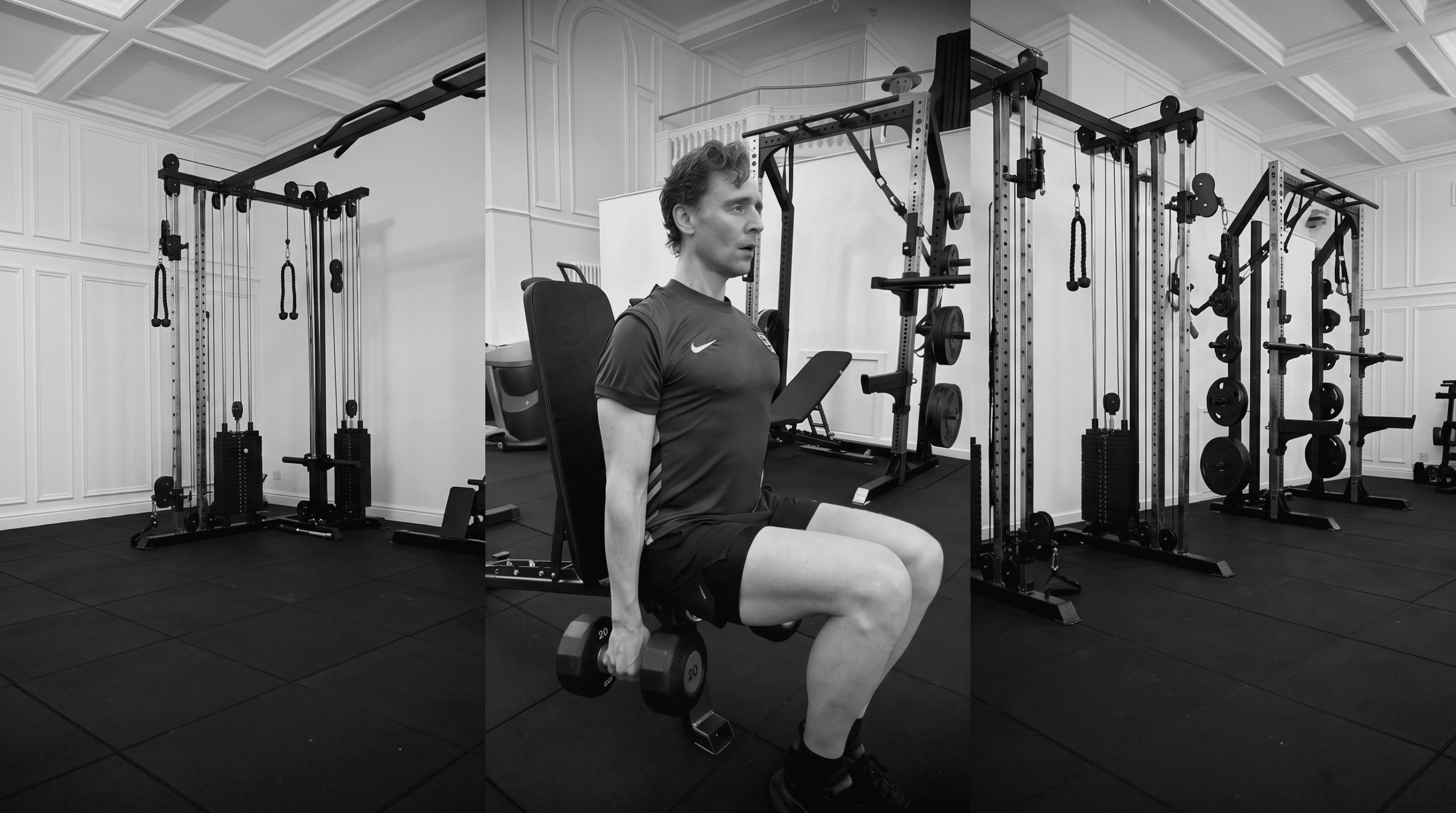
In Men’s Health UK’s October cover story, the 44-year-old British actor opens up about how running has become far more than preparation for physically demanding roles—it’s his primary tool for mental clarity, problem-solving, and staying present.
And the science backs him up completely.
Jump to:
Why Tom Hiddleston Never Stops Running
Hugh Laurie, Hiddleston’s co-star on the BBC spy thriller The Night Manager, put it bluntly.
Tom never stops running. Before work, after work, during work.
That’s not hyperbole. Hiddleston, who first captured global attention as Loki in 2011’s Thor and has since become one of the most recognizable faces in the Marvel Cinematic Universe, treats running as non-negotiable—not because a director demands it, but because his mind demands it.
No products found.
In the Men’s Health feature, conducted by Christopher Riley with creative direction by Declan Fahy, Hiddleston frames his relationship with running as something deeper than cardio. It’s a mental health practice, a cognitive tool, and a form of moving meditation rolled into one.
For Hiddleston, running clears his head, helps him solve creative problems, and anchors him in the present moment—benefits that extend far beyond any six-pack or stamina boost.
Movement as Mindfulness
Hiddleston told BBC Radio 2 in a previous interview:
I love movement, and I love movement in cinema.
That philosophy runs deeper than action sequences. Physical capability, for him, is inseparable from character work—and from life itself.
Running offers something unique: rhythmic, repetitive motion that frees the prefrontal cortex to wander, process, and create. Neuroscience research consistently supports this idea. Aerobic exercise enhances prefrontal cortex activity, the brain region responsible for executive function, planning, and emotional regulation.
In other words, Hiddleston isn’t just burning calories—he’s optimizing brain function.
No products found.
Sports psychologists have long recognized running as a tool for stress regulation and creative problem-solving. The rhythmic nature of running, combined with sustained aerobic effort, creates an ideal environment for what researchers call “transient hypofrontality”—a temporary reduction in analytical overthinking that allows deeper cognitive processing to occur.
It’s why so many runners report their best ideas happening mid-stride.
Training for The Night Manager Season 2
Hiddleston’s return to the role of Jonathan Pine in The Night Manager Season 2—which aired on BBC and Prime Video in 2025-2026, a full decade after the Golden Globe-winning first season—required serious physical preparation.
Working with trainer Waterson, Hiddleston undertook a punishing program combining high-intensity circuit training with his beloved running.
One documented session involved 30 different exercises in a single gruelling workout, incorporating compound movements, bodyweight exercises, and conditioning work. This wasn’t bodybuilding for aesthetics—it was functional, endurance-focused training designed to build stamina, mental toughness, and real-world physical capability.
Fitness direction for the Men’s Health feature was credited to Andrew Tracey, a well-known figure in fitness media, and the piece emphasizes how Hiddleston’s approach reflects a broader shift in Hollywood training culture.
No products found.
Endurance Over Aesthetics
Hiddleston represents a growing trend among actors: prioritizing endurance sports over purely aesthetic bodybuilding.
While Marvel heroes are often associated with bulging biceps and superhero physiques, Hiddleston’s Loki—and his portrayal of spy Jonathan Pine—demand something different: agility, stamina, and mental sharpness.
Performance coaches note that endurance training fundamentally changes the psychology of preparation. Instead of mirror-focused vanity work, athletes and actors training for stamina develop resilience, discipline, and mental fortitude.
It’s training that serves life, not just the camera.
With roles in Avengers: Doomsday and an upcoming Tenzing biopic—where he’ll portray legendary mountaineer Edmund Hillary—Hiddleston’s commitment to functional fitness isn’t slowing down. Both roles are physically demanding, requiring not just strength but cardiovascular endurance and mental grit.
Running and Men’s Mental Health
Hiddleston’s story also taps into something larger: the underreported role of running in men’s mental health maintenance.
No products found.
Men’s Health UK, under Editor in Chief Claire Anderson, has increasingly focused on the intersection of physical fitness and mental wellbeing—and Hiddleston’s example is a perfect case study.
Regular aerobic exercise, particularly running, is one of the most effective non-pharmaceutical interventions for stress management, anxiety reduction, and mood stabilization. For men, who statistically underutilize mental health services, movement-based practices like running can serve as an accessible entry point to emotional regulation.
Running doesn’t require a therapist’s office, insurance approval, or social vulnerability. It just requires shoes and commitment.
Clinicians working in men’s mental health often point to endurance exercise as a gateway to broader wellness practices—mindfulness, self-awareness, and presence all emerge naturally from consistent running habits.
The Science of Running as Cognitive Fuel
Hiddleston’s description of running as a problem-solving tool aligns perfectly with emerging neuroscience.
Studies consistently show that aerobic exercise increases blood flow to the brain, promotes neurogenesis (the creation of new neurons), and enhances connectivity in brain regions associated with memory and executive function.
No products found.
Running also triggers the release of brain-derived neurotrophic factor (BDNF), often called “Miracle-Gro for the brain,” which supports learning, memory, and mental clarity.
Beyond biochemistry, there’s something profoundly meditative about sustained rhythmic movement. Runners often describe entering a flow state—a mental zone where time dissolves, stress fades, and clarity emerges.
It’s no wonder Hiddleston uses running to think through scripts, characters, and life decisions.
Practical Takeaways from Hiddleston’s Approach
You don’t need to train for a Marvel movie to benefit from Hiddleston’s philosophy. Here’s how to apply his mindset:
- Run for your mind, not just your body. Reframe running as cognitive training, not calorie burning.
- Consistency beats intensity. Hiddleston runs regularly—before, after, and during work. Build a habit, not a heroic workout.
- Combine endurance with functional strength. Circuit-style sessions that mix bodyweight movements, compound lifts, and conditioning build real-world capability.
- Use movement to solve problems. When stuck on a decision or creative block, lace up and run. Let your feet do the thinking.
- Train for resilience, not aesthetics. Prioritize stamina, mental toughness, and how you feel over how you look.
Why This Matters Beyond Hollywood
Hiddleston’s story isn’t just celebrity fitness content—it’s a blueprint for sustainable wellness.
In an era where mental health struggles are rising and sedentary lifestyles dominate, his approach offers something refreshingly simple: move your body, clear your mind, stay present.
No products found.
Running doesn’t require equipment, gym memberships, or complicated protocols. It’s accessible, scalable, and scientifically proven to improve both physical and mental health.
Whether you’re preparing for a spy thriller or just trying to navigate daily stress, the principle remains the same: movement is medicine.
Tom Hiddleston, educated at Eton College, the University of Cambridge, and the Royal Academy of Dramatic Art, has built a career defined by versatility—from Shakespearean theatre to Marvel blockbusters. But his most consistent role might be the one he plays every morning: the runner who uses miles to make sense of the world.
And that’s a role anyone can adopt.
Sources
- Men’s Health UK – https://www.menshealth.com/uk/building-muscle/a70044488/tom-hiddleston-night-manager-training/