Fitness influencer Jesse James West recently embarked on a sobering journey—visiting gyms on the brink of extinction.
His mission? Uncover why commercial gym chains are vanishing at an alarming rate, from bankruptcy filings to member complaints about maintenance and cleanliness.
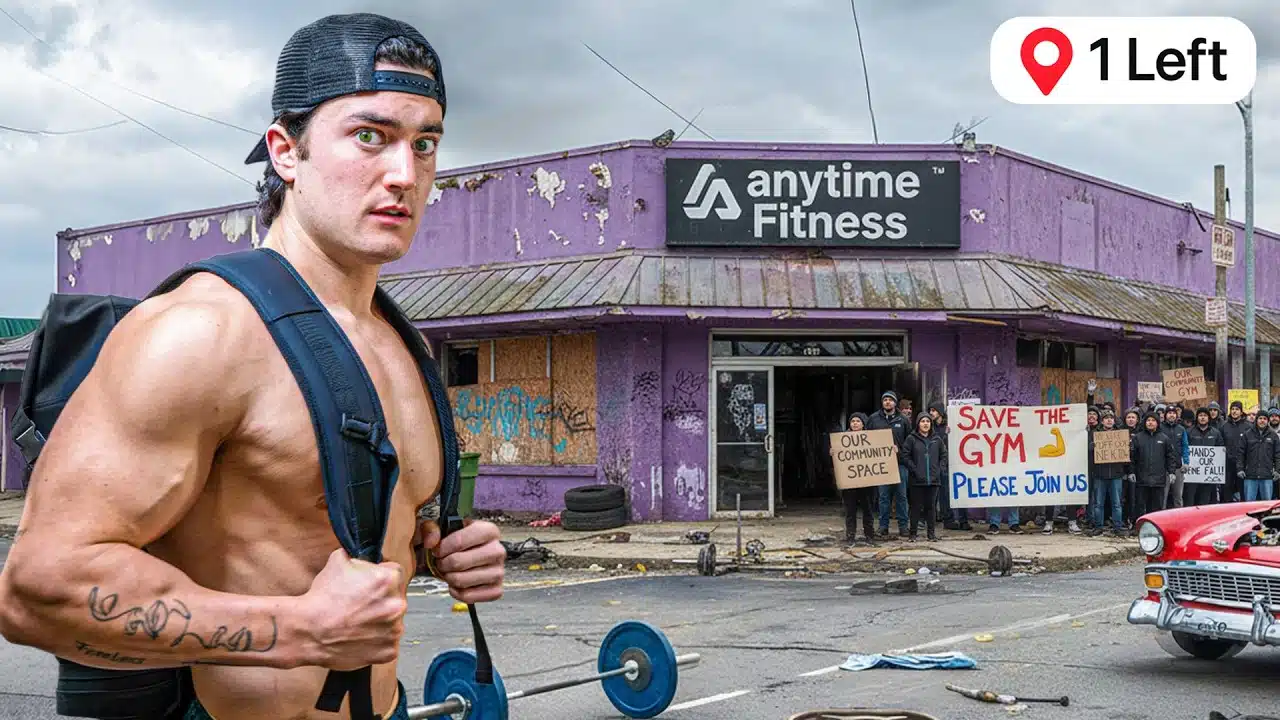
Armed with his camera and genuine curiosity, West toured four struggling gym chains to investigate what’s really happening behind closed doors.
What he discovered reveals troubling trends about fitness accessibility, business practices, and the future of affordable gym culture.
Jump to:
- Blink Fitness: Strategic Bankruptcy or Financial Mismanagement?
- 24 Hour Fitness: When “Always Open” Becomes Sometimes Open
- Mayweather Boxing and Fitness: Niche Market, Niche Problems
- Gold’s Gym: The Fading Mecca of Bodybuilding
- Why Commercial Gyms Are Actually Disappearing
- What Gym Closures Mean for Fitness Accessibility
- Lessons for Surviving Gym Chains
Blink Fitness: Strategic Bankruptcy or Financial Mismanagement?
West’s first stop brought him to Blink Fitness, which has shrunk from roughly 100 locations to just 37.
The chain filed Chapter 11 bankruptcy in 2024, drowning in $280 million of debt—a staggering amount that raises serious questions about fiscal oversight.
You think they would stop after $1 million in debt, but somebody kept running up the tab.
Despite negative online reviews warning about dirty equipment and broken machines, West found something unexpected: brand new equipment throughout the facility.
The Equipment Mystery Solved
Employee Derek revealed the strategic maneuver behind this paradox during West’s investigation.
What Blink did was they bought like hundreds of thousands, millions of dollars of equipment and then filed chapter 11 bankruptcy and then they got bought up by UK company.
This revelation exposed what appears to be a calculated business strategy—purchasing expensive equipment right before declaring bankruptcy, potentially protecting assets while restructuring debt.
West found the facility reasonably clean despite reviews claiming otherwise, with functional equipment, comfortable temperature control at 69 degrees, and adequate cleaning supplies scattered throughout.
However, locker rooms showed signs of neglect with paper towels and toilet paper littering floors in certain areas.
Member Sentiment About Disappearing Gyms
When West spoke with regular members, their responses revealed genuine emotional connections to their training spaces.
Member Rico expressed sadness about the transition, noting Blink was his “first home” and he’d always trained at that specific location.
Despite bankruptcy proceedings, West observed every bench press station occupied during his visit—clear evidence that demand for affordable fitness remains strong.
24 Hour Fitness: When “Always Open” Becomes Sometimes Open
West’s investigation next brought him to 24 Hour Fitness, which has plummeted from 400 locations to approximately 250 after filing bankruptcy in 2020.
The chain accumulated $1.3 billion in debt—nearly five times Blink’s financial hole.
Arriving at night, West immediately discovered the irony in the gym’s name.
I’m confused. I thought you guys were 24 hour fitness.
The staff member clarified they only maintain 24-hour operations Monday through Friday—a significant departure from the brand promise that built their reputation.
Maintenance Issues Everywhere
While cardio equipment appeared abundant and mostly functional, West discovered serious maintenance problems throughout the facility:
- Torn bench padding with gaping holes large enough to render equipment unusable
- Completely detached cable systems on weight machines
- Abandoned personal items including water bottles and even a protein bar
- Disorganized weight plates left scattered on equipment
If you have this big of a hole on the bench, just put the bench in the closet or something like just don’t bring it out because this is just embarrassing.
Locker room conditions proved equally concerning, with toilet paper scattered across floors, random bottles abandoned near sinks, and questionable cleanliness standards.
Perhaps most telling—West discovered a “steroid warning” posted in locker rooms, suggesting management awareness of illicit activity but questionable enforcement.
Reviews mentioned saunas and steam rooms as key selling points, but when West attempted accessing these premium features, staff informed him they were closed.
Multiple members cited these amenities as primary reasons for membership, yet they remained consistently unavailable during operating hours.
West was eventually asked to stop filming and leave the premises—a suspicious request that raised questions about what management might be trying to conceal.
Mayweather Boxing and Fitness: Niche Market, Niche Problems
Floyd Mayweather’s branded boxing fitness chain presented different challenges than traditional weightlifting gyms.
The chain reduced locations by over 50% from their peak of 70 facilities, though unlike previous gyms, they haven’t filed bankruptcy.
However, reports indicate significant financial struggles stemming from expensive membership fees and limited operating hours.
West’s initial visit found the facility completely dark and locked despite confirming his appointment.
His second attempt proved successful, though he discovered the gym only opens during scheduled class times—dramatically limiting accessibility compared to 24/7 competitors.
Specialized Training, Limited Appeal
Coach K explained the fundamental challenge facing Mayweather locations during West’s investigation.
Boxing is a very specific niche. Only the people interested in boxing are going to go here.
Unlike general fitness facilities offering diverse equipment for various training styles, Mayweather gyms target boxing enthusiasts exclusively.
This specialization limits potential membership pools significantly, particularly in markets without strong boxing cultures.
Despite limitations, West found the actual class experience exceeded expectations, with personalized coaching attention and Floyd Mayweather himself appearing on screens demonstrating proper technique.
The equipment selection proved appropriate for group fitness—dumbbells reaching 50 pounds, multiple heavy bags, wrecking balls, and specialized boxing equipment.
Gold’s Gym: The Fading Mecca of Bodybuilding
West saved the most iconic location for last—Gold’s Gym Venice, the legendary facility where Arnold Schwarzenegger built his championship physique.
Gold’s Gym filed bankruptcy in 2020 due to pandemic lockdowns and has steadily closed locations ever since.
Day passes now cost $50 (up from $40 just years ago), reflecting both inflation and desperation to maintain revenue streams.
Historic Equipment Still Functioning
Walking through Gold’s Gym felt like touring bodybuilding history, with equipment dating back to the mid-1980s still in active use.
The facility houses legendary 300-pound dumbbells, plate-loaded machines from decades past, and walls covered with photos of bodybuilding icons who trained there.
Despite negative reviews claiming overcrowding, West found ample availability across numerous squat racks, bench press stations, and six separate dumbbell rack areas.
However, disorganization proved rampant—10-pound dumbbells stored next to 90-pound pairs, weights scattered randomly rather than organized by incremental progression.
Cultural Shift From Hardcore to Mainstream
Multiple long-term members described dramatic cultural changes at Gold’s Gym over recent years.
Around 2020, all the bodybuilders kept leaving and leaving and leaving.
Another member explained how competitive intensity diminished significantly as serious bodybuilders migrated elsewhere.
The competitors have left. The bodybuilding energy has kind of dissipated or it’s like it’s left, you know, and it’s a bummer.
Members noted management asking them to “tone down” intense training behavior—a stark departure from Gold’s Gym’s hardcore roots and original identity.
Despite these changes, loyal members expressed hope that fewer locations might mean increased quality and improved equipment at remaining facilities.
Why Commercial Gyms Are Actually Disappearing
West’s investigation revealed several interconnected factors driving gym closures across chains:
Unsustainable Debt Accumulation
Both Blink Fitness and 24 Hour Fitness accumulated hundreds of millions in debt before bankruptcy filings.
These massive obligations suggest expansion strategies prioritizing rapid growth over financial sustainability, leaving chains vulnerable when revenue streams faltered during economic downturns or pandemic closures.
Deferred Maintenance Creating Negative Experiences
Across multiple locations, West documented broken equipment, torn padding, detached cables, and general neglect.
When gyms fail maintaining basic equipment functionality and cleanliness standards, member satisfaction plummets regardless of membership pricing.
Negative word-of-mouth and poor online reviews create vicious cycles driving potential members toward better-maintained competitors.
Over-Specialization Limiting Market Appeal
Mayweather Boxing demonstrated how niche positioning can restrict growth potential.
While specialization creates passionate communities, it simultaneously limits addressable market size compared to general fitness facilities accommodating diverse training preferences.
Cultural Dilution Alienating Core Demographics
Gold’s Gym members mourned losing hardcore bodybuilding atmosphere as facilities became more mainstream.
Attempting appealing to everyone often results in satisfying no one—alienating loyal core members without successfully attracting enough casual exercisers to compensate.
Intense Competition From Budget Chains
Planet Fitness emerged repeatedly as formidable competition offering lower membership prices.
When struggling chains like Blink already charged just $15 monthly yet still faced closure, competing on price alone proves insufficient without corresponding experience quality.
What Gym Closures Mean for Fitness Accessibility
West raised profound questions about implications for everyday exercisers when affordable gym options disappear.
Gyms like Blink Fitness allow people to get access to an affordable gym. And if they’re disappearing, does that mean that the gym culture, the affordable gyms are all just going to be disappearing with it?
Consolidation in the fitness industry could reduce options for budget-conscious individuals seeking convenient training locations.
As chains close underperforming locations, fitness deserts may emerge in certain neighborhoods—areas lacking accessible, affordable exercise facilities within reasonable travel distances.
This particularly impacts lower-income communities where boutique studios and premium gyms remain financially out of reach.
Gyms As Community Anchors
Beyond equipment access, West’s interviews revealed gyms function as social hubs where lasting friendships form.
Member Rico’s emotional response to Blink’s transition illustrated how training spaces become “homes” with deep personal significance.
This is family. This is home. You know, you come here, the energy is unrivaled.
When beloved gyms close, communities lose more than workout equipment—they lose gathering spaces fostering accountability, motivation, and shared purpose.
For many individuals, gym communities provide crucial social connections and mental health support extending far beyond physical fitness benefits.
Lessons for Surviving Gym Chains
West’s investigation offers valuable insights for gym operators hoping to avoid similar fates:
- Prioritize maintenance religiously — Broken equipment destroys member experience regardless of pricing
- Deliver on brand promises consistently — Operating hours, amenity availability, and service quality must match marketing claims
- Understand your core demographic — Attempting mainstream appeal shouldn’t alienate loyal members who built your reputation
- Control expansion pace — Rapid growth funded by unsustainable debt creates vulnerability during economic downturns
- Maintain facility cleanliness standards — Basic hygiene isn’t negotiable in spaces where people sweat and share equipment
Ultimately, West’s journey through struggling gym chains revealed that success requires balancing financial sustainability with genuine commitment to member experience.
Cutting corners on maintenance, diluting brand identity, or accumulating reckless debt might generate short-term profits but inevitably leads toward bankruptcy courts and padlocked doors.
For fitness enthusiasts, the message remains clear: support gyms that invest in equipment, cleanliness, and community—because when they disappear, they take irreplaceable training memories and friendships with them.