Jake Gyllenhaal’s transformation from lean leading man to full-blown action hero didn’t happen by accident.
His journey from charming rom-com star to the ripped, boxing-obsessed Antoine Fuqua in Southpaw is the stuff of Hollywood legend—and it’s built on a foundation of relentless training, strategic nutrition, and mental grit that would break most people.
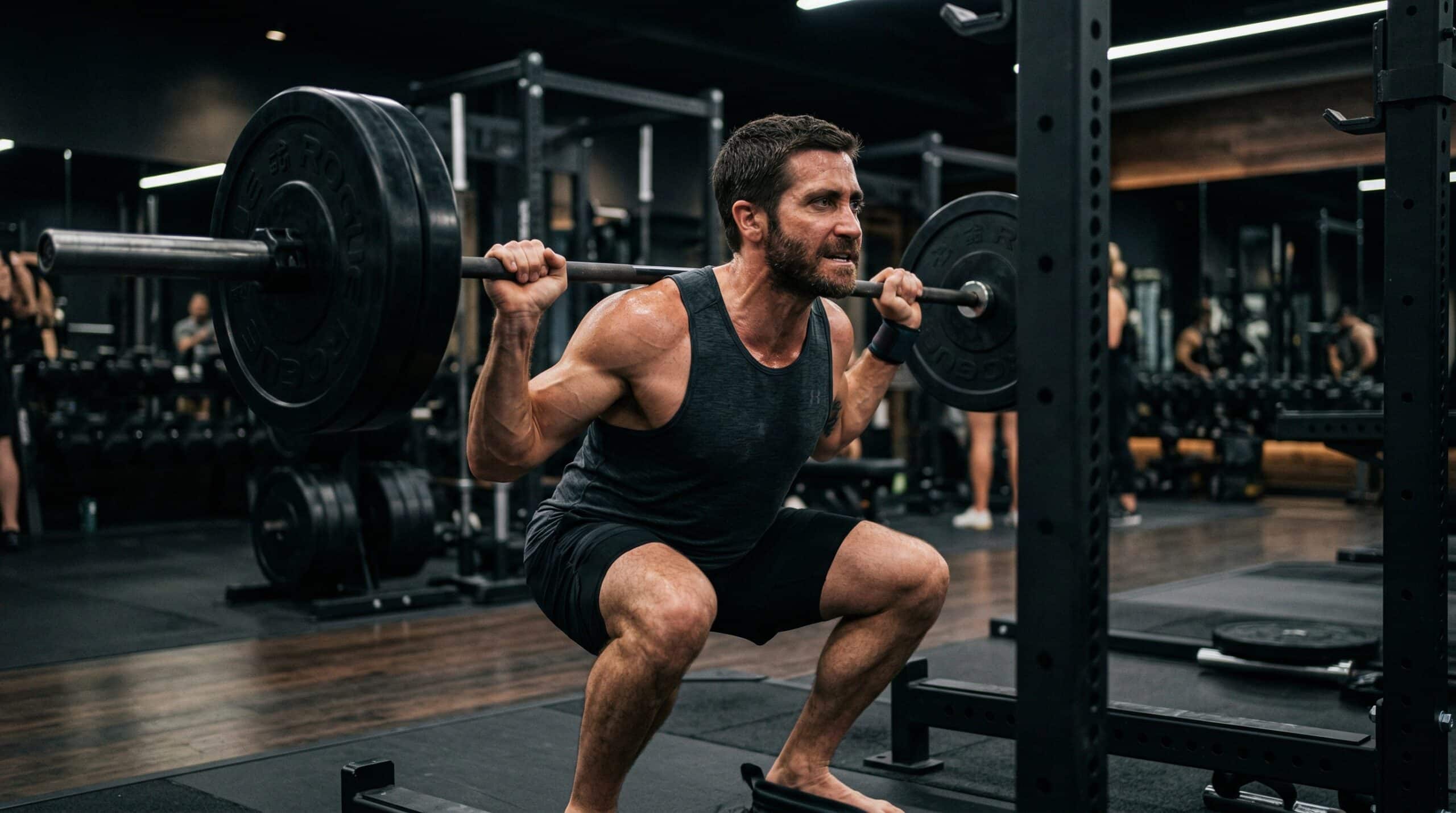
Whether he’s preparing to play a gaunt freelance journalist or a muscle-bound prizefighter, Gyllenhaal’s approach to fitness is methodical, intense, and designed for real-world results.
This isn’t about vanity or quick fixes—it’s about building functional strength, explosive power, and an athlete’s endurance that translates to both screen presence and long-term health.
Jump to:
- The Gyllenhaal Method: High-Intensity, Full-Body Domination
- Explosive Power: Plyometrics and Functional Training
- Core Strength: Beyond Traditional Abs
- Nutrition: Precision Fueling for Maximum Results
- The Mental Component: Discipline Over Motivation
- Recovery and Adaptation: The Missing Piece
- Making It Work: Practical Application
- The Transformation Timeline
- Beyond Hollywood: Long-Term Health
The Gyllenhaal Method: High-Intensity, Full-Body Domination
Gyllenhaal’s training philosophy centers on high-intensity, compound movements that recruit multiple muscle groups simultaneously. His workouts aren’t about isolating biceps for Instagram photos—they’re about building a body that can perform.
For Southpaw, Gyllenhaal trained six hours daily for five months straight. That’s not a typo. Six. Hours. Daily.

If you want something simple that actually works, this is one of the most effective tools I’ve used to build strength, conditioning, and endurance without needing a full gym setup.
- Full-body training with one weight using swings, squats, and presses
- Solid cast iron build that feels stable and lasts for years
- Comfortable grip that makes high-rep workouts easier to handle
His regimen combined heavy strength training, boxing-specific conditioning, and brutal cardiovascular work that left him exhausted but transformed. The result? A physique that looked like it belonged in a professional boxing ring, not a Hollywood soundstage.
Boxing as Foundation
Boxing formed the cornerstone of Gyllenhaal’s Southpaw preparation. He trained under former professional boxer Terry Claybon, learning not just how to throw punches, but how to move, breathe, and think like a fighter.
His boxing sessions included:
- Heavy bag work for power development and conditioning
- Speed bag training for hand-eye coordination and shoulder endurance
- Mitt work with trainers for reaction time and precision
- Sparring sessions that tested mental toughness as much as physical ability
- Jump rope intervals for footwork, rhythm, and cardiovascular fitness
This wasn’t recreational boxing. Gyllenhaal fought actual boxers in preparation, taking real punches and developing authentic fighting skills that translated to incredibly realistic on-screen performances.
Strength Training: Compound Lifts Reign Supreme
Outside boxing, Gyllenhaal’s strength program emphasized progressive overload through compound movements. Deadlifts, bench presses, pull-ups, and military presses formed the foundation.
These exercises build dense, functional muscle that enhances athletic performance rather than just aesthetic appearance. Think strength that translates to real-world power, not just gym numbers.
If you want something simple that actually works, this is one of the most effective tools I’ve used to build strength, conditioning, and endurance without needing a full gym setup.
- Full-body training with one weight using swings, squats, and presses
- Solid cast iron build that feels stable and lasts for years
- Comfortable grip that makes high-rep workouts easier to handle
Barbell deadlifts, performed heavy with 4 sets of 6-8 reps, develop total-body strength while taxing the posterior chain—glutes, hamstrings, lower back, and traps. This movement alone can transform physiques when executed consistently with proper form.
Weighted pull-ups challenge back width and thickness while building functional pulling strength. Gyllenhaal pushed these to failure, often adding weight plates when bodyweight became insufficient.
Explosive Power: Plyometrics and Functional Training
Building muscle is one thing. Building muscle that can explode with power is entirely different.
Gyllenhaal incorporated extensive plyometric training—box jumps, battle ropes, and sled pushes—to develop fast-twitch muscle fibers and explosive athleticism.
Box jumps train the body to generate maximum force in minimal time, developing power that translates to faster punches, quicker movements, and improved athletic performance across all domains.
Battle rope waves and slams create metabolic chaos while building shoulder endurance and core stability. These intervals spike heart rate rapidly, creating cardiovascular adaptations while maintaining muscle mass.
If you want something simple that actually works, this is one of the most effective tools I’ve used to build strength, conditioning, and endurance without needing a full gym setup.
- Full-body training with one weight using swings, squats, and presses
- Solid cast iron build that feels stable and lasts for years
- Comfortable grip that makes high-rep workouts easier to handle
Sled Work: The Ultimate Conditioning Tool
Sled pushes and pulls deserve special mention. These brutal exercises combine strength, power, and conditioning into movements that leave athletes gasping but transformed.
Pushing heavy sleds develops quadriceps, glutes, and mental toughness simultaneously. There’s nowhere to hide during a 30-meter sled push—you either finish or you don’t.
Pulling sleds backward challenges hamstrings and forces athletes into uncomfortable positions that build resilience alongside muscle.
Core Strength: Beyond Traditional Abs
Gyllenhaal’s core training extends far beyond crunches. Renegade rows, ab rollouts, and farmer’s walks create functional core stability that protects the spine while enhancing overall performance.
Renegade rows combine planks with rowing movements, forcing core muscles to resist rotation while back muscles work. This integration mirrors real-world movement patterns where muscles must stabilize and move simultaneously.
Ab rollouts from kneeling positions challenge abdominal strength eccentrically, building control through extended ranges of motion. These develop the kind of core strength that prevents injury while enhancing athletic performance.
If you want something simple that actually works, this is one of the most effective tools I’ve used to build strength, conditioning, and endurance without needing a full gym setup.
- Full-body training with one weight using swings, squats, and presses
- Solid cast iron build that feels stable and lasts for years
- Comfortable grip that makes high-rep workouts easier to handle
Farmer’s walks—simply carrying heavy weights for distance—build grip strength, trap development, and core stability while teaching the body to maintain posture under load.
Nutrition: Precision Fueling for Maximum Results
Training intensity means nothing without proper nutrition. Gyllenhaal’s dietary approach emphasizes high protein intake, strategic carbohydrate timing, and nutrient density.
His daily caloric intake during transformation phases ranged from 3000-3500 calories, carefully distributed across multiple meals to support muscle growth while minimizing fat gain.
Protein consumption remained consistently high—approximately 1 gram per pound of body weight—sourced from chicken breast, salmon, eggs, and quality protein supplements.
Meal Timing and Composition
Breakfast started with complex carbohydrates from oatmeal paired with egg whites for sustained energy and muscle protein synthesis. Adding berries provided antioxidants while almonds contributed healthy fats.
Mid-morning snacks kept metabolism elevated—Greek yogurt with apple slices and whey protein maintained amino acid availability between larger meals.
If you want something simple that actually works, this is one of the most effective tools I’ve used to build strength, conditioning, and endurance without needing a full gym setup.
- Full-body training with one weight using swings, squats, and presses
- Solid cast iron build that feels stable and lasts for years
- Comfortable grip that makes high-rep workouts easier to handle
Lunch featured substantial protein portions (8 ounces chicken breast) with quinoa providing complete proteins and complex carbohydrates. Mixed greens with olive oil delivered micronutrients and healthy fats.
Pre-workout nutrition emphasized quick-digesting carbohydrates—bananas and rice cakes with almond butter—providing immediate energy without digestive distress.
Post-Workout Recovery
Immediately following training, Gyllenhaal consumed fast-absorbing whey protein with simple carbohydrates (dextrose or maltodextrin) to replenish glycogen stores and initiate muscle recovery.
This post-workout window capitalizes on enhanced nutrient uptake, shuttling amino acids and glucose into depleted muscles for optimal adaptation.
Dinner centered on omega-3 rich salmon paired with sweet potatoes and fibrous vegetables, providing sustained energy release and anti-inflammatory benefits crucial for recovery.
Evening snacks featured slow-digesting cottage cheese with walnuts, supplying casein protein that fuels overnight muscle protein synthesis while healthy fats support hormone production.
If you want something simple that actually works, this is one of the most effective tools I’ve used to build strength, conditioning, and endurance without needing a full gym setup.
- Full-body training with one weight using swings, squats, and presses
- Solid cast iron build that feels stable and lasts for years
- Comfortable grip that makes high-rep workouts easier to handle
The Mental Component: Discipline Over Motivation
Perhaps the most underrated aspect of Gyllenhaal’s transformations is psychological. His commitment to character preparation demonstrates that discipline trumps motivation every single time.
Motivation fluctuates. Discipline remains constant.
Training six hours daily for five months requires systematized habits, not fleeting inspiration. Gyllenhaal approached physical transformation as character study—becoming the person who would naturally possess that physique.
This mindset shift separates temporary results from lasting transformation. Bodies change when identities change.
Recovery and Adaptation: The Missing Piece
Intense training demands equally intense recovery. Gyllenhaal prioritized sleep, active recovery, and strategic rest days to allow adaptation without overtraining.
Sleep represents the body’s primary recovery tool. During deep sleep, growth hormone release peaks, facilitating muscle repair and adaptation. Gyllenhaal reportedly maintained strict sleep schedules, understanding that training breaks down tissue—recovery builds it back stronger.
If you want something simple that actually works, this is one of the most effective tools I’ve used to build strength, conditioning, and endurance without needing a full gym setup.
- Full-body training with one weight using swings, squats, and presses
- Solid cast iron build that feels stable and lasts for years
- Comfortable grip that makes high-rep workouts easier to handle
Active recovery sessions—light cardio, stretching, mobility work—promoted blood flow and waste removal without additional training stress.
Making It Work: Practical Application
Most people can’t train six hours daily. That’s reality, not excuse.
The principles underlying Gyllenhaal’s transformations—progressive overload, compound movements, high protein intake, and consistent effort—apply regardless of available time.
Training 5-6 days weekly with focused, intense sessions produces remarkable results when paired with disciplined nutrition and adequate recovery.
Start with fundamental movements: deadlifts, presses, pulls, squats. Master form before adding weight. Increase intensity gradually but relentlessly.
Track nutrition meticulously initially—awareness creates accountability. Weigh food, log meals, monitor progress. Adjust based on results, not feelings.
If you want something simple that actually works, this is one of the most effective tools I’ve used to build strength, conditioning, and endurance without needing a full gym setup.
- Full-body training with one weight using swings, squats, and presses
- Solid cast iron build that feels stable and lasts for years
- Comfortable grip that makes high-rep workouts easier to handle
Prioritize protein consistently. Build meals around quality protein sources, adding carbohydrates and fats to meet energy demands.
The Transformation Timeline
Gyllenhaal typically dedicated 5-6 months for major physical transformations. This timeline allows sustainable muscle growth without metabolic damage or unsustainable practices.
Rapid transformations often prove temporary. Building muscle requires patience—approximately 1-2 pounds monthly for natural lifters represents excellent progress.
Fat loss occurs faster, but preserving muscle during cuts demands high protein intake and continued strength training. Gyllenhaal maintained training intensity while adjusting nutrition for body composition goals.
Beyond Hollywood: Long-Term Health
While Gyllenhaal’s transformations serve artistic purposes, the underlying principles promote long-term health and functional fitness.
Strength training preserves bone density, maintains metabolic rate, and prevents age-related muscle loss. Cardiovascular conditioning protects heart health and enhances longevity.
If you want something simple that actually works, this is one of the most effective tools I’ve used to build strength, conditioning, and endurance without needing a full gym setup.
- Full-body training with one weight using swings, squats, and presses
- Solid cast iron build that feels stable and lasts for years
- Comfortable grip that makes high-rep workouts easier to handle
High-protein diets support muscle maintenance, promote satiety, and preserve metabolic function during caloric deficits.
These aren’t just Hollywood tricks—they’re evidence-based practices that enhance quality of life regardless of whether cameras are rolling.
Gyllenhaal’s dedication to physical transformation demonstrates what becomes possible when commitment meets methodology. His results aren’t genetic anomalies—they’re products of systematic training, precise nutrition, and unwavering discipline applied consistently over months.
The blueprint exists. Implementation determines results.