When actor Jeremy Renner was crushed by a 14,000-pound snowcat in January 2023, many thought his career—maybe even his life—was over.
But 18 months later, the “Hawkeye” star is lifting heavy, shooting a full TV season, and showing the world what it really means to come back from the edge.
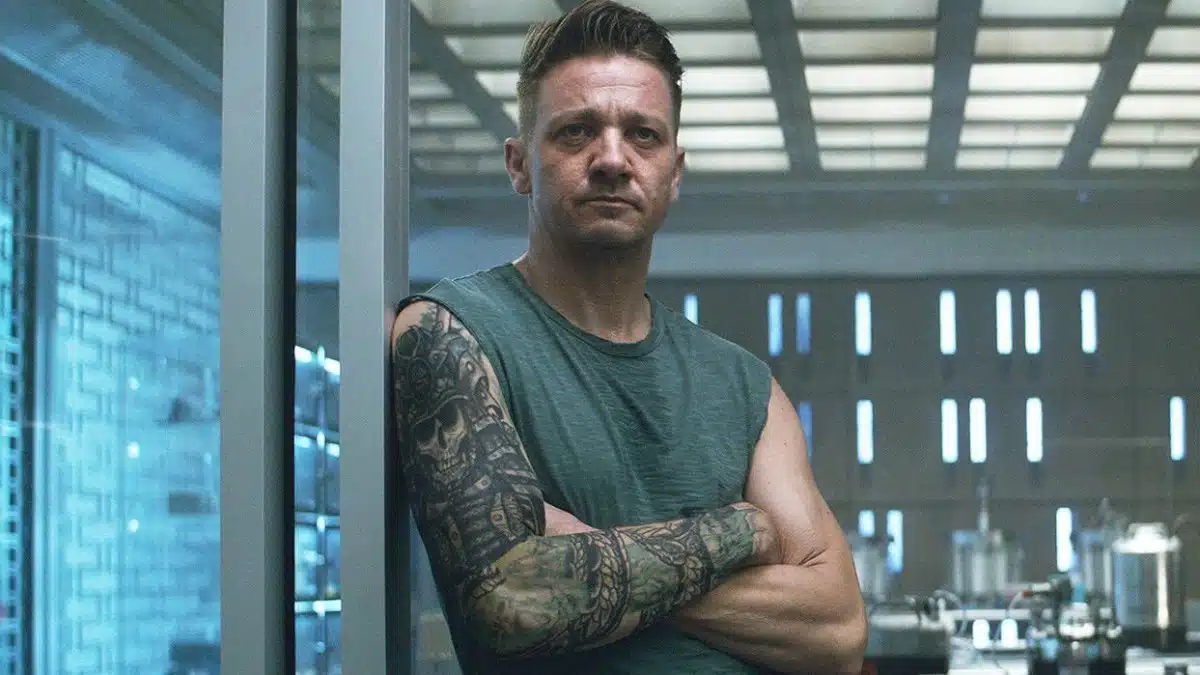
His story isn’t just about survival. It’s a powerful reminder that recovery, resilience, and strength are never linear—and never just physical.
Jump to:
From Life Support to Lifting 50s
Renner’s recovery is nothing short of astonishing.
In a garage-turned-gym in Sewickley, Pennsylvania, the 53-year-old actor trains up to five days a week under the watchful eye of trainer Cat Cantella. His workouts start with 30 minutes of painful stretching, proceed through mobility drills and vibration therapy, and culminate in intense lifting sessions—including 50-pound curls he jokingly refers to as “bitch-ass bitches.”
But make no mistake: every rep is earned.
“Four months of abuse—physical, mental, emotional,” he laughs, jabbing at Cantella’s shoulder. “But I feel great, and I look great.”
Behind the bravado is a man who has endured 38+ documented injuries: shattered ribs, a collapsed lung, broken ankles, a punctured liver, and damage so severe his left eyeball bulged from its socket. At one point, he flatlined in the snow. EMTs had to revive him while his family watched from the house.
“Focus on Breathing”: The Moment Everything Changed
In the moments after the accident, Renner wasn’t thinking about Hollywood. He was thinking about air.
“I’m screaming for a breath. I needed to shove all my energy of air out just so I could suck air back in,” he recalled. “There was no breathing happening. It was a muscle I had to use to press—and it’s hard to use your stomach muscles when you have 14 broken ribs and a popped lung.”
For 45 excruciating minutes, he lay there—bleeding into the snow, eyes flickering shut, and desperately trying to survive. “Huooohohh, huooohohh,” he says, mimicking the ragged sound of his own breath. “But with the exhaustion, there was almost peace.”
He wasn’t exaggerating. A neighbor later told him, “You went away.” He was clinically dead.
Why He Lived: Family, Focus, and Fearless Mindset
Renner attributes his survival to one thing: love.
“My family was there, squeezing my toes,” he said. “I woke up and signed that I was sorry. ‘Holy fuck. I’m so sorry. I love you all so much.’ That was the driving energy of me waking in the first place.”
His tight-knit family—he’s the oldest of seven—rallied around him, visiting the ICU, cheering him through sponge baths, painful transfers, and the demoralizing experience of peeing in a jug. Friends, including Marvel co-stars like Anthony Mackie, Paul Rudd, and Robert Downey Jr., dropped everything to be by his side.
“I’d rather go to jail with Downey than do something amazing by myself,” Renner quips.
But even that support wasn’t enough without mindset.
“The only thing we can control in our lives is our perspective,” he says—a mantra rooted in Buddhist philosophy, reinforced by a lifetime of confronting fear.
How Fear Became Fuel
Years before the accident, Renner kept a written list of fears—success, intimacy, sharks, failure—and made it a mission to face each one.
He studied psychology and theology. Swam with sharks. Wrote down the loss of loved ones as a fear and reframed it.
“You can’t fear loss,” he says now. “You mourn loss. But you should fear not being able to mourn loss. That means you didn’t love deeply enough.”
The mindset shift he applied then prepared him for the trauma that would nearly kill him. And it’s the same philosophy that carried him through months of agony and back onto the set of Mayor of Kingstown—not as a broken man pretending to be whole, but as a man rebuilt.
Recovery Is Work. Here’s What It Takes.
The daily routine is brutal.
- Espresso first, from a Jura machine he brought with him to the rental house.
- Red-light therapy while spreading his legs on a medieval-looking stretch machine.
- Vibration massage with a Power Plate Pulse drilled into his thighs and hips.
- Strength work, adjusted for the fact that his body still contains rods, plates, and screws.
- Pain management, on set and off. On cold days, his joints “lock up” easily, especially in Pittsburgh’s freezing cemeteries where Kingstown films.
And diet? At 53, muscle retention is harder than ever.
“I’m on a high-protein diet,” he explains. “Testosterone’s at 300. No growth hormone. You get atrophy. But the more strength I have, the more energy I have.”
The simplicity of his advice is misleading—because behind every casual statement is hard-won truth.
“How do you find confidence?” he asks. “You take one step. Then another. Then guess what, Hot Sauce? You’re walking.”
Why His Comeback Resonates So Deeply
There’s something magnetic about survival stories—but especially this one. Because Renner didn’t just bounce back. He rewired his approach to life.
He now receives love freely. He says thank you more. And he’s dead serious when he says: “I’m not having another bad day ever, dude.”
There’s no secret, he insists. Just mindset.
When people ask how he’s pulling it off, he credits his support system—but also the quiet, relentless discipline of showing up.
“You breathe out. Then you breathe in. Then you breathe out. Now you’re breathing.”
Final Thoughts: “This Is What You Take With You”
Renner doesn’t sugarcoat his experience. Death, he says, was “exhilarating peace.” But it’s the life that followed—messy, painful, humbling—that he’s decided to live fully.
“You take shared experiences with the people you love. That’s eternal. That’s what you carry.”
He exhales, deeply. His face settles.
It’s not about being famous for playing Hawkeye anymore. It’s about being famous for choosing to come back—and choosing to fight for every step, every breath, and every day.
And for anyone trying to find their way through their own version of catastrophe, Jeremy Renner’s story offers one lasting, unshakable truth:
You’re not broken. You’re rebuilding. Breathe.