What if arteries are silently building plaque right now, despite clean eating and regular exercise?
Dr. Michael Brewer discovered this harsh reality at age 57.
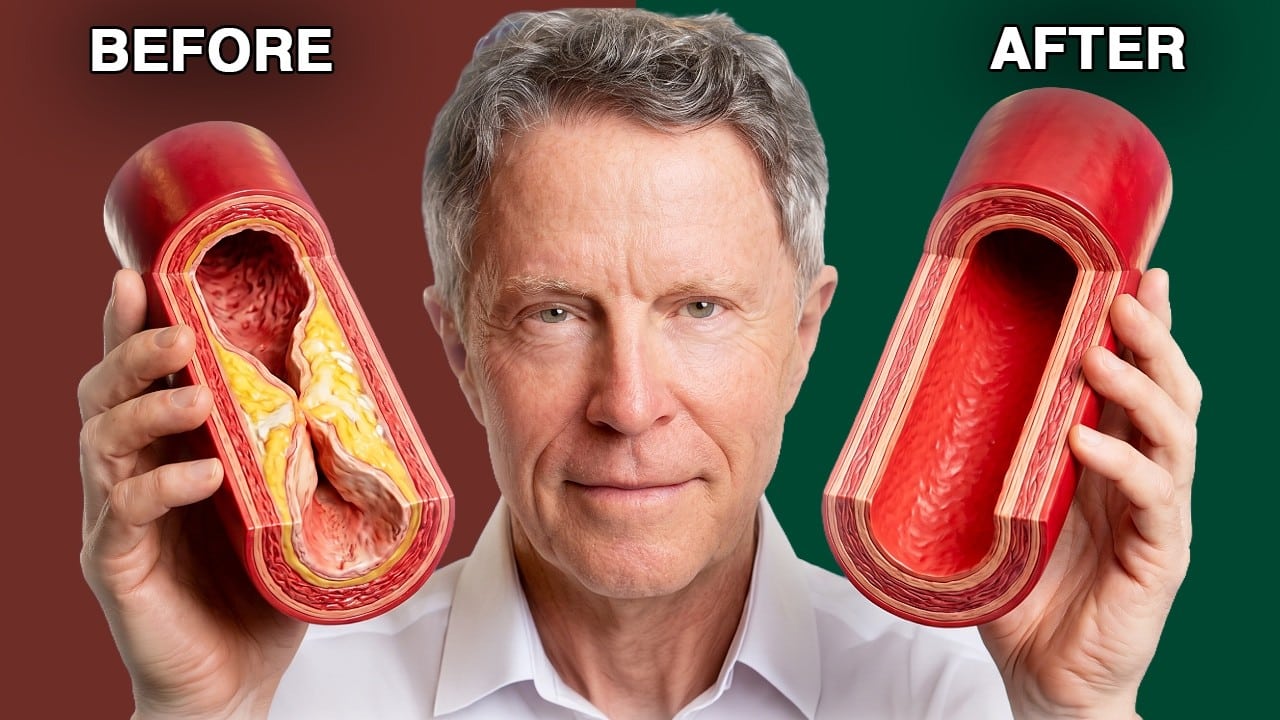
As director of preventive medicine at Johns Hopkins, he ran marathons, ate a low-fat diet, and taught doctors how to prevent heart disease.
Then a simple neck ultrasound revealed he had arteries of a 73-year-old—and was at serious risk of heart attack within years.
In a recent detailed account, Dr. Brewer shared exactly how he reversed his arterial plaque and now, at 67 with a diabetes diagnosis, maintains arteries younger than someone under 40.
Jump to:
- The Wake-Up Call That Changed Everything
- The Hidden Culprit: Metabolic Disease
- Step One: Test, Don’t Guess
- Step Two: Cut The Right Carbs
- Step Three: Exercise With Intensity
- Step Four: Address Hidden Roadblocks
- Step Five: Supplement Strategically
- Step Six: Medicate When Necessary
- The Results: Decades Younger Arteries
- The Bottom Line
The Wake-Up Call That Changed Everything
At a medical conference in Las Vegas, a colleague introduced Dr. Brewer to CIMT—a quick, five-minute ultrasound of neck arteries with no radiation.
I expected to get a clean result and do a victory lap for being in such good shape because I practiced what I preached. I was wrong.
The scan revealed two discrete plaques. His arterial age came back at 73.
That was a gut punch that took weeks to process.
The Hidden Culprit: Metabolic Disease
After researching further, Dr. Brewer discovered something shocking: metabolic disease drives arterial plaque even more than cholesterol.
He ran an oral glucose tolerance test—drinking a set amount of glucose and measuring blood sugar before, one hour after, and two hours later.
His blood sugar peaked over 160. That meant prediabetes severe enough to build cardiovascular plaque.
The low-fat diet that I thought was protecting my arteries was actually full of glycemic carbs. I ate a lot of bread and grain products. Those were spiking my blood sugar every day. Sometimes three times a day.
Step One: Test, Don’t Guess
You cannot fix what you don’t measure. Standard doctor tests rarely measure what actually kills people.
Critical Tests Beyond Standard Cholesterol Panels
Dr. Brewer recommends starting with CIMT (Carotid Intima-Media Thickness). This ultrasound can show soft, unstable plaque—the kind causing heart attacks—years before any symptoms appear.
Inflammation markers reveal whether plaque is unstable or “hot” and dangerous:
- C-reactive protein
- LP-PLA2
Both are blood tests doctors can order. These inflammation tests indicate if plaque is stable or about to cause trouble.
Another crucial measurement: visceral fat—not body weight or BMI, but fat wrapped around organs inside the abdomen. This drives insulin resistance.
A DEXA body composition scan measures visceral fat precisely.
Step Two: Cut The Right Carbs
Once Dr. Brewer knew blood sugar was his root problem, the diet question changed completely.
What’s my blood sugar doing after I eat? became the guiding question.
I switched from low fat to low carb. That was really the single biggest change I made. I stopped spiking my blood sugar. It drove more of the reversal than anything else, especially including medications.
Not All Carbs Are Created Equal
Fiber-based carbs from non-starchy vegetables won’t spike blood sugar. Brussels sprouts, broccoli, cauliflower—these are safe.
The problem carbs are glycemic carbs—those that raise glucose in blood:
- Grain products
- Bread
- Rice
- Pasta
- Oatmeal (yes, even oatmeal)
These drove Dr. Brewer’s blood sugar over 140 mg/dL—the threshold where inflammation begins in artery walls.
When blood sugar exceeds 140 after meals day after day, multiple times daily, arteries take repeated hits from inflammation, creating space for plaque.
What Dr. Brewer Eats Instead
Foods that kept his blood sugar flat for hours and kept him satisfied:
- Eggs fried in butter
- Bacon
- Avocado
- Salmon
- Non-starchy vegetables
- Big Caesar salads with olive oil
Fasting is another powerful piece. When you don’t eat, insulin drops and continues dropping. There’s no other way to lower insulin as effectively.
Even narrowing eating windows from 16 hours to 12 or 8 hours makes a metabolic difference.
If a meal spikes blood sugar over 140, don’t panic. Take a walk, do calf raises, or a few lunges. Movement pulls sugar from blood into muscle cells where it’s harmless.
Step Three: Exercise With Intensity
Dr. Brewer had been running marathons for decades—half marathons most weekends. He practiced basketball drills with two balls.
Yet he still built plaque.
The question wasn’t whether I was exercising, it was whether the exercise I was doing was actually fixing the metabolic problem, and it wasn’t.
Long-distance cardio builds aerobic fitness but doesn’t efficiently improve insulin resistance—the root of this entire problem.
You can be incredibly fit and still have terrible metabolic health. Dr. Brewer was living proof.
Why Leg Muscles Matter Most
Legs are by far your largest muscle group. When these muscles work, especially at intensity, they pull glucose directly from bloodstream.
Long-distance runners often have very thin legs—decreased muscle means less tissue pulling sugar from blood.
The more metabolically active your leg muscles, the better your body handles glucose.
High-Intensity Interval Training (HIIT)
Dr. Brewer added REHIT (Reduced Exertion High-Intensity Interval Training)—short, intense bursts at around 90% effort for 40 to 60 seconds, followed by recovery.
He does 20 seconds all-out, only two or three times per session. A full REHIT session takes just 5 minutes.
He performs these on stationary bike, rebounder, or running hill sprints.
Those 20 seconds are at full effort. At about 15 seconds you’re saying, ‘Am I going to make it to full 20 at this intensity?’ That’s what you need to be feeling at 15 seconds.
Resistance Training Focused On Legs
Dr. Brewer does “resistance snacks”—brief, intense leg-focused exercises:
- 1 minute wall sits
- 1 minute deep lunge (each side)
- 2 minutes calf raises
Total: 5 minutes. Done once or twice daily, plus one longer gym session weekly.
The cumulative effect on blood sugar management is more significant than supplements or medication.
Start where you are. If walking now, add short speed bursts. Add a weight vest or belt. Work toward short, intense efforts and leg-focused resistance over time.
Goal isn’t fitness for its own sake—it’s metabolic function.
Step Four: Address Hidden Roadblocks
Diet and exercise drove biggest changes, but several factors quietly undermined progress.
Sleep: The Non-Negotiable Foundation
Dr. Brewer told himself he was someone who got by fine on five or six hours.
He was wrong. Poor sleep raises cortisol, which spikes blood sugar. Elevated blood sugar drives inflammation—the same inflammation building plaque.
One night of bad sleep increases insulin resistance for the next 48 hours.
Dr. Brewer also discovered mild sleep apnea. His dental arch was high and narrow, pushing his tongue back into airway while sleeping, waking him dozens of times nightly without realizing it.
He addressed it with Invisalign braces to widen his arch and trained himself to sleep on his side.
His apnea improved significantly. Blood pressure dropped. Both changes showed directly in labs.
Breathing: Activating The Vagus Nerve
Normal breathing is 15 to 20 breaths per minute. To activate the vagus nerve—the body’s natural anti-cortisol switch—you need to get down to 7 to 10 breaths per minute.
Dr. Brewer used a feedback device called Respirate to learn what slow breathing feels like.
Technique: Inhale for 4-5 seconds, exhale for 6-8 seconds. Do this for 10 minutes.
Impact on blood pressure and stress markers is measurable and real.
Chronic Stress and Purpose
Chronic stress runs same pathway as poor sleep: cortisol, inflammation, plaque.
If your nervous system stays locked in fight-or-flight mode, your body remains in low-grade inflammatory state continuously.
Environmental exposures, chronic relationship stress, absence of purpose—all activate same inflammatory pathways as bad food.
Fear gets you started. Purpose keeps you going.
For Dr. Brewer, purpose meant staying physically capable for loved ones and turning his wake-up call into something helping others avoid heart attack or stroke.
Step Five: Supplement Strategically
For most of his career, Dr. Brewer thought supplements were basically expensive urine—consensus among those he trained with.
Finding plaque in his own arteries forced him to actually examine evidence. He was surprised by some findings.
You cannot out-supplement a bad lifestyle. Fix diet, exercise, and sleep first. Supplements support what’s already happening—they don’t replace it.
Dr. Brewer’s Supplement Protocol
Vitamin D3: 5,000 IU daily. Low D3 levels directly link to increased inflammation, cardiovascular risk, diabetes, and prediabetes. Most people in developed countries are deficient.
K2: 400 micrograms daily (not the 100 mcg found in most D3-K2 combinations). K2 improves calcium metabolism and heals artery walls. Emerging evidence suggests K2 plays a role in improving insulin resistance.
Niacin: Only supplement that simultaneously raises HDL, lowers LDL, lowers triglycerides, and lowers Lp(a)—a little-known but important cardiovascular risk factor.
Magnesium: Involved in over 300 body processes including blood pressure regulation and insulin sensitivity. Dr. Brewer takes two forms:
- Magnesium L-threonate for brain health and sleep
- Magnesium glycinate for muscle function and relaxation
Omega-3 fatty acids (EPA and DHA): Strong evidence for cardiovascular risk reduction. Even eating lots of fish, supplementing adds measurable benefit.
For arterial plaque specifically:
- Aged garlic extract
- Nattokinase
Both have direct evidence for impact on plaque stability.
Step Six: Medicate When Necessary
This step generates controversy, but Dr. Brewer emphasizes medications can be powerful tools when used correctly.
Low-Dose Statin
First medication Dr. Brewer added was low-dose statin—not to lower LDL.
Evidence is clear: low-dose statins reduce cardiovascular inflammation. That was his target, not cholesterol number.
Massive difference exists between 5 mg rosuvastatin two or three times weekly and 40-80 mg atorvastatin daily.
One is an anti-inflammatory tool used strategically only for people with plaque. The other causes diabetes and doesn’t reliably address inflammation for those with metabolic disease.
Dr. Brewer only uses rosuvastatin or pitavastatin at low doses—not daily.
Blood Pressure Medication
When blood pressure hit 130/90 and didn’t come down, Dr. Brewer started ramipril (an ACE inhibitor).
ACE inhibitors do something beyond blood pressure control: they reduce vascular inflammation.
He later switched to losartan (an ARB) due to persistent cough from ACE inhibitor.
Keeping blood pressure in optimal range protects arteries from ongoing mechanical damage.
Aspirin and Blood Thinners
Low-dose aspirin (81 mg). Once you have confirmed plaque, you’re no longer in primary prevention—you’re a cardiovascular disease patient in secondary prevention.
Dr. Brewer later switched to Eliquis after developing atrial fibrillation. Eliquis covers stroke risk from afib in ways aspirin doesn’t.
Metformin
Roughly 1 gram total, usually half a gram three to four days weekly—not to manage blood sugar directly, but for insulin sensitivity.
At that dose, concerns about mitochondrial stress don’t apply significantly.
Every medication is not a replacement for lifestyle—it’s an adjunct to fill gaps.
Diet, exercise, sleep, stress do heavy lifting. Medications support that work while root cause gets fixed.
The Results: Decades Younger Arteries
Dr. Brewer has re-scanned arteries yearly since his wake-up call.
Recently, he went beyond CIMT and got CT angiogram with AI analysis through a company called Cleerly—the most advanced imaging available for identifying plaque character in heart arteries.
Not just how much plaque or where, but what kind: soft and dangerous versus stable and calcified.
The Numbers Tell The Story
Soft plaque volume: 0.1 cubic millimeters. Essentially no unstable plaque in heart arteries. Soft plaque causes heart attacks—his is essentially gone.
Total plaque: 75.6 cubic millimeters. Of that, 31 is completely stable, calcified plaque. The rest is higher-density, non-calcified plaque that behaves stably when metabolism is managed.
Stenosis (arterial narrowing): Most under 10%. Highest was 17% in the LAD (left anterior descending—the “widow maker”).
For a 67-year-old man with diabetes diagnosis, that narrowing level is typical of someone under 40.
Percent atheroma volume: 2.5%. The plumbing’s wide open.
Arterial age on CIMT: 58. Dr. Brewer is 67.
He carries diabetes diagnosis, has had it for a decade, carries 9p21 cardiovascular genetic risk variant, and has atrial fibrillation.
Yet his arteries look like those of someone over a decade younger.
The Bottom Line
A 67-year-old with diabetes, cardiovascular genetic risk, and atrial fibrillation can have arterial profile of someone decades younger by following this six-step plan.
Test to identify hidden problems. Cut glycemic carbs that spike blood sugar. Exercise with intensity focusing on legs. Address sleep, stress, and purpose. Supplement strategically for specific gaps. Medicate when necessary to support—not replace—lifestyle changes.
Dr. Brewer’s scans confirm what thousands of his patients have experienced: reversing arterial plaque isn’t just possible—it’s achievable with the right strategy consistently applied.
The root cause isn’t cholesterol. It’s metabolic disease—and that can be fixed.