Most people think of it as a core move, pressing hard into parallettes or ground.
But that’s not why they’re stuck hovering inches above failure.
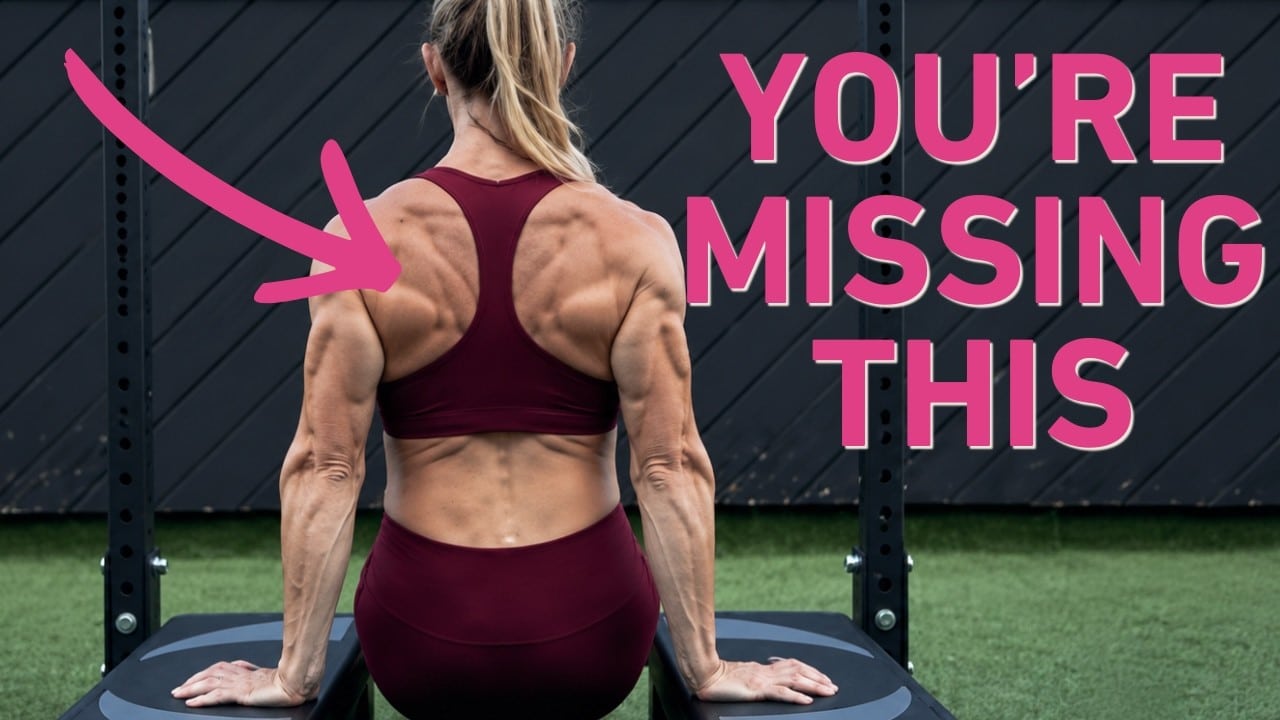
The real problem? They’re missing the pull.
In a recent video, GMB Fitness founder broke down exactly why the L-sit isn’t just about pushing—it’s about mastering scapular depression, retraction, and four specific pulling actions that most people never even train.
Jump to:
Why Your Core Isn’t the Problem
Yes, hands press into the floor during an L-sit. That part’s obvious.
But what actually gets your body off the ground is a pulling action—specifically, scapular depression. That’s when shoulders pull back and down, away from ears.

If you want something simple that actually works, this is one of the most effective tools I’ve used to build strength, conditioning, and endurance without needing a full gym setup.
- Full-body training with one weight using swings, squats, and presses
- Solid cast iron build that feels stable and lasts for years
- Comfortable grip that makes high-rep workouts easier to handle
Most people fail at the L-sit because they’re thinking of it as a pressing core exercise. And while it is a pressing exercise, it is also a pulling exercise.
Dr. JJ Thomas, GMB trainer and doctor of physical therapy, explains that proper L-sit execution requires scapular control and stability on the rib cage over a stacked pelvis.
Without scapular depression and retraction working together, you’re just reinforcing rounded shoulder posture—exactly what most people are trying to avoid.
The Foundation: Scapular Depression and Retraction
Scapular depression activates three critical muscle groups: serratus anterior, pectoralis minor, and latissimus dorsi. These stabilize the rib cage on the pelvis.
But there’s another piece: scapular retraction, the same pulling component used in pull-ups.
You also must have scapular retraction, which is a pulling component, like you would on a pull-up bar, so that your shoulder blade muscles are aligning your shoulder blade on your rib cage.
Without retraction, shoulder blades won’t align properly, and the entire position collapses.
Four Pulls That Make the L-Sit Work
There’s a pulling action running underneath every L-sit progression. Here’s how to feel it.
If you want something simple that actually works, this is one of the most effective tools I’ve used to build strength, conditioning, and endurance without needing a full gym setup.
- Full-body training with one weight using swings, squats, and presses
- Solid cast iron build that feels stable and lasts for years
- Comfortable grip that makes high-rep workouts easier to handle
Pull #1: Shoulders Back and Down
This is scapular depression—the foundation. Nothing else works without it.
Key adjustment: Point fingers out to the sides, not forward. Forward-facing fingers lock up wrists and limit shoulder mobility.
Pointing outward takes pressure off wrists, opens up shoulders, and allows proper depression and retraction. It’s the same setup used in GMB’s crab position.
When done correctly, shoulder blades drop and chest opens slightly. That’s the pull working.
Pull #2: Knees Together
Engage adductors by pulling knees toward each other. This creates full-body tension instead of loose, disconnected legs.
Tighter is lighter. This tension makes it easier to lift legs off the ground in full L-sit variations.
If you want something simple that actually works, this is one of the most effective tools I’ve used to build strength, conditioning, and endurance without needing a full gym setup.
- Full-body training with one weight using swings, squats, and presses
- Solid cast iron build that feels stable and lasts for years
- Comfortable grip that makes high-rep workouts easier to handle
Try placing something between knees and squeezing to feel the inward pull more clearly.
Pull #3: Knees Toward Body
This activates hip flexors and builds compression strength—a completely different demand than most core exercises.
Most people have never trained hip flexors to pull under load. That’s why the L-sit humbles even those with strong cores.
Compression strength doesn’t come from planks or crunches. It comes from pulling knees in while maintaining scapular position.
Pull #4: Backs of Knees Down
As legs extend, pull the backs of knees downward. This locks down the entire lower body.
It’s the hardest cue to feel but the most important for achieving full leg extension.
If you want something simple that actually works, this is one of the most effective tools I’ve used to build strength, conditioning, and endurance without needing a full gym setup.
- Full-body training with one weight using swings, squats, and presses
- Solid cast iron build that feels stable and lasts for years
- Comfortable grip that makes high-rep workouts easier to handle
Imagine trying to straighten your legs against resistance. That tension you feel in the backs of your legs is what you’re looking for.
What to Do If You Can’t Clear the Floor
Can’t get hips off the ground? Don’t have parallettes? Elevate hands.
Use blocks, books, park equipment, or even chairs—anything stable works. This solves the “arms too short” problem and gives hands better positioning.
Critical reminder: Keep fingers pointing out to the sides, not forward.
When Your Back Rounds, You’ve Lost the Pull
If your back rounds during an L-sit attempt, scapular depression has failed.
When that first pull goes, everything else collapses. Shoulders must stay pulled back and down throughout the entire hold.
No amount of core strength compensates for losing shoulder position.
If you want something simple that actually works, this is one of the most effective tools I’ve used to build strength, conditioning, and endurance without needing a full gym setup.
- Full-body training with one weight using swings, squats, and presses
- Solid cast iron build that feels stable and lasts for years
- Comfortable grip that makes high-rep workouts easier to handle
The 60-Second Challenge
Ready to test everything? Here’s where to start.
Get into a tucked sit with feet on the ground. Hold for 60 seconds.
- Shoulders: Back and down
- Knees: Pulled together
- Knees: Pulled in toward body
- Entire body: Engaged and tight
This isn’t about leg strength or core endurance alone. It’s about feeling the pull from start to finish.
Master that, and L-sit progression becomes far more manageable. Miss it, and you’ll keep spinning your wheels wondering why “core work” isn’t enough.