If you’ve ever staggered out of the squat rack and barely survived the rest of leg day, you’re not alone.
But what if flipping your leg-day routine could give you better gains and less burnout? That’s exactly what exercise scientist Dr. Mike Israetel suggests—and he’s not alone.
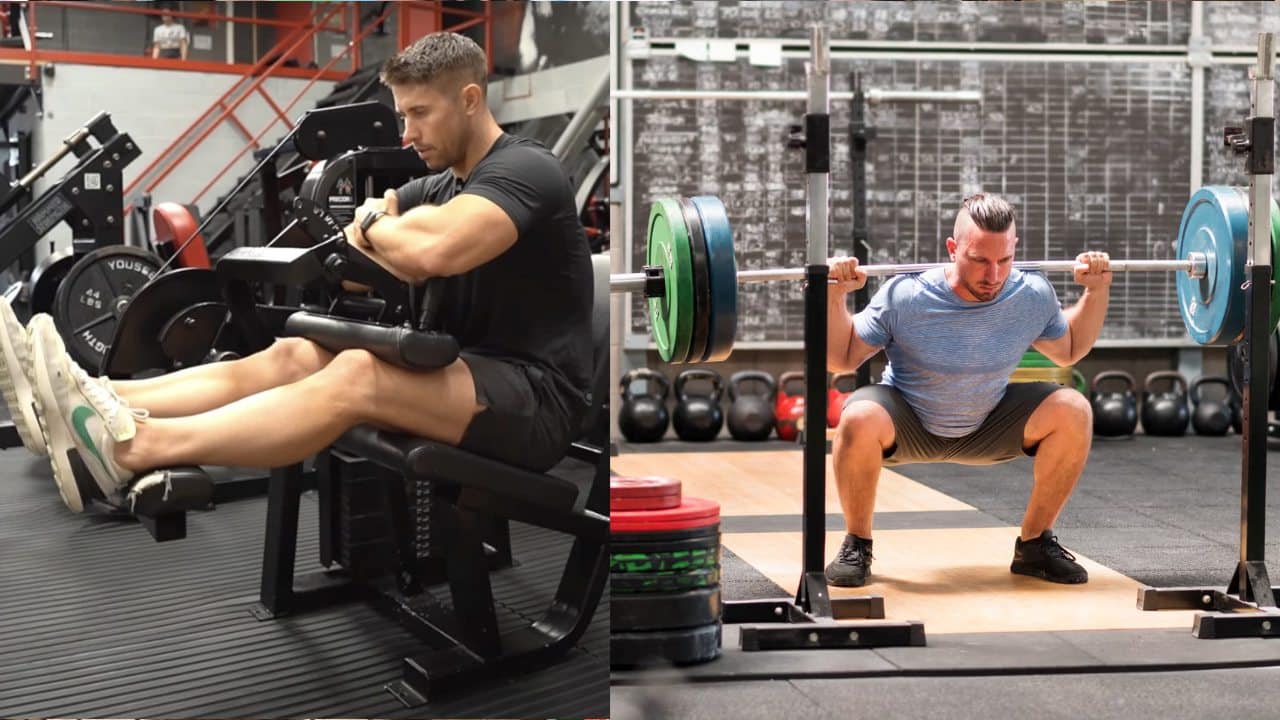
In a recent video breakdown, Israetel argues that doing leg curls before squats could lead to superior hamstring development and better overall fatigue management.
This might sound counterintuitive, especially to traditionalists who swear by squatting first. But emerging science and practical gym logic may back his claim.
So should you really pre-fatigue your hamstrings before your heaviest compound lift? Here’s what the research—and real-world results—have to say.
Jump to:
Leg Curls First: The Logic Behind the Switch
Dr. Israetel outlines three main fatigue types to consider when ordering your leg workouts:
- Local fatigue – the specific muscle being worked.
- Systemic fatigue – whole-body energy depletion.
- Axial fatigue – stress from spinal loading.
According to Israetel, squats are among the most fatiguing movements in all three categories. They drain energy, load the spine, and leave your body taxed. So, placing them early in your session might limit the quality of everything that follows—especially your hamstring training.
On the other hand, starting with seated leg curls gives you a fresh shot at directly targeting the hamstrings before systemic fatigue sets in. Curls don’t significantly load the spine or require total-body output, making them the perfect low-fatigue warm-up with high returns.
“Anything you want to train after high-level systemic fatigue is a bad deal,” Israetel explains. “So if you have important things to do in your programme, you had better not have a lot of systemic fatigue early.”
What the Research Says About Exercise Order
Israetel’s recommendation isn’t just theoretical—it’s backed by multiple studies on exercise sequence and hypertrophy.
1. Muscles trained first grow better
A well-cited 2010 review in the Journal of Strength and Conditioning Research confirmed that the muscles trained first in a workout benefit from better performance and higher total volume. Whether it’s squats or curls, putting your priority first gets better results. For lifters focusing on hamstring development, that means leading with curls.
2. Hamstrings are undertrained during squats
Although squats hit the glutes and quads hard, EMG studies show they barely activate the hamstrings. A study in Sports Biomechanics found significantly higher hamstring activation during leg curls compared to squats. Relying on squats alone for hamstring development leaves major gaps.
3. Pre-fatiguing doesn’t harm squats much
You might worry that tiring out your hamstrings before squatting could ruin your performance. But since hamstrings aren’t primary movers in the squat, moderate local fatigue doesn’t drastically reduce squat output. Meanwhile, the systemic fatigue from squats does reduce your performance in later isolation exercises, making a strong case for flipping the order.
Benefits of Doing Leg Curls First
- Enhanced hamstring activation: Targeted training while fresh improves muscle fiber recruitment.
- Reduced injury risk: Stronger, more balanced hamstrings help protect knees and hips.
- Improved squat feel: Many lifters report squats feeling more stable after curls due to warmed-up knee joints and activated posterior chains.
- Better fatigue management: You conserve systemic and spinal energy for the heaviest lift.
Program Examples: Israetel’s Leg Day Splits
Split 1: Traditional Approach
- Squats
- Leg Curls
Pro: You’re fresh for squats.
Con: Hamstring training is compromised due to systemic fatigue.
Split 2: Optimal for Hypertrophy
- Leg Curls
- Squats
Pro: Prioritizes hamstrings and preserves squat quality.
Con: May slightly reduce maximal squat performance—but that’s only a concern for powerlifters.
What About Strength Athletes and Beginners?
Israetel clarifies that powerlifters chasing a max squat should still lead with squats. Strength output is highest when the nervous system is fresh and unfatigued.
For beginners, exercise order matters less. Novices benefit more from improving technique and developing foundational movement patterns than optimizing fatigue pathways.
“If you’ve been training for less than about two to three years, don’t worry about exercise order too much,” says Israetel. “Just focus on getting better technique with free weights.”
Seated vs Prone Curls: Yes, It Matters
Not all leg curls are created equal. A 2020 study published in Frontiers in Physiology found that seated leg curls led to 14% hamstring hypertrophy over 12 weeks, compared to just 9% with prone curls. Seated versions stretch the hamstring under longer muscle lengths—a key factor in muscle growth.
If your gym has both, opt for the seated curl first for superior results.
Final Word: Should You Make the Switch?
If hamstring hypertrophy and overall leg development are your priorities, starting with leg curls makes physiological and practical sense.
You’ll target your hamstrings more effectively, manage systemic fatigue better, and potentially improve your squat stability.
But if you’re a competitive lifter chasing heavy numbers, keep the squats up front—and hit those curls hard afterward.
For everyone else, don’t be afraid to challenge tradition. Your leg day might just thank you for it.