Walking 20,000 steps daily might sound impossible—until you hear from someone who’s actually done it.
Robin, creator of the YouTube channel “Science of Self-Care,” recently completed a 30-day challenge that transformed both her body and mind in unexpected ways.
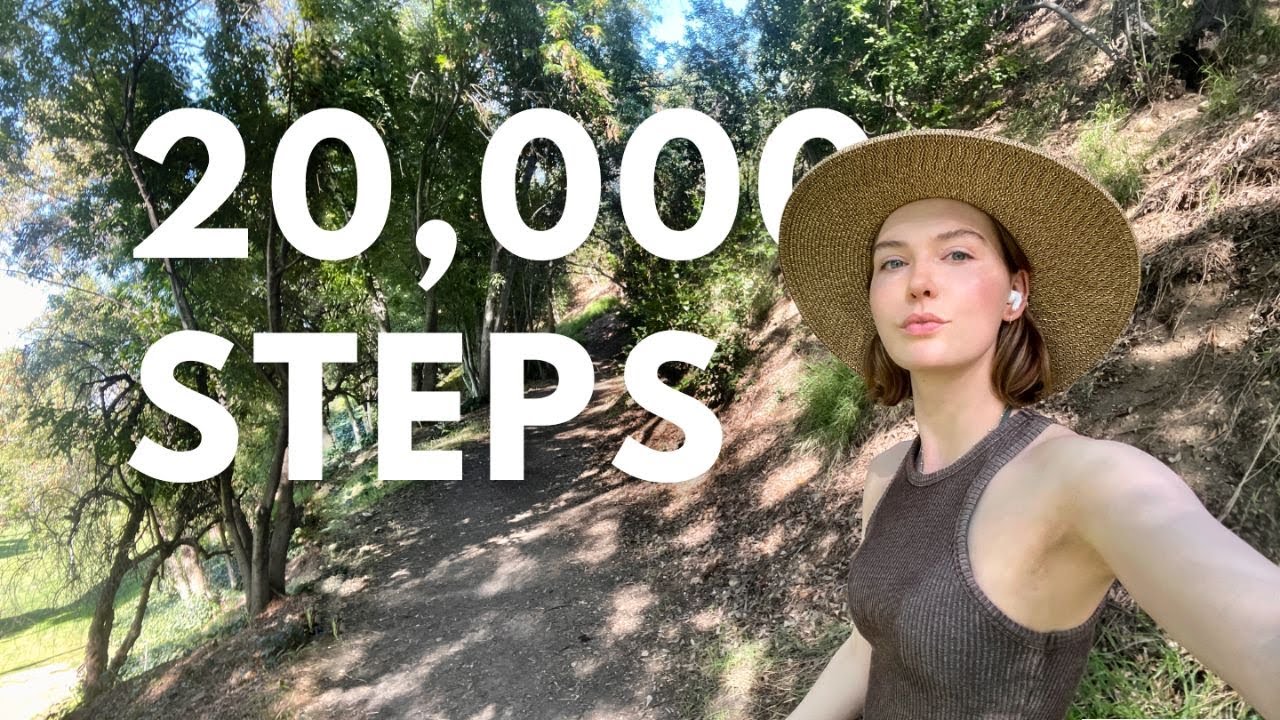
What started as a modest increase from her usual 15,000 steps became a profound lesson in habit formation, metabolic health, and emotional resilience.
Her experience offers actionable insights for anyone looking to make walking a cornerstone of their wellness routine.
Jump to:
The Surprising Benefits Beyond Weight Loss
Robin’s journey began with low expectations. Already walking 15,000 steps since the pandemic started, she doubted an additional 5,000 would make much difference.
She was wrong.
Sleep Quality Transformed
The first major change came in her sleep patterns. After logging 8-10 miles daily, Robin found herself falling into deep, restorative sleep with ease.
By the end of the day after walking 20,000 steps, your body feels like it’s done something and you feel so ready to lay down and quickly fall into a deep slumber.
This creates a positive feedback loop—better sleep leads to more energy for movement the next day, which then promotes even better sleep quality.
Posture Improvements Without Trying
Robin noticed her shoulders opening up and her overall stance becoming more upright. This happened naturally, without conscious effort during most walks.
She recalled visiting a back specialist years ago for postural asymmetry. The doctor prescribed hip and body loosening exercises, explaining that perceived structural problems often stem from movement patterns keeping bodies stuck in misalignment.
Walking became Robin’s solution—gentle, repetitive movement that gradually restored balance.
Body Composition Changes
While Robin intentionally avoided making physique her primary focus, she did notice becoming leaner and more toned. She attributes this partly to increased protein intake during the month but emphasizes that physical changes alone rarely create lasting habits.
What matters more? The emotional transformation.
Mental Health: The Game-Changer
Robin describes her emotional state during the challenge as genuinely positive, balanced, and connected to her happiest self.
Walking has really become a form of mental health and a form of meditation for me. I am just less happy when I don’t do it.
This aligns with research detailed in “The Joy of Movement,” which explains how exercise releases endogenous compounds—essentially drugs produced by our own muscles—that elevate mood.
Robin also discussed an intriguing theory with an EMDR psychiatrist. EMDR uses bilateral stimulation (light and sound to alternating sides) to process trauma. The psychiatrist hypothesized that walking’s repetitive left-right motion might trigger similar neurological benefits, helping process emotions and experiences.
The Biggest Obstacle: Time
Walking 20,000 steps requires several hours daily. For most people, this seems absolutely impossible.
Robin’s solution? Strategic stacking.
Combine Walking With Existing Activities
Rather than carving out separate walking time, Robin integrated movement into activities she already does:
- Reading: Audiobooks on Audible transform walking time into learning time
- Work: A makeshift treadmill desk allows her to take meetings and complete tasks while moving
- Entertainment: Movies and shows become opportunities for low-intensity walking
She also challenges common time assumptions. After accounting for eight hours sleeping and eight hours working, most people still have eight hours available—more than double what’s needed for 20,000 steps.
Where does that time currently go? Often to scrolling social media or passive activities that could easily incorporate movement.
The Fat-Burning Sweet Spot
Walking’s low intensity creates ideal conditions for beta oxidation—the process of burning fat for fuel.
Robin describes reaching a particular metabolic state during extended walks, a sensation she compares to runner’s high but gentler.
You hit this point where you feel like you can walk forever.
This contrasts with high-intensity interval training, which primarily burns carbohydrates and actually increases cortisol. Walking at approximately 40 percent VO2 max helps reduce stress hormones while promoting fat utilization.
Practical Tips to Maximize Your Walks
Walk With Palms Forward
Robin learned this posture hack from fellow YouTuber Rachel. Turning palms outward forces chest opening and shoulder retraction.
While it might look unusual, Robin doesn’t care—the posture benefits speak for themselves. She now walks with noticeably more confidence in her body language.
Add Light Resistance
One-pound ankle and wrist weights provide strength training during walks. Robin uses buildable weights that can be stacked for progressive overload.
Combined with arm pumping motions, these create high-repetition toning exercises that enhance muscle development without requiring gym time.
Experiment With Intensity
For those wanting Zone 2 cardio benefits, Robin suggests trying the 12-3-30 method: walking at 12 percent incline, 3 miles per hour, for 30 minutes on a treadmill.
But intensity isn’t always necessary. Leisurely neighborhood strolls still provide tremendous value, particularly for stress reduction.
Track Your Biometrics
Robin uses devices like Lumen, which measures whether you’re burning carbohydrates or fat. This immediate feedback helped her recognize patterns and build intuition about her metabolic state.
Contrary to fears that tracking disconnects people from their bodies, Robin found it deepened her self-awareness. Objective data paired with subjective experience accelerates pattern recognition.
Apple Watch, Whoop, and similar wearables can track changes in resting heart rate, heart rate variability, and other markers that improve with increased activity.
Building the Habit: Standardize Before You Optimize
Robin emphasizes a concept from James Clear’s “Atomic Habits”—standardize before you optimize.
Rather than immediately aiming for 20,000 steps, start by simply stepping outside daily. Make walking routine before worrying about numbers.
Once the habit feels automatic, then add tracking, increase step counts, and refine techniques.
This approach prevents overwhelm and creates sustainable progress.
Reframing Your Relationship With Movement
Robin’s transformation hinged on shifting her identity. She stopped viewing exercise as punishment or a weight-loss tool and started seeing movement as how she feels happiest.
If we really think of physical movement as a way to feel amazing versus a punishment or a way to lose a bunch of weight, we create an entirely different relationship with physical activity.
This identity shift creates intrinsic motivation that outlasts any aesthetic goal.
She also borrows from “The Inner Game of Tennis,” adopting an “umpire mindset” toward goals. Rather than experiencing emotional highs when hitting targets and crushing lows when missing them, she observes outcomes with curiosity.
Goals become data points rather than self-worth indicators—making it easier to stay consistent through inevitable setbacks.
Starting Your Own Walking Practice
Robin stresses that 20,000 steps isn’t mandatory. Whether you’re currently at 3,000 steps or 15,000, simply adding 20 minutes can create meaningful change.
For inspiration, she recommends “The Slight Edge,” which explores how small daily habits compound into life-changing results over time.
Available on Audible, it’s perfect for listening during walks—creating immediate application of its principles.
Walking represents more than cardiovascular exercise. It’s meditation in motion, stress reduction, metabolic optimization, and emotional regulation rolled into one accessible practice.
Robin’s month-long experiment proved that sometimes the simplest interventions create the most profound transformations.