Countless men blame low testosterone for their struggles with energy, muscle gain, and fat loss.
But according to fitness and hormone optimization expert Mike Thurston, they’re looking at the wrong hormone entirely.
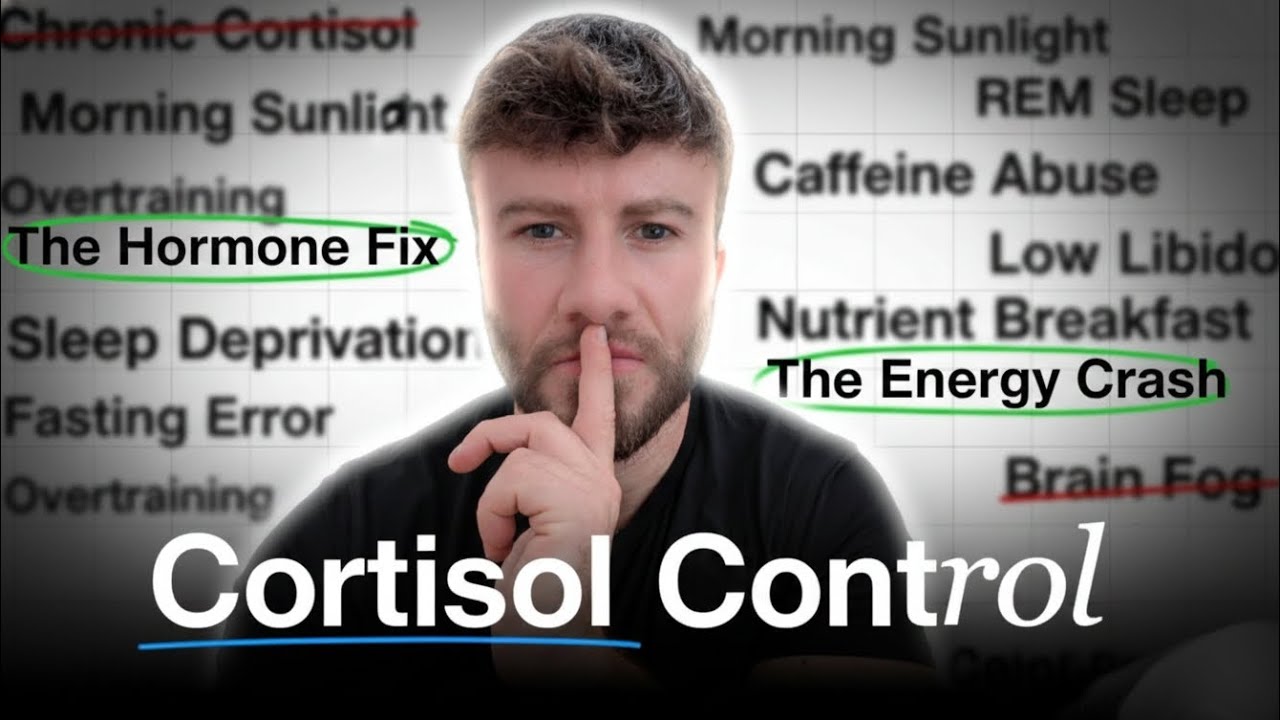
In a recent video, Thurston revealed that chronically elevated cortisol—not low testosterone—is the real villain sabotaging men’s hormonal health.
And until cortisol gets under control, reaching optimal testosterone levels remains virtually impossible.
Jump to:
- The Cortisol-Testosterone Seesaw
- Signs Your Cortisol Is Sabotaging Your Testosterone
- The Science Behind Cortisol’s Testosterone Block
- Stop Fasting (Unless You’re Obese or Diabetic)
- Don’t Abuse Caffeine
- Increase Carbs Around Training
- Optimize Sleep: The Most Powerful Intervention
- Don’t Overtrain
- Stop Using Work as an Excuse for Sleep Deprivation
- The Bottom Line
The Cortisol-Testosterone Seesaw
Thurston explains that cortisol and testosterone exist on opposite ends of what he calls a “physiological seesaw.”
Cortisol acts almost as a ceiling on testosterone levels when it’s chronic. Acute cortisol is fine. It’s different. Chronic cortisol is a problem.
When cortisol rises, testosterone falls. When cortisol stays elevated day after day, testosterone production becomes severely compromised.
This creates a vicious cycle where men experience fatigue, brain fog, difficulty building muscle, stubborn fat retention, and irritability—all while their bodies prioritize survival over reproduction and growth.
Signs Your Cortisol Is Sabotaging Your Testosterone
Most men don’t realize they’re operating on chronically elevated cortisol until the damage accumulates.
Thurston outlines the telltale signs:
- Waking up tired despite sleeping
- Feeling wired but drained throughout the day
- Intense cravings for sugar and caffeine
- Needing multiple coffees just to function
- Difficulty gaining muscle or losing fat
- Actually losing muscle mass
- Snapping at people without reason
- Brain fog and energy crashes by mid-afternoon
- Low libido and reduced morning erections
The worst thing is most men don’t even realize it’s happening. They wake up feeling tired and then they’re wired but kind of drained all day long because they’re running on cortisol basically.
The Science Behind Cortisol’s Testosterone Block
Thurston breaks down the biological mechanisms at play.
Your body uses pregnenolone as a precursor to produce both cortisol and testosterone. When stress is chronic, your body prioritizes cortisol production—the survival hormone—at testosterone’s expense.
High cortisol levels trigger several hormonal cascades that destroy testosterone production:
- Reduced production of DHEA, another testosterone precursor
- Lower levels of LH and FSH, hormones that signal testosterone production
- Direct inhibition of Leydig cells in the testes that convert cholesterol into testosterone
- Increased SHBG (sex hormone binding globulin), which binds up free testosterone
The result? Less total testosterone, even less free testosterone, and a body stuck in fight-or-flight mode instead of building and thriving.
Stop Fasting (Unless You’re Obese or Diabetic)
Thurston’s first recommendation surprises many men: stop intermittent fasting.
If you don’t have type 2 diabetes right now or you’re not well over 30% body fat or obese, please stop fasting. It’s making everything worse.
Fasting while drinking multiple coffees amplifies caffeine’s stress response. Without food to buffer it, caffeine hammers your gut and stress hormones.
A nutrient-dense breakfast immediately and dramatically lowers cortisol levels. It signals safety to your body and breaks the cortisol-driven morning anxiety cycle.
Don’t Abuse Caffeine
Thurston loves coffee but warns against stimulant abuse.
He references the influencer culture around excessive caffeine consumption, specifically calling out Andrew Tate’s hyperbolic claim about drinking “30 coffees a day.”
Please don’t drink 30 coffees in a fasted state. It’s going to be horrendous for your cortisol levels.
Multiple pre-workouts, energy drinks, and endless coffee throughout the day keep cortisol perpetually elevated. Occasional stimulant use is fine, but chronic abuse destroys hormonal balance.
Increase Carbs Around Training
Post-workout carbohydrates help manage cortisol spikes from training.
Thurston recommends clean carb sources like fruits, potatoes, and other whole foods—not processed junk loaded with seed oils. Pair carbs with magnesium after training for enhanced recovery and cortisol management.
Optimize Sleep: The Most Powerful Intervention
Sleep optimization might be the single most effective cortisol-lowering strategy available.
Thurston emphasizes taking sleep seriously and optimizing your circadian rhythm:
- Get morning sunlight exposure to set your circadian clock
- Eliminate blue light in the evening to preserve melatonin production
- Sleep in a cold, dark room
- Take magnesium bisglycinate before bed
- Eat slow-digesting carbs before sleep (like kiwi fruit) to prevent blood sugar crashes
Many men wake at 2 or 3 AM because their blood sugar drops too low, triggering a cortisol spike. A small amount of carbs before bed prevents this.
Morning sunlight doesn’t just wake you up—it starts the cortisol decline that continues throughout the day, allowing you to sleep better at night.
Don’t Overtrain
Younger men especially fall into the overtraining trap.
Absolutely obliterating yourself six days a week as a natural isn’t an effective strategy. The cortisol does build. It accumulates.
Training six days weekly while also doing boxing or Brazilian Jiu-Jitsu four times weekly creates unsustainable stress for natural athletes. Eventually, adrenals burn out, cortisol crashes, and testosterone precursors disappear.
Rest days aren’t optional—they’re when stress hormones dissipate and recovery happens.
Stop Using Work as an Excuse for Sleep Deprivation
Thurston’s final point targets the “hustle culture” mentality.
Many men justify chronic sleep deprivation by claiming work demands it. They stay up until 1 AM or remain on call 24/7, believing sacrifice equals success.
There are plenty of guys who make way way way way more money who aren’t doing these things and they’re still sleeping well and their cortisol levels are coming down. So clearly it’s not necessary to make lots of money.
Something needs restructuring—either mindset, business operations, or career approach—because chronic sleep deprivation isn’t sustainable. Low testosterone from poor sleep makes building anything harder, not easier.
The Bottom Line
Reaching 800+ ng/dL testosterone isn’t about supplements or testosterone replacement therapy for most men.
It’s about addressing the cortisol ceiling that’s blocking natural production. Fix the stress response, and testosterone production follows naturally.
Remember: 80% of testosterone is produced overnight during sleep. Optimizing evening routines and maximizing sleep quality aren’t optional extras—they’re foundational to hormonal health.
Control cortisol first. Everything else becomes possible after that.