Building an athletic, lean physique doesn’t require endless hours in the gym or complicated workout splits targeting every individual muscle group.
According to fitness content creator and performance training advocate, the secret lies in mastering just seven fundamental movement patterns.
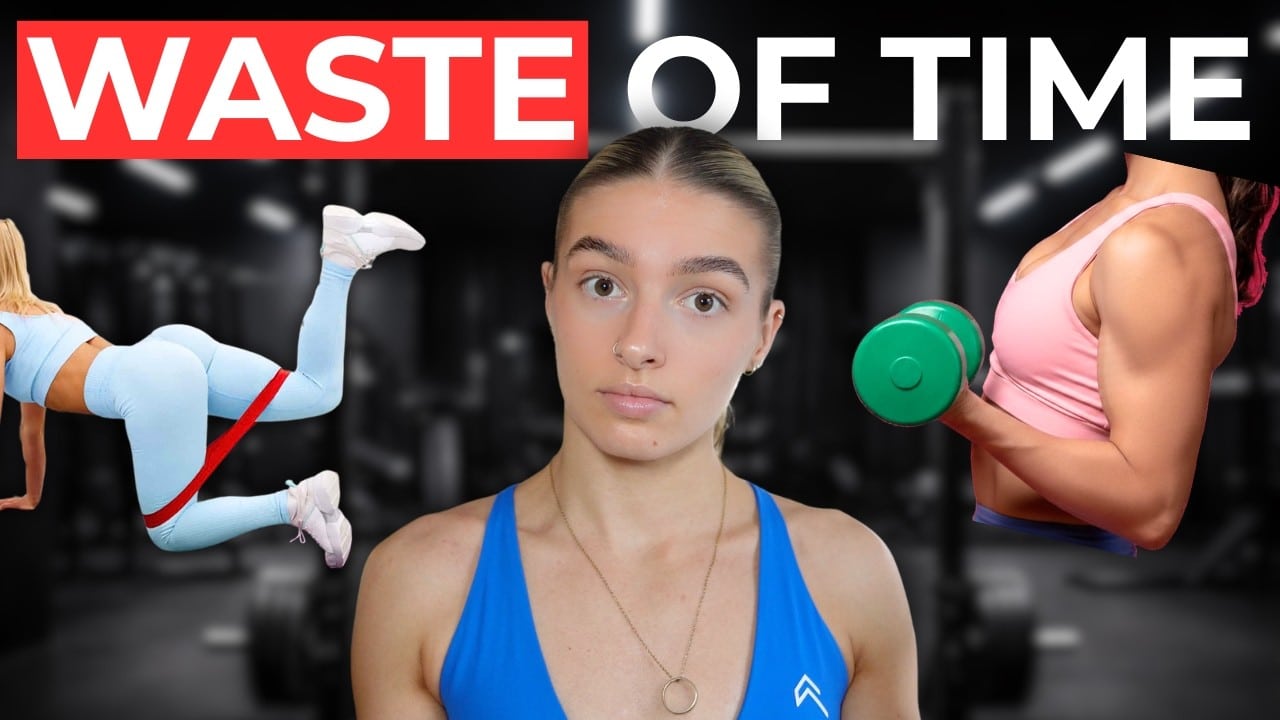
This approach promises to deliver better results in less time while helping women escape the exhausting cycle of aesthetics-focused training that leaves many feeling burnt out and frustrated.
The shift from traditional bodybuilding-style workouts to movement-based training can transform not just how bodies look, but how they function in everyday life.
Jump to:
Why Movement Patterns Trump Muscle Isolation
Traditional gym programming often focuses on splitting workouts by body parts—chest day, leg day, arm day. This approach can lead to imbalanced development and unnecessarily long training sessions.
The creator explains her own frustration with this method: “I used to do the classic gym girl workouts where I’d target a different muscle group with every session and spend close to two hours in the gym at any one time until I got to the point that I was dreading the gym.”

If you want something simple that actually works, this is one of the most effective tools I’ve used to build strength, conditioning, and endurance without needing a full gym setup.
- Full-body training with one weight using swings, squats, and presses
- Solid cast iron build that feels stable and lasts for years
- Comfortable grip that makes high-rep workouts easier to handle
Your body doesn’t recognize specific exercises. It just recognizes movement patterns.
This fundamental insight changes everything about how effective training should be structured. When workouts focus on how the body naturally moves rather than isolated muscles, three significant benefits emerge.
Strength develops faster because compound movements load multiple muscle groups simultaneously. Injury risk decreases as the body learns to function as an integrated unit. Training becomes enjoyable when it’s no longer viewed as a tedious obligation to achieve a certain appearance.
The Seven Essential Movement Patterns
Pattern One: The Squat
Squatting trains the quads, glutes, and core through any exercise where knees and hips bend while the torso remains relatively upright. This pattern isn’t limited to barbell back squats.
Variations include goblet squats, hack squats, leg presses, and zercher squats. Equipment availability, experience level, and personal preference should guide exercise selection within this pattern.
The creator personally favors zercher squats for the additional core challenge created by front-loading the weight.
Pattern Two: The Hinge
If squats dominate the front of the legs, hinges rule the posterior chain. Glutes, hamstrings, and lower back all develop through this pattern.
If you want something simple that actually works, this is one of the most effective tools I’ve used to build strength, conditioning, and endurance without needing a full gym setup.
- Full-body training with one weight using swings, squats, and presses
- Solid cast iron build that feels stable and lasts for years
- Comfortable grip that makes high-rep workouts easier to handle
Hinging involves bending at the hips while maintaining a flat back and relatively straight knees. Classic exercises include deadlifts, Romanian deadlifts (RDLs), single-leg RDLs, good mornings, and hip thrusts.
Nothing has built my hamstrings and glutes like RDLs have. Especially single leg RDLs. They are my favorite exercise possibly ever.
Many women skip hinging exercises because the form can be challenging to master and they don’t provide the immediate burn of isolation movements. This is a critical mistake.
Programming should include at least one hinge variation weekly, ideally two, for balanced lower body development.
Pattern Three: Single-Leg Work
Unilateral training builds athletic capability in ways bilateral movements cannot. Most people avoid single-leg exercises because they’re humbling and don’t allow for heavy loading.
However, this pattern delivers unique benefits:
- Corrects imbalances between stronger and weaker sides
- Develops stability and control throughout movement
- Builds legs and glutes through different stimulus than bilateral work
Options range from bodyweight reverse lunges and step-ups for beginners to Bulgarian split squats, walking lunges, and lateral lunges for more advanced trainees.
If you want something simple that actually works, this is one of the most effective tools I’ve used to build strength, conditioning, and endurance without needing a full gym setup.
- Full-body training with one weight using swings, squats, and presses
- Solid cast iron build that feels stable and lasts for years
- Comfortable grip that makes high-rep workouts easier to handle
Bulgarian split squats with a barbell represent the creator’s preferred variation, described as “brutal, but in the best way.”
Pattern Four: The Push
Pushing divides into two essential directions: vertical and horizontal. Both must be trained for balanced upper body development.
Vertical pushing involves pressing weight overhead through exercises like shoulder presses, overhead presses, and landmine presses. Horizontal pushing means pressing weight away from the chest via bench presses, dumbbell presses, and push-ups.
Training only horizontal pushes develops chest and front deltoids while neglecting shoulders. The reverse creates its own imbalances.
Optimal programming includes one vertical push and one horizontal push each week.
Pattern Five: The Pull
Like pushing, pulling occurs in two planes. Vertical pulling brings weight down toward you or pulls your body up to a fixed point through pull-ups, lat pulldowns, and assisted pull-ups.
If you want something simple that actually works, this is one of the most effective tools I’ve used to build strength, conditioning, and endurance without needing a full gym setup.
- Full-body training with one weight using swings, squats, and presses
- Solid cast iron build that feels stable and lasts for years
- Comfortable grip that makes high-rep workouts easier to handle
Horizontal pulling draws weight toward your body via cable rows, dumbbell rows, and gorilla rows.
Pulling represents one of the most undertrained patterns in women’s programming. Years of messaging to prioritize glutes, core, and arms has left backs neglected.
Strong back development not only creates an athletic aesthetic but significantly improves posture. The creator programs slightly more pulling than pushing weekly to counteract desk work and support postural correction.
Pattern Six: The Carry
Carries may look deceptively simple—pick up weight and walk—but they build full-body integration unlike any other pattern.
Farmer’s carries, suitcase carries, front-loaded carries, and waiter walks simultaneously challenge grip strength, forearms, shoulders, core stability, posture, and breathing coordination.
Carries are the closest thing in the gym to real life function. The strongest, most capable women I know all train carries.
This pattern trains the core to perform its primary function—protecting the spine under load—far more effectively than countless crunches.
If you want something simple that actually works, this is one of the most effective tools I’ve used to build strength, conditioning, and endurance without needing a full gym setup.
- Full-body training with one weight using swings, squats, and presses
- Solid cast iron build that feels stable and lasts for years
- Comfortable grip that makes high-rep workouts easier to handle
Adding carries to workouts once or twice weekly provides comprehensive benefits felt throughout the entire body.
Pattern Seven: Rotation
The final pattern includes both rotation and anti-rotation movements. Rotation involves twisting through the torso under load via cable wood chops, Russian twists, or rotational slams.
Anti-rotation requires resisting rotational forces while maintaining stability through exercises like Pallof presses, bird dogs, and dead bugs.
Most aesthetics-focused programs completely ignore rotational work, resulting in weak, underdeveloped cores despite frequent ab training. Crunches address only one core function.
Real-world movement demands that the core stabilize, rotate, and resist rotation. Weekly programming must reflect these varied demands.
Programming the Seven Patterns
All seven patterns don’t need to appear in every training session. Strategic distribution across the week delivers optimal results.
If you want something simple that actually works, this is one of the most effective tools I’ve used to build strength, conditioning, and endurance without needing a full gym setup.
- Full-body training with one weight using swings, squats, and presses
- Solid cast iron build that feels stable and lasts for years
- Comfortable grip that makes high-rep workouts easier to handle
The creator favors full-body sessions four times weekly, though two to four sessions work effectively. Full-body training allows muscle recovery between sets, maintaining performance throughout entire workouts.
She programs slightly more pulling than pushing for postural benefits and slightly more hinging than squatting to support glute development goals.
Each session begins with two compound exercises—one upper body, one lower body—before moving to accessory work.
Train this way for 3 months and you will look more athletic than you did after a year of glute focused training because you’ll be building a balanced and capable body and not just chasing a burn in one specific area.
Sessions last 45 minutes to an hour, significantly less than traditional body-part splits, while delivering superior progress through compound movements that provide maximum training efficiency.
The complete approach requires selecting variations within each pattern that fit individual body mechanics, personal enjoyment, and progressive overload capacity. That’s the entire game.