Fat loss coach Par Vale has seen it all: clients who’ve shed hundreds of pounds over the years, only to gain it all back—and then some.
In a recent video addressing a viewer question about losing 25-30 pounds, Vale tackles the uncomfortable truth about rapid weight loss that most people don’t want to hear.
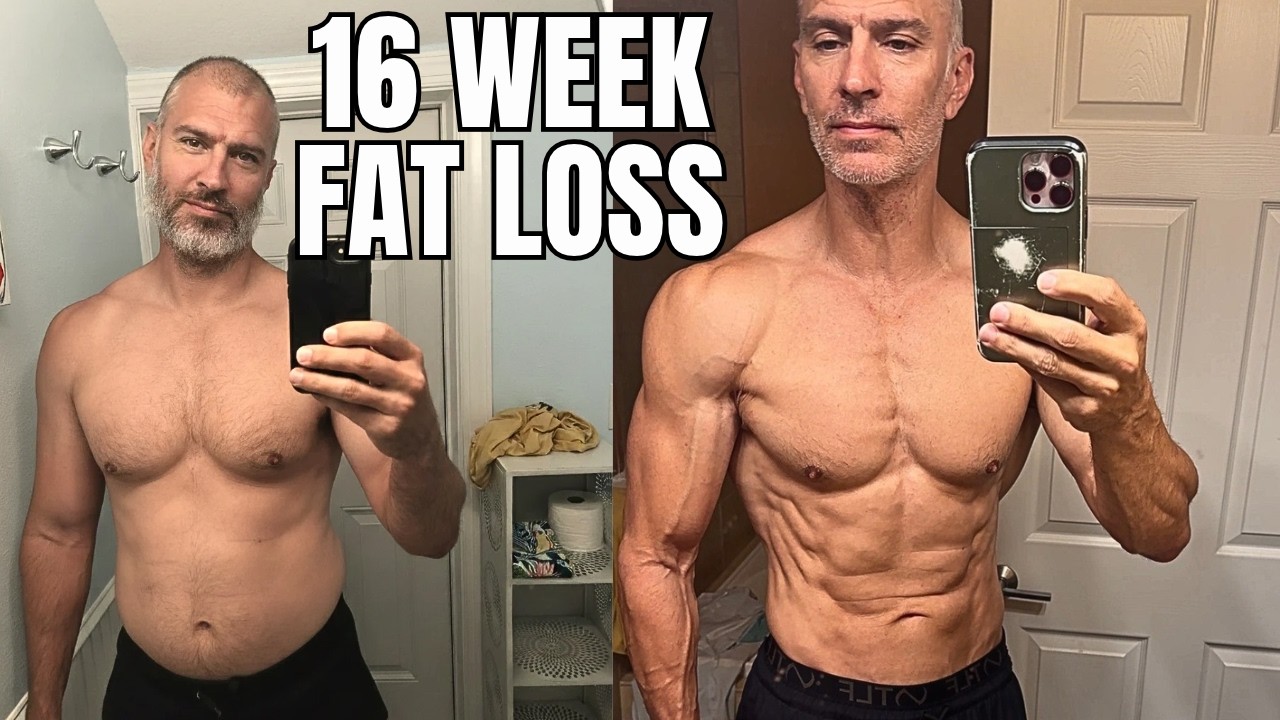
The answer isn’t just about calories and cardio—it’s about why most people fail to keep weight off permanently.
And according to Vale, who has coached clients for over 15 years, the problem isn’t losing weight. It’s what happens after.
Jump to:
- The Weight Regain Problem Nobody Talks About
- The 1% Rule for Sustainable Fat Loss
- Why Your Body Fights Back: Metabolic Adaptation Explained
- The Breaking Point and the Rebound
- The Matador Study: A Different Approach to Dieting
- Diet Breaks: The Secret Weapon
- Maintaining Weight Loss: Easier Than Losing It
- The Problem with Extreme Dieting Approaches
- The Accountability-Based Approach
- Rethinking the Timeline
- After the Transformation Challenge
- The Bottom Line on Losing 30 Pounds
- Sources
The Weight Regain Problem Nobody Talks About
Vale points to a harsh reality that challenges conventional thinking about dieting success.
We don’t really have a weight loss problem. My friend Lane Norton likes to say, we don’t have a weight loss problem, we have a weight regain problem.
The statistics are sobering: the more overweight someone is, the more times they’ve typically tried to lose weight. Each attempt often leads to a higher regain.
No products found.
Vale argues that the fundamental question isn’t whether a diet worked—it’s whether the results lasted. If someone loses 30 pounds only to gain back 35, was that diet truly successful?
The 1% Rule for Sustainable Fat Loss
Vale recommends a specific approach that might test the patience of anyone eager for quick results.
The safest way to lose body fat is at about 1% of your body weight per week. For some people, that is not fast enough.
Here’s what that looks like in practice:
- At 250 pounds: Losing 2.5 pounds per week is safe and sustainable
- At 200 pounds: The rate drops to 2 pounds per week
- At 150 pounds: You’re looking at 1.5 pounds per week
The rate naturally slows as bodyweight decreases, which frustrates many dieters. But Vale emphasizes this is exactly how fat loss should work—and trying to speed it up creates bigger problems down the road.
Why Your Body Fights Back: Metabolic Adaptation Explained
Vale introduces a concept that explains why dieting gets progressively harder: metabolic adaptation.
Picture this scenario: someone starts eating 2,000 calories daily and runs 30 minutes each day. They lose 10 pounds. Success, right?
No products found.
But then progress stalls. The same routine that initially worked suddenly stops producing results.
Vale explains several reasons why:
- Lower body weight means fewer calories needed for basic functions
- Improved cardiovascular fitness means less energy burned during the same exercise
- Changes in thermic effect of food
- Overall metabolic rate decreases
The typical response? Cut more calories and add more cardio. This creates a vicious cycle.
Vale has witnessed clients on sub-1,000 calorie diets doing hours of cardio daily for months—even up to a year. While human willpower can be remarkable, there’s always a breaking point.
The Breaking Point and the Rebound
When metabolic adaptation reaches its peak, maintenance calories drop dangerously low. Exercise efficiency skyrockets, meaning fewer calories burned for the same effort.
Then something triggers a break: frustration, a vacation, burnout, or simply life getting in the way.
No products found.
Someone might overeat for a week and gain 5, 10, or 15 pounds. Panic sets in. The restrictive cycle begins again.
This type of thinking is what causes us to gain the weight back and then some.
Vale emphasizes that the solution isn’t more restriction—it’s changing the entire approach to dieting.
The Matador Study: A Different Approach to Dieting
Vale references research that fundamentally changed how he coaches clients: the Matador study on metabolic adaptation.
The study compared two groups over 16 weeks of dieting:
Group 1: Continuous caloric deficit for 16 straight weeks
Group 2: Two weeks in deficit, two weeks at maintenance, repeating throughout (total of 30 weeks)
No products found.
The results were striking:
- Less metabolic adaptation in the intermittent group
- Greater fat loss despite taking longer
- Better muscle retention
- Higher energy expenditure
- Less diet fatigue after completion
While Vale presents the Matador study as transformative, it’s worth noting the research context. The 2018 study published in the International Journal of Obesity showed promising results for intermittent energy restriction, but the sample size was relatively small (51 men) and some researchers note that individual responses to diet breaks can vary considerably. Still, the principle of periodic maintenance phases has gained traction among evidence-based coaches.
Most importantly, participants kept the weight off more successfully after the diet ended.
Diet Breaks: The Secret Weapon
Vale implements “diet breaks” with his coaching clients—not breaks from dieting itself, but breaks from caloric deficits.
His approach involves bringing calories up to maintenance levels periodically, primarily through increased carbohydrates.
Vale’s typical diet break protocol:
No products found.
- Increase calories by 15-20%, mostly from carbohydrates
- Reduce cardio by 40-60% depending on current volume
- Monitor hunger, energy, sleep, and fatigue levels
- Use refeed days to establish maintenance baselines
As a coach, I have a check-in form that I really like to understand where somebody’s hunger is at, somebody’s energy, their sleep, their fatigue, and it’s all these things I look at. It’s not just about are you losing weight, it’s about how are you handling the weight loss.
The adjustment isn’t one-size-fits-all. Someone doing 90 minutes of daily cardio might reduce to 35 minutes, while someone doing only 20 minutes might maintain that amount.
Maintaining Weight Loss: Easier Than Losing It
Vale draws a powerful parallel between fat loss and muscle building.
Building muscle requires time, consistency, and progressive overload. Maintaining that muscle? Far less demanding—less time, less intensity, zero progression needed.
The same principle applies to fat loss. Losing weight is brutally hard. Maintaining that loss? Comparatively easy.
But there’s a catch: people must build sustainable habits during the fat loss phase, not adopt temporary measures they plan to abandon.
The Problem with Extreme Dieting Approaches
Vale expresses skepticism about highly restrictive diets that people can’t maintain long-term.
No products found.
Extended fasting, carnivore diets, and ketogenic approaches all face the same fundamental question: can someone sustain this forever?
Vale has coached people through ketogenic diets, and almost universally they’ve told him the same thing:
I like the ketogenic diet. I don’t like how restrictive it is on me living my life.
When someone follows an extreme approach they can’t maintain, they inevitably return to foods they’ve avoided. Overconsumption follows. Weight returns.
The cycle continues.
The Accountability-Based Approach
Vale’s philosophy centers on flexibility and accountability rather than restriction.
His key principles:
No products found.
- No foods are off-limits when practiced within reason
- Proteins, carbs, and fats all have valuable roles
- Tracking calories and macros makes everything more manageable
- Sustainability trumps speed every time
This approach requires learning to track intake accurately and understanding how different foods fit within calorie and macro targets.
It’s less dramatic than extreme diets. It takes longer. But according to Vale, it’s the only approach that leads to permanent results.
Rethinking the Timeline
Vale challenges the very concept of viewing fat loss as point A to point B.
The way you have to look at this approach to lose 30 lb and keep it off forever is not as point A to point B, but point A to point B to point C to point D.
Fat loss becomes a series of phases: deficit periods, maintenance breaks, more deficit, more maintenance. The timeline extends, but the results actually improve.
Perhaps most importantly, the process becomes sustainable.
When someone enjoys morning walks, pays attention to nutrition without obsession, and finds satisfaction in training, the timeline stops mattering. The focus shifts from reaching a destination to living differently.
No products found.
After the Transformation Challenge
Vale runs 10-week transformation challenges where participants push hard with a deadline. Some achieve remarkable results.
But he doesn’t consider the challenge successful if participants simply lose weight and then regain it.
The real success comes from understanding how to transition out of an aggressive deficit into maintenance, then potentially into another fat loss phase if needed.
It’s not really successful to me if people join my challenges or work with me as a coach if I just get the weight off of them and then leave them to gain it all back.
The goal isn’t just weight loss—it’s permanent change.
The Bottom Line on Losing 30 Pounds
So how long should it take to lose 30 pounds? According to Vale’s 1% rule, someone weighing 200 pounds would lose approximately 2 pounds weekly, reaching their goal in roughly 15 weeks.
But incorporating diet breaks every 2-4 weeks extends that timeline to 20-25 weeks or more.
No products found.
That’s nearly six months versus less than four months with continuous dieting.
The difference? One approach prioritizes speed. The other prioritizes keeping the weight off permanently.
Vale’s final advice cuts through the noise of quick-fix promises:
Don’t rush it. Learn accountability and really start to just enjoy the process.
For anyone with 25-30 pounds to lose, the most important question isn’t how fast they can lose it. It’s whether they’ll still have it off a year from now—and the year after that.
Sources
- Byrne SM, Cooper Z, Fairburn CG. Weight maintenance and relapse in obesity: a qualitative study. International Journal of Obesity. 2003.
- Dulloo AG, Jacquet J, Montani JP, Schutz Y. How dieting makes the lean fatter: from a perspective of body composition autoregulation through adipostats and proteinstats awaiting discovery. Obesity Reviews. 2015.
- Byrne SM, Cooper Z, Fairburn CG. Psychological predictors of weight regain in obesity. Behaviour Research and Therapy. 2004.
- Fothergill E, et al. Persistent metabolic adaptation 6 years after “The Biggest Loser” competition. Obesity. 2016.
- Trexler ET, Smith-Ryan AE, Norton LE. Metabolic adaptation to weight loss: implications for the athlete. Journal of the International Society of Sports Nutrition. 2014.
- Byrne NM, et al. Intermittent energy restriction improves weight loss efficiency in obese men: the MATADOR study. International Journal of Obesity. 2018.