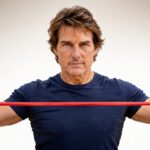
In a recent Business Insider article, legendary soccer star Mia Hamm shared her evolved approach to fitness and longevity at age 54.
Gone are the days of intense training with minimal recovery.

Now, she’s focused on training smarter for long-term health — and her three-step routine holds powerful lessons for anyone looking to stay strong and mobile as they age.
Her strategy? Muscle activation, interval cardio, and golf.
Jump to:
The Recovery Wake-Up Call
Hamm admits she didn’t always prioritize recovery during her competitive years. Stretching felt like wasted time that could be spent refining technical skills or building power.
She told me all the time to stretch. As a young player, my warmup was much shorter, and the thought of stretching just took away from the technical and physical side of the game.
After matches, recovery meant little more than an ice bath or quick stretch. Looking back, Hamm wonders if better recovery habits could have prevented knee and ankle injuries that plagued her career.
Post-retirement in 2004, she tried maintaining her athlete-level training intensity. Reality hit hard.
I tried to train like a former athlete, and that’s a full-time job. It’s really hard to do that.
Balancing motherhood, entrepreneurship, and advocacy work required a complete fitness overhaul. She partnered with Tylenol’s PainTalk campaign to promote smarter recovery strategies for athletes at every level.
Step 1: Muscle Activation Over Maximum Strength
Strength training remains central to Hamm’s routine, but explosive power isn’t the goal anymore. She’s focused on correcting muscle imbalances that lead to joint pain and back problems.
It’s easy for certain muscles, the smaller muscles, the support muscles to turn off. I need to do a lot of glute activation and hip flexor activation prior to golfing because if not, then my back takes over.
Her current approach emphasizes targeted activation work rather than heavy lifting.
What Muscle Activation Looks Like
Hamm’s routine includes exercises designed to “wake up” smaller stabilizing muscles that modern sedentary lifestyles tend to shut down.
- Resistance band work for glutes and hips
- Single-leg balance exercises with rotation
- Lighter weights focused on control and stability
- Mobility drills before golf or other activities
This type of training targets classic longevity markers: mobility, stability, and balance. These capabilities predict independence and injury prevention as we age far better than maximum strength alone.
It’s not just going into the weight room and throwing around as much weight as you can. It’s specific to your sport, it’s specific to your body, and specific to your deficiencies as an athlete.
Step 2: Interval Training Replaces Long Runs
As a professional soccer player, Hamm covered miles during every match. Now, she prioritizes heart health and stamina through high-intensity interval training rather than grinding out long runs.
I don’t even go out on three-mile runs because my body can’t handle it as much, the wear and tear, but I will still get my heart rate up.
Interval training involves short bursts of intense cardio alternated with rest or lower-intensity movement. Research shows this method improves cardiovascular fitness while reducing joint stress compared to steady-state cardio.
Hamm’s Interval Approach
Her workouts often combine brief cardio sessions with strength work for maximum efficiency.
- One-minute bursts on exercise bike
- Alternating sets of weights or resistance bands between cardio intervals
- Focus on heart rate elevation rather than distance covered
This strategy preserves cardiovascular health while respecting her body’s current needs. It’s time-efficient and sustainable — two critical factors for maintaining fitness throughout life.
If you want to try to deepen your fitness base, intervals are always a great way to do it.
Step 3: Golf as Longevity Medicine
While Hamm’s legacy lives in soccer, golf has become her primary sport. She started playing after college and used it as stress relief during Olympic and World Cup training.
Unexpectedly, golf improved her soccer performance by forcing mental discipline.
What I love about the game of golf is that it magnified my weaknesses as a soccer player. I just carried a lot of my mistakes with me on the field. In golf, you can’t perform if you’re thinking about three shots ago.
Why Golf Supports Healthy Aging
Golf combines multiple elements linked to longevity:
- Low-intensity walking covering several miles per round
- Mental exercise requiring focus and strategic thinking
- Social connection through playing with others
- Time outdoors in natural settings
- Rotational movement that maintains mobility
Beyond physical benefits, Hamm values golf’s stress-reduction properties. She’s learned that tension in the body mirrors tension in life.
The harder you grip the club, the worse the outcome. So you really have to let go and try to eliminate tension in your body, which means eliminating some tension in your life, and that’s not always easy to do.
The Bigger Lesson: Training Specific to Your Life Stage
Hamm’s evolution from elite athlete to active 54-year-old demonstrates a crucial principle: effective fitness changes across life stages.
What worked at 25 won’t work at 55. Maximizing performance looks different when your goals shift from competition to sustained health, energy, and independence.
Her current priorities reflect this shift:
- Correcting imbalances rather than building maximum strength
- Protecting joints while maintaining cardiovascular fitness
- Incorporating activities that reduce stress and support mental health
- Choosing sustainable routines that fit alongside other life responsibilities
Hamm also emphasizes changing attitudes around pain and recovery in athletic culture. Through her work with Tylenol’s PainTalk campaign, she’s advocating for smarter approaches.
There’s still this kind of mentality of, ‘well, we just have to gut through it.’
Key Takeaways from Hamm’s Longevity Routine
Whether you’re a former athlete or someone looking to stay active decades from now, Hamm’s approach offers valuable guidance:
- Listen to your body’s changing needs rather than forcing outdated training methods
- Prioritize activation and stability work over pure strength or power
- Use interval training for cardiovascular health without excessive joint wear
- Choose activities you enjoy that naturally incorporate longevity-supporting elements
- Embrace recovery as essential rather than optional
- Address muscle imbalances specific to your body and activities
At 54, Hamm proves that adapting your fitness approach doesn’t mean giving up on strength or athleticism. It means training with intention for the life you want to live — not just next year, but decades from now.
Her regret about not stretching as a young athlete has transformed into wisdom about prevention, balance, and sustainability. That’s perhaps the most valuable lesson of all.