Imagine turning 60 not with a quiet sigh, but with a clenched fist, ready to lift more, run further, and live better than ever before.
That’s the mission of Lawrence from Fitting50 — and if you’re anywhere from age 40 to 70+, his journey might just change how you think about aging.
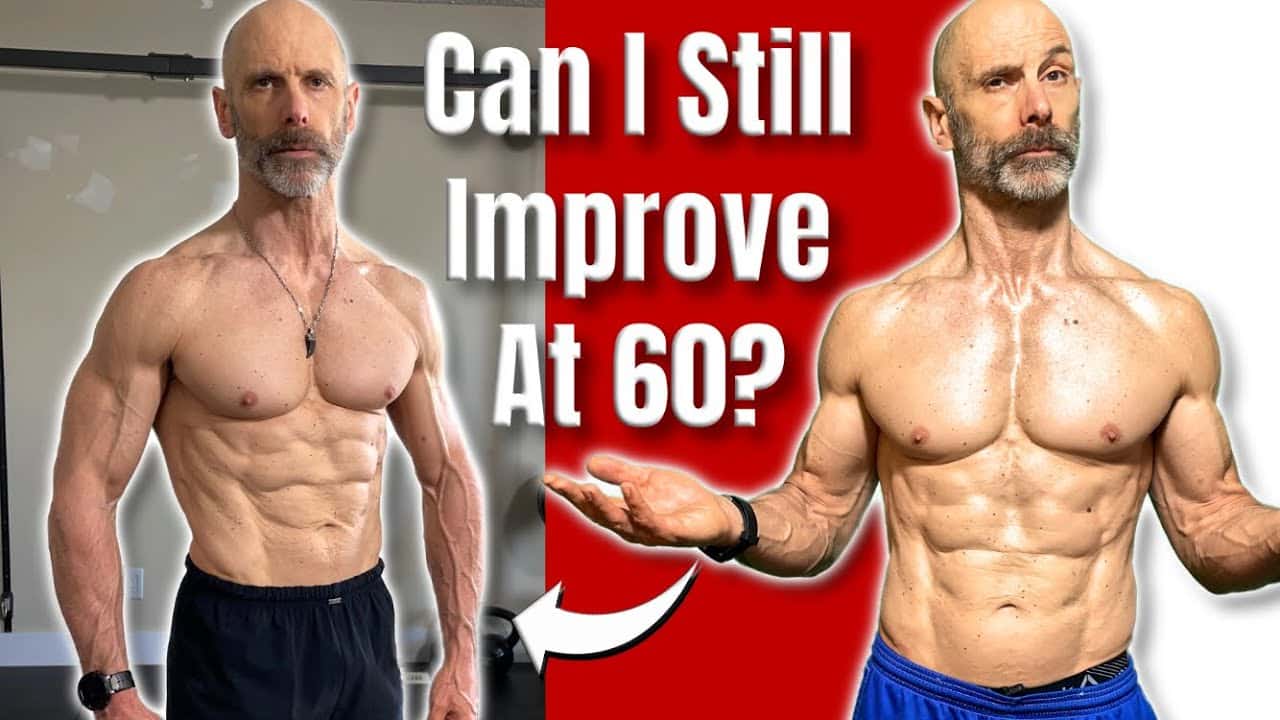
His one-year plan, part of a longer two-year roadmap, aims to build muscle, improve cardiovascular health, and maintain peak performance well into his 70s and beyond.
The strategy isn’t random. It’s highly structured, deeply strategic, and backed by science.
This article breaks down everything: resistance training, body composition tracking, VO2 max protocols, and how someone past middle age can train like — or even outperform — someone decades younger.
Jump to:
Why 60 Is Just the Beginning
For Lawrence, age 60 is not a finish line — it’s the launch pad for an era of improved strength, endurance, and metabolic health. His main goal? To enter his 60s in better physical shape than most 30-year-olds and continue getting better from there.
“I want to maintain the shape and health of a much younger man,” he explains. “And the decisions I make now will determine the quality of my life for decades to come.”
His plan reflects an understanding that longevity isn’t just about living longer — it’s about thriving longer.
The Lean Bulk Strategy: What It Looks Like
Where many people shift toward fat loss with age, Lawrence is aiming to build lean muscle — intelligently.
As a trained and experienced lifter, he knows the most effective approach at his stage is a long-term lean bulk, with short phases of cutting to manage excess body fat.
Here’s a breakdown of the process:
- Bulk Duration: 2 years total, starting after his 60th birthday
- Mini Cuts: Interspersed every few months to keep body fat in check
- DEXA Scans: Used periodically to track lean mass, fat percentage, and bone density
This isn’t about bulking for aesthetics alone. Muscle mass preservation and bone health are two key predictors of healthy aging. DEXA scans help him calibrate progress with surgical precision.
Training Blueprint: Full Body Sessions with Intelligent Recovery
Lawrence sticks to a full-body training split three times a week, with sessions lasting roughly 90 to 120 minutes. The focus is on **progressive overload** — steadily increasing the weight, reps, or intensity of key movements over time.
After noting his back wasn’t recovering as fast, he smartly adapted. More spinal-friendly leg exercises were introduced using new equipment:
- Leg Press
- Hack Squat
- Seated Hamstring Curls / Leg Extensions
These choices ease pressure off the lower back while continuing to challenge the legs effectively. He’s still doing Romanian Deadlifts, but with adjusted volume and intensity to support spinal recovery.
Fixing Muscle Imbalances
He noticed great gains in arms and back during his last bulk — but not in legs and chest. With targeted exercise selection and recovery-aware programming, this year’s goal is to reverse that trend.
Benchmarking Youth: Competing with 20-Year-Olds
How does a 60-year-old stack up against men in their 20s? Lawrence is testing it — literally.
Using StrengthLevel.com‘s database of lift standards, he’s comparing his strength to younger cohorts. Here’s how he currently stacks up:
- Dumbbell Bench: 60 lbs x 24 reps → Intermediate
- Pull-Ups: 9 reps → Novice
- Leg Press: 320 lbs x 16 reps → Intermediate
The goal isn’t necessarily to match elite lifters in their 20s — it’s to exceed the intermediate level and push into advanced territory over time.
After his milestone birthday, he’ll target heavier loads at lower reps to continue building maximal strength. This recalibrates the goalpost — and the intensity.
Building a Younger Heart: VO2 Max and Longevity
Cardiorespiratory capacity, particularly VO2 max, is arguably the most important biomarker correlated with lifespan. Higher values mean better oxygen efficiency and a lower risk of chronic disease and early death.
“The better your VO2 max, the longer you’ll live,” says Lawrence — echoing recent data highlighted by Dr. Peter Attia and other longevity physicians.
Weekly Cardio Plan
- Daily Cardio: 16 minutes, building to 20
- Split Style: Half brisk walking (3.8 mph, incline 1), half light jog (10-minute mile pace)
- HIIT Once Weekly: 8 x 4-minute intervals (per Peter Attia’s protocol)
Currently, his VO2 max is tracked via a Garmin watch. Though not ultra-precise, he plans to undergo lab testing later for an accurate measurement.
To give context: VO2 max around 43 is average for a healthy 20-year-old. For someone over 60, a VO2 reading of 46 or higher enters elite territory — an attainable, albeit challenging, goal that Lawrence is gunning for.
Staying the Course Year-Round
Consistency is king. Through cuts, bulks, cardio shifts, and strength benchmarks, the common thread is discipline woven over years.
This two-year transformation journey isn’t just about aesthetics — it’s about redefining what it means to age well, stay injury-free, and live an active, vibrant life.
“If you’re 40 or 60, set a fitness goal,” Lawrence says. “With a plan, you can make it a reality.”
And when this phase finishes? He plans to cut — and bring back the shredded six-pack last revealed at 58.
If you want to see how that looked, Lawrence has got you covered in his next video.
Until then, keep lifting, keep running, and keep evolving — because your best body might be the one you build after 60.