Two muscular athletes, two completely different movement abilities.
That’s the fascinating reality fitness coach Eugene Teo recently highlighted when comparing powerlifter Larry Wheels and fellow athlete Ashton—both incredibly strong, but moving like they’re from different sports entirely.
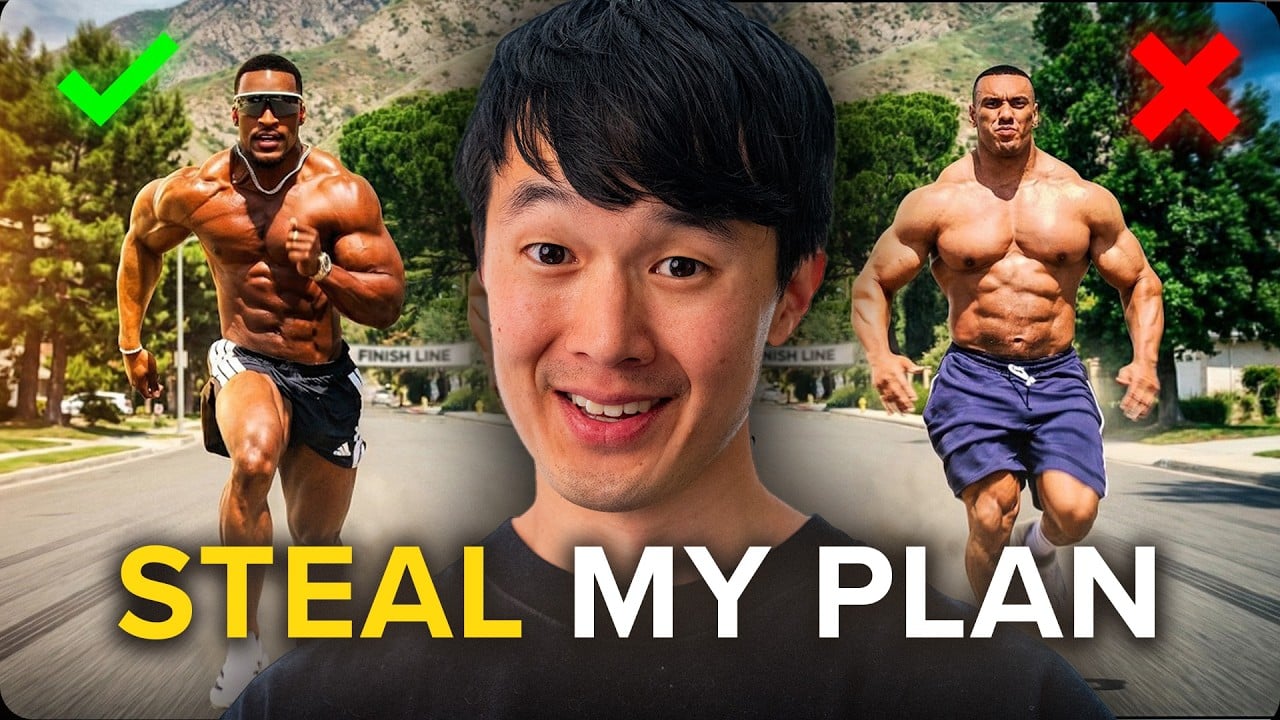
In a recent video, Teo used this comparison to illustrate a critical gap in traditional strength training: you can build impressive muscle and monster strength while becoming “pretty useless outside of the gym.”
Here’s how to avoid that fate—and build a body that’s strong, mobile, and athletic.
Jump to:
The Athlete vs. The Fridge
Teo doesn’t mince words when describing what he observed.
Larry runs like he’s 68 and needs a walker. Bro runs like he has the handbrake on.
The contrast was stark: Ashton moved fluidly with rhythm and coordination, while Larry’s sprint resembled what Teo colorfully described as “a penguin vigorously doing bicep curls.”

If you want something simple that actually works, this is one of the most effective tools I’ve used to build strength, conditioning, and endurance without needing a full gym setup.
- Full-body training with one weight using swings, squats, and presses
- Solid cast iron build that feels stable and lasts for years
- Comfortable grip that makes high-rep workouts easier to handle
No hip extension. No shoulder extension. No rotation. Just knees and quads grinding through motion.
But this isn’t about criticizing Larry Wheels, who remains an absolute beast in his domain. It’s about recognizing a widespread pattern among lifters at every level.
The Development Gap: When Strength Outpaces Movement
Teo knows this problem intimately because he’s lived it.
10 years ago when I was a competitive bodybuilder, huge mode, I was jacked, strong, powerful. But outside of the gym, I was really useless.
The phenomenon follows a predictable trajectory. Newbie lifters experience rapid improvements across all fitness qualities—a basic barbell squat builds strength, muscle, power, mobility, and athleticism simultaneously.
But after one to three years, something shifts.
Muscle and strength continue climbing. Meanwhile, mobility stagnates. Athletic qualities plateau or decline. Stiffness creeps in, along with nagging aches and recurring injuries that never quite heal.
If you want something simple that actually works, this is one of the most effective tools I’ve used to build strength, conditioning, and endurance without needing a full gym setup.
- Full-body training with one weight using swings, squats, and presses
- Solid cast iron build that feels stable and lasts for years
- Comfortable grip that makes high-rep workouts easier to handle
This “development gap” isn’t a flaw—it’s simple specificity. Your body adapts to what you demand from it.
Why Larry Moves Like Larry
According to Teo, Larry’s movement limitations aren’t weaknesses—they’re trade-offs.
He’s devoted so much of his time and attention towards getting really strong and stiff and stable for things like his bench press and his barbell squat. He’s so good at it that it’s become his default state.
That specialized strength produces jaw-dropping gym feats like 90-degree push-ups and world-class lifts. But remove him from that specific context—ask him to sprint or change direction quickly—and the system breaks down.
The lesson? Hyperspecialization creates capability in narrow domains while sacrificing broader physical competence.
The Five Pillars Missing From Traditional Programs
Teo identifies five core fitness components that balanced training should address:
- Strength
- Hypertrophy (muscle growth)
- Power (explosive force production)
- Mobility
- Endurance
Most modern programs obsessively focus on the first two while neglecting the others. The result? Lifters who look impressive but move poorly and fatigue quickly.
If you want something simple that actually works, this is one of the most effective tools I’ve used to build strength, conditioning, and endurance without needing a full gym setup.
- Full-body training with one weight using swings, squats, and presses
- Solid cast iron build that feels stable and lasts for years
- Comfortable grip that makes high-rep workouts easier to handle
Teo advocates for what he calls “broad general physical preparedness”—competence across all domains rather than dominance in just one or two.
The Hybrid Bodybuilding Template
Teo’s solution doesn’t require four-hour gym sessions. He trains 45 to 60 minutes per day, three to five days weekly, using a structured template that addresses each fitness pillar.
1. Plyometrics (5-10 Minutes)
Quick, snappy movements that prepare joints and tissues for higher-intensity work.
Examples: pogos, skips, hops, bounds
These can serve double duty as dynamic warm-ups while gradually building explosive capacity.
2. Power Development (10-15 Minutes)
Power isn’t just strength—it’s how rapidly you generate maximum force.
If you want something simple that actually works, this is one of the most effective tools I’ve used to build strength, conditioning, and endurance without needing a full gym setup.
- Full-body training with one weight using swings, squats, and presses
- Solid cast iron build that feels stable and lasts for years
- Comfortable grip that makes high-rep workouts easier to handle
Olympic lifts exemplify this quality, though Teo emphasizes accessible alternatives like explosive dumbbell work, kettlebell movements, jumps, and throws.
Key principle: reduce weight, maximize speed and intent. Don’t train to failure here.
Even traditional exercises like lat pulldowns become power builders when performed explosively at lighter loads.
3. Strength Work (Part of 30-40 Minute Block)
Big compound movements remain essential: squats, deadlifts, rows, presses, pull-ups.
Teo recommends three to six rep ranges for one to three sets per workout, focusing on progressive overload.
4. Hypertrophy Training (Part of 30-40 Minute Block)
One to two targeted exercises that address weak points or aesthetic goals.
If you want something simple that actually works, this is one of the most effective tools I’ve used to build strength, conditioning, and endurance without needing a full gym setup.
- Full-body training with one weight using swings, squats, and presses
- Solid cast iron build that feels stable and lasts for years
- Comfortable grip that makes high-rep workouts easier to handle
Push these movements hard with higher volume and intensity. Together with strength work, this forms the workout’s “meat and potatoes.”
5. Mobility Work (5-10 Minutes)
Full range-of-motion strength training covers most mobility needs, but Teo identifies one critical missing element: rotation.
He incorporates at least one rotation-based movement into most sessions. Favorite choices include windmills (combining hip, spine, and shoulder mobility) and static holds like long lunges and horse stances.
Keep it simple: pick one or two areas to focus on for 12-week blocks, then reassess.
6. Cardiovascular Conditioning (15-90 Minutes)
Teo programs cardio either post-workout or on separate days depending on training split.
His current approach includes:
If you want something simple that actually works, this is one of the most effective tools I’ve used to build strength, conditioning, and endurance without needing a full gym setup.
- Full-body training with one weight using swings, squats, and presses
- Solid cast iron build that feels stable and lasts for years
- Comfortable grip that makes high-rep workouts easier to handle
- Interval work: 15 minutes, alternating one-minute easy/moderate/fast efforts (twice weekly)
- Sprint sessions: 20-30 meter accelerations focusing on technique (once weekly)
- Long runs: 45-90 minutes at comfortable pace (once weekly)
This variety develops both aerobic capacity and anaerobic power without excessive time investment.
Debunking the Bodybuilding Myth
Teo pushes back against the trendy narrative that bodybuilding inherently creates dysfunction.
He acknowledges the ridiculous alternative: “weird circus quirky exercises that just look really complicated, but don’t really stimulate any adaptation.”
The solution isn’t abandoning strength and hypertrophy training—it’s adding the missing pieces rather than replacing proven methods with gimmicks.
As Teo points out, for every example of immobile muscle-bound lifters, there are equally impressive counter-examples like Ashton—athletes who built size and strength while maintaining exceptional movement quality.
The Real Time Investment
Teo regularly encounters skepticism about his approach.
If you want something simple that actually works, this is one of the most effective tools I’ve used to build strength, conditioning, and endurance without needing a full gym setup.
- Full-body training with one weight using swings, squats, and presses
- Solid cast iron build that feels stable and lasts for years
- Comfortable grip that makes high-rep workouts easier to handle
The comments I always get are all about, oh, bro’s got like 4 hours to work out or he must live in the gym.
Reality check: his template fits comfortably into 45-60 minute sessions. Over 100,000 people follow these exact protocols with consistent results.
The template adapts to any training split—upper/lower, push/pull/legs, full body—making implementation straightforward regardless of experience level.
Building Resilience, Not Just Size
Teo’s philosophy centers on becoming “a more resilient human that’s strong in the gym and capable for life.”
This means rejecting false choices between aesthetics and athleticism, between strength and mobility, between size and function.
Traditional bodybuilding provides an essential foundation—it genuinely improves multiple fitness qualities simultaneously, especially for beginners. But intermediate and advanced lifters need intentional programming across all five pillars to continue progressing holistically.
The development gap isn’t inevitable. It’s simply what happens when programming ignores power, mobility, and conditioning in favor of exclusive strength and hypertrophy focus.
If you want something simple that actually works, this is one of the most effective tools I’ve used to build strength, conditioning, and endurance without needing a full gym setup.
- Full-body training with one weight using swings, squats, and presses
- Solid cast iron build that feels stable and lasts for years
- Comfortable grip that makes high-rep workouts easier to handle
The fix requires adding, not replacing. Keep the compound lifts and progressive overload. Just make room for explosive work, rotational movements, and varied cardiovascular stimulus.
Will you move like Ashton or Larry? The answer depends less on genetics than on whether your programming addresses all dimensions of physical capability—or just the ones that show up in mirror selfies.