Olympic weightlifters hoist hundreds of kilos overhead in behind-the-neck positions, showcasing some of the strongest, most mobile shoulders in sports.
Yet conventional fitness wisdom labels this exact movement as dangerous.
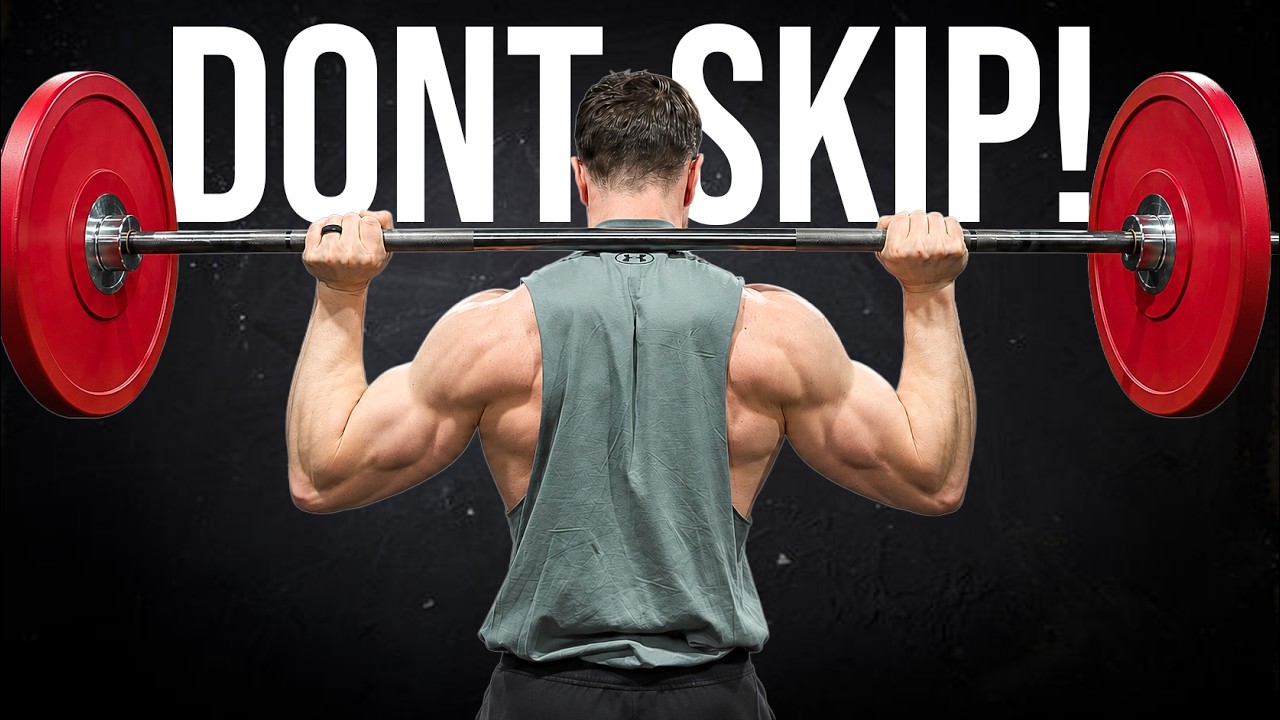
In a recent educational video, fitness expert Sham breaks down why behind-the-neck pressing deserves reconsideration—and how to approach it safely for superior shoulder development.
The truth lies somewhere between blind fear and reckless enthusiasm.
Jump to:
Test Before You Press
Not everyone should jump straight into behind-the-neck pressing with loaded barbells. Sham recommends a simple mobility screening first.
Grab a dowel or broomstick and attempt pressing it behind your neck through a complete range of motion. Watch for compensations—excessive arching, head jutting forward, or inability to bring the stick down toward your traps.
If you’re able to use a full range of motion without compensating, you can bring the bar down all the way towards your traps, then you’re a good candidate for behind the neck press.
This simple test reveals whether you possess adequate shoulder and upper back mobility. Only after passing should you consider progressing to weighted variations.
Superior Shoulder Stimulation
Behind-the-neck pressing delivers distinct advantages over traditional overhead movements.
The frontal plane of motion places dramatically more emphasis on lateral deltoids. Standard overhead presses involve significant chest activation, particularly upper pectoral fibers.
Behind-the-neck variations minimize this involvement through their more upright torso angle and altered pressing path. The result? Shoulders do the heavy lifting.
Strengthening Vulnerable Positions
Most training occurs in front of the body. This creates predictable weaknesses.
Behind-the-neck pressing addresses the 90-90 position—90 degrees of external rotation combined with 90 degrees of abduction. This configuration remains weak and unfamiliar for most lifters precisely because conventional programming neglects it.
It’s a bit of a catch 22 here because people feel weak, feel discomfort because it’s unfamiliar and they don’t do it because of those reasons. But if you were to actually train the exercise and you don’t have any contraindications of previous injury or anything that would put you at harm or real risk of this exercise, then there’s room to progress.
Adaptation follows exposure. Bodies strengthen positions they regularly encounter.
Enhanced Stabilizer Recruitment
Behind-the-neck pressing demands exceptional work from rotator cuff muscles and scapular stabilizers. External rotators, lower traps, mid traps, and serratus anterior fire intensely to keep the humeral head centered within the glenoid cavity.
This coordination challenge builds resilient, bulletproof shoulders over time.
Fresh Stimulus, New Gains
Perhaps the most compelling argument involves simple novelty.
Behind-the-neck pressing represents mechanically disadvantageous positioning compared to standard overhead work. You’ll lift lighter loads—and that’s actually beneficial.
Significant training stimulus arrives without requiring maximal absolute strength. Muscle growth and strength development occur in new ranges of motion, triggering adaptation responses similar to newbie gains.
For experienced lifters hitting plateaus, this variation invigorates stale programming through targeted novelty.
Practical Implementation Guidelines
Sham emphasizes intelligent progression over aggressive loading.
Warm-Up Protocol Matters
Face pulls make excellent primers before behind-the-neck work. They activate rotator cuff and scapular muscles while rehearsing the 90-90 position.
You wouldn’t jump into your heaviest set of bench press without any warm-up sets. And the same goes for the behind the neck press.
Begin with an unloaded stick, gradually progressing through multiple warm-up sets. This allows technique refinement, body awareness, and identification of potential issues before they become problems.
Redefining Progress
Traditional progressive overload focuses relentlessly on adding weight. Unconventional movements require different success metrics:
- Control quality – Smoother, more confident execution
- Stability improvements – Reduced wobbling or compensation
- Range of motion expansion – Deeper, more complete movements
- Comfort levels – Absence of pain or pinching sensations
Only after establishing these foundations should load increases occur. Maintaining identical weights for multiple weeks isn’t failure—it’s intelligent training.
Individual Variability Recognition
Anatomical differences matter significantly. Some individuals possess hooked acromions that make behind-the-neck movements genuinely uncomfortable regardless of mobility or technique.
Limb lengths, muscle insertion points, and joint structures vary widely between people. Perfect mobility doesn’t guarantee perfect compatibility.
No exercise is perfect for everyone, but no exercise is bad for everyone at the same time. There’s more nuance, there’s more context.
If patient, progressive implementation still produces discomfort, standard overhead pressing remains perfectly effective for building shoulder size and strength. Forcing incompatible movements serves no purpose.
Optimism Meets Reality
Healthy individuals without previous injuries should approach unconventional movements with measured optimism rather than blanket fear.
Bodies demonstrate remarkable adaptability when exposed to novel stimuli through intelligent progression. Uncomfortable ranges of motion become comfortable strongholds over time.
Technique best practices include using controllable ranges of motion initially. Complete depth isn’t mandatory—work within comfortable parameters while gradually expanding capabilities.
The human body adapts to demands placed upon it. Some athletes perform behind-the-neck presses bringing barbells down toward their glutes before pressing upward—extreme ranges achieved through consistent, patient training.
Context Over Dogma
Universal exercise prescriptions and prohibitions ignore individual context. Behind-the-neck pressing isn’t inherently dangerous nor universally appropriate.
Proper screening, progressive loading, attention to individual response, and realistic expectations transform this “forbidden” movement into a powerful shoulder-building tool for appropriate candidates.
For those seeking shoulder development beyond conventional patterns, behind-the-neck pressing offers legitimate benefits worth exploring—provided implementation respects individual limitations and emphasizes quality over ego-driven loads.