Muscle mass has long been hailed as the cornerstone of longevity, and for good reason.
Research consistently shows that higher lean muscle mass protects against age-related diseases like frailty, diabetes, neurodegeneration, and heart disease.
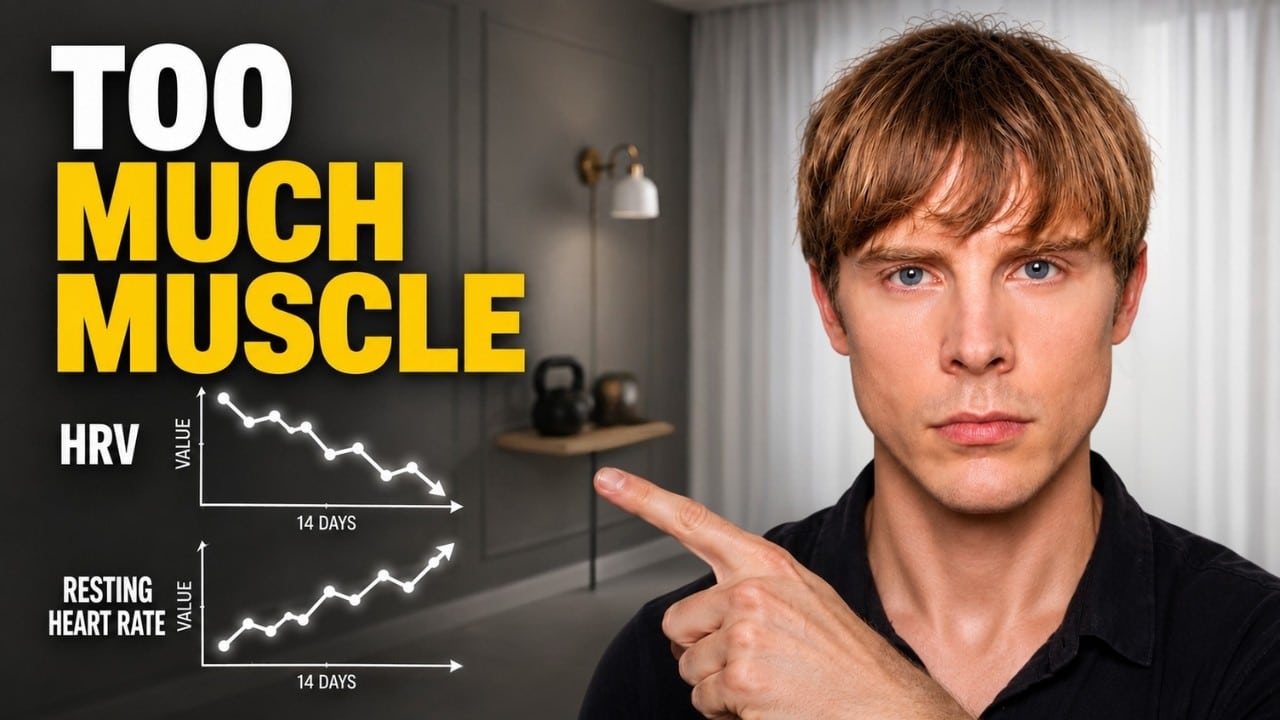
But here’s the uncomfortable truth that challenges conventional fitness wisdom: more muscle isn’t always better for living longer.
In fact, chasing excessive muscle mass might actually be undermining your longevity goals in ways you never considered.
Jump to:
The Muscle Paradox Nobody Talks About
Having higher muscle mass can decrease early death risk by 30%, while high fat mass increases that risk by 56%. Those numbers seem straightforward enough.
But dig deeper into longevity research and a curious pattern emerges: natural bodybuilders who live into their 60s and 70s deliberately downsize their muscle mass. Professional bodybuilders still alive today couldn’t maintain their peak physiques because doing so compromised their health.
Setting aside steroid users who die prematurely from drug use, even naturally muscular individuals don’t necessarily outlive their lean, sinewy counterparts. Personal experimentation reveals why this might be true.
Carrying just 4 to 5 kilograms of extra muscle—without any anabolic assistance—can worsen critical longevity biomarkers. Resting heart rate can climb 8 to 10 beats per minute, jumping from 36 to 45. Heart rate variability drops from 110 to 85. Liver enzymes tick upward. Lipid panels deteriorate despite maintaining low body fat, simply because maintaining extra muscle requires consuming substantially more food.
What Actually Predicts Longevity Better Than Muscle Mass
The confusion stems from mistaking muscle mass as the primary goal rather than understanding what truly mediates the relationship between muscle and longevity.
When researchers compare muscle mass against muscle strength, strength emerges as the superior predictor of longevity and mortality risk. Losing muscle strength as people age predicts mortality in older men independent of their actual muscle mass.
Muscle strength reflects muscle quality. Someone can have adequate muscle mass while being overweight, but that reveals nothing about muscle functionality. Higher strength indicates regular physical activity, maintained lifelong physical capacity, healthier nervous system function for firing muscle fibers, better metabolic health, optimal hormonal environment including testosterone and IGF-1, greater physiological reserve against disease, and superior mobility, stability, and balance.
Muscle Power Trumps Everything
The plot thickens when comparing muscle strength to muscle power. Power proves an even stronger predictor of mortality than strength.
Muscle power encompasses everything muscle strength represents, plus additional benefits. Power requires superior muscle quality and enhanced nervous system condition. Critically, muscle power declines sooner than strength, making it a more sensitive health indicator.
This creates a hierarchy of muscle qualities associated with longevity:
- Number one: Muscle power and speed — sprinting, explosiveness, clean and jerks, plyometrics
- Number two: Muscle strength — deadlifts, pull-ups, shoulder press
- Number three: Muscle mass — lean tissue itself
Being explosive and fast without sufficient muscle mass still increases frailty risk and hip fracture vulnerability during falls. However, muscle mass naturally develops as a byproduct of training for strength and power.
Rather than deliberately focusing on building muscle mass, training strength and power allows muscle to accumulate organically.
How Much Muscle Is Actually Optimal?
If “more muscle equals better health” were universally true, natural bodybuilders would dominate longevity statistics. Reality tells a different story.
A 2025 dose-response meta-analysis examined over 130,000 middle-aged and older adults, with most studies measuring lean mass via DEXA scan. People classified with low lean mass faced 30% higher mortality risk during follow-up periods.
Analyzing lean mass kilogram by kilogram revealed each additional kilogram associated with roughly 1% lower death risk. Importantly, this relationship proved non-linear—the greatest benefit comes from escaping low muscle range, while benefits plateau as muscle mass increases.
Standardized measurements varied across studies, with some measuring total lean mass, others appendicular lean mass, and still others using percentage of lean mass relative to total body weight. This distinction matters enormously because 20 kg of muscle represents vastly different physiques for someone weighing 50 kilos versus 100 kilos at 190 cm tall.
The U-Shaped Curve of Muscle and Mortality
Like many biological phenomena, muscle and longevity likely follow a U-shaped curve. Too little muscle increases mortality risk through frailty and fractures—potentially mediated by malnutrition rather than muscle mass directly.
Too much muscle shortens lifespan by wearing down organs. Hearts must pump and kidneys must filter blood for substantially larger bodies, wearing out 10 to 20 years sooner than normal-weight individuals. This resembles obesity from body fat—muscular obesity still results in premature death 10 to 15 years earlier.
Lowest mortality sits in the middle: muscular and lean without carrying unnecessary mass relative to height and frame.
One study found mortality following a U-shaped curve with lowest risk around 56 kg predicted lean body mass. Mortality remained below average up to approximately 90 kg, only rising at extreme values exceeding 100 kg. While this doesn’t prove more muscle causes harm—clearly providing leeway until at least 95 kg lean mass—it indicates diminishing returns at muscular extremes.
Measuring Your Muscle Status
Low muscle mass risk applies predominantly to older populations. Older adults with low muscle mass face over three times higher mortality within one year after hip fractures compared to those with normal muscle mass, primarily because older people start with compromised bone density.
Young people with low muscle mass rarely suffer hip fractures. Lower muscle mass also increases likelihood of gaining fat and developing insulin resistance because muscle acts as a metabolic sponge for blood sugar and calories.
The gold standard for measuring adequate muscle mass involves DEXA scans examining appendicular lean muscle mass—muscle in arms and legs, adjusted for height. Sarcopenia (low muscle mass) is diagnosed when appendicular lean mass falls below 7 kg per square meter for men and 5.4 kg per square meter for women, placing individuals in the bottom 10% of their population.
For reference, an appendicular lean mass around 9.5 places someone in the 90th to 95th percentile for men around age 30.
How Excessive Muscle Harms Health
Larger bodies require hearts to pump more blood, increasing cardiac workload over time. Carrying 5 kg extra muscle—even at low body fat—can elevate resting heart rate by 10 beats. Adding body fat compounds this, potentially raising resting heart rate by 20 beats.
Data from over 1.2 million people suggests every 10 beats per minute increase above 45 links to 9% higher all-cause mortality risk and 8% cardiovascular mortality risk. Moving from 35 to 45 beats per minute creates minimal mortality difference, but jumping from 65 to 75 significantly impacts longevity prospects.
More muscle means higher protein turnover and increased metabolic waste requiring kidney filtration, elevating workload over time. Maintaining very large muscle mass demands more calories, and chronic caloric excess accelerates aging across all animal species studied over 100 years of aging research.
The Sleep Apnea Connection
Increased muscle mass can raise sleep apnea risk by building neck musculature. Weightlifting creates thicker necks from muscle growth even at low body fat percentages. Combined with excess body fat, neck thickness compounds dramatically.
Sleep apnea periodically cuts off breathing during sleep, lowering oxygen levels and fragmenting sleep quality. Over time, this increases risks for high blood pressure, heart disease, stroke, atrial fibrillation, cognitive decline, and Alzheimer’s disease.
Neck circumference stands as one of the strongest physical predictors of obstructive sleep apnea. Men with neck circumference exceeding 43 cm (17 inches) and women over 41 cm (16 inches) face high sleep apnea risk.
Body Fat Changes Everything
How much muscle benefits longevity depends heavily on body fat percentage. Abundant muscle paired with abundant body fat blunts muscular benefits.
One 9-year study found excess body fat mitigated survival advantages from muscle strength and power. Being fat but fit beats being merely fat, yet carrying excess fat regardless of fitness status reduces longevity benefits from physical conditioning.
For men, anything above 15% body fat associates with increased mortality risk. For women, 20% to 35% body fat appears safe, though 20% to 25% likely represents optimal range. Men must prioritize leanness more than women, who naturally carry less muscle mass.
BMI: Flawed But Useful at Extremes
BMI receives justified criticism for inaccuracy in individuals with higher muscle mass. Someone with visible abs and lower abdominal veins might register BMI of 25 to 25.5—technically overweight—due to increased muscle and bone density.
Carrying 5 kg more muscle can push BMI to 27 or 28, still causing worsened blood work and elevated resting heart rate. BMI lacks accuracy in standard distribution but proves more reliable at extremes.
BMI of 30 or 35 (class one obesity) indicates excessive weight regardless of muscle mass. Olympic bodybuilders exceed BMI 30, which proves unsustainable for long-term health. Professional bodybuilder Ronnie Coleman reached BMI 41. Chris Bumstead sits at 31.
Professional bodybuilding compromises health beyond steroid use—extreme muscle mass wears down organs even when body fat stays low. Natural bodybuilders rarely achieve BMI 30 while lean, typically peaking around 28 or 29.
Reaching BMI 30 or 35 at 20% body fat is easy but undesirable. Optimal male body fat targets 10% to 12%, not exceeding 15%. Only individuals maintaining 10% to 12% body fat can legitimately claim BMI doesn’t apply to them—anyone at 20% body fat with elevated BMI is simply carrying excess fat.
If you can’t see your abs and your BMI is over 25, you’re overweight. Doesn’t matter how much muscle you have.
The Optimal Muscle Strategy
BMI around 25 with appendicular lean mass in the 90th to 95th percentile represents excellent muscle development for longevity without pursuing bodybuilding or strength athletics. Building additional muscle beyond this point often worsens blood markers, lowers VO2 max, raises resting heart rate, and decreases heart rate variability.
Most people benefit from building more muscle. However, the critical insight is this: don’t chase muscle—chase functional training aspects like strength and power, allowing muscle to develop as a natural byproduct.
Here’s the practical framework:
- Avoid low muscle mass: Appendicular lean mass below 7 kg/m² for men and 5.4 kg/m² for women predicts poor longevity outcomes
- Prioritize strength and power over mass: Let muscle accumulate through getting stronger rather than pursuing hypertrophy
- Engage in strength training: Focus on progressive strength gains
- Implement athletic power exercises: Sprinting, plyometrics, kettlebell swings, Olympic weightlifting, gymnastics
- Monitor neck circumference: Exceeding 43 cm (men) or 41 cm (women) signals problems from excess fat, muscle, or both
- Optimize body fat: Below 15% for men; 20% to 25% for women
- Use BMI cautiously: Once lean (under 15% body fat for men, 20-25% for women), BMI above 26 to 27 likely worsens biomarkers
Muscle remains vital for longevity, but quality trumps quantity. Strength beats size. Power beats strength. And functionality beats all arbitrary measurements of mass.