In 1922, a 14-year-old boy weighing just 65 pounds was told by his doctor to say goodbye.
Then came an injection of a molecule pulled from an animal pancreas, and he lived another 13 years.
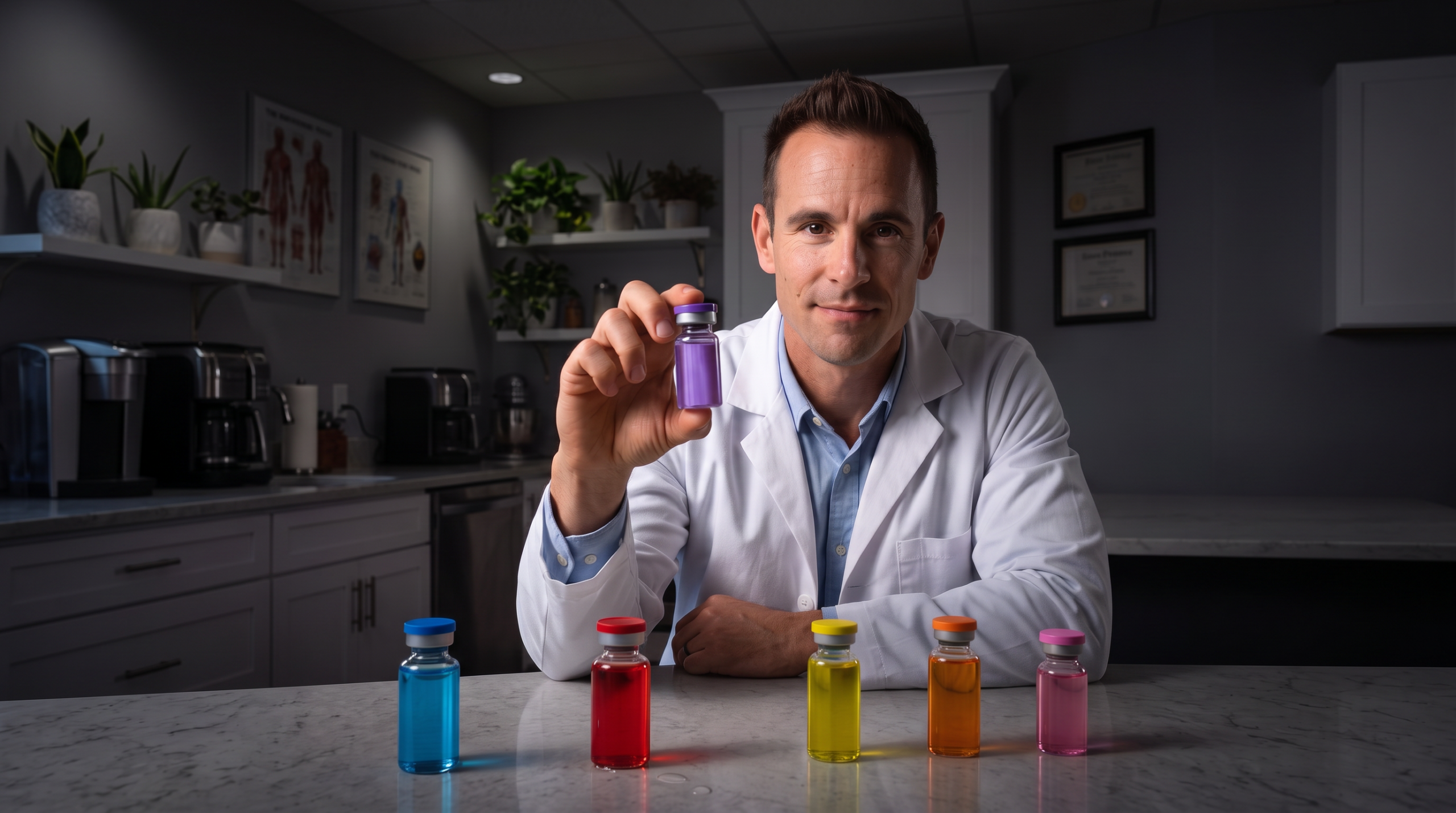
That molecule was insulin, and it belongs to a family now sold by the thousands online: peptides.
In a recent YouTube video, Dr. Will Haas, who says he has spent 15 years in peptide therapy, laid out a “three floors” framework for sorting them.
Some peptides may help rebuild the body, while others are unregulated research chemicals, so which popular one might be wrong for you?
Jump to:
What a Peptide Actually Is
Proteins are built from amino acids. A peptide is a short chain of those same amino acids.
If you want something simple that actually works, this is one of the most effective tools I’ve used to build strength, conditioning, and endurance without needing a full gym setup.
- Full-body training with one weight using swings, squats, and presses
- Solid cast iron build that feels stable and lasts for years
- Comfortable grip that makes high-rep workouts easier to handle
Peptides are not building blocks sitting there as structure. They’re messengers.
Insulin knocks on the door of a cell and asks it to open. Oxytocin tells the brain who to trust and bond with.
Synthetic versions either copy a signal you already make or send one your body knows how to answer. Semaglutide, for example, mimics GLP-1, the gut signal that says “you’re full.”
The Catch That Changes Everything
Just cuz your body recognizes a signal, doesn’t mean that signal is right for you.
Each peptide delivers its message to one specific level of biology. Miss the level, and you can choose a compound that is powerful, popular, and useless for your problem.
Haas pictures a building with three floors: cells, tissues, and whole systems.
Floor One: The Cellular Foundation
Mitochondria, the power plants inside cells, turn food into ATP. With age, stress, and toxins, they decline, and every organ they power slows down too.
This is the cellular level. It’s where aging quietly begins and it’s the level almost nobody thinks to check.
Three peptides work here:
If you want something simple that actually works, this is one of the most effective tools I’ve used to build strength, conditioning, and endurance without needing a full gym setup.
- Full-body training with one weight using swings, squats, and presses
- Solid cast iron build that feels stable and lasts for years
- Comfortable grip that makes high-rep workouts easier to handle
- Epitalon: modeled on a pineal gland compound, it activates telomerase, the enzyme protecting chromosome caps. Animal studies show lifespan extension.
- MOTS-c: encoded in mitochondrial DNA itself. Animal work shows better insulin sensitivity and exercise-like effects.
- SS-31: protects the inner mitochondrial membrane and is in human trials for heart failure and mitochondrial disease.
Reality check: Epitalon and MOTS-c rest largely on animal data. Human evidence remains early, so treat the promise as promising, not proven.
Floor Two: Tissue Repair
Why does a paper cut heal in 3 days, but a torn tendon can hurt for 3 years?
Blood supply is the answer. Tendons and ligaments get very little, so they mend slowly or not at all.
This floor targets stalled injuries, inflamed gut lining, and breaking-down connective tissue.
BPC-157
Originally identified from a protein in human gastric juice, BPC-157 is linked to gut lining, tendon, ligament, and nerve repair. Haas calls its data some of the strongest in peptide literature.
The picture is more nuanced than that sounds. Most of the research is in animals, and large, rigorous human trials are still lacking.
TB-500 and GHK-Cu
- TB-500 (a thymosin beta-4 fragment) works through actin, which governs cell movement and rebuilding. Haas highlights muscle, cardiovascular tissue, and wounds.
- GHK-copper shifts gene activity tied to repair, antioxidant defense, and inflammation control.
These act locally rather than body-wide. Think specific injuries, not whole-system fixes.
If you want something simple that actually works, this is one of the most effective tools I’ve used to build strength, conditioning, and endurance without needing a full gym setup.
- Full-body training with one weight using swings, squats, and presses
- Solid cast iron build that feels stable and lasts for years
- Comfortable grip that makes high-rep workouts easier to handle
Floor Three: Whole-System Signals
The biggest results live here, but so does the biggest mistake in this entire field.
System 1: Hormones
These peptides prompt the pituitary to release your own growth hormone in its natural rhythm, rather than flooding the body with synthetic hormone.
- Sermorelin: one of the earliest and best studied.
- Ipamorelin: more selective, without spiking cortisol.
- CJC-1295: often stacked with Ipamorelin to lengthen the release window.
- Tesamorelin: the only one FDA-approved for reducing visceral fat in certain patients.
System 2: Metabolism
The first GLP-1 drug came from the venom of the Gila monster, a desert lizard. That discovery launched the whole category.
Two receptors means two conversations with your metabolism at the same time.
- Semaglutide (GLP-1 only): roughly 15% body weight loss, with the strongest cardiovascular safety data in the class.
- Tirzepatide (GLP-1 and GIP): around 22.5% of body weight, with better muscle preservation, according to Haas.
- Retatrutide (GLP-1, GIP, and glucagon): about 24% in a 48-week phase two trial. Not yet FDA-approved.
System 3: The Nervous System
Haas calls this the real frontier. Instead of shuffling neurotransmitters, these peptides target neurotrophic pathways, especially BDNF, a signal that keeps the brain adapting and repairing.
- Semax: raises BDNF and has been used clinically in Russia for stroke recovery for decades.
- Selank: targets the stress response through the GABA system, reportedly without dependence or sedation.
- Dihexa: a highly potent neurotrophic peptide studied for Alzheimer’s and cognitive decline.
- Cerebrolysin: a neuropeptide complex used in Europe and Asia for stroke, brain injury, and neurodegeneration.
Caution matters most here. Dihexa remains an early research compound, and several of these are not approved for general use in the United States.
The Trap: Jumping to the Penthouse
Weight loss and brain peptides get the headlines, so people start injecting at the top.
But if the foundation is cracked, you don’t renovate the penthouse first.
Haas describes a 42-year-old who looked like a textbook weight loss candidate, with low energy and a stalled metabolism. Blood work pointed two floors down, to the cellular level.
If you want something simple that actually works, this is one of the most effective tools I’ve used to build strength, conditioning, and endurance without needing a full gym setup.
- Full-body training with one weight using swings, squats, and presses
- Solid cast iron build that feels stable and lasts for years
- Comfortable grip that makes high-rep workouts easier to handle
The floor that gets the most attention is not always the floor your body needs first.
How to Find Your Floor
Haas says his clinic, Vibe Wellness, starts with full blood work, a complete hormonal assessment, and inflammatory markers before prescribing anything.
Whatever route you take, a few practical rules apply:
- Test before you guess. Let your numbers, not the results you want, point to a floor.
- Work with a qualified clinician. Unregulated research chemicals carry real risks.
- Check the evidence tier. FDA-approved drugs, human trials, and animal-only data are very different things.
- Reassess over time. Your biology changes, so your plan should too.