Losing belly fat feels frustratingly slow for most men over 30, and many fitness influencers aren’t telling the whole truth about how long it actually takes.
One fitness coach who dropped from 20% body fat down to 6% wants men to understand something critical: it didn’t happen in six weeks.
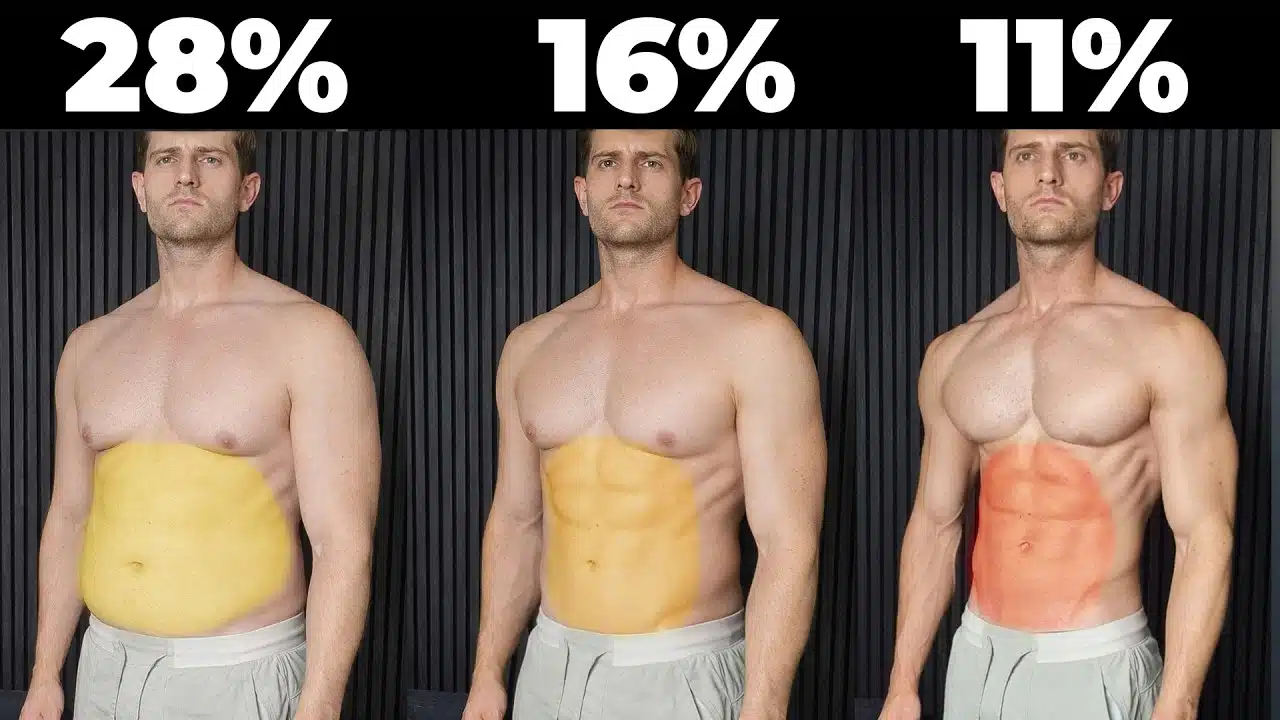
Following unrealistic timelines can sabotage progress, causing men to quit right before their bodies start showing visible changes.
Here’s what actually happens at each stage of belly fat loss and exactly how long each phase takes.
Jump to:
Stage One: The Invisible Progress Phase (Starting Point to 23-26% Body Fat)
This initial stage destroys motivation faster than anything else. Men start eating better, training consistently, adding cardio, and watching pounds drop on the scale—but their belly looks virtually identical in the mirror.
Most men completely misjudge what’s happening during these crucial first weeks. Think of peeling an apple: removing the first few layers barely changes its appearance, but as it shrinks, each layer makes a dramatically bigger visual difference.
Above 25% body fat, fat drops from everywhere simultaneously. Changes show up in the face first, which explains why others notice before you do.
This first stage can start at any level of body fat and it brings you down to around that 23 to 26% range.
Early losses can reach 2 pounds weekly, but that pace won’t last. Bodies adapt, and progress slows.
Realistic timeline: Half a kilo or one pound weekly on average, regardless of starting point. Faster rates sacrifice energy, performance, and long-term sustainability.
A guy starting at 28% moves through faster than someone at 35%, but rushing this phase guarantees burnout. The choice is simple: transform in 8-12 weeks and regain everything, or take 8-12 months and stay lean permanently.
Stage Two: The Frustration Zone (Around 20% Body Fat)
When Progress Shows Up Everywhere Except Your Belly
Physical changes accelerate around 20% body fat—just not where most men want them. Shoulders lean out, arms define, chest sharpens, but the belly stubbornly remains.
Some men actually feel they look worse, especially those carrying visceral fat that pushes the abdomen outward. Panic sets in. Hormones, insulin resistance, broken metabolism—something must be wrong.
Nothing is wrong. This is normal physiology.
Picture draining a swimming pool: shallow ends empty first (limbs, face, neck), while deep ends take longest because they hold the most water. The belly stores the most fat, so it drains last.
The Science Behind Stubborn Belly Fat
Fat cells contain different receptors influencing how easily they release stored energy. Beta-adrenergic receptors stimulate fat release—areas like arms, upper torso, and legs respond faster.
Alpha-2 receptors slow fat release, making belly fat remarkably resistant. Even with perfect execution, abdominal fat leaves last.
Spot reduction doesn’t exist. No amount of crunches burns belly fat specifically. Unless choosing liposuction, the only path forward is patience.
Many men sabotage themselves here by drastically cutting carbs, doubling cardio, and going extreme too quickly. Most just needed more time doing what already worked.
Stage Three: The Precision Phase (Breaking Below 20% Into the Teens)
Weight drops, overall leanness improves, but belly fat clings desperately. Everything changes here because previous effort levels no longer produce results.
Think of screwing into wood: the deeper you go, the more force required. Lower body fat percentages work identically. Leaner physiques demand greater consistency and precision.
Guessing food portions? Over. Letting mood dictate activity? Done. Weekend binges destroying progress? Absolutely not.
Margins for error tighten dramatically. Fat loss slows to half a kilo or one pound weekly maximum—often less. Remaining fat takes significantly longer to mobilize.
One of my clients was thinking that nothing he was doing was working, but then he dropped 5 lbs in one week.
Plans haven’t stopped working. Execution simply isn’t precise enough, or patience has run thin.
Many overcorrect by slashing calories aggressively, adding excessive cardio, forcing results. Sickness, travel disruptions, injuries—something breaks the streak, triggering complete rebounds before ever reaching 15% body fat.
Proper adjustments and strategic tweaks break through this barrier, leading to a transformative next stage.
Stage Four: The Decision Point (Reaching 15% Body Fat)
Remember that apple analogy? Shape finally changes at 15% body fat. Waist tightens, stomach flattens, ab outlines emerge, obliques appear.
People might even say you look “too thin” or worry about excessive weight loss—because leanness stopped being normal.
A crucial decision arrives: maintain this lean shape with soft definition, enjoying more food flexibility and less precision, or push toward true ripped status in the top 1%?
Staying at 15% feels like baking a cake without frosting—significant achievement, but incomplete. However, drifting back to 18-20% happens quickly without vigilance.
Pushing to 10-13%: The Final Stretch
Getting from 15% down to 10-13% isn’t far, but it’s not easy mode. This phase demands extreme detail and patience, exposing true commitment levels.
Timeline matters less here. Every percentage point earned becomes visibly noticeable. Hunger intensifies beyond previous experience.
Poor programming tanks energy, reverses training progress, and crushes recovery—especially problematic for men over 30 juggling full-time work and families.
Proper structure maintains high performance throughout. One coach dieted to 10% while working 50+ hours weekly, still hitting PRs consistently in the gym.
For me, when I was trying to cut for my show, I was around 175, 180 pounds when I started.
Hunger becomes noticeable but tolerable. Nothing special about genetics or circumstances—just strategy and execution, perhaps with a touch of mental toughness.
That internal voice I put on tape sound like a straight WHEN I LISTEN TO THAT. So if YOU EVER HAVE A HARD TIME OUT THERE, tape yourself. Listen to what kind of [ __ ] you’re being. Stay hard.
Instant results carry zero value. Earned transformations create lasting appreciation and change.
Stage Five: The Identity Shift (10-12% Body Fat)
Going from lean to properly ripped separates men who achieve and maintain leanness from those trapped in eternal yo-yo cycles.
Reaching 15% correctly means no reinvention required. Calories stay controlled, steps remain consistent, training stays progressive. Minor fine-tuning addresses any metabolic adaptations—easily identified through proper data tracking.
Strategic diet breaks help. One to two controlled weeks at maintenance before pushing to 10-12% resets mental and physical capacity. This isn’t a blowout—losing control here erases weeks of effort instantly.
Progress slows to a quarter to half kilo weekly, or half to one pound maximum. Already leaner than most men, this becomes purely personal competition.
Why Every Man Should Get Ripped Once
Anyone can temporarily push to 15%. Getting to 10-12% and maintaining it transforms identity completely.
Stop being “the guy chasing fat loss.” Become someone who simply lives lean. Habits shift, structure changes, mindset evolves.
Every man should experience true leanness once—not for appearance, but for the profound lessons about body, mind, and capability.
Reaching and maintaining 10-13% body fat makes returning to starting weight nearly impossible. After doing it properly, wishing for easier or faster becomes irrelevant. Simply do what results require.
No hoping. No praying. No wishing. Just execution.
The Best Part: Sustainable Maintenance
After reaching 10-12%, reverse dieting to cruise at 11-13% becomes sustainable long-term—one coach has maintained this range for ten years.
Looking sharp remains effortless. Performance stays optimal, PRs continue in training, life stays enjoyable with substantial buffer from overweight ranges above 20%.
This structured system makes fat loss and muscle growth predictable and sustainable for high-performing men with demanding lifestyles.
The timeline isn’t the problem—impatience and unrealistic expectations are. Understanding what happens at each stage prevents quitting right before breakthrough moments arrive.