Forget muscle selfies and marathon medals.
The newest way to flex your fitness superiority has arrived, and it’s far more subtle — but just as competitive.
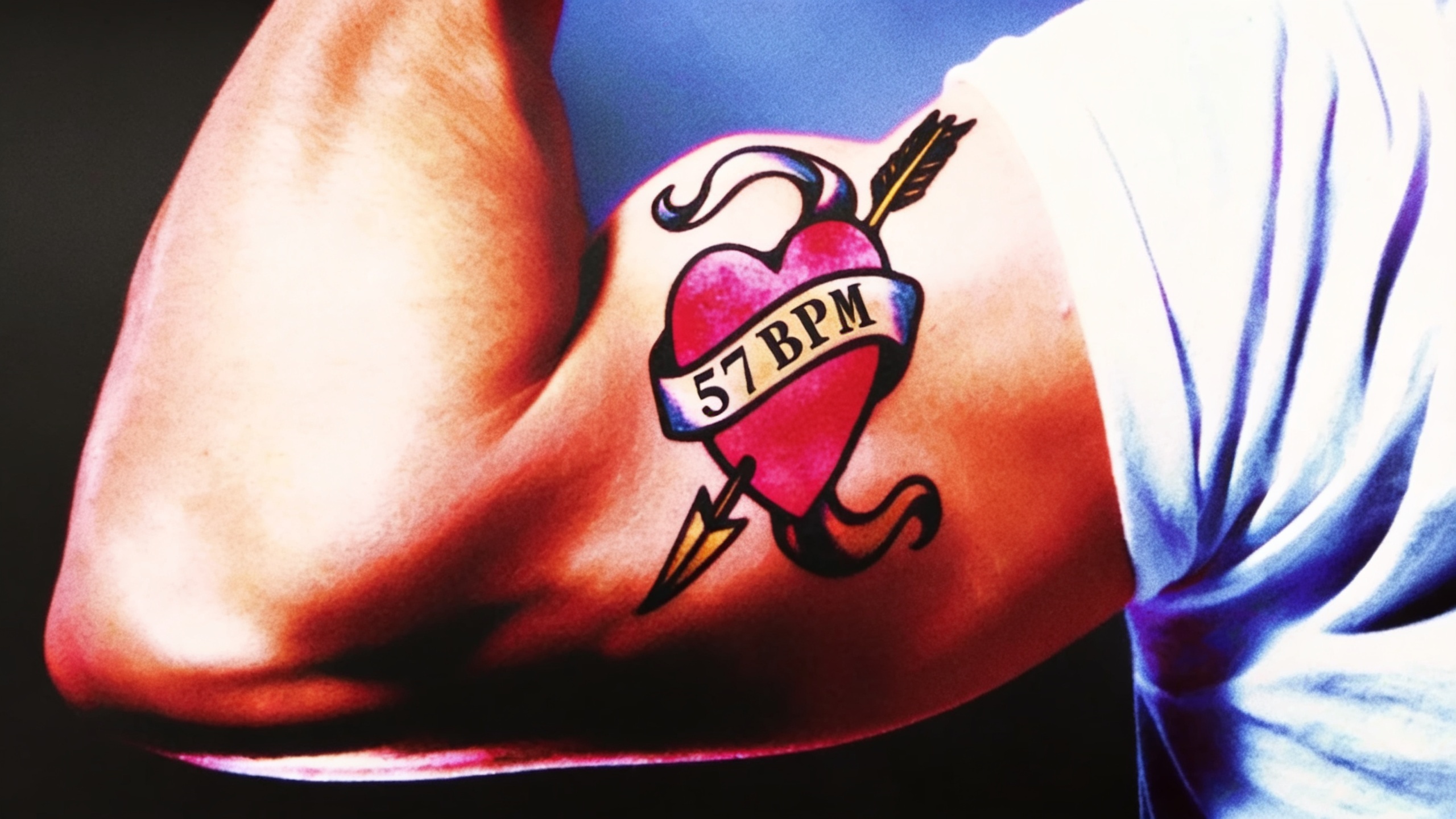
People are now broadcasting their resting heart rates on Instagram Stories and even dating app profiles, treating this once-obscure cardiac metric as the ultimate proof of health and vitality.
In an October 7, 2026 GQ article, wellness writer Hannah Singleton explores how sharing low resting heart rates has become the latest status symbol in the “longevity-maxxing” movement — but questions whether that impressively low number is actually the health flex people think it is.
Jump to:
- The New Currency of Health Bragging
- From Professional Cyclists to Private Instagram Stories
- The Science Behind the Status Symbol
- The Longevity-Maxxing Movement
- Dating Apps and Biological Signaling
- The Intersection of Healthism and Performance Culture
- What Actually Matters for Heart Health
- The Verdict on the Flex
The New Currency of Health Bragging
Henry Lau, a strength coach in Providence, Rhode Island, didn’t mince words when describing the phenomenon to GQ.
It’s like rich people flexing with their Lamborghinis.
Except instead of luxury cars, people are showing off the number of times their heart beats per minute while at rest.
Consumer wearables like Apple Watch, Whoop, Oura Ring, and Garmin have transformed resting heart rate (RHR) from a clinical measurement into a continuously tracked, easily shareable metric. What was once only measurable in doctor’s offices or athletic training centers is now displayed on smartphone screens 24/7.
This democratization of biometric data has created an entirely new class of health performance — one where lower numbers equal higher social capital.
From Professional Cyclists to Private Instagram Stories
The cultural obsession reached new heights during a recent Tour de France, when wearable brand Whoop broadcast the resting heart rates of professional cyclists like Mathieu van der Poel and Tadej Pogačar on live television.
Their numbers? High 30s beats per minute.
For context, the American Heart Association considers a normal adult resting heart rate to be between 60 and 100 beats per minute. These elite athletes were operating at nearly half that rate — a testament to years of intense cardiovascular conditioning that creates larger, more efficient hearts.
Suddenly, amateur fitness enthusiasts had a new benchmark to chase.
Roberto Clemente, a New York-based runner cited in Singleton’s article, represents this broader trend. He takes pride in his low RHR and occasionally shares it on his private Instagram Stories — not to brag, exactly, but to signal his dedication to fitness and longevity optimization.
The Science Behind the Status Symbol
Lower resting heart rates generally indicate more efficient cardiovascular function.
Elite endurance athletes commonly have RHRs in the 40–60 bpm range due to a phenomenon called cardiac hypertrophy — their hearts physically enlarge and strengthen through sustained aerobic training, pumping more blood with each beat and therefore requiring fewer beats per minute.
For regular exercisers, improving cardiovascular fitness through consistent training can gradually lower resting heart rate by 5–25 beats per minute over time.
But here’s where the flex gets complicated.
When Low Isn’t Necessarily Good
A very low resting heart rate is not universally a sign of superior health.
In non-athletes, readings consistently below 60 bpm can indicate bradycardia — a medical condition where the heart beats too slowly to pump adequate blood throughout the body. This can cause dizziness, fatigue, shortness of breath, and in severe cases, fainting.
Other factors that can lower RHR without improving health include:
- Beta-blocker medications prescribed for high blood pressure or anxiety
- Genetic variations that naturally produce lower heart rates regardless of fitness level
- Hypothyroidism and other metabolic conditions
- Electrolyte imbalances
- Damage to heart tissue from aging or disease
Cardiologists emphasize that resting heart rate is just one data point among many. Looking at RHR in isolation — without considering blood pressure, cholesterol, aerobic capacity, recovery metrics, and overall lifestyle — provides an incomplete and potentially misleading picture of cardiovascular health.
The Longevity-Maxxing Movement
This RHR obsession doesn’t exist in a vacuum.
It’s part of a broader cultural moment that Singleton’s article labels “longevity-maxxing” — a movement where people optimize their bodies for extended lifespan as both a genuine health goal and a performed social identity.
Figures like Bryan Johnson, who publicly tracks dozens of biomarkers and spends millions annually on anti-aging protocols, have popularized the idea that health optimization should be measured, quantified, and shared.
Online communities on Reddit’s r/longevity and r/biohacking forums dissect every imaginable health metric, from VO2 max to telomere length to inflammatory markers.
What was once confined to niche fitness forums has migrated to mainstream social media and even dating apps, where displaying a low resting heart rate has apparently become a signal of desirability and vitality — proof that you take your health seriously in an era where wellness is moral currency.
The Gamification of Health Data
Wearable technology companies have masterfully tapped into status-seeking behavior through gamification.
These devices don’t just track metrics — they create competitions, streaks, badges, and social sharing features that transform personal health into a performance sport.
Apple Watch users close their “rings.” Whoop members compare recovery scores. Oura Ring wearers obsess over their readiness metrics.
Resting heart rate becomes another number to optimize, another way to prove you’re winning at the game of health.
But behavioral scientists warn this can lead to unhealthy fixation on numbers rather than holistic wellbeing — where people chase lower RHRs through excessive training or stress themselves trying to hit arbitrary targets set by algorithms.
Dating Apps and Biological Signaling
Perhaps most surprisingly, resting heart rate has entered the dating market.
Some users now include their RHR statistics in dating app profiles, alongside height, occupation, and interests.
From an evolutionary psychology perspective, this makes a certain kind of sense. Physical fitness has always been a mate selection signal — an indicator of genetic quality, disease resistance, and potential longevity.
In previous eras, people assessed fitness through visible cues like muscle tone, athletic performance, or physical stamina.
Wearable technology now offers an allegedly objective, quantified alternative — a number that claims to peer inside the body and measure cardiovascular efficiency directly.
The problem? As we’ve established, that number tells an incomplete story.
The Intersection of Healthism and Performance Culture
Cultural critics view the RHR-sharing phenomenon as an extension of “healthism” — the moral valorization of health and fitness that frames wellness as both a personal responsibility and a measure of character.
In this worldview, being healthy (or at least appearing healthy through optimized metrics) becomes a form of virtue signaling.
Social media amplifies this dynamic by creating platforms where every aspect of life — including heart rate — becomes content, performance, and currency in the attention economy.
A low RHR shared on Instagram isn’t just health information. It’s a carefully curated statement about discipline, dedication, and membership in an elite club of people who care enough to optimize.
What Actually Matters for Heart Health
If you’re genuinely interested in cardiovascular health rather than social media status, medical experts recommend focusing on a broader constellation of factors:
- Regular aerobic exercise — 150 minutes of moderate activity or 75 minutes of vigorous activity weekly
- Blood pressure management — keeping readings consistently below 120/80 mmHg
- Cholesterol levels — particularly LDL and triglycerides
- Resting heart rate trends over time rather than absolute numbers
- Heart rate variability — the variation in time between heartbeats, which indicates autonomic nervous system function
- Recovery heart rate — how quickly your heart rate drops after exercise
- VO2 max — maximum oxygen uptake during intense exercise
- Absence of arrhythmias or irregular heartbeats
- Lifestyle factors like sleep quality, stress management, and nutrition
Cardiologists emphasize that changes in your personal baseline resting heart rate matter more than comparing yourself to others.
If your RHR is normally 65 bpm and suddenly jumps to 80 bpm for several days, that signals something worth investigating — overtraining, illness, stress, or inadequate recovery.
But whether your baseline is 50 or 70 bpm matters less than whether that number is stable and you feel healthy.
The Verdict on the Flex
So is sharing your resting heart rate the health flex people think it is?
Not really.
While a low RHR can indicate excellent cardiovascular fitness in trained athletes, it’s not a reliable standalone measure of health for the general population. Too many variables — genetics, medications, medical conditions, and measurement inconsistencies — make it an unreliable signal when viewed in isolation.
The cultural phenomenon Singleton documents in her GQ article reveals more about our current moment than about cardiovascular science.
We live in an era where wearable technology meets social media performance culture meets longevity obsession — creating perfect conditions for biometric bragging that may or may not reflect actual health.
If you genuinely care about heart health, by all means track your resting heart rate as one data point among many. Work with healthcare providers to understand what your numbers mean in context.
But if you’re posting that impressively low RHR to Instagram as the ultimate fitness flex?
You might just be participating in the Lamborghini show-off culture of the wellness world — all status symbol, questionable substance.