Roman Reigns is opening up about what it really takes to maintain his superhero physique—and it’s not always pretty.
In a candid conversation on Men’s Health’s Strong Talk podcast, the WWE World Heavyweight Champion revealed the mental battles, strict dietary discipline, and physical evolution required to look camera-ready whether he’s stepping into the ring or onto a Hollywood set.
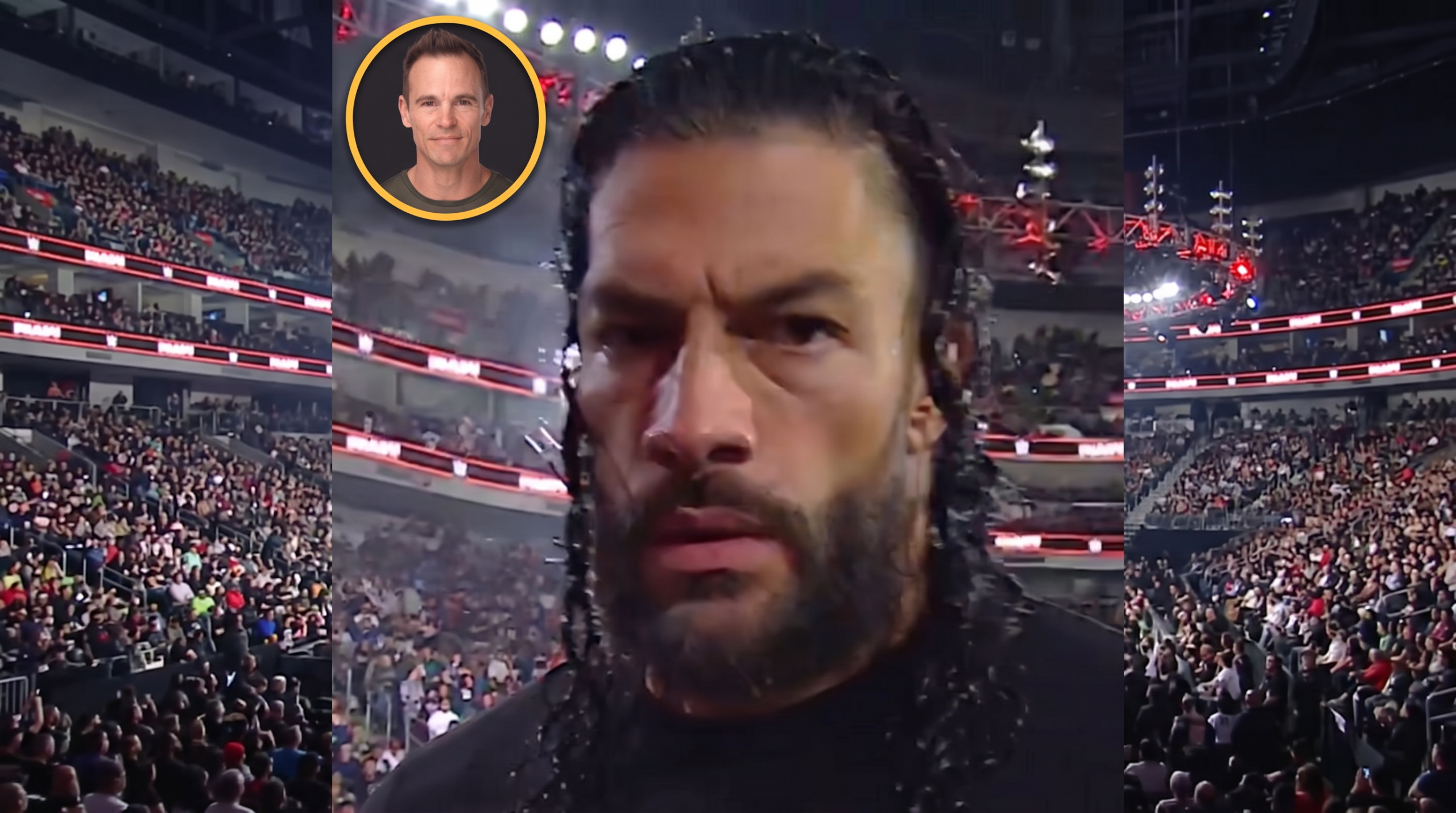
From training for his role as Akuma in the upcoming Street Fighter movie to learning from legends like Dwayne “The Rock” Johnson and John Cena, Reigns shared insights that go far beyond typical workout advice.
Here’s what the wrestling superstar had to say about body image struggles, the surprising difficulty of martial arts training, and why he believes he’s currently in his physical prime.
Jump to:
- The Inner Critic Every Athlete Battles
- Why Diet Is Reigns’ Biggest Challenge
- Football, Wrestling, or Martial Arts: Which Training Is Toughest?
- Martial Arts Training: A Whole New Level of Difficulty
- Training for Longevity and On-Screen Credibility
- Learning from Legends: The Rock and John Cena
- Listening to Your Body: Intuition Over Metrics
- Knowing When to Push and When to Rest
- Prime Time: Reigns on His Current Physical State
- Key Takeaways from Roman Reigns’ Approach
The Inner Critic Every Athlete Battles
Reigns didn’t hold back when discussing the psychological challenges of maintaining an elite physique in an industry where appearance is scrutinized constantly.
We’ve all got a little bit of body dysmorphia, right? We’re all fighting this little, you know, critic in our head. I’m in an aesthetic business, and this is what I signed up for, so there’s nobody to blame. But it’s not always perfect.
Despite his imposing presence and championship-caliber conditioning, Reigns admits to the same insecurities many face. The difference? He’s learned to extend grace to himself.
His advice for managing that internal voice is simple yet powerful: treat fitness as a marathon, not a sprint.
It’s a marathon. It’s not over. Even if your goal is tomorrow, just extend it. Just keep going. If my look isn’t perfect on Sunday, then I should probably just keep trying to make it a little better. Keep working at it.
Why Diet Is Reigns’ Biggest Challenge
For someone who makes physical dominance look effortless, Reigns revealed a surprising vulnerability: his body’s response to even minor dietary slip-ups.
You put a doughnut right there, and I’ll start accumulating water on me. For some reason, I could just look at it and get chubby. I come from a big family. We’re big-boned people. We’re watery bros, you know?
Maintaining discipline requires an all-or-nothing mentality for Reigns. When he’s locked in, everything falls into place. But one deviation can trigger a cascade.
When I’m locked in and I’m dialed, that’s everything. If I get out of that, I can be the opposite, where I don’t want to work out and I want to eat the worst stuff. I want to order the food in. Is it 5:00 somewhere? Because I’d like to have a beer, too. It’s one of those things that I have to be very careful about, and I have to constantly remind myself of what we’re doing, what our goals are, and what we’re trying to achieve.
This kind of self-awareness separates elite performers from everyone else. Reigns knows his triggers and builds systems to avoid them.
Football, Wrestling, or Martial Arts: Which Training Is Toughest?
Reigns has experienced three distinct types of high-level training: college football at Georgia Tech, professional wrestling with WWE, and martial arts preparation for his Street Fighter role.
When asked which was most demanding, his answer highlighted how different disciplines challenge athletes in unique ways.
I would have to say the football training was the hardest and the most intense, but I was also my youngest. As I’ve gotten older, training for wrestling in the WWE, it’s not easy at all. But with wisdom you get a little smarter. You learn how to handle things and adjust things.
The Control Factor in WWE
Wrestling demands something football never did: explosive power combined with precise control.
You have to have so much more muscle control. In football, you just explode, and whatever happens, happens. That guy goes flying and that’s perfect. But in wrestling and sports entertainment, you have to learn how to explode, but then also stay in full control. How can you swing at a guy and make it look like it’s coming at him, like a Nolan Ryan fastball, but you have enough control to make it to where you can throw that punch 4 to 5 times a week and not kill the guy and do it again tomorrow.
This balance between power and restraint requires years to develop and represents one of wrestling’s most underappreciated athletic skills.
Martial Arts Training: A Whole New Level of Difficulty
Training to play Akuma in Street Fighter introduced Reigns to challenges he never anticipated, despite decades of athletic experience.
The character’s bodybuilder-esque physique matched Reigns’ existing aesthetic, but the movement requirements were entirely foreign territory.
I got lucky because Akuma…his physique is kind of bodybuilderesque. He’s a big brother, so he’s very muscular. That helped me out, to kind of stay in my regimen. But when you add in the martial arts, the fighting disciplines…you have to be able to have your legs in a sumo squat, but then you can pop up on your toes and also hit a unique pose with your arms. There’s so much isometric work in that. There’s so much to that body control, almost like a ballerina type of work. And the footwork was pretty extensive.
Reigns had minimal martial arts background—just two days of childhood taekwondo before quitting. While he grew up watching Bruce Lee films, nothing prepared him for the physical demands of authentic martial arts training.
I was always a big fan of Bruce Lee. You know, me and my cousins always watched all the martial arts films and Bruce Lee movies, but I never understood exactly how hard it is. And to be able to hold those poses….I mean, it’s very much like Pilates and yoga-ish, the way you have to be able to hold your body and then hold that posture in order to keep that authenticity for each discipline.
The isometric holds, precise footwork, and body control gave Reigns newfound respect for action stars like Jason Statham and Chuck Norris who make it look effortless on screen.
Training for Longevity and On-Screen Credibility
The Street Fighter experience taught Reigns an important lesson about the balance between aesthetics and functional movement—especially crucial for both wrestling and film.
The crossover is huge, because we want to look like we can save the world. There’s that fine balance, where you want to look that part. But if that movement, that physicality, that athleticism is not there, it will take people out. [The audience] won’t be able to get lost. There will be no escapism. That’s the most important thing about being well-rounded. You can see when guys have a super strength over here, but then there’s a deficit here. But then they’re good here, but they don’t have all the tools sharpened. It’s important to have both those tools.
This philosophy mirrors what’s become increasingly important in both professional wrestling and action cinema: audiences can tell when someone just looks the part versus actually being capable of the movements required.
Learning from Legends: The Rock and John Cena
When it comes to transitioning from wrestling to Hollywood while maintaining an impressive physique, Reigns has two of the best mentors imaginable.
These two are special humans you’re talking about. Even in their leaned-out stages, they’re still just superhero guys. And these are my mentors. These are the guys that I watched come before me. So these are guys who had a great imprint and left a great impression on me. If you’re going to steal from somebody from their playbook, John Cena and Dwayne Johnson are two of the very best you can do it from….We all get to a place where we have to adjust. We’ve got to evolve. And we have to change. I hope I can get to a place in my career, like they did, where that’s going to be the next step for me.
Different Approaches to Training Evolution
Reigns noted distinct differences in how his two mentors adapted their training as their careers evolved.
Cena shifted toward mobility and flexibility, particularly after spending time training in China, moving away from pure strength work toward pliability. Yet despite this evolution, Reigns emphasizes Cena remains “freakishly strong.”
With The Rock, Reigns sees more similarity to his own training philosophy.
Dwayne is huge. People don’t really understand how big DJ is. Even in his leaned-out state, he’s still a big man. I would say me and Dwayne have a little closer mindset on what we like to do in the gym. We’re chasing that pump. We’re trying to create hypertrophy.
Listening to Your Body: Intuition Over Metrics
Despite the prevalence of fitness trackers and wearable technology, Reigns takes a measured approach to data-driven training.
I wouldn’t put all my weight on the actual data or metrics, but it’s gauging day-to-day the consistency of what these numbers are. That’s a way to use them. The main thing I really like to use those for is my sleep. I have a crazy-low pulse. My resting pulse is under 40 [beats per minute]. And sometimes I can get it all the way down to, like, 35, So if I’m over 60, I know something’s going on. But I wouldn’t ride or die on these metrics. I’m the captain.
That’s the mindset of someone truly in tune with their body—using technology as a tool for pattern recognition rather than letting it dictate decisions.
Reigns also revealed something fascinating about his cardiovascular response during matches.
[My heart rate] is always lower than I expected. Then a crazy brawl breaks out, and it’s like a sprint. I’ve learned over the years how to manage that whole process in the 30 to 40 minutes where I’m out there. I’ve learned how to ride that roller coaster where I can keep my stress levels down the whole time.
This ability to regulate physiological response under extreme performance pressure speaks to years of experience and mental conditioning.
Knowing When to Push and When to Rest
For athletes committed to year-round performance, recovery becomes as important as training intensity.
You have to listen to your body if you’re committed to this, and this is an annual thing. Your body is going to send signals when you’re not feeling good….It’s just one of those things where you have to be intuitive.
This wisdom comes from decades of high-level training across multiple disciplines. Reigns understands that longevity requires knowing when pushing through serves you and when it breaks you down.
Prime Time: Reigns on His Current Physical State
At an age when many athletes begin to decline, Reigns believes he’s reached his peak.
I think I’m in my prime physically. I look at my stomach or whatever it may be, that’s a part of that body dysmorphia we’re all struggling with. And it’s one of those deals that I think if you just keep working on it…it’s not done until it’s done.
Rather than chasing what his physique looked like in his 30s, Reigns focuses on continuous improvement within his current reality. This mindset shift—from nostalgia to progression—allows him to stay motivated without being imprisoned by past versions of himself.
Key Takeaways from Roman Reigns’ Approach
Several actionable principles emerge from Reigns’ interview that apply whether you’re a professional athlete or someone simply trying to stay consistent with fitness goals:
- Acknowledge the mental game: Body dysmorphia and inner critics affect everyone, even elite performers. Recognizing this removes shame and allows progress.
- Build systems around your weaknesses: Reigns knows dietary slip-ups trigger cascading problems, so he creates structures to stay locked in.
- Balance aesthetics with function: Looking good means nothing if movement quality suffers. Train for both appearance and performance.
- Use data as a guide, not a dictator: Metrics provide useful patterns, but intuition built through experience should drive decisions.
- Extend your timeline: Treating fitness as a marathon rather than a sprint removes the pressure of perfection and enables sustainable effort.
- Learn from those ahead of you: Study how mentors evolved their training and bodies as their careers progressed.
- Listen to your body’s signals: Recovery and knowing when to pull back enables longevity in demanding pursuits.
Roman Reigns’ journey from college football to WWE dominance to Hollywood action star demonstrates that elite physicality requires more than just gym time. Mental discipline, dietary vigilance, adaptability across training styles, and self-awareness separate those who maintain peak performance from those who burn out.
His willingness to discuss struggles with body image and the constant mental work required to stay focused makes his success more relatable—and his advice more valuable—than typical celebrity fitness content.
Whether you’re preparing for your own physical challenge or simply trying to build consistency in your fitness routine, Reigns’ approach offers a blueprint: stay locked in, extend grace when needed, train smart as you age, and remember it’s never done until it’s done.