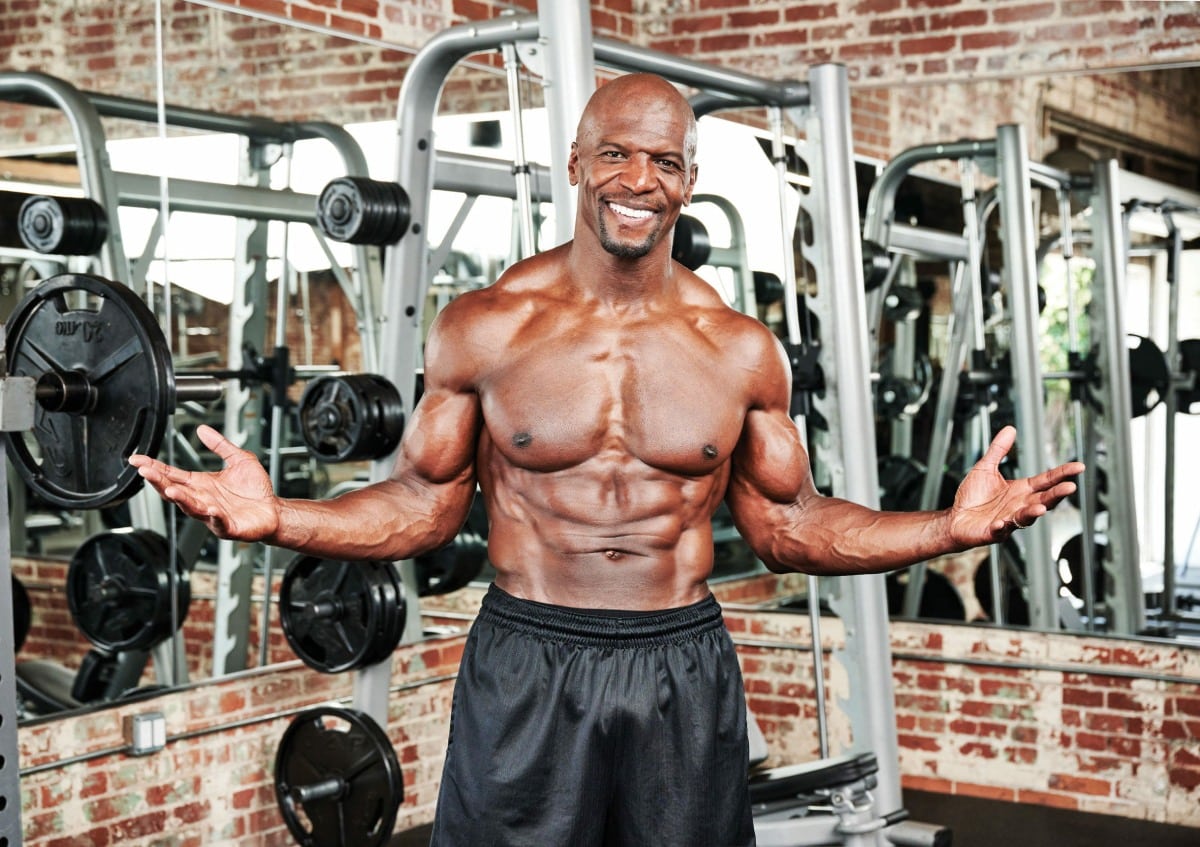
At 56, Terry Crews continues to defy every expectation we’ve ever had about aging in fitness.
He’s built like a superhero, still trains like a pro athlete, and hasn’t let age, injury, or time slow him down.
But behind the muscle is a powerful story of adaptability, recovery, and mindset that’s evolved over decades.
In a candid conversation with performance expert Pat Davidson, Crews reveals the strategies that allowed him to stay fit, injury-free, and high-performing year after year — even after suffering a torn bicep on national television.
From smarter warmups and training around pain, to emotional resilience and finding joy in movement, here’s how Terry Crews is still winning his fitness journey today — and how you can too, no matter your age.
Jump to:
- The Key to Staying Fit Over 50: Adapt and Evolve
- Warmups Are Everything As You Age
- Train For Your Body, Not Your Program
- Smart Recovery: The Missing Key to Longevity
- Knowing the Difference Between Pain and Soreness
- Training Heavy — But Smarter
- Big Workloads, Big Burn
- Consistency Through Creativity
- The Final Word: Don’t Stop, Ever
The Key to Staying Fit Over 50: Adapt and Evolve
“I feel the best I’ve ever felt,” Crews says, even though he admits he’s been in technically better shape in his younger years.
But while youthful recovery and hard-hitting NFL workouts are in his past, his energy, consistency, and smarter approach to training are what makes his current routine more sustainable — and arguably more effective for long-term health.
The foundation of his approach? Listening to his body and adapting accordingly.
Injury Recovery Begins with Mindset
Back in 2010, Crews suffered a serious injury while lifting a couch on a live Jimmy Kimmel skit — his bicep detached from the bone. “It was scary,” he recalls. “I didn’t even know that was possible.”
After a Kevlar-reinforced surgical repair, he did what he always does: train around and stay consistent.
“Get back on the horse,” he says. “Even with plantar fasciitis, I just cut everything down and kept moving — incline walks, super light days. But I never stopped.”
Warmups Are Everything As You Age
In his 20s, Crews could jump into any workout cold. Now, warmups are a vital part of his daily practice.
- 20-minute warmup sessions focused on shoulders, back, and core
- High-rep light-weight circuits (e.g., 100-rep sets) to improve tendon blood flow
- Daily mobility and activation drills with bands
“When I get the right warmup, I feel young again,” he says. “It’s like a reset button.”
Age Isn’t Just a Number — It’s a History
Performance coach Pat Davidson emphasizes that age-related changes are influenced by more than just birthday candles. “If you played in the NFL, that’s weekend car crashes for years,” Davidson notes. “That’s going to affect biological age.”
Ultimately, your training must reflect the cumulative load on your body — not just your age in years.
Train For Your Body, Not Your Program
Crews says it took him years to unlearn flawed squat form that didn’t match his anatomy. “I’ve got long legs and a short torso,” he explains. “I widened my stance, opened my knees, and finally found the groove.”
The lesson? Don’t copy someone else’s form — build your own.
Creativity in the gym means understanding your unique structure and adapting your training to fit. “It took me years to figure out how I squat best. But when I did, my legs started growing again.”
Athlete-Level Conditioning (Even With a Busy Schedule)
Crews has run four miles a day for 25 years. More recently, he adapted to joint pain with machines like the stair master and, now, the anti-gravity treadmill — a device that lets athletes train without full-body impact.
“I can take 40-50 pounds off and just run, which I love,” he says. “I’ve got so much energy to burn.”
Smart Recovery: The Missing Key to Longevity
Crews emphasizes active recovery over passive rest.
Rather than taking full rest days, he schedules “phantom workouts” — ultra-light sessions used to promote blood flow and mental consistency.
“I just want to feel something,” he says. “Even if it’s 100 reps with light dumbbells or some kettlebell squats — I stay moving.”
Wednesdays and Sundays Are Sacred
He keeps his recovery days planned and protected, not reactive.
“If I don’t plan it, I’ll skip it,” he admits. “So I made it part of the system.”
Supplements and Smarter Self-Care
Crews now regularly uses collagen for connective tissue health and takes his rest more seriously.
“I used to feel guilty for a day off. Now, I understand rest is work.”
Knowing the Difference Between Pain and Soreness
A key part of longevity is understanding body signals.
“You can’t run uphill with downhill thoughts,” Crews says, pointing out how fear of injury often becomes self-fulfilling.
If you’re adapting well and progressing, the discomfort likely indicates growth. If you’re regressing, in sharp localized pain, or unable to move properly — that’s worth examining.
“Pain you can work through is different than pain that stops you cold,” Davidson adds. “Progress is the compass.”
Training Heavy — But Smarter
Crews still lifts heavy — just more intuitively.
“I put the weight on the rack and sometimes just know it’s too much,” he says. “I think longevity, not ego.”
He keeps focus on movements that feel good, working within ranges that challenge him without compromising form — often 275 lbs for 10 instead of a risky 400 lbs for 1.
Big Workloads, Big Burn
Between filming America’s Got Talent and other projects, Crews tracks staggering energy outputs — up to 7,000 calories a day.
“I couldn’t do that on a treadmill,” he laughs. “It’s the live energy, the adrenaline, the on-your-feet all day kind of vibe that adds up.”
Davidson agrees: “Mental and emotional engagement burns more than people realize. Coaches, speakers, performers — it’s exhausting.”
Consistency Through Creativity
Asked how he keeps this going decade after decade, Crews says it’s about joy — and ownership.
“You are your greatest tool. There’s no comparison,” he says. “You wouldn’t use someone else’s screwdriver on your project, so why copy their training?”
Instead of rigid routines, he blends styles, experiments with tools, and stays creative without being reckless.
“I’ve found ways to use cable machines for hamstring work instead of squats, or using belt squats for back days. Do whatever keeps you loving it.”
The Final Word: Don’t Stop, Ever
“Adaptation is your superpower,” Davidson concludes. “You’re not who you were at 25 — you’re better, if you’re smarter.”
And for Crews, that’s the message.
One that’s taken him from child sit-up sessions fueled by fear to decades-long dominance built on mindfulness, movement, and meaning.
“See you at the finish line,” he says, smiling. “We’re not broken — just not finished.”