In fitness circles, there’s a pervasive belief that high-rep training with lighter weights is essentially worthless—dismissed as “junk volume” that wastes time without delivering real results.
But what if this widely accepted wisdom is completely wrong?
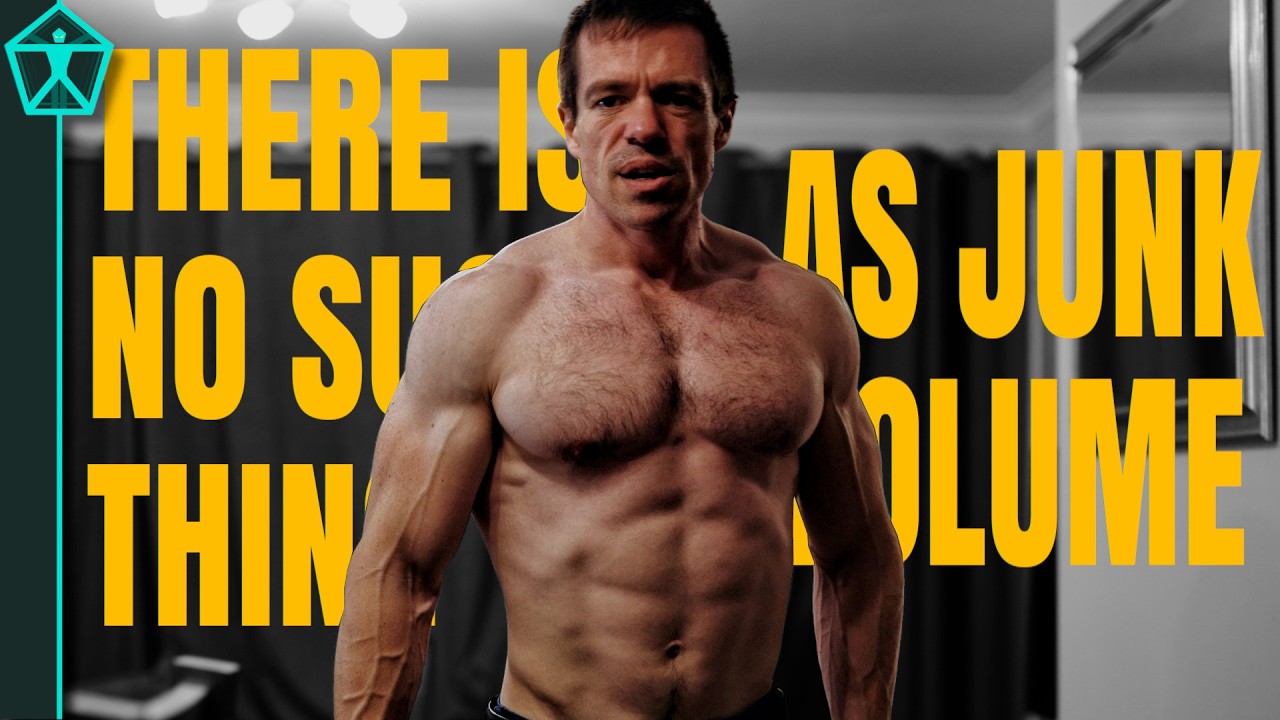
Fitness coach and content creator Adam Sinicki, known online as The Bioneer, recently challenged this conventional thinking in a detailed breakdown of why every rep counts—even those performed well before muscular failure.
His argument flips traditional strength training philosophy on its head.
Jump to:
The “Junk Volume” Argument Explained
Critics of high-repetition training argue that muscle growth and strength gains primarily come from stimulating high-threshold motor units—which only activate when movements become genuinely difficult, typically during those final grinding reps of a set.
Their logic seems sound: why perform 30 push-ups when you could simply add weight and reach failure at 8 reps, stimulating those crucial muscle fibers much faster?

If you want something simple that actually works, this is one of the most effective tools I’ve used to build strength, conditioning, and endurance without needing a full gym setup.
- Full-body training with one weight using swings, squats, and presses
- Solid cast iron build that feels stable and lasts for years
- Comfortable grip that makes high-rep workouts easier to handle
Sinicki acknowledges this perspective before systematically dismantling it.
Fatigue Isn’t a Bug—It’s a Feature
Getting tired during high-rep training isn’t wasted effort, according to Sinicki. It’s training endurance—both cardiovascular and strength endurance simultaneously.
Strength endurance, by the way, is what you need for the majority of strength-based tasks. You need to exert strength for a significant period of time, whether wrestling, doing DIY, carrying something heavy, moving furniture, you name it.
This work capacity boost translates directly to better performance in subsequent workouts. More energy means more exercises performed at higher quality.
High-rep training also delivers cardiovascular benefits and promotes angiogenesis—the formation of new blood vessels that enhance recovery and daily energy levels.
You’re essentially getting aerobic conditioning for free, eliminating pressure to add separate cardio sessions.
The Slow-Twitch Revolution
Here’s where Sinicki’s argument becomes particularly compelling: those “easy” initial reps aren’t doing nothing.
If you want something simple that actually works, this is one of the most effective tools I’ve used to build strength, conditioning, and endurance without needing a full gym setup.
- Full-body training with one weight using swings, squats, and presses
- Solid cast iron build that feels stable and lasts for years
- Comfortable grip that makes high-rep workouts easier to handle
They’re isolating and training lower-threshold motor units and slow-twitch muscle fibers to complete failure—something heavy lifting rarely accomplishes.
While slow-twitch fibers are individually smaller than their fast-twitch counterparts, they’re far more numerous. Combined, they contribute roughly equivalent muscle surface area and significant power output in most real-world scenarios.
The Tug-of-War Analogy
Sinicki uses a brilliant analogy to explain motor unit recruitment during different training styles.
Imagine a team pulling increasingly heavy objects with rope. The team includes extremely strong individuals who fatigue quickly (fast-twitch fibers) and smaller, more endurance-focused members (slow-twitch fibers).
When pulling light objects, only the endurance members participate—the strong guys stay benched because they’re simply not needed.
With heavy loads, everyone gets involved. This seems ideal until you recognize a critical flaw: when the strong guys tire out, the smaller team members must stop too, even though they aren’t fully fatigued.
If you want something simple that actually works, this is one of the most effective tools I’ve used to build strength, conditioning, and endurance without needing a full gym setup.
- Full-body training with one weight using swings, squats, and presses
- Solid cast iron build that feels stable and lasts for years
- Comfortable grip that makes high-rep workouts easier to handle
They’re not being taken to failure because they have to stop as soon as the bigger guys wear out.
Heavy lifting trains fast-twitch fibers effectively but leaves slow-twitch fibers undertrained.
The High-Rep Solution
High-repetition training with lighter loads solves this problem elegantly.
Initially, only slow-twitch fibers activate. As they fatigue, fast-twitch fibers must eventually chip in to continue the movement. Keep pushing, and every muscle fiber reaches complete exhaustion.
If you keep going and keep going, eventually every single member of your team will be completely fatigued, taken to complete failure.
Those “junk” reps are training an equally important but frequently neglected portion of muscle tissue.
Beyond Mechanical Tension
Sinicki challenges another fitness dogma: that mechanical tension alone drives muscle growth.
High-rep training delivers metabolic stress and muscle damage at any rep range—additional pathways to hypertrophy beyond simple mechanical load.
If you want something simple that actually works, this is one of the most effective tools I’ve used to build strength, conditioning, and endurance without needing a full gym setup.
- Full-body training with one weight using swings, squats, and presses
- Solid cast iron build that feels stable and lasts for years
- Comfortable grip that makes high-rep workouts easier to handle
Other benefits accumulate as well:
- Movement mastery: Rehearsing patterns builds neurological efficiency
- Improved strength-to-weight ratio: Moving your bodyweight becomes effortless
- Tendon strengthening: Explosive movements with higher reps stimulate connective tissue adaptation
- Joint health: Contrary to myths about repetitive strain, balanced high-rep training doesn’t increase injury risk compared to heavy lifting
The Time Efficiency Myth
Critics claim high-rep training takes too long. Sinicki disagrees.
You can bash out 35 dips and it’ll still take you less than 30 seconds if you’re using a rapid cadence. Not that different from five slow grinding reps.
Factor in setup time, equipment access, and gym commutes, and bodyweight high-rep training often proves faster overall.
Shorter rest periods between sets compress workouts further. Lower recovery demands mean training more frequently without overtraining.
Strength Is Specific
Sinicki doesn’t claim high-rep bodyweight training builds maximal powerlifting strength—that requires practicing heavy compound lifts with proper neural adaptations.
But he questions whether most people actually need that type of strength.
If you want something simple that actually works, this is one of the most effective tools I’ve used to build strength, conditioning, and endurance without needing a full gym setup.
- Full-body training with one weight using swings, squats, and presses
- Solid cast iron build that feels stable and lasts for years
- Comfortable grip that makes high-rep workouts easier to handle
Someone who has an amazing bench press cannot planche. It’s just a different set of neural pathways. It’s a different intramuscular coordination that’s required.
Bodyweight mastery represents its own sophisticated strength expression. The person performing a flawless planche isn’t “weaker” than someone benching 300 pounds—they’ve simply developed different capacities.
For building an athletic, functional physique with real-world performance capabilities, high-rep training delivers remarkable results without requiring barbells or gym memberships.
Movement Is Never Junk
Sinicki’s most powerful point transcends programming debates entirely.
The very fact that we call some movement junk just because there’s not the most optimal growth, just because there’s not an ROI shows just how warped fitness messaging has become. If you’re moving, you’re improving.
Fitness culture’s obsession with optimization has created a toxic mindset where exercise is only “worthwhile” if it maximizes hypertrophy or strength gains.
This perspective ignores mobility, coordination, cardiovascular health, functional capacity, and mental well-being—all enhanced through varied movement regardless of “efficiency.”
Every rep contributes something valuable, even if it’s not the fastest route to bigger biceps.
If you want something simple that actually works, this is one of the most effective tools I’ve used to build strength, conditioning, and endurance without needing a full gym setup.
- Full-body training with one weight using swings, squats, and presses
- Solid cast iron build that feels stable and lasts for years
- Comfortable grip that makes high-rep workouts easier to handle
Practical Application
For those interested in this training philosophy, Sinicki emphasizes that high-rep bodyweight work can build impressive physiques alongside genuine athletic capability—all from home with minimal equipment.
The approach works particularly well for people seeking balanced development without aspirations for competitive powerlifting or bodybuilding.
Training becomes more sustainable when it fits seamlessly into daily life rather than demanding gym commutes and lengthy recovery periods.
High-rep training isn’t junk volume—it’s comprehensive physical development that traditional heavy lifting often overlooks. Those extra reps train slow-twitch fibers, build work capacity, improve cardiovascular fitness, and develop movement mastery simultaneously.
Perhaps it’s time to reconsider what we dismiss as “junk” and recognize that all movement holds value beyond simple muscle growth metrics.