In a recent episode of The Human Upgrade podcast, host Dave Asprey sat down with sports chiropractor Dr. Tommy Rhee to dig into whole-body vibration.
Rhee, a veteran of the Tampa Bay Buccaneers and UCLA Athletics, calls the technology a “cheat code” for health.
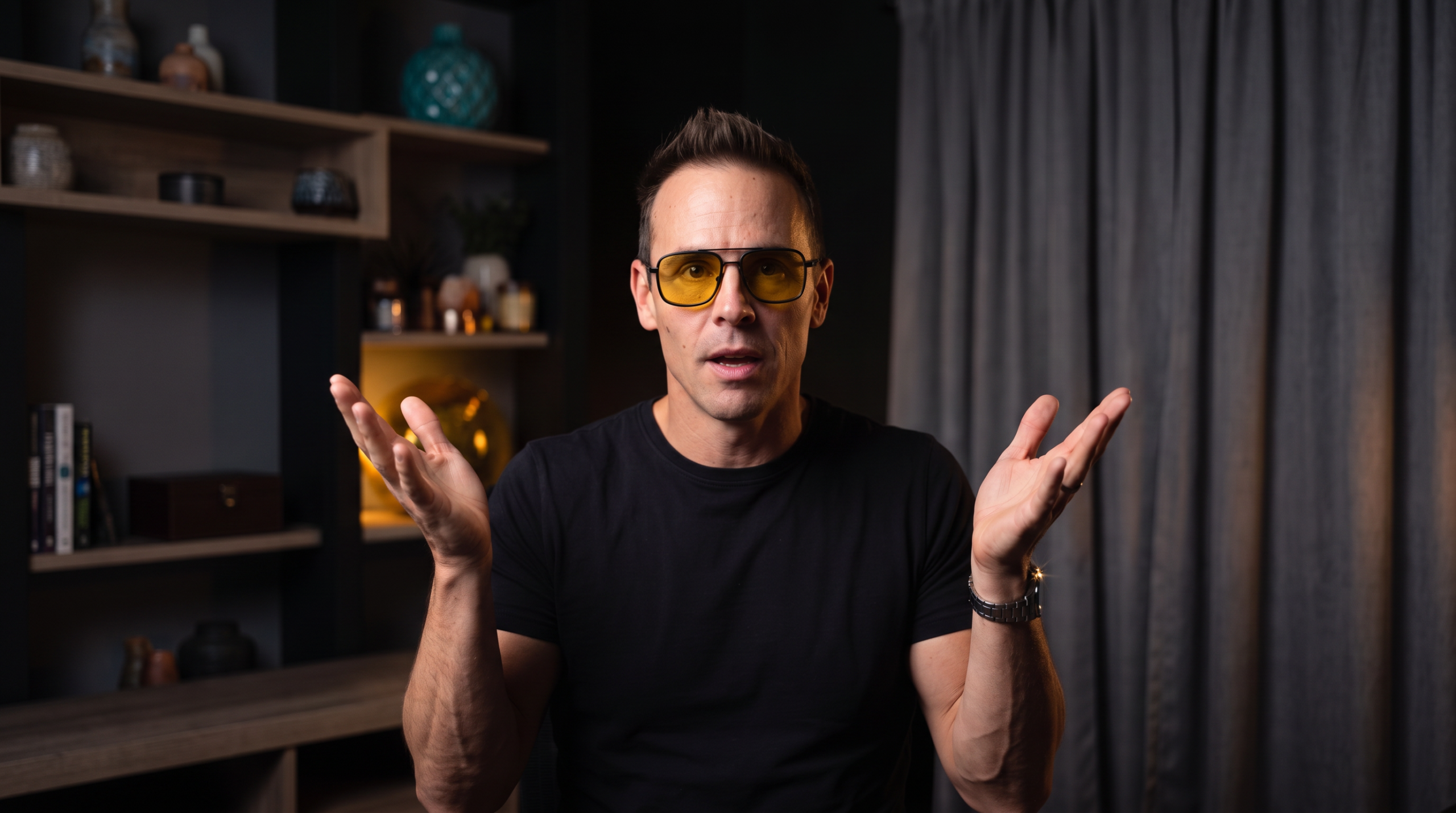
One patient in his seventies reportedly noticed a surprising change within weeks.
Why would standing on a buzzing platform affect blood flow, bones, and blood sugar?
Here is what the two experts said, and where the evidence deserves a closer look.
Jump to:
- The Core Idea: Muscles Fire, Blood Moves
- Nitric Oxide and “Shear Stress” Explained
- The Story Everyone Will Ask About
- Bone Density: The Standout Claim
- Joints Without the Wear
- Blood Sugar After Meals
- Brain Health: Promising, Not Proven
- What Short Sessions Might Do
- Not All Plates Are Equal
- How to Progress, Step by Step
- Who Should Check First?
The Core Idea: Muscles Fire, Blood Moves
According to Rhee, a vibration platform sets off rapid, tiny muscle contractions through the calves and thighs. Circulation follows.

If you want something simple that actually works, this is one of the most effective tools I’ve used to build strength, conditioning, and endurance without needing a full gym setup.
- Full-body training with one weight using swings, squats, and presses
- Solid cast iron build that feels stable and lasts for years
- Comfortable grip that makes high-rep workouts easier to handle
You want some activation. You want the muscles to start turning on, contracting, and just activating.
His pitch is simple: you stand still while the device does work you may lack time or energy to do yourself.
Rhee also cited a 2001 study measuring the artery behind the knee. Blood velocity there reportedly doubled after a session.
Nitric Oxide and “Shear Stress” Explained
Rhee points to endothelial nitric oxide synthase (eNOS), an enzyme in artery linings that produces nitric oxide, a molecule that relaxes and widens blood vessels.
Pulsing forces on vessel walls, he argued, trigger more production than constant, steady force. Asprey called this shear stress, and said platforms deliver a bigger dose than jogging or heavy lifting.
Why a Mini Trampoline Falls Short
Bouncing can activate muscles and move lymph. Frequency is the problem.
Asprey noted that a trampoline delivers roughly one jump every two seconds, while platforms cycle 20 to 30 times per second.
If you want something simple that actually works, this is one of the most effective tools I’ve used to build strength, conditioning, and endurance without needing a full gym setup.
- Full-body training with one weight using swings, squats, and presses
- Solid cast iron build that feels stable and lasts for years
- Comfortable grip that makes high-rep workouts easier to handle
The Story Everyone Will Ask About
Rhee recommended a protocol to a man in his seventies: 10 minutes, three times daily. The goal was to ease a food-sensitivity inflammatory response.
My wife wants to thank you. I said well, why? He’s like well, after about 3 to 4 weeks, I started to get my erection back.
Fun story. Still just one anecdote, not a clinical trial, and other factors could have contributed.
Asprey described his own stack: vibration, a nutrient supplement, and a daily low dose of the prescription drug tadalafil. Prescription medications belong in a conversation with your own doctor, not in copycat routines.
Bone Density: The Standout Claim
Rhee described a 2008 six-month study of postmenopausal women with osteoporosis. The vibration group reportedly gained 4.3 in lumbar bone density, while the comparison group lost 1.9.
He explained the mechanism through Wolff’s law: bone adapts to mechanical load. Stress signals osteoblasts, the cells that build bone, to lay down more tissue.
I see Power Plate as both a signaler and a stressor.
No study name was given on air, so treat these figures as a starting point. Vibration is no replacement for osteoporosis treatment prescribed by a physician.
If you want something simple that actually works, this is one of the most effective tools I’ve used to build strength, conditioning, and endurance without needing a full gym setup.
- Full-body training with one weight using swings, squats, and presses
- Solid cast iron build that feels stable and lasts for years
- Comfortable grip that makes high-rep workouts easier to handle
Asprey’s Bone-Support Recipe
Asprey framed bone health as a recipe rather than a single fix. His list:
- Protein: about 1 gram of animal protein per pound of body weight
- Trace minerals: including boron, which he called the most important for density
- Vitamin D: paired with vitamin K2, which he said directs calcium into bone
- Mechanical signal: vibration sessions
Asprey was clear that none of this treats disease. His point: it builds an environment where bones receive a “get strong” message.
Joints Without the Wear
Marathons, triathlons, and excessive spin classes can chew through cartilage. Rhee suggested isometric holds on a platform engage muscles, tendons, and ligaments while sparing joint surfaces.
Asprey added a joint recipe of up to 20 grams of grass-fed collagen plus a joint-support supplement.
Blood Sugar After Meals
Asprey, who sometimes wears a continuous glucose monitor, says standing on a platform for 5 to 10 minutes after eating blunts his spikes.
Rhee’s explanation is a two-part effect: improved insulin responsiveness plus working muscles that burn glucose for fuel. Both claims were described in general terms, without a specific trial.
If you want something simple that actually works, this is one of the most effective tools I’ve used to build strength, conditioning, and endurance without needing a full gym setup.
- Full-body training with one weight using swings, squats, and presses
- Solid cast iron build that feels stable and lasts for years
- Comfortable grip that makes high-rep workouts easier to handle
Brain Health: Promising, Not Proven
Rhee linked vibration to cerebrospinal fluid (CSF) movement, the system that helps clear waste proteins linked to Alzheimer’s, such as tau and amyloid beta. He cited a 2024 MIT study using light and sound, followed by a 2025 study using 40 Hz transcranial vibration that showed improved fluid coupling on MRI.
Neither used a whole-body platform. Rhee said as much: that is where research “needs to walk into.”
Sleep claims carry the same caveat. Rhee admitted he knows of no specific sleep studies on platforms, and Asprey conceded the link rests on mechanism rather than direct evidence.
What Short Sessions Might Do
Pressed for time? Rhee says brief bursts still count.
- Growth hormone: a 2000 study in young adults reportedly showed a significant rise after a short session
- Stem and progenitor cells: a 2020 study reportedly found a 33% increase in circulating cells
- Soreness: short bursts may help flush inflammation after training
- Warm-up: a couple of minutes replaces a long prep routine
A 2000 study also reportedly showed faster reaction times after vibration, with accuracy intact. The sample was small.
Asprey’s take on time efficiency was blunt: “It’s not exactly the same as walking, but it got you more shear forces.”
If you want something simple that actually works, this is one of the most effective tools I’ve used to build strength, conditioning, and endurance without needing a full gym setup.
- Full-body training with one weight using swings, squats, and presses
- Solid cast iron build that feels stable and lasts for years
- Comfortable grip that makes high-rep workouts easier to handle
Not All Plates Are Equal
Both men warned about budget machines that rock side to side like a seesaw. Rhee said travel distances of 8 to 12 inches can tax the lumbar spine and sacroiliac joints.
Every single person I know who has a plate that rocks back and forth, it ruins their lower back.
Rhee prefers smaller, quicker movement in three dimensions: left-right, forward-back, and up-down. Both men work with Power Plate, and Asprey promoted a sponsor discount on the show, so weigh their preference accordingly.
Asprey also joked that very low frequencies have a famous bathroom side effect.
How to Progress, Step by Step
Slow is easy, right? Stand there, shoulder width apart, hold on to the device, and then go with that session.
- Start static: stand with knees slightly bent, hands on the device
- Release your grip: once there is no ill effect, let go
- Add an isometric squat: hold the position
- Go dynamic: lower, pause one second, rise, and aim for 10 reps
- Challenge balance: try one-leg stands and single-leg squats
Rhee does a session each morning, saying it “primes my nervous system.” He recommends sessions of 1, 5, or 10 minutes depending on time and goals.
Who Should Check First?
Asked about people with arterial plaque, Rhee answered, “It depends.” He frames vibration as a preventive tool for those with family histories of stiff arteries or high blood pressure.
Anyone with existing cardiovascular disease, joint problems, or osteoporosis should get medical clearance first. Much of the conversation reflects expert opinion and early research rather than settled science, and whole-body vibration looks best as one piece of a broader routine.
If you want something simple that actually works, this is one of the most effective tools I’ve used to build strength, conditioning, and endurance without needing a full gym setup.
- Full-body training with one weight using swings, squats, and presses
- Solid cast iron build that feels stable and lasts for years
- Comfortable grip that makes high-rep workouts easier to handle